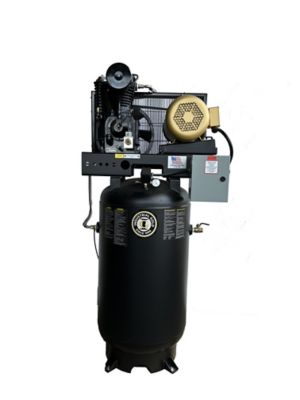
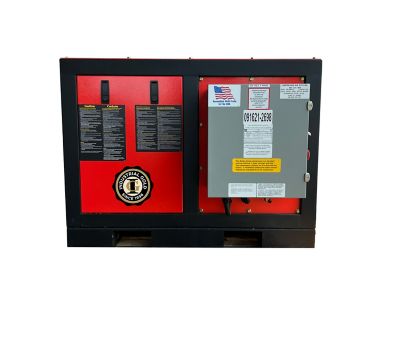
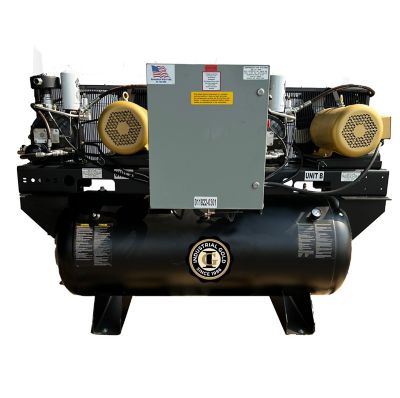
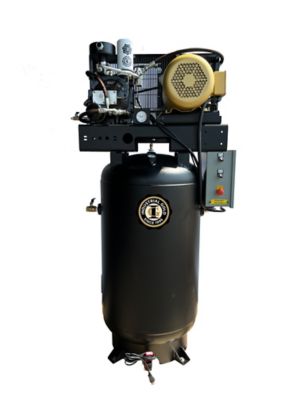
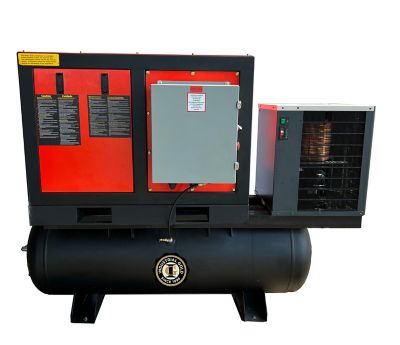
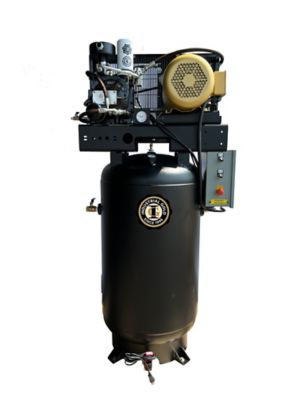
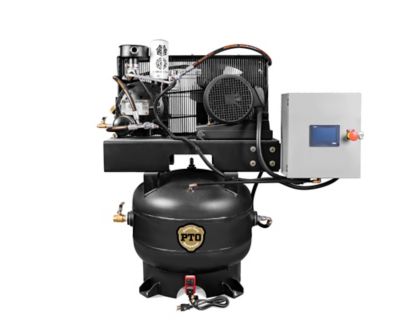
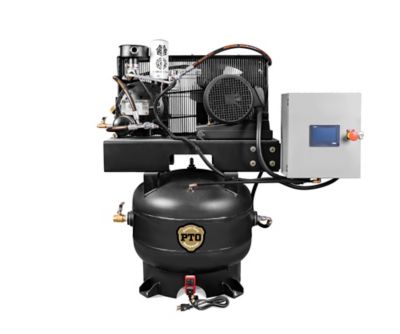
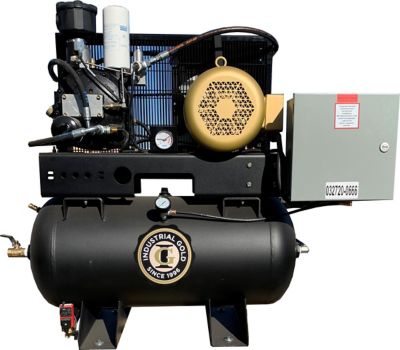
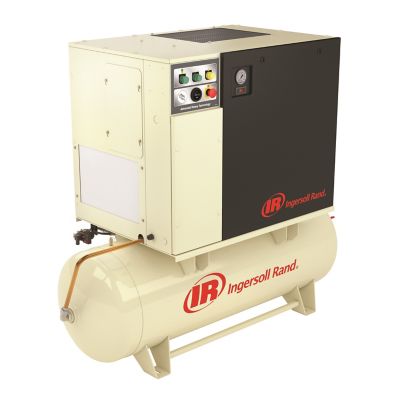
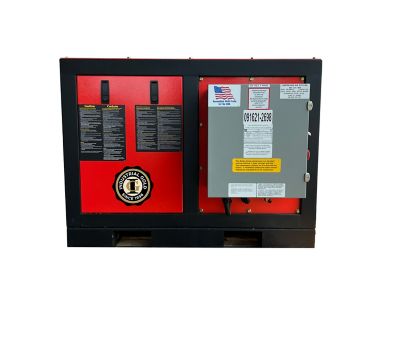
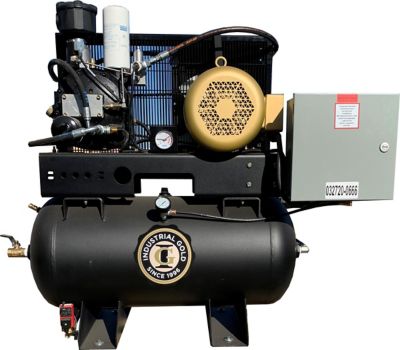
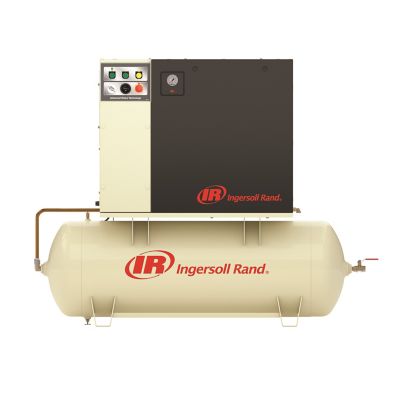
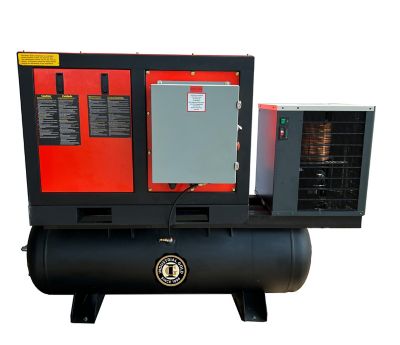
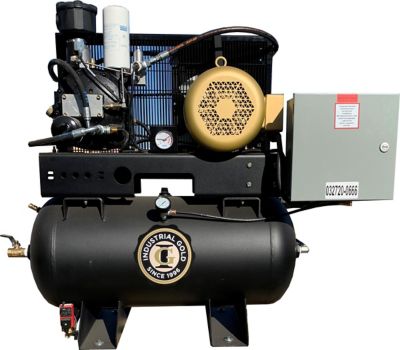
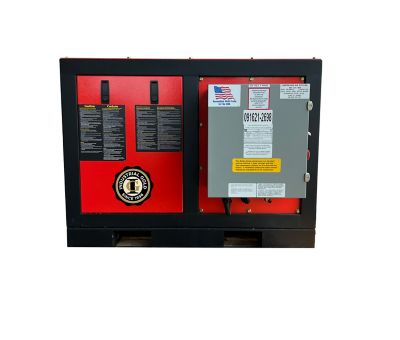
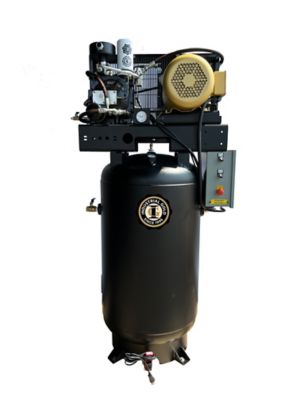
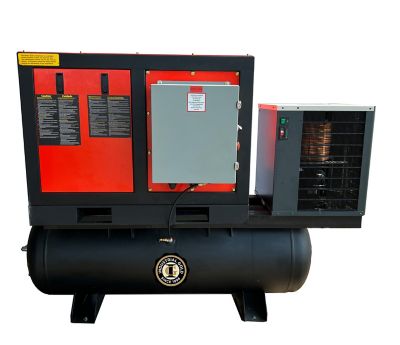
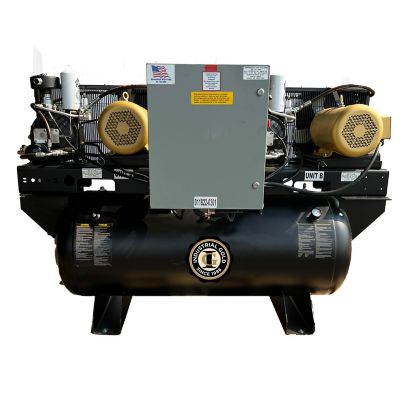
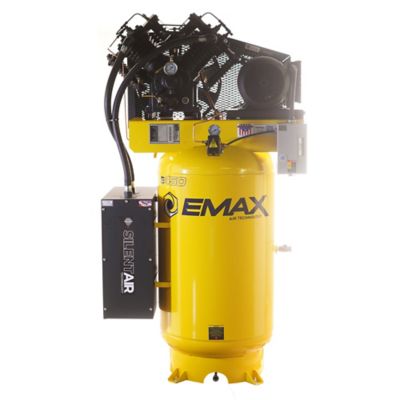
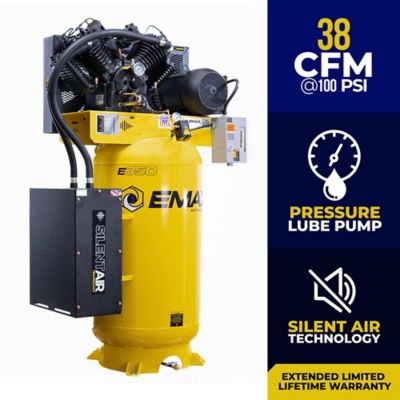
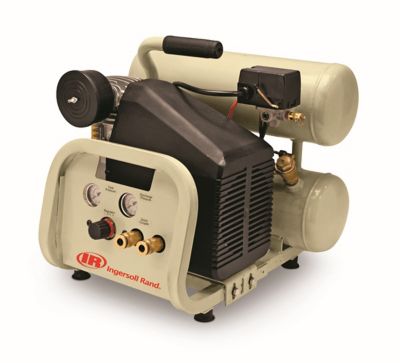
A rotary compressor compresses air or refrigerant by trapping it in a space that gets smaller as internal parts turn. That rotating action sets it apart from a reciprocating compressor, which relies on a piston moving back and forth. The category covers several designs, including rotary screw, rotary vane, and rolling-piston compressors, with each suited to different equipment and workloads. Around a farm shop, repair garage, or fabrication building, a rotary screw air compressor can support a steady demand for compressed air throughout the workday. Inside cooling and heating equipment, a compact rotary refrigerant compressor moves refrigerant through the system so heat can transfer from one place to another. These applications share a basic operating principle, but their compressors are not interchangeable. Rotary screw designs generally have two intermeshing helical rotors that trap air and reduce its volume as it travels through the compressor. Sliding-vane designs have a rotor with vanes that move within slots, creating chambers that shrink as the rotor turns. A rolling-piston design typically has an eccentric roller and a sliding vane that divide the compression chamber. This arrangement is common in compact air-conditioning and heat-pump systems. For shoppers comparing rotary compressors, the intended job matters more than the category name alone. Running pneumatic tools across several service bays calls for a different setup than replacing a compressor in a cooling system. Rotary designs often provide smoother delivery than reciprocating alternatives, and some enclosed rotary screw packages help keep operating sound manageable in a busy shop. Actual sound levels, efficiency, and space requirements depend on the equipment and installation. Many industrial rotary screw compressors are built for continuous operation within their specified conditions, while other rotary designs have different operating limits. Matching those limits to the workload helps keep the equipment suited to the job, whether that means long stretches of shop work or temperature control in compatible HVAC equipment.
For compressed-air applications, the practical fit starts with how much air the tools need and how often they run together. Cubic feet per minute, or CFM, describes airflow, while pounds per square inch, or PSI, describes pressure. A rotary air compressor needs to supply the required airflow at the tools’ operating pressure; a high maximum pressure rating by itself does not establish that fit. A shop where one impact wrench runs occasionally has a different demand pattern than a repair operation with grinders, sanders, and other air tools working at the same time. Sandblasting and sustained grinding can draw substantial airflow, making delivered CFM and rated duty cycle especially important. An air receiver helps buffer changes in demand, but tank capacity cannot make up for a compressor that produces too little air over a long stretch. Motor horsepower is another consideration, though it is not a substitute for comparing delivered airflow under stated conditions. Electrical service also shapes the choice. Voltage, phase, starting requirements, and circuit capacity need to match the installation, particularly in an outbuilding where the existing service may already support welders, lighting, and other equipment. Fixed-speed and variable-speed rotary screw systems respond differently to changing demand, and the better fit depends on the pattern of work rather than the motor-control label alone. Physical dimensions matter beyond getting the cabinet through the door. Room for ventilation, filter changes, panel access, and service work belongs in the footprint, along with a suitable mounting surface. Steel enclosures, receiver construction, internal coatings where specified, and corrosion protection can all affect how a system stands up to its surroundings. The details covered by
Compressor Construction connect directly with these everyday considerations. In a working barn or shop, dust, airborne chaff, damp conditions, and nearby grinding operations make equipment placement just as important as floor space. A location away from heavy debris, with ventilation that meets the manufacturer’s requirements, helps the compressor shed heat without crowding the rest of the workspace. Sound ratings also deserve attention when the unit will run near a workbench or an occupied service area for hours at a time.
Care requirements vary with the rotary compressor design, its lubrication system, and the environment around it. Oil-injected rotary screw compressors depend on specified lubricant, filtration, and separation components to manage heat and carryover. Oil-free designs use a different approach to the compression chamber, but they still require maintenance and may need downstream air treatment for the application. Compressed air can carry moisture, particles, and, in some systems, oil aerosols, so filters, dryers, and condensate management are part of the larger setup. For painting or finishing work, the required air cleanliness may be much stricter than it is for an impact wrench loosening wheel hardware. Long hose runs, undersized piping, and restrictive fittings can also reduce pressure at the tool even when the compressor itself is properly sized. During cooler weather, unheated spaces bring extra concerns about condensate freezing and operation below the equipment’s temperature limits. Keeping drains functional, monitoring filters, and following the service schedule support a longer working life without treating every compressor alike. Refrigerant applications call for a separate set of fit checks. A replacement rotary compressor must match the system’s approved refrigerant, lubricant, electrical characteristics, capacity, connections, and operating envelope. Similar dimensions or a matching voltage do not make two refrigerant compressors interchangeable. Some compact assemblies include a suction accumulator to help keep liquid refrigerant from reaching the compression chamber, but that feature depends on the system design. HVAC replacement work belongs with a qualified technician who can handle refrigerant properly and confirm compatibility with the equipment manufacturer’s specifications. For farmers maintaining a shop, mechanics handling repeated repairs, and business owners running pneumatic equipment, the right rotary compressor is one that fits the actual workload and the building supporting it. Accessible service points, clear maintenance requirements, appropriate air treatment, and enough working room around the unit matter long after installation. Together, those details help turn a compressor from a stand-alone machine into a practical part of the daily operation, ready for the air demand the job calls for.