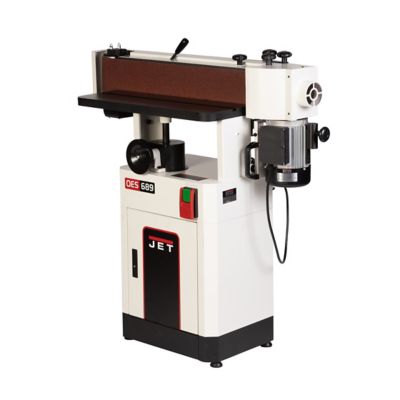
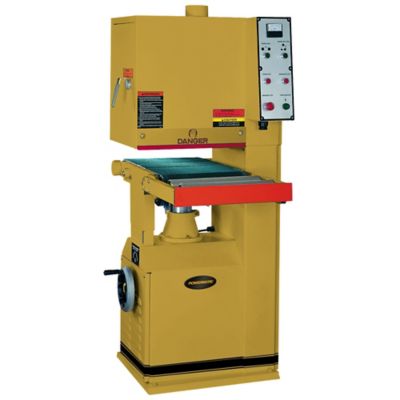
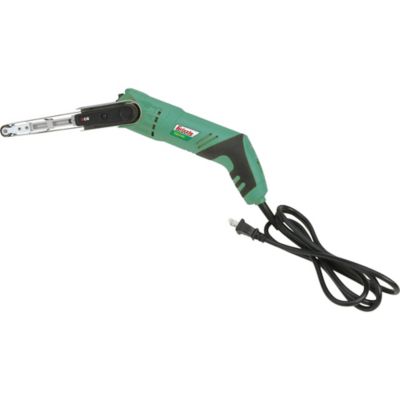
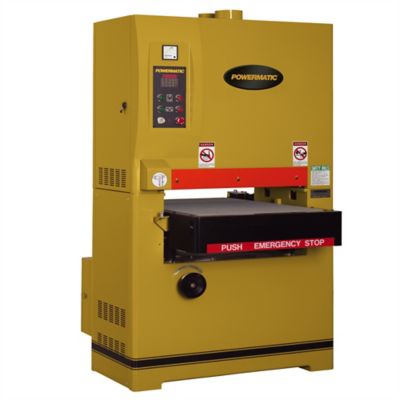
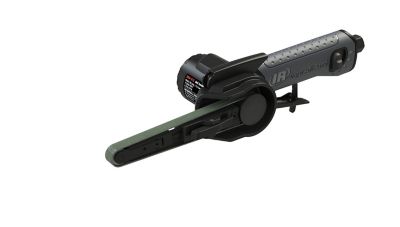
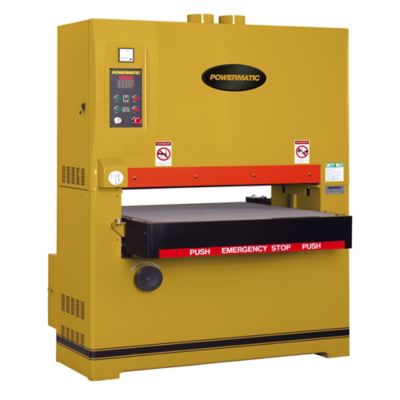
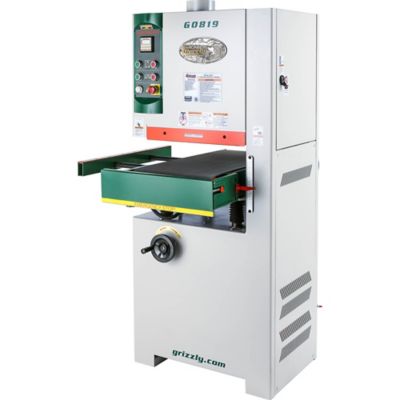
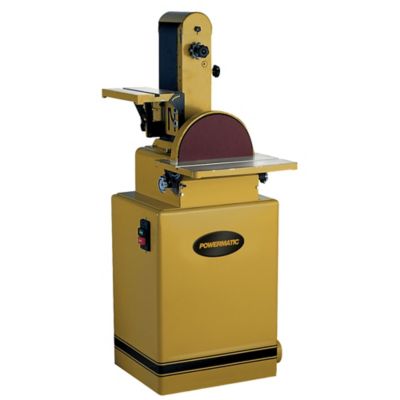
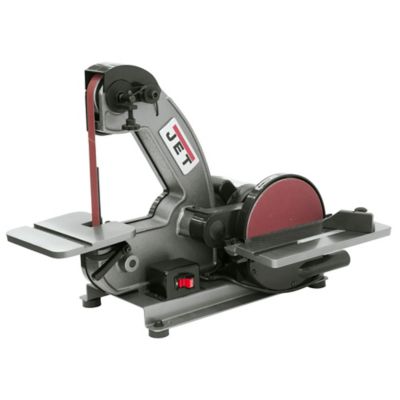
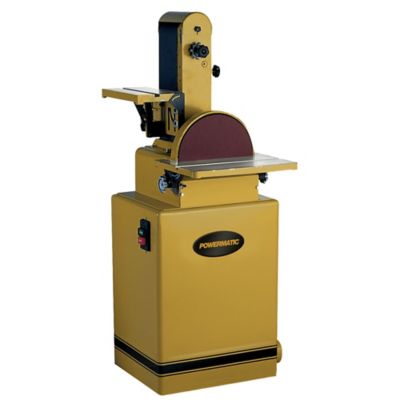
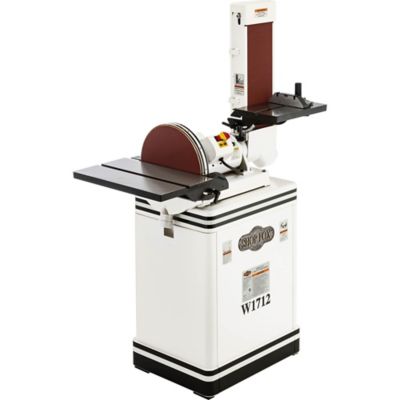
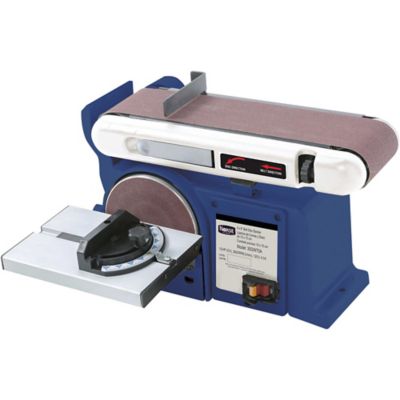
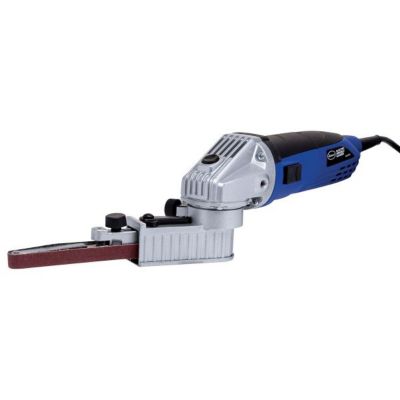
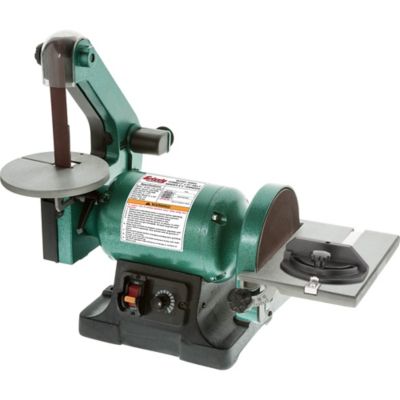
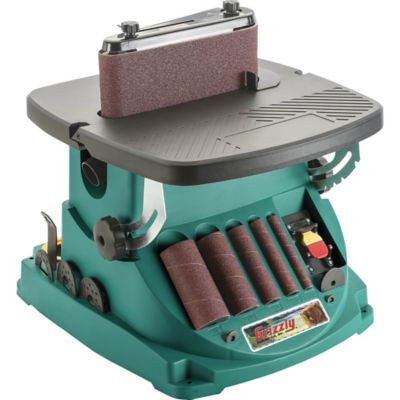
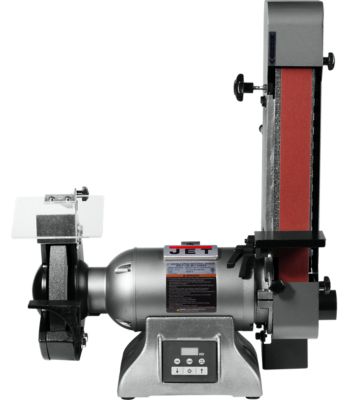
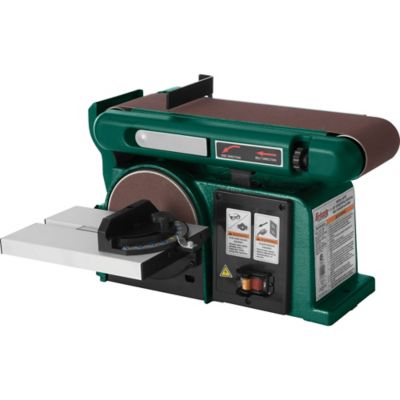
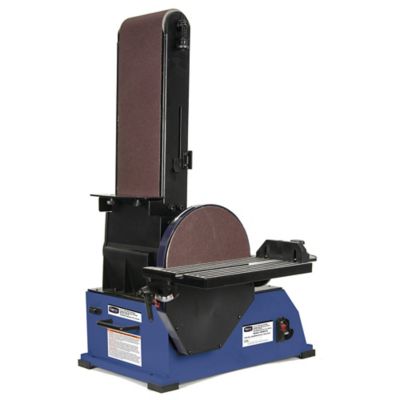
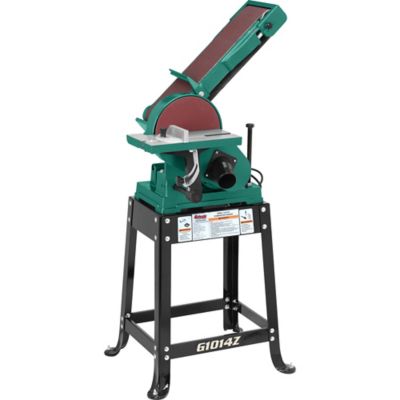
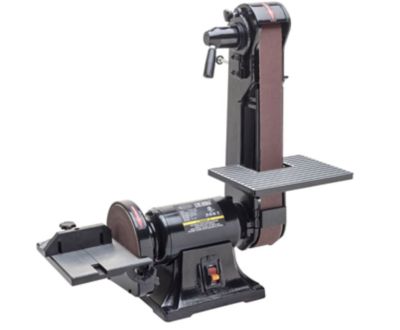
Woodworking belt sanders remove material with a continuous abrasive belt that runs around two or more rollers. They fall into two main groups: portable handheld belt sanders for working across boards and large flat surfaces, and stationary machines for bringing the workpiece to the sanding surface. Benchtop belt sanders are suited to shaping edges, smoothing small parts, and working on exposed end grain, while wide belt machines handle broader panels through a feed system. That distinction matters when matching a tool to the jobs around a home shop, farm workshop, or cabinet workspace. A portable sander can help level a glued-up tabletop, smooth rough boards for shelving, or take down an uneven joint on a sturdy workbench. A stationary setup gives smaller pieces a steady sanding surface, with a table or fence providing support where the machine’s design allows. Neither format replaces every other sanding tool: belt sanders excel at removing material, while tight corners, curved profiles, and final finish preparation may call for another approach. Wood species also affect the match. Soft pine can lose material quickly under an aggressive belt, while oak and maple often call for more attention to abrasive selection and feed pressure. Broad, flat contact surfaces help keep a board even, but a belt sander can also round an edge or leave a hollow if too much sanding happens in one spot. Tool weight, balance, and a clear view of the work matter just as much as motor output. For furniture builders, property owners tackling repairs, and woodworkers turning rough lumber into practical shop fixtures, the best fit starts with the size of the workpiece and the amount of material that needs to come off. A machine intended for occasional board cleanup serves a different role than one expected to process repeated batches of cabinet parts.
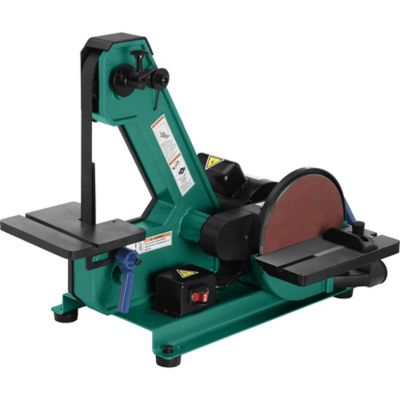
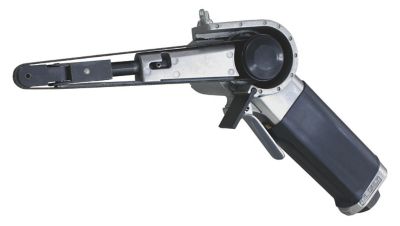
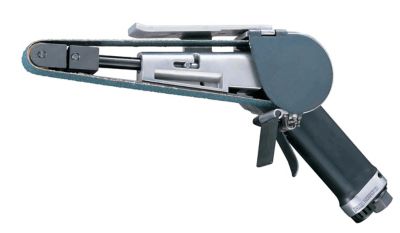
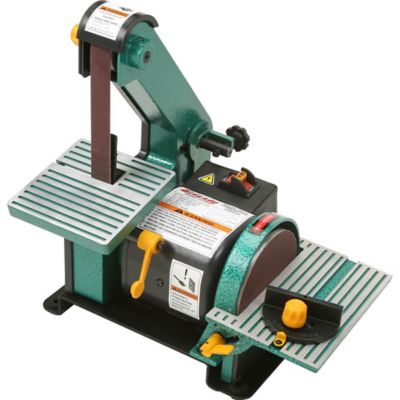
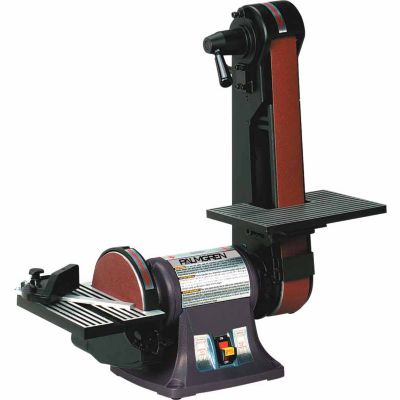
Portable woodworking belt sanders put the sanding action directly on the work, making handle placement, grip comfort, and belt size important considerations. A wider belt covers more surface with each pass, while a smaller tool can be easier to control on narrower boards and in a crowded work area. Belt width and length must match the sander’s specifications; a belt that looks close in size is not necessarily a proper fit. Tracking adjustments help keep the abrasive centered on the rollers, and straightforward belt changes make switching between grits less of a chore. Variable speed can add flexibility when moving between rough stock removal and more controlled smoothing, though the abrasive and the wood still determine how aggressively the tool cuts. Stationary sanders bring a different set of considerations, including table size, fence adjustment, belt orientation, and room around the machine for longer boards. Some benchtop designs offer horizontal and vertical belt positions, which can expand the range of edges and shapes they accommodate. A
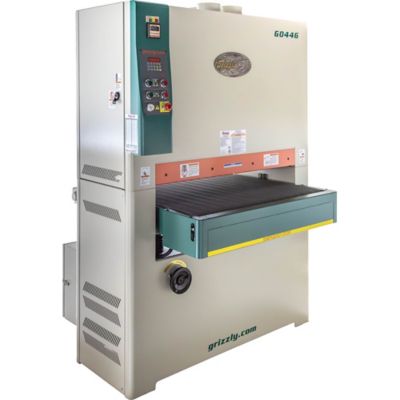
Wide Belt Sander is a larger stationary format that feeds broad, flat workpieces beneath an abrasive belt, making working width, thickness capacity, and feed controls central to the match. It belongs in a different space and workload discussion than a handheld tool or compact bench machine. Across these formats, a stable base and adequate work support help keep boards from tipping or shifting. Power requirements matter, too, particularly in an outbuilding where outlet placement or circuit capacity may limit the setup. Corded equipment needs a suitable electrical connection, while battery-powered handheld designs depend on a compatible battery system and enough runtime for the task. Dust collection connections deserve attention before the machine enters the shop. Port size, hose clearance, and compatibility with an appropriate extraction system affect how neatly the equipment fits into an existing workspace, especially when a long board needs room to travel.
Abrasive belts are part of the working setup, not an afterthought. The backing, abrasive material, grit, and belt joint all affect how the sander behaves against wood. Aluminum oxide is a common choice for general woodworking, while other abrasive formulations may suit heavier cutting or particular sanding demands. Coarser grits remove stock faster and leave deeper scratches; finer grits refine the surface but do not make a belt sander interchangeable with a finishing sander. On a broad tabletop or bench seat, the direction of the grain and the scratch pattern can remain noticeable after stain brings the surface to life. Resin from pine, leftover adhesive along a glue line, and worn abrasive can also change the cut. Belts that load with residue tend to work less efficiently, and extra pressure is no substitute for an abrasive that is ready for replacement. Care considerations include accessible dust passages, a belt-release mechanism that operates smoothly, and rollers and contact surfaces that can be inspected according to the manufacturer’s directions. Proper belt tension, clean ventilation openings, and storage away from moisture help protect the equipment and abrasives between jobs. Maintenance and belt changes belong with the power disconnected, and any damaged belt needs attention before the machine runs again. Eye protection, hearing protection, suitable dust control, and keeping loose clothing clear of moving parts are important parts of the workspace. A dust bag alone does not address every airborne wood-dust concern. For a gift recipient, familiarity with their projects is more helpful than choosing the biggest machine. Someone building small boxes and shop organizers may value a compact stationary setup, while a person making tables or repairing broad wood surfaces may have more need for a portable format. Matching the sander to the person’s space, power supply, experience, and regular projects makes it a practical addition to the bench rather than another tool waiting for a suitable job.