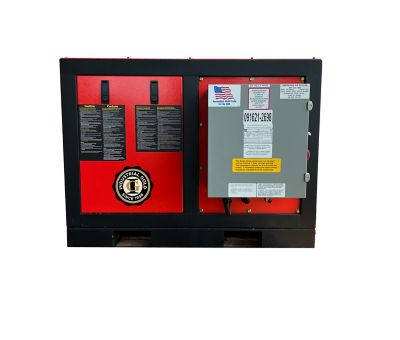
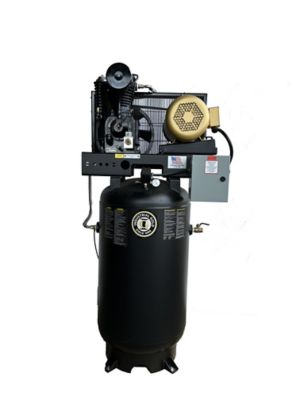
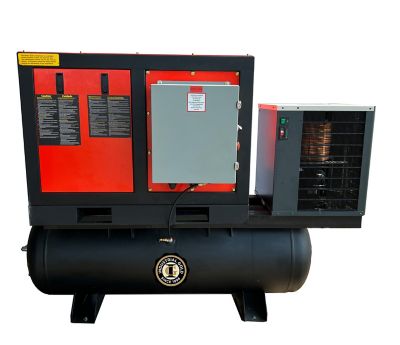
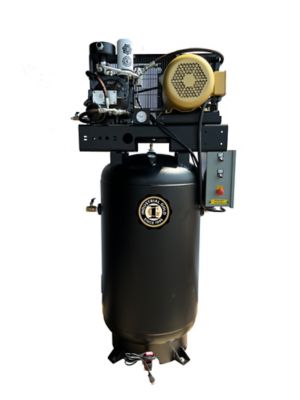
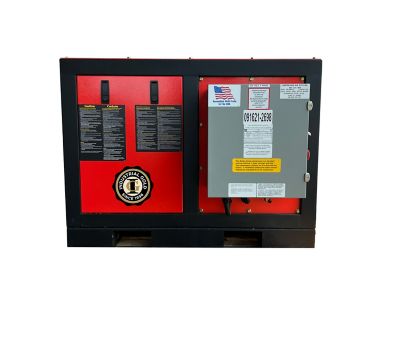
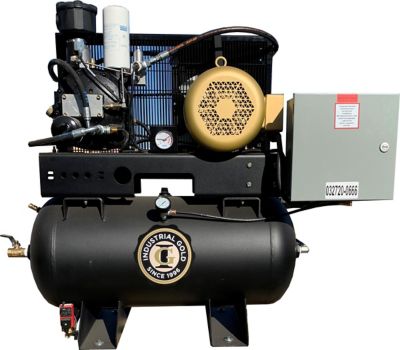
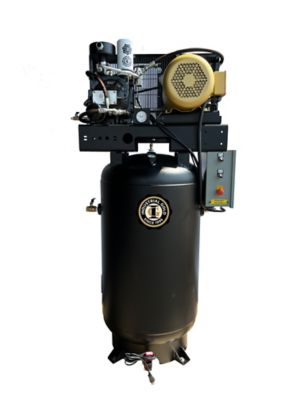
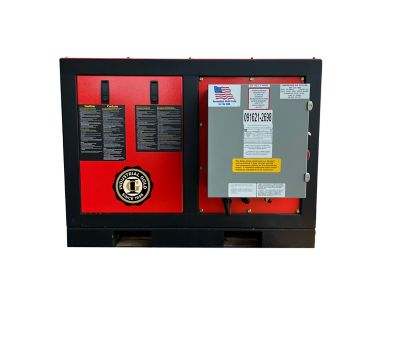
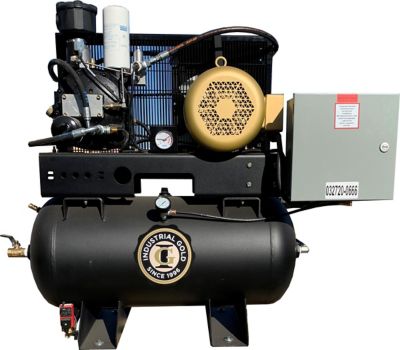
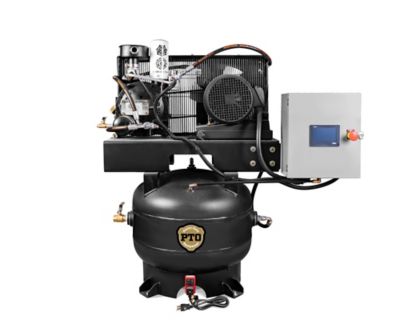
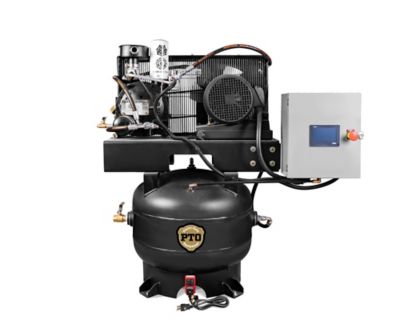
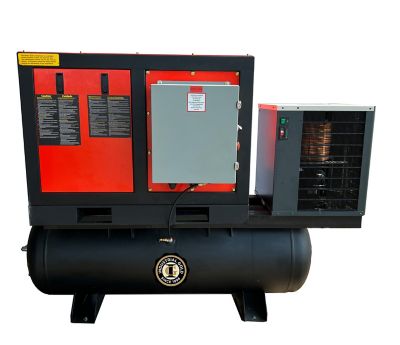
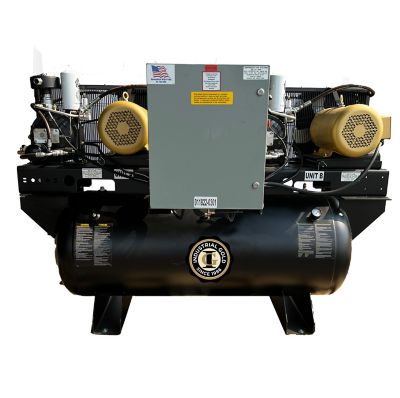
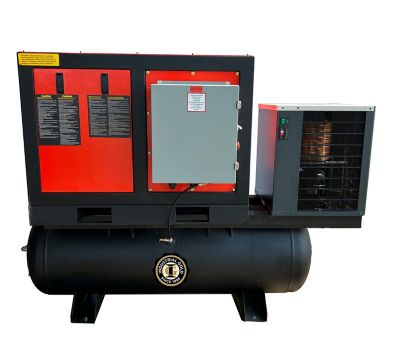
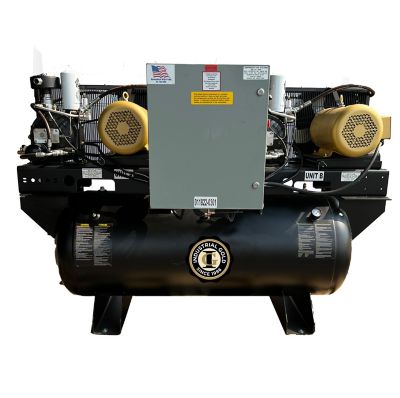
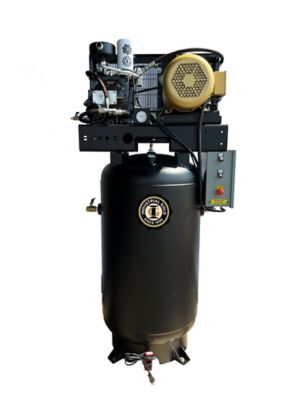
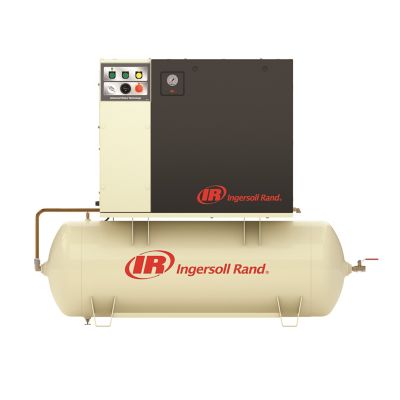
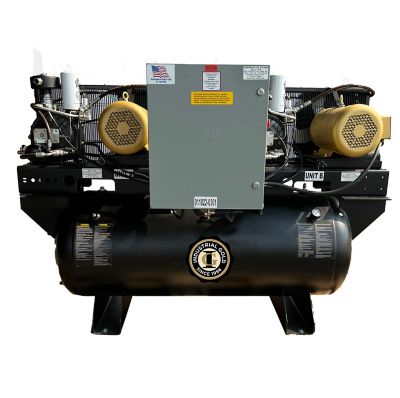
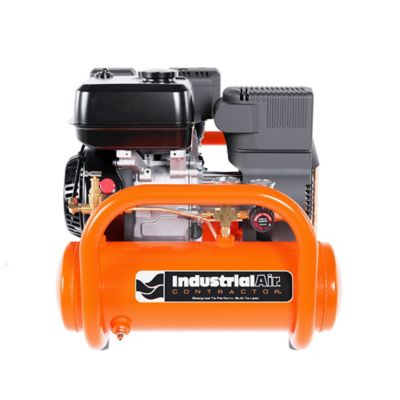
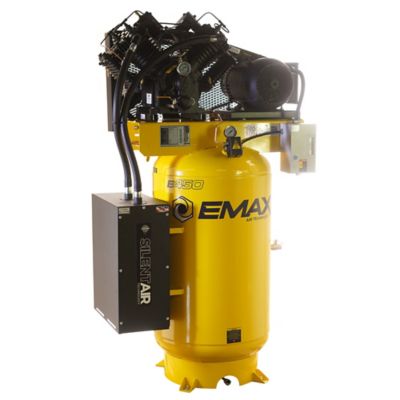
A screw compressor supplies compressed air by drawing air into a chamber where two intermeshing, screw-shaped rotors turn inside a closely fitted housing. As the rotors turn, they trap air and move it through spaces that gradually get smaller, raising its pressure before it reaches the discharge outlet. This rotary motion produces a steady air supply rather than the repeated compression strokes of a piston compressor. For a farm repair shop, fabrication business, or busy equipment service bay, that steady output can support work that keeps air tools running for long stretches. Think of a technician grinding a welded bracket while another mechanic runs an impact wrench across the shop, with a blow gun drawing air between jobs. A rotary screw air compressor can suit that kind of overlapping demand when its airflow and pressure ratings match the work. Many industrial rotary screw compressors carry a 100% duty-cycle rating under specified operating conditions, meaning they can run continuously within those limits. That rating belongs to the particular machine, though, rather than every compressor with screw-type rotors. Sound levels also vary, although enclosed rotary screw designs often operate more quietly than comparable piston equipment. The most useful sizing figures are delivered airflow, commonly listed in cubic feet per minute, or CFM, and the pressure at which that airflow is measured. Horsepower alone does not show how much air reaches the tools. A grinder that draws air continuously places a different load on the system than an impact wrench running in short bursts, even when both require similar pressure. Combined demand matters wherever several workstations share one air line. An air receiver tank helps buffer brief surges and provides stored compressed air, but it cannot make up for a compressor that falls short during sustained work. The right match keeps the focus on the repair instead of repeated pauses while pressure builds back up.
The main screw compressor designs differ in how they manage lubrication, sealing, and the air leaving the compression chamber. An oil-injected screw compressor circulates lubricant through the air end to help seal clearances, carry away heat, and protect moving components. A separator removes most of that oil from the compressed air before discharge, while downstream treatment addresses remaining carryover according to the application. This arrangement fits many general shop and industrial tasks, provided the complete air system meets the requirements of the tools or process. An oil-free screw compressor keeps oil out of the compression chamber, making it relevant to applications with stricter limits on oil contamination. Oil-free compression does not, by itself, remove moisture, dust, or contaminants entering with the intake air. Painting, finishing, instrumentation, and other sensitive work still call for air treatment matched to the process. Construction details matter, too. Depending on the design, a machine may combine precision-machined steel rotors, cast housings, metal piping, and an enclosure that helps manage sound and airflow. Details such as rotor housings, drive arrangements, and mounting points are all part of
Compressor Construction, and they affect service access, vibration, and the machine’s footprint. Belt, gear, and direct-drive arrangements have different inspection and maintenance needs; none tells the whole story without the rest of the design. Physical fit includes more than floor space. A compressor needs the ventilation, service clearances, mounting support, and access specified by its manufacturer. A corner crowded with feed sacks, welding supplies, or spare tractor parts may leave too little room for cooling airflow or filter changes. Electrical fit is just as important: voltage, phase, circuit capacity, and installation requirements must match the machine. A qualified electrician can confirm those needs before a stationary compressor becomes part of the shop.
Day-to-day workload also shapes which controls and system features make sense. A fixed-speed screw compressor runs its motor at a set speed and manages output through its control system, which may suit a shop with fairly steady air demand. A variable speed drive adjusts motor speed within its operating range to follow changes in demand. That can reduce energy consumption in a properly sized system with a changing workload, but it does not automatically make every installation more efficient. Long idle periods, oversized equipment, air leaks, and unnecessary pressure settings can all affect performance. Receiver capacity, pipe sizing, and treatment equipment belong in that same picture. Long hose runs, restrictive fittings, and clogged filters can leave a tool short of pressure even when the compressor itself is producing enough air. Moisture management is another practical consideration, especially where air powers finishing equipment or sits in distribution piping. Aftercoolers help remove heat from discharged air, separators collect liquid moisture, and dryers lower the moisture content further. Filters handle particular contaminants according to their ratings, while drains remove collected liquid from tanks and treatment components. Oil-bearing condensate needs handling that follows applicable disposal requirements rather than draining onto the ground. Routine care supports service life and helps keep a small issue from interrupting a full day’s work. For oil-injected machines, that generally includes the specified lubricant, oil-filter service, intake-filter checks, and separator maintenance at the manufacturer’s intervals. Belt-driven equipment adds belt condition and tension to the maintenance picture. Clear access to service points, readable operating information, and a record of maintenance help make those tasks part of the shop routine. Inspection or service requires the proper shutdown, electrical isolation, and pressure release procedures, with trained service personnel handling work beyond routine operator care. Whether the job is rebuilding implements, maintaining a fleet, or feeding several fabrication stations, a well-matched screw compressor brings together sufficient airflow, suitable air treatment, compatible power, and room to keep the equipment in working order.