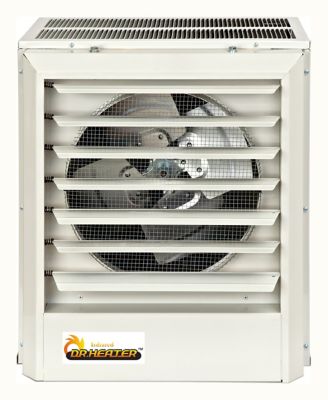
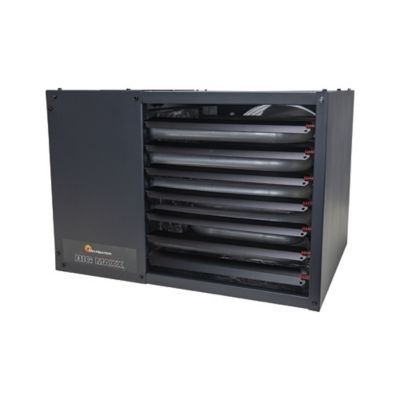
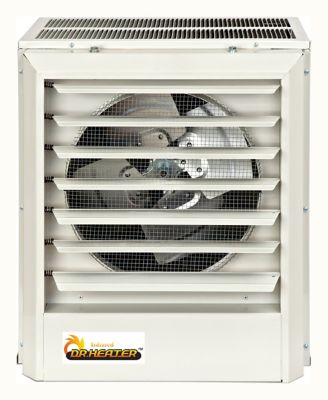
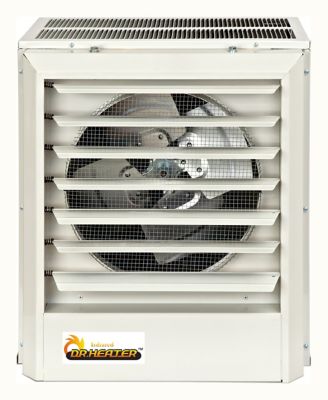
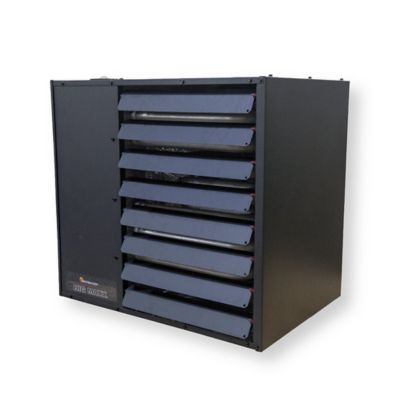
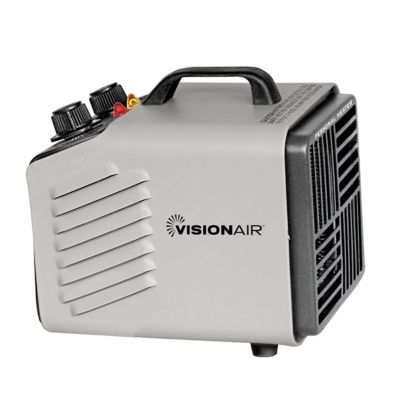
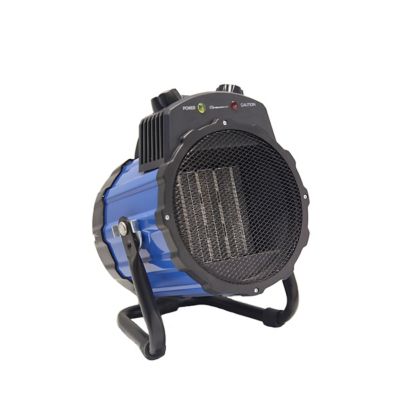
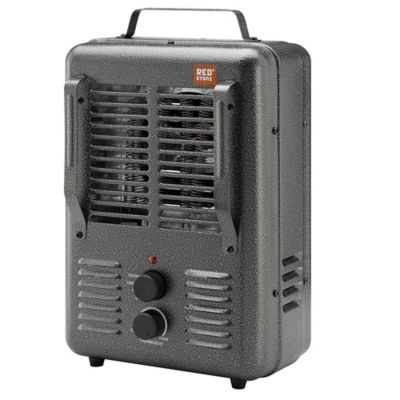
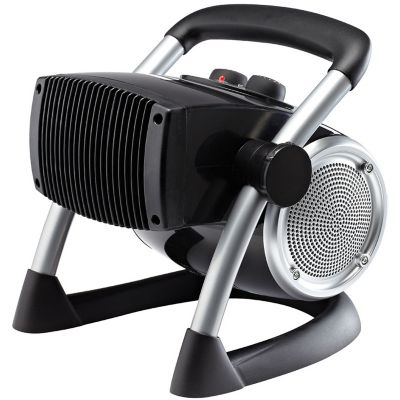
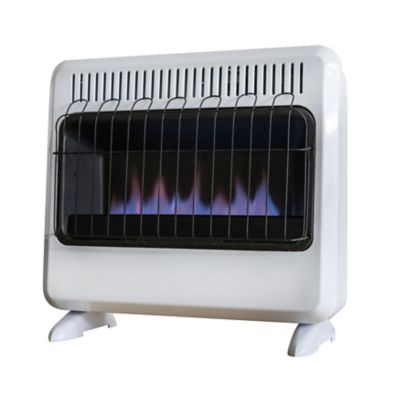
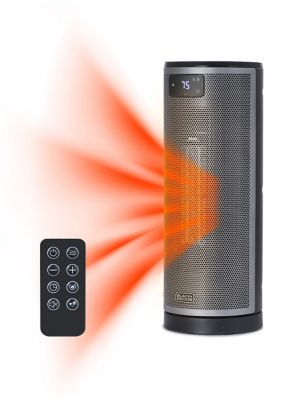
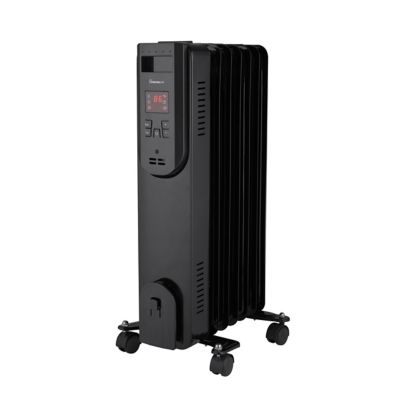
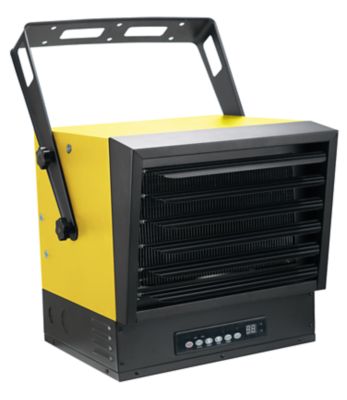
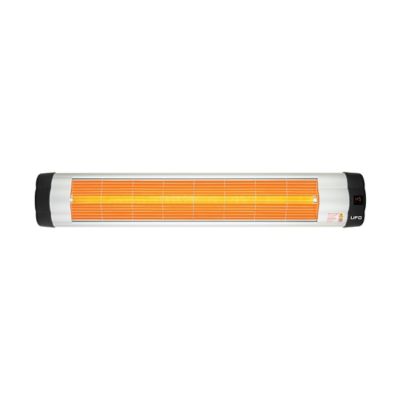
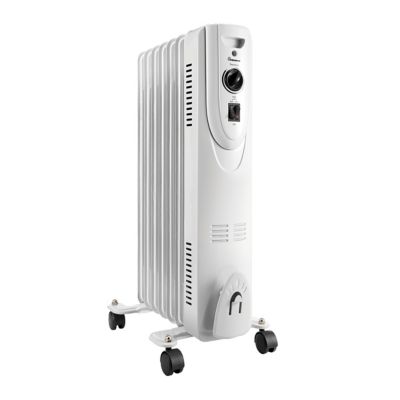
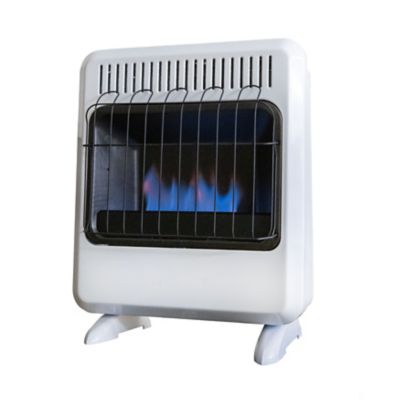
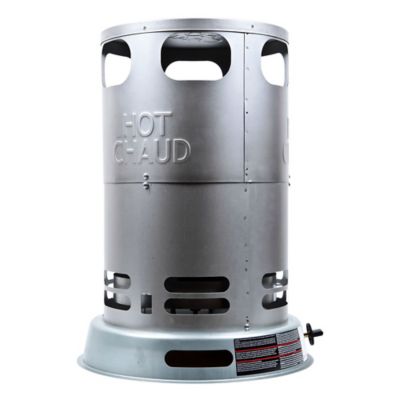
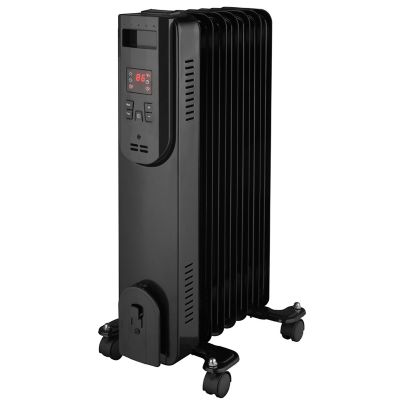
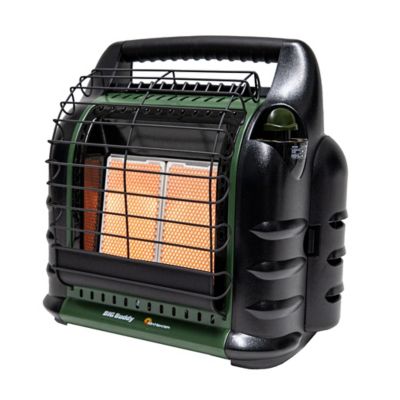
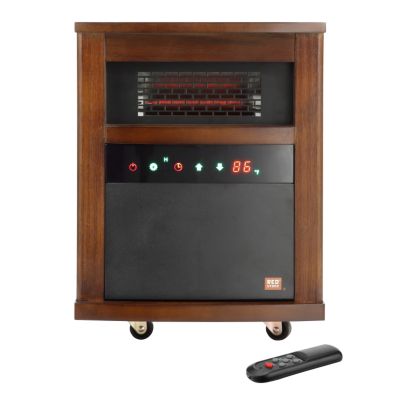
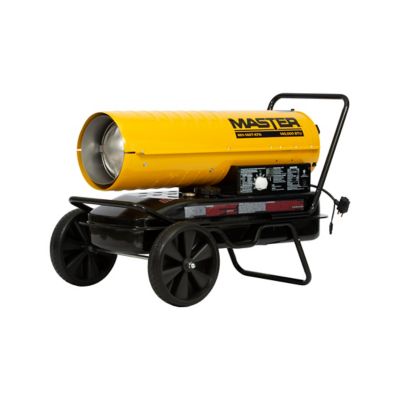
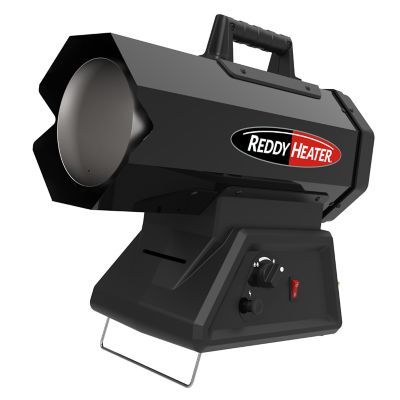
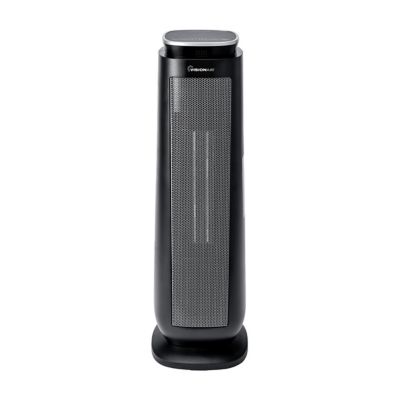
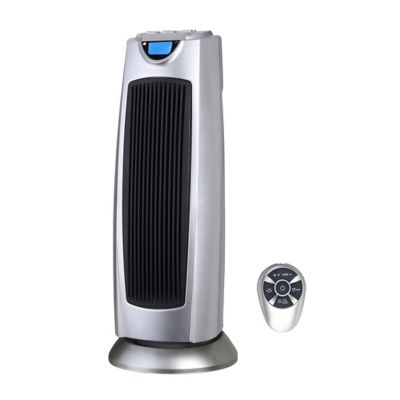
A unit heater is a self-contained heating appliance that warms a room or open work area, typically by blowing air across a heating element or heat exchanger without an extensive central duct system. Unit heaters are a practical fit for garages, farm shops, maintenance buildings, and other spaces where keeping the work area comfortable matters more than heating an entire property. Many mount overhead or on a wall, leaving floor space open for a tractor, workbench, tool cabinet, or parked truck. That elevated position also helps keep the heater out of everyday traffic, though mounting height and clearance requirements vary by model. Electric unit heaters generate heat with electrical resistance elements, while gas-fired versions commonly transfer heat from a burner through a heat exchanger. Hydronic models draw heat from hot water supplied by a compatible boiler system. Across these types, a fan helps move warm air into the space rather than leaving it concentrated around the appliance. Adjustable louvers on some designs allow the discharge direction to be set within the manufacturer’s limits, helping direct warmth toward the work area. Steel cabinets and metal grilles are common construction features, with finishes that help protect exterior surfaces from everyday wear. Cabinet construction, mounting hardware, and access to service panels all matter in a working building where equipment needs to fit around daily chores. A shop where someone spends an evening repairing a mower has different heating demands than a large equipment bay with tall doors opening throughout the day. Unit heaters can serve either setting when the appliance, heating capacity, and installation match the space. Their compact footprint makes them especially useful where a freestanding heater would take up valuable room. For a woodworker, mechanic, acreage owner, or someone who keeps a busy home garage, the appeal is straightforward: heat where the work happens, with equipment positioned to leave the floor clear. An open interior generally gives the fan more room to circulate air than a building divided into several separate rooms.
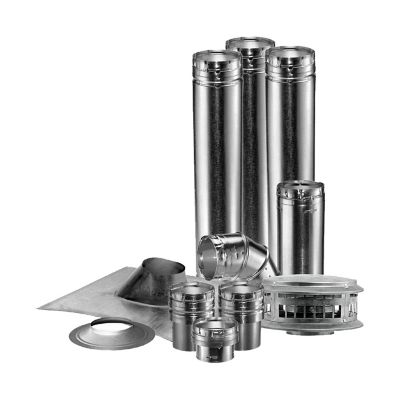
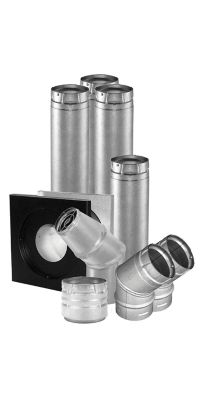
Heating capacity is one of the biggest differences among unit heaters, but square footage alone does not tell the whole story. Ceiling height, insulation, window area, air leakage, outdoor design temperatures, and the frequency of overhead-door openings all affect the heating load. A tightly enclosed garage and a drafty shop can need very different heat output even when their floor dimensions match. Output may be listed in BTUs per hour or watts; one kilowatt of electric heating equals about 3,412 BTUs per hour. On fuel-burning equipment, rated fuel input and delivered heat output are not the same figure, so those specifications deserve a close look. A professional heat-load calculation provides a stronger basis for sizing than a broad square-footage estimate, particularly in tall or poorly insulated buildings. Fan airflow and discharge reach matter alongside heating output, since warm air needs to circulate through the occupied area. Fuel choice also has to match the building. Electric models need an electrical supply and circuit capacity that meet their ratings, and many require a dedicated, hardwired connection. Natural gas and propane models require the correct fuel connection, pressure, combustion-air provisions, and venting arrangement specified for the appliance. Hydronic models need compatible water temperatures, flow, piping, and freeze protection where applicable. Installation belongs with qualified professionals who can account for local codes, permits, and the building’s existing systems. Mounting supports must carry the heater’s weight, and required clearances must remain open around the cabinet, air inlet, outlet, and venting. Ordinary unit heaters are not automatically suitable for areas containing combustible dust, flammable vapors, corrosive chemicals, or heavy moisture. A feed-handling area, spray-finishing space, or livestock building calls for a closer look at the environment and the equipment’s listed applications. Separated-combustion designs draw combustion air from outdoors, but that feature alone does not make a heater appropriate for a hazardous location. Fuel-burning installations also call for carbon monoxide alarms placed according to applicable requirements and alarm instructions.
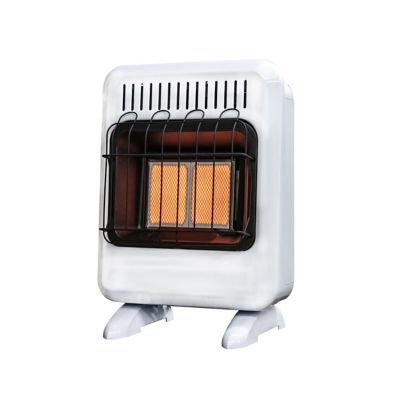
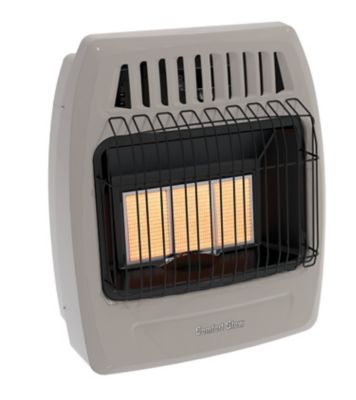
Day-to-day convenience often comes down to controls, airflow, and how the building gets occupied. A thermostat can help maintain the selected temperature without someone repeatedly switching the heater on and off. Depending on the design, controls may be built into the cabinet or connected to a separate wall thermostat. Compatibility matters, since not every thermostat works with every heater or control voltage. In a shop with intermittent activity, suitable programmable controls can support a heating schedule that follows the workday, while freeze-protection settings may help protect a space when the appliance and installation are intended for that purpose. Neither feature replaces proper protection for exposed plumbing or other freeze-sensitive equipment. Thermostat placement also affects operation: direct discharge air, sunlight, drafts, and nearby heat sources can distort the temperature reading. Fan sound deserves consideration in a small garage where conversation or detailed bench work is part of the day, and service access matters when a heater sits above shelving or equipment. Routine care generally includes keeping the surrounding area clear, checking that inlet and outlet openings remain unobstructed, and following the manufacturer’s cleaning and inspection schedule. Power must be disconnected and the appliance allowed to cool before any owner-permitted cleaning; burner, venting, electrical, and heat-exchanger work calls for a qualified service professional. Combustion and ventilation openings must never be blocked to hold more heat inside. For a smaller enclosed room where overhead air distribution is not the best fit,
Wall Heaters offer another heating category worth comparing, with their own mounting, clearance, and power requirements. The best match is equipment suited to the building’s layout and intended activity, not simply the highest heat rating. From a bench tucked beside the garage door to a roomy farm repair shop, the important details stay grounded in everyday work: enough heat for the space, clear room for airflow, controls that suit the routine, and access for ongoing care.