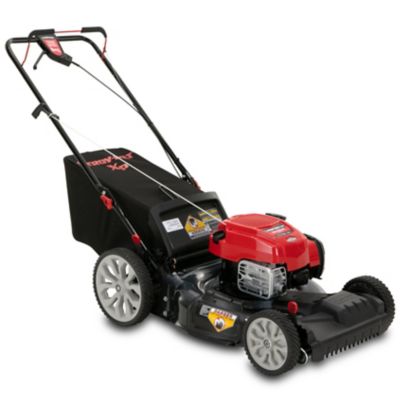
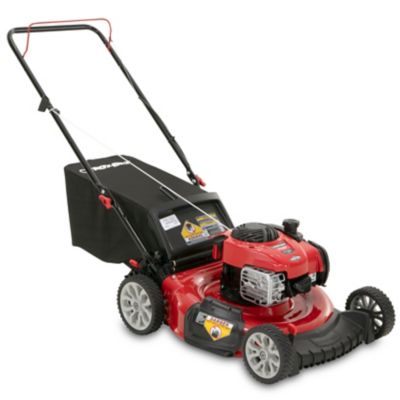
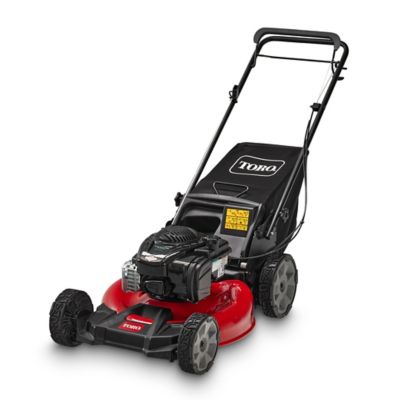
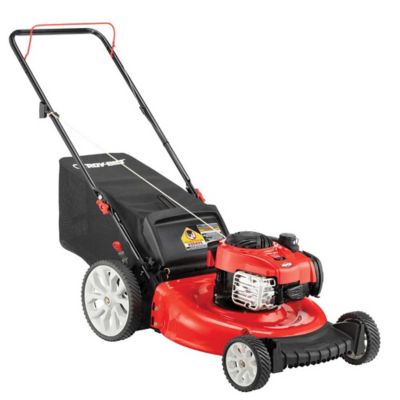
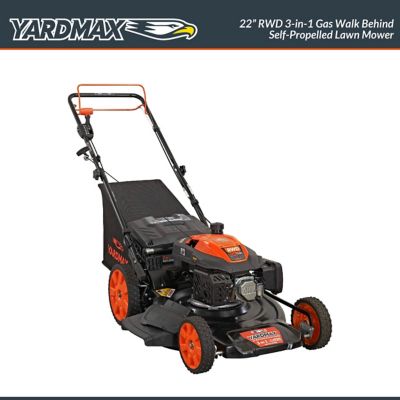
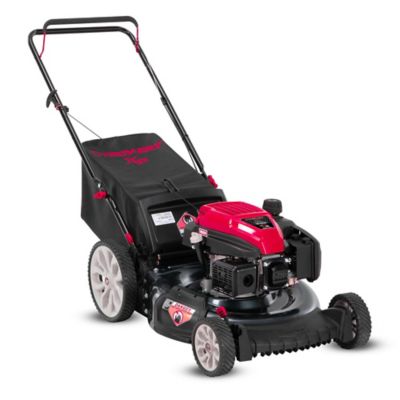
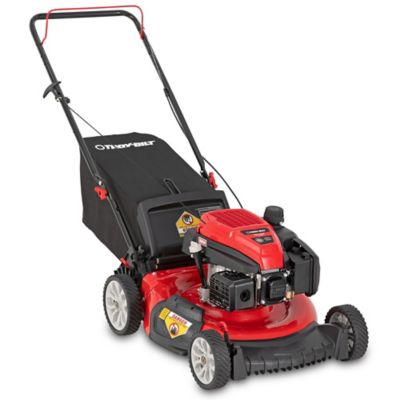
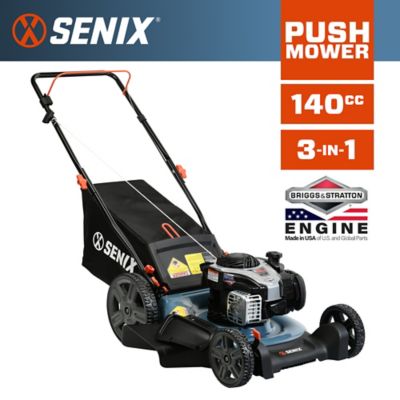
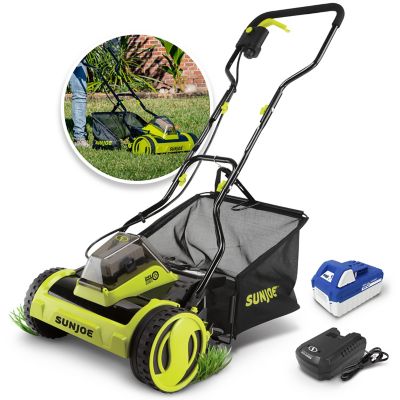
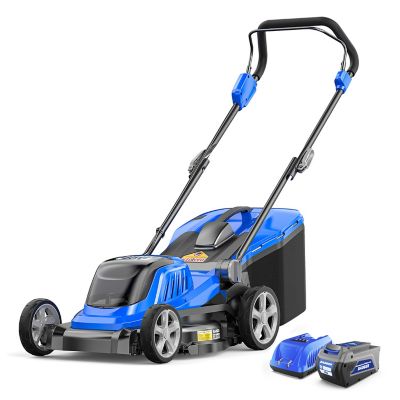
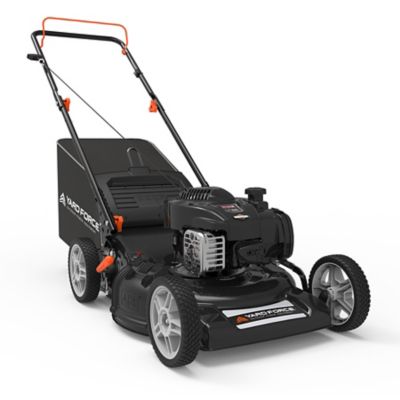
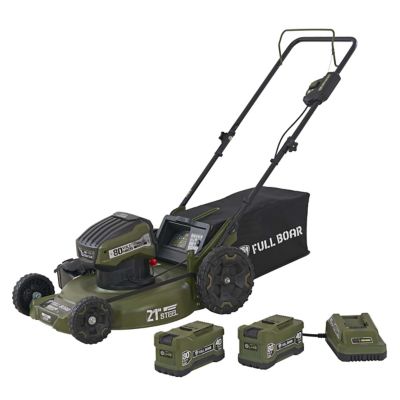
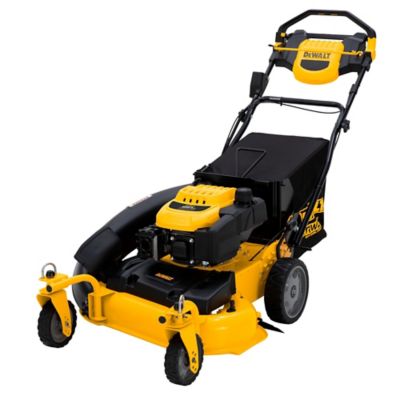
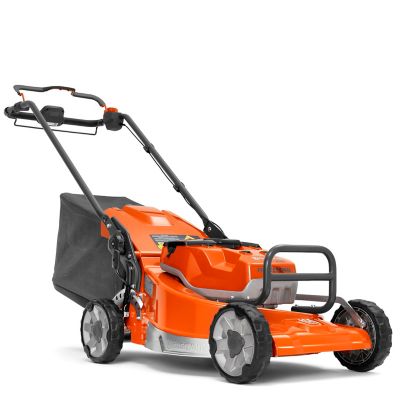
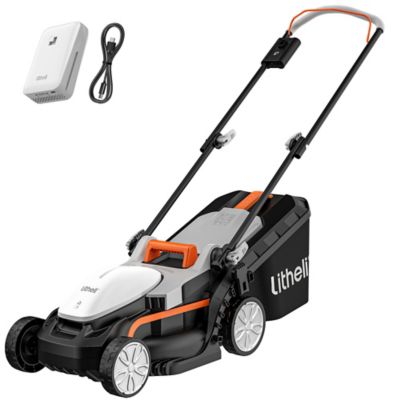
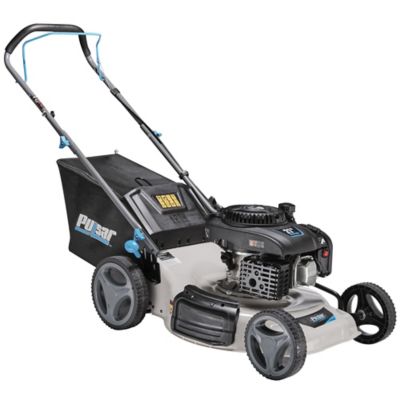
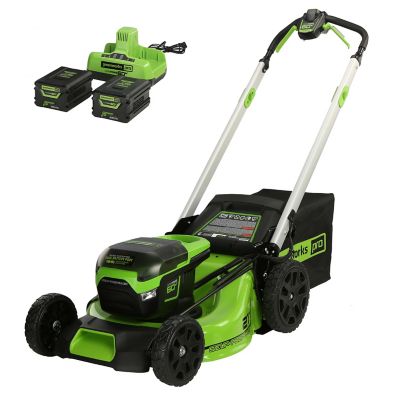
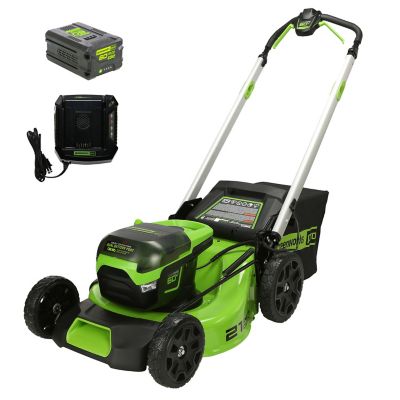
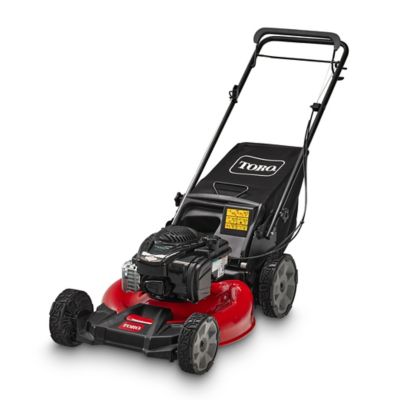
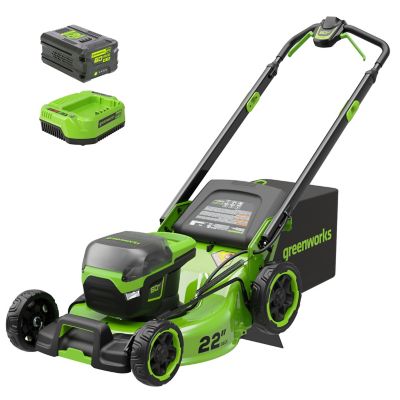
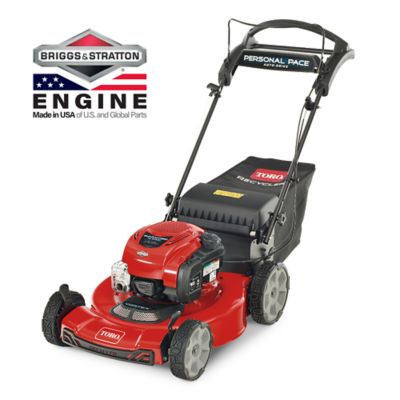
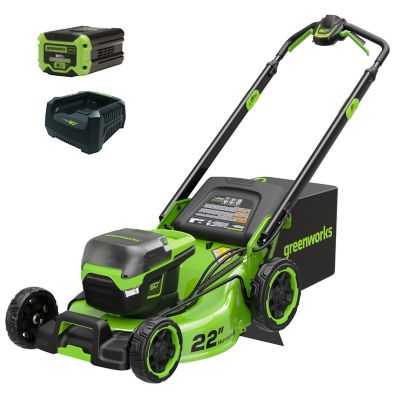
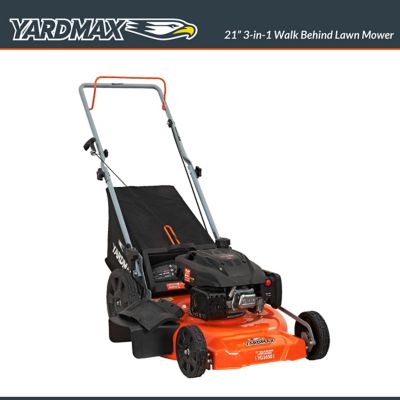
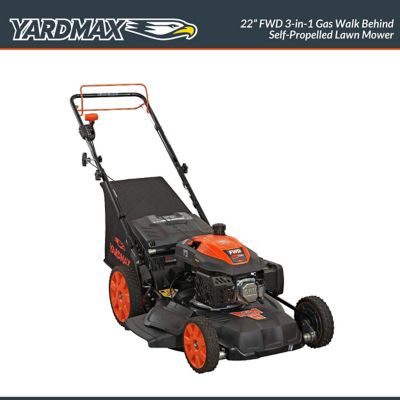
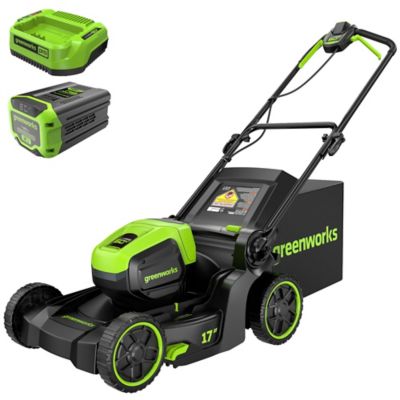
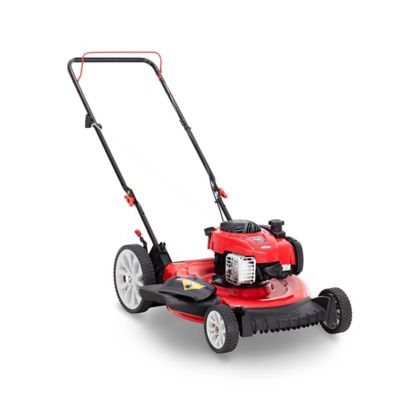
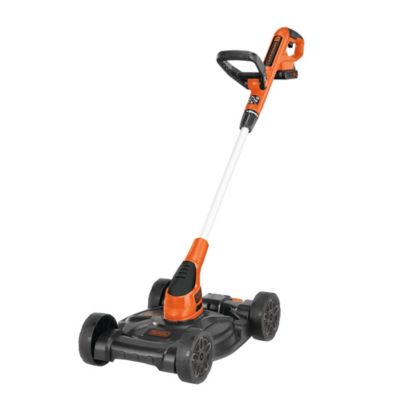
A push mower with a bag cuts grass and collects the clippings in an attached catcher, keeping loose cuttings off the lawn instead of scattering them across it. That makes a bagging push mower a practical fit for yards where grass tends to track onto the porch, collect along a walkway, or stick to the kids’ shoes. It also helps keep cuttings out of flower beds and away from the edge of a vegetable patch. The mower still needs someone behind the handle to move it along; on a powered push mower, the engine or motor turns the blade rather than driving the wheels. Gas, battery-powered, corded electric, and certain manual reel mowers can all offer grass collection, though their cutting systems and catcher designs differ. Gas-powered push mowers pair an engine with a rotary blade and need fuel, oil checks where applicable, and routine engine care. Battery-powered push mowers run on rechargeable batteries, making battery capacity, charging time, and compatibility with the mower important parts of the setup. Corded electric mowers need a suitable electrical connection and an outdoor-rated extension cord that meets the manufacturer’s requirements. Manual reel mowers with catchers rely on forward movement to turn the cutting reel and generally suit smaller, fairly level lawns with grass kept at a manageable height. For any power source, the amount of lawn matters, but so does the route across it. A compact yard broken up by fence corners, garden beds, and a clothesline can call for more maneuvering than a larger open rectangle. Gates, storage doors, and narrow strips beside an outbuilding also affect how comfortably a mower fits the property. Bagging is especially handy around places where people walk, sit, or play, while a mower with approved mulching and discharge settings offers flexibility for other parts of the yard. Those functions depend on the mower’s design and the correct attachments, so not every bagging mower handles clippings the same way.
Cutting width, wheel design, handle position, and collection capacity all shape how a push lawn mower with a bag feels over a full mowing job. A wider deck covers more ground on each pass, while a narrower deck can be easier to work between a fence and a raised bed. Larger rear wheels may roll more easily over uneven ground, but a push mower still takes effort to move, especially as the grass catcher fills. Adjustable handle positions can help different operators find a comfortable grip without reaching too far or walking too close to the deck. Cutting-height settings matter just as much as deck size because different lawn grasses have different needs. Taking off too much grass at once leaves a heavier load for the blade and collection system, while regular mowing at an appropriate height supports a more even cut. On rotary mowers, bagging depends on airflow carrying clippings through the discharge opening and into the catcher. A clean chute, an appropriate blade, and a bag that can vent air all contribute to that process. Thick or moisture-heavy clippings can clump and restrict the passage, so a large bag alone does not guarantee fewer interruptions. Catcher capacity also brings a trade-off: more room for grass can mean fewer stops, but a full bag weighs more to lift and carry. A broad opening, a comfortable carrying handle, and a straightforward attachment system can make emptying less awkward beside the compost pile or collection container. Materials deserve a close look, too. Steel mower decks need attention anywhere chipped paint exposes metal, while polymer decks have different care requirements outlined by the manufacturer. Grass catchers often combine a fabric body with a supporting frame and rigid connection points. Intact seams, unobstructed fabric, and secure mounting hardware help the collection system do its job. The best fit is a mower that matches both the lawn and the person handling it, rather than simply having the widest cut or biggest bag.
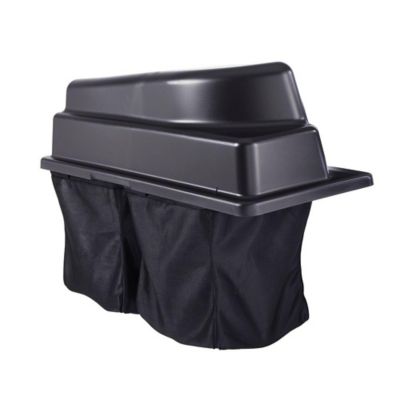
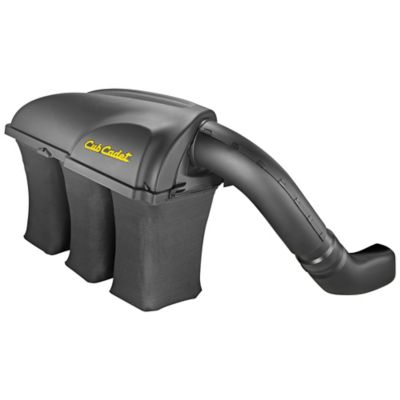
The collection bag is part of the mower’s working system, not just a sack hanging behind the handle. Its opening, frame, attachment points, and clearance must match the mower, and a similar-looking replacement may not connect or function properly. For a mower that calls for that particular replacement category, the
Toro Lawn Mower Bag page provides a related place to look, with compatibility still dependent on the mower’s model information and the replacement part specifications. Some replacements include the fabric catcher only, while others may include a frame or additional components, so the listed contents matter. A bag that drags, slips off its mounting points, or leaves gaps at the connection needs attention before mowing continues. Routine care helps keep both the mower and catcher ready for the next round of yard work. Packed grass beneath the deck or inside the chute can interfere with cutting and collection, and a catcher left full between jobs can hold moisture and develop odors. Emptying the bag after mowing and allowing it to dry before storage helps keep that mess out of the shed. Cleaning methods vary by material, so the mower and bag instructions should determine whether brushing, rinsing, or another method is appropriate. Before clearing a blockage, inspecting the blade area, or removing packed clippings, the mower needs to be shut down, all moving parts stopped, and its power source disconnected as directed in the manual. Stones, wire, sticks, and other debris also belong out of the mowing path; a collection bag does not make those objects safe to run over. Collected grass can go into a suitable compost system or a local yard-waste collection stream where accepted, with any lawn-treatment restrictions taken into account. For homeowners tending a small front lawn, keeping paths clear around a country home, or maintaining fenced patches that larger mowing equipment cannot reach, a bagging push mower offers a manageable way to cut grass and gather the cuttings in the same pass.