


GPS Dog Fences
Give your dog room to roam with boundaries you map right from your phone. Shop app-defined GPS dog fences from Dogtra, PetSafe and Halo, with options for at-home containment and select systems that add location tracking. No boundary wire to bury means less digging around your property, but choosing the right fit still matters. Compare acreage requirements, collar sizing, charging needs and subscription plans before you get started.
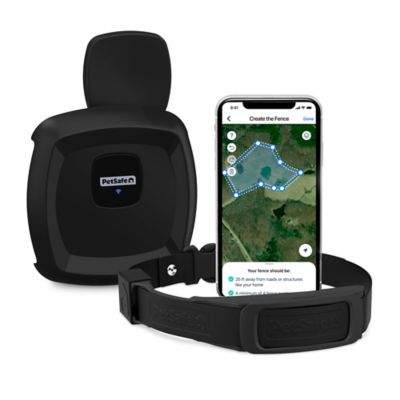
PetSafe
PetSafe 3/4 ac Guardian GPS Dog Fence
A GPS dog fence for 3/4-acre properties with app setup, rechargeable collar, and no subscription required.
What customers like:
Accurate GPS tracking
Long battery life
No subscription required
Waterproof collar
Easy setup
$464.99
$449.95
SALE
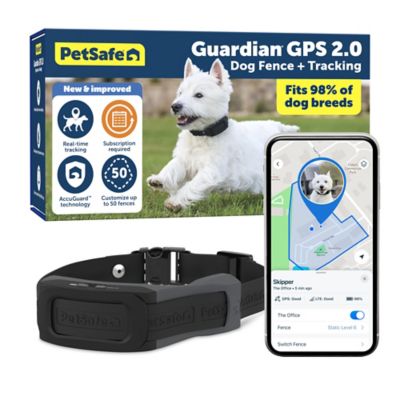
PetSafe
PetSafe Guardian GPS 2.0 Dog Fence + Tracking
A wireless GPS dog fence and tracker with real-time location, dual-frequency GPS, and app-guided setup.
What customers like:
Customizable and flexible fence boundaries
Easy setup and installation
User-friendly and responsive app
$449.99
$449.99
SALE
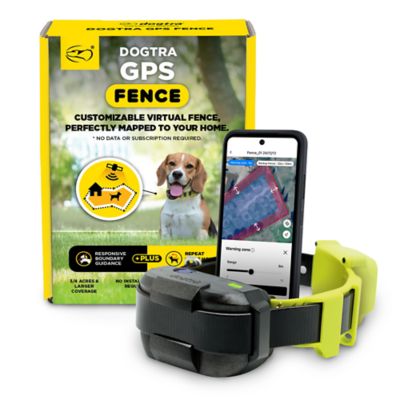
Dogtra
Dogtra GPS Fence
A wireless black GPS-based dog containment system with customizable boundaries, app control, and waterproof design.
$199.99
$199.99
SALE
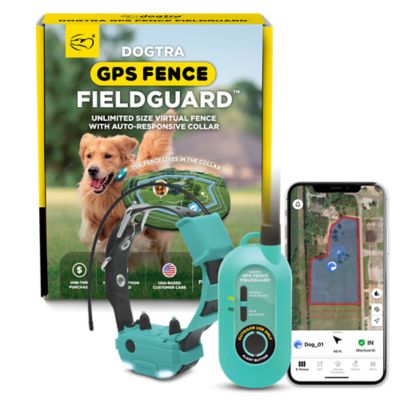
Dogtra
Dogtra Dogtra GPS Fence Fieldguard
A teal GPS containment system with live tracking, virtual fencing, remote correction, and IPX9K waterproof protection.
$429.99
$429.99
SALE
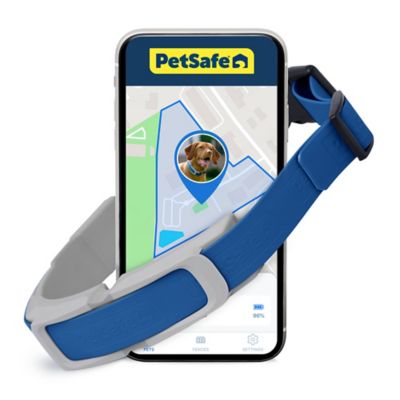
PetSafe
PetSafe 3/4 ac Guardian GPS + Tracking Dog Fence Collar, World's Most Reliable GPS Fence Technology
A GPS dog fence collar with AccuGuard technology for real-time tracking and up to 20 custom wireless boundaries.
What customers like:
Connectivity to app
Accurate and effective
Easy to use with phone
Programmable for multiple areas
Comfortable fit
$249.99
$249.99
SALE
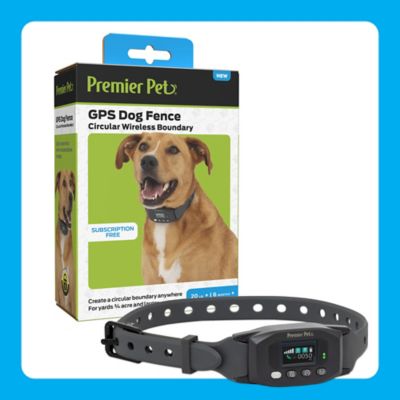
Premier Pet
Premier Pet GPS Dog Fence with Circular Wireless Boundary
A GPS-powered wireless dog fence with adjustable boundaries and a water-resistant, rechargeable collar.
What customers like:
Water-resistant and durable
Effective for large areas
Reliable boundary accuracy
Easy setup
No subscriptions or apps needed
$139.99
$139.99
SALE
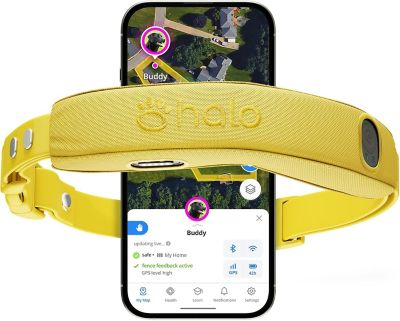
Halo
Halo Wireless Dog Fence System and GPS Dog Collar
A sunburst GPS collar and wireless fence system with dual-frequency tracking, 48-hour battery, and rapid charging.
$419
$419
SALE
FAQ
You map a virtual boundary in a compatible app, and the collar uses GPS location information to respond as your dog approaches or crosses it. Depending on the model, feedback can include tone, vibration or static correction. Follow the manufacturer's boundary-training instructions. These systems aren't physical barriers, don't keep other animals out and aren't a substitute for supervision.
Choose GPS when you want app-mapped boundaries without burying wire, provided your property meets the system's requirements. Compare in-ground dog fence systems if you prefer a boundary laid out with wire. A transmitter-based wireless pet fence may suit a circular containment area. Check each option's coverage, installation needs and property restrictions.
Check the exact model's coverage limits and site requirements rather than acreage alone. Dogtra GPS Fence and PetSafe Guardian GPS Dog Fence are intended for properties larger than 3/4 acre, but that minimum doesn't establish every property's suitability. Compare dog fence systems for 5-acre properties and review the manufacturer's guidance on GPS reception and boundary placement.
It depends on the model. Dogtra GPS Fence and PetSafe Guardian GPS Dog Fence list no subscription requirement; the Guardian GPS model does not include location tracking or portability. PetSafe Guardian GPS 2.0 Dog Fence + Tracking requires a subscription and cellular service. The Halo system also requires a membership to activate GPS and fence features. Check the current plan terms before choosing.
Some systems support multiple dogs, with a compatible collar for each one. For example, PetSafe Guardian GPS Dog Fence supports up to eight dogs with additional Guardian Add-A-Dog collars purchased separately. When browsing replacement and additional dog fence collars, match the exact system and generation—not just the brand.
Check your dog's weight and neck measurement against the specific collar's requirements. PetSafe Guardian GPS Dog Fence is designed for dogs over 25 pounds with neck sizes from 13 to 28 inches, while Guardian GPS 2.0 lists dogs 10 pounds and larger. Also compare charging needs, water-protection ratings and training instructions. An app-controlled fence still needs a properly fitted collar and consistent training.