Walk-Behind Leaf Blowers

When the leaves keep falling, put your cleanup power on wheels. Walk-behind leaf blowers help move leaves across open lawns and driveways without carrying the engine on your back. Explore gas-powered models from SuperHandy, Brave, Champion Power Equipment and more, then compare airflow, wheel design and discharge controls to find a good fit for your property.
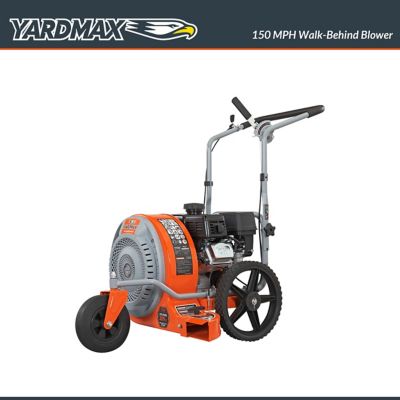
YARDMAX 150 MPH/1,200 CFM 209cc Gas Walk-Behind Leaf Blower
YARDMAX YARDMAX 150 MPH/1,200 CFM 209cc Gas Walk-Behind Leaf Blower
A powerful gas blower with a 209cc engine, 150 MPH wind speeds, and 1200 CFM air flow.
(28)
$379.99 $379.99
SALE
What customers like:
Easy to assemble
Adjustable throttle and deflector
Easy to push
Powerful performance
Works as expected
$379.99 $379.99
SALE
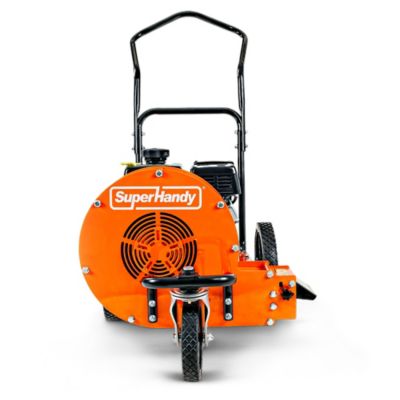
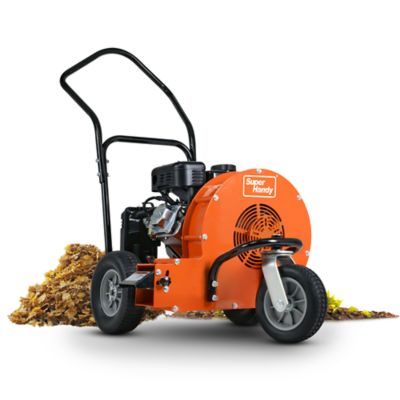
SuperHandy 150 MPH/1,270 CFM 209cc Gas Walk-Behind Leaf Blower
SuperHandy SuperHandy 150 MPH/1,270 CFM 209cc Gas Walk-Behind Leaf Blower
A powerful walk-behind leaf blower with a 7HP engine, 150 MPH wind force, and durable steel frame.
(16)
$499.99 $499.99
SALE
$499.99 $499.99
SALE
SuperHandy 150 MPH 209cc Gas Walk-Behind Leaf Blower
SuperHandy SuperHandy 150 MPH 209cc Gas Walk-Behind Leaf Blower
A powerful gas walk-behind leaf blower with a rust-resistant steel frame and adjustable airflow direction.
(4)
$529.99 $529.99
SALE
$529.99 $529.99
SALE
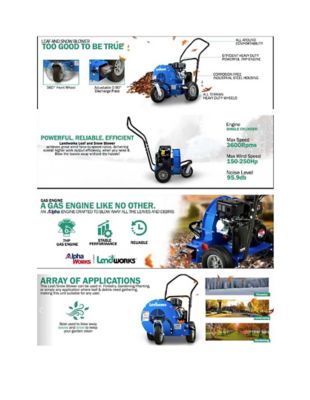
Landworks 150-200 MPH/1,270-2,000 CFM 212cc Gas Walk-Behind Leaf Blower
Landworks Landworks 150-200 MPH/1,270-2,000 CFM 212cc Gas Walk-Behind Leaf Blower
A powerful gas leaf blower with a 7Hp engine, 150-200 MPH wind force speed, and a heavy-duty metal impeller.
(2)
$549.99 $549.99
SALE
$549.99 $549.99
SALE
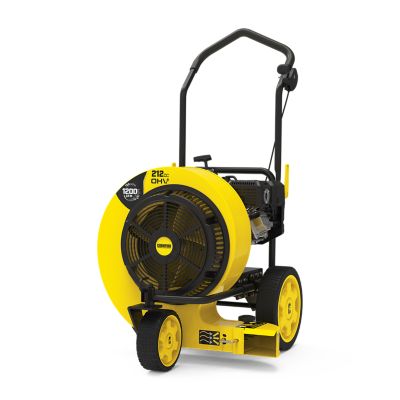
Champion Power Equipment 212cc 1200 CFM Walk-Behind Leaf Blower
Champion Power Equipment Champion Power Equipment 212cc 1200 CFM Walk-Behind Leaf Blower
A gas-powered walk-behind leaf blower with adjustable throttle, ergonomic handle, and 1200 CFM air volume.
(1)
$649.99 $649.99
SALE
$649.99 $649.99
SALE
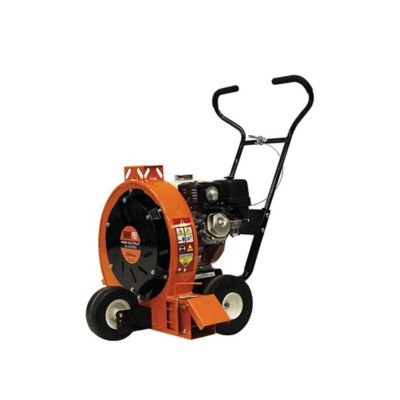
Brave 150 MPH 270cc Gas Walk-Behind Leaf Blower
Brave Brave 150 MPH 270cc Gas Walk-Behind Leaf Blower
A gas-powered walk-behind leaf blower with an aluminum impeller, steel construction, and adjustable handles.
(0)
$1999.99 $1999.99
SALE
$1999.99 $1999.99
SALE
Walk-behind leaf blowers are wheeled outdoor power machines that move fallen leaves and loose yard debris with a concentrated stream of air. Their main advantage is air volume: many machines move more than 1,000 cubic feet per minute, or CFM, while larger designs can move several thousand CFM. That airflow helps push broad piles across open ground, making these blowers a practical fit for large lawns, farmsteads, commercial grounds, and long paved drives. Compared with carrying a handheld or backpack blower, rolling the equipment keeps the machine’s weight off your arms and shoulders, though steering and pushing still take effort. Among Fall Leaf Blowers, walk-behind designs are especially suited to properties where leaves collect in wide stretches rather than just a few tight corners. Picture a line of mature maples along a lane, a broad side yard beside the barn, or a paved gathering area covered after a windy day. Those spaces give a wheeled blower room to work without constant turns around flower beds and porch steps. CFM describes how much air the machine moves, while miles per hour, or MPH, describes the speed of that air. Both matter, but neither number tells the whole story. Outlet shape, discharge direction, leaf moisture, and the surface underneath all affect how well a pile moves. Dry, loose leaves generally move more readily than wet leaves pressed into grass, and a thick mat may need loosening before airflow can carry it along. Most walk-behind blowers gather debris into rows or piles rather than vacuuming or shredding it, so the cleanup still needs a destination, such as an appropriate collection area or compost pile. Property owners, grounds crews, and landscaping businesses often favor this equipment for repeat cleanup across open spaces, especially where carrying a blower for extended stretches becomes tiring.

The right fit depends as much on the ground beneath the wheels as the size of the property. A wide, mostly level lawn presents different demands than a narrow path with tree roots, gates, and sharp turns. Machine width, overall weight, handle height, and turning room all affect how comfortably a walk-behind leaf blower moves around a property. Large-diameter wheels can roll across uneven turf more easily than small wheels, while pneumatic tires may cushion the ride over rough patches. Solid tires avoid flats, though their feel on bumpy ground can differ. Wheel construction, bearings, and axle support deserve attention when the route includes repeated trips between the shed, driveway, and back lot. Push models depend on the operator to move the machine, while self-propelled designs provide powered travel; neither arrangement removes the need to follow the manufacturer’s slope limits. A steep bank or ditch edge is not the place to trade footing for reach. Housing materials also vary. Steel housings can add weight and rigidity, while engineered polymer housings may reduce weight and resist rust. The frame, impeller, protective guards, and fasteners all contribute to how the equipment handles regular work and vibration. Discharge controls are another practical consideration. Depending on the design, an adjustable outlet or directional attachment can help place airflow along a driveway edge or steer leaves toward a collection row. Controls within comfortable reach reduce awkward stops and stretches, especially when moving between turf and pavement. Around parked trucks, windows, livestock areas, and garden beds, controlled airflow matters more than simply running at full throttle. Stones and other hard objects can become projectiles, so loose gravel calls for caution rather than a stronger blast. Eye protection, hearing protection, sturdy footwear, and keeping people and animals clear of the discharge path belong with the job. Engine sound and airborne dust also matter near neighboring homes, shared lanes, and occupied buildings.

Engine-powered walk-behind leaf blowers need routine attention to keep cleanup from turning into an afternoon in the shop. Most gas-powered designs have four-cycle engines, but fuel requirements, oil specifications, and service intervals belong to the individual machine’s manual. Engine size can provide useful context, yet it should not replace airflow ratings and handling details when comparing equipment. A larger engine does not automatically make a blower easier to steer through a gate or better suited to a small yard. Accessible oil checks, air filters, fuel caps, and service points can make regular upkeep less of a chore. Dusty work around gravel drives and dry leaf piles can load an air filter quickly, so inspection matters even when the engine still seems to run normally. Leaves should stay clear of cooling openings and the air intake, and loose hardware, worn tires, or a damaged guard should not wait until the next big cleanup. Before clearing a blockage or reaching near the impeller, the engine needs to be off, moving parts fully stopped, and the ignition disabled as the manual directs. Proper storage matters, too: a clean, dry spot under cover helps protect metal parts, cables, and controls, while fuel storage or draining should follow the engine maker’s directions. Letting the engine cool before putting the machine away is part of that routine. For occasional home cleanup, straightforward controls and manageable storage dimensions may matter most. For repeated work on acreage or managed grounds, comfortable handling and easy access for maintenance become especially valuable. A blower that rolls comfortably through the shed doorway and follows the property’s main cleanup routes is a better match than one chosen on airflow alone. With room to maneuver and a sensible place to collect leaves, walk-behind leaf blowers bring concentrated clearing power to the stretches of ground where a rake becomes a long-haul job.

FAQ

Back to top