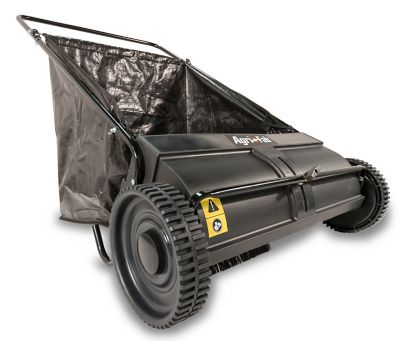
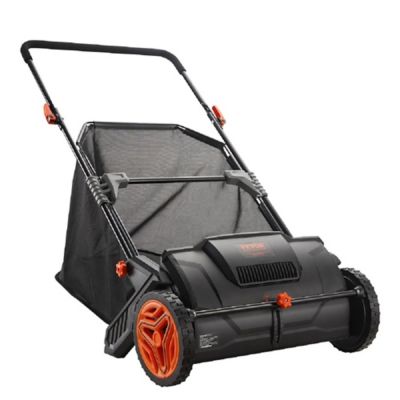
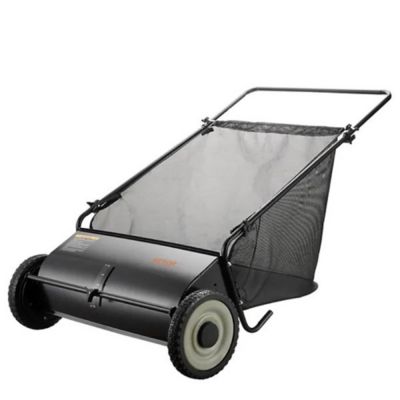
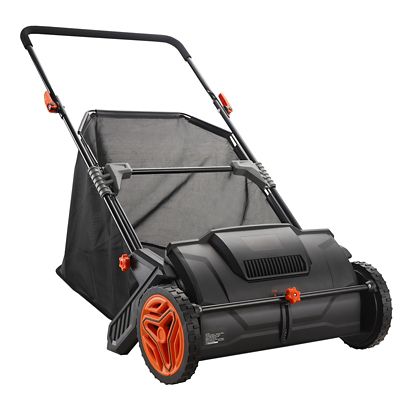
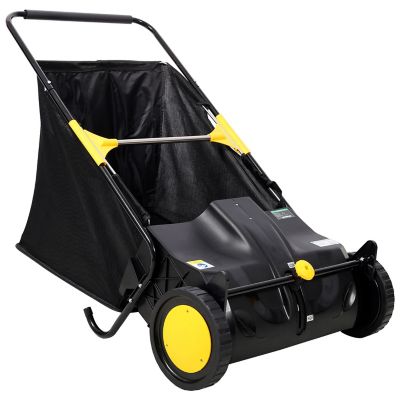
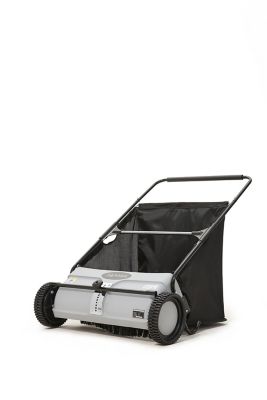
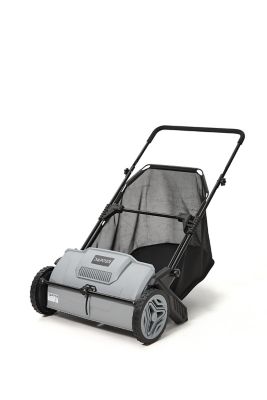
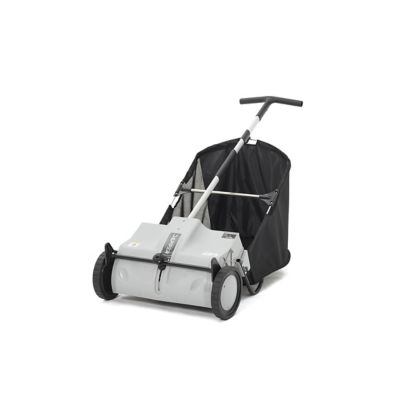
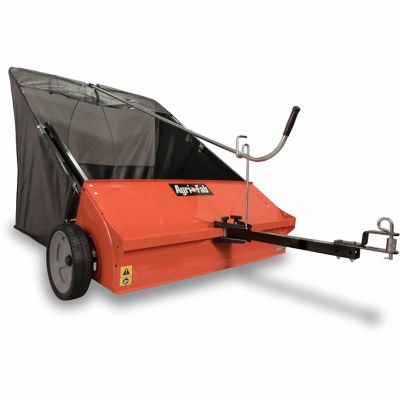
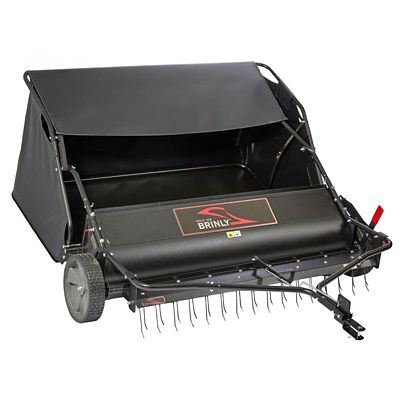
A push lawn sweeper is a manual, walk-behind yard tool that uses wheel-driven rotating brushes to lift leaves, loose grass clippings, and other light lawn debris into an attached collection hopper. As you push, the wheels turn the brush assembly, gathering material without a separate engine, power cord, or battery. That straightforward setup makes these lawn sweepers a practical fit for homeowners who want to tidy turf without dragging a rake through every stretch of grass. They can be especially handy around a farmhouse yard, beside a garden fence, or on the smaller lawn between a driveway and a shed, where maneuvering larger equipment can be awkward. The brushes collect loose material rather than cutting grass, so a sweeper complements a mower instead of replacing it. Pickup depends on the debris, turf, brush setting, and surface conditions. Dry, scattered leaves and loose clippings generally move into the hopper more readily than soggy piles pressed into the grass. Pine needles and small, light twigs may also fall within a sweeper’s working range, depending on its design and the maker’s recommendations, but stones, branches, and heavy litter call for separate removal. A push sweeper is not a leaf shredder, either; collected material usually stays close to its original size. That distinction matters when a leafy patch fills the hopper faster than a thin layer of clippings. For folks who keep a compost pile or gather leaves for mulch, a collection bag can make it simpler to move lawn debris to a designated spot. The appeal is a steady, hands-on way to clean up after mowing or gather loose leaves before they settle into a thick mat. There is still walking, pushing, turning, and emptying involved, and the amount of effort changes with the load and terrain. On a manageable stretch of lawn, though, a walk-behind sweeper can gather scattered debris in broad passes and cut down on repeated raking.
The right fit starts with the ground a push lawn sweeper needs to cover, not just the size of the yard on paper. A broad sweeping path can reduce the number of trips across an open lawn, while a narrower frame may be easier to steer between raised beds, through a garden gate, or around trees. Overall width matters at those tight spots, since the wheels or hopper may extend beyond the brush path. A larger hopper holds more material between stops, but a full bag adds weight and takes more effort to move and empty. For a fenced backyard with several corners, maneuverability may matter more than collecting the largest possible load. On a long, open stretch beside a barn, sweeping width and hopper capacity may carry more weight. Handle height, grip shape, and the position of the collection bag also affect comfort, especially when several people share lawn chores. Adjustable brush height helps match the sweeper to the grass and material being gathered. Brushes set too low can drag, increase pushing effort, and interfere with smooth wheel movement; brushes set too high may pass over debris. Wheel size and tread influence how the sweeper rolls over small surface irregularities and maintains the traction that drives the brushes. Deep ruts, steep slopes, exposed roots, and very soft ground can make a loaded push sweeper harder to handle. These tools generally make the most sense where there is room to walk at a steady pace and turn without wrestling the frame around obstacles. For bigger properties, the area needing cleanup may matter more than total acreage: a push model can suit the lawn near the house even when fields and pastures stretch well beyond it.
Lawn Mower Leaf Collector equipment is another category for shoppers considering collection options that work with mowing equipment, while a push sweeper keeps the task separate from a mower.
Construction and everyday care both play a part in how a push lawn sweeper handles repeated yard work. Depending on the design, materials may include a steel frame, molded plastic housing or wheels, synthetic brush bristles, and a fabric collection hopper. Metal components provide structural support, while plastic parts can help keep carrying and pushing weight down. The hopper needs to contain loose debris without becoming awkward to remove or empty, and its attachment points take repeated handling as loads come off the lawn. Seams, frame connections, wheel mounts, and brush supports are worth considering alongside hopper size and sweeping width. A bag that is manageable when empty can feel quite different when packed with damp leaves, so the removal method and distance to the compost pile matter in daily use. Storage fit deserves the same attention as working fit. A sweeper has to share space with the mower, wheelbarrow, hoses, and other tools, whether it lives in a shed or along a garage wall. Folding handles or collapsible hoppers, where included, can reduce the space it takes up between jobs. Keeping the hopper clear of packed debris and letting it dry before storage helps limit lingering moisture and odors. Grass wrapped around the axle or brush ends can hinder movement, while tangled cord, wire, or twine can damage moving parts. Inspection and cleaning belong with the sweeper parked securely and the brushes stopped, following the manufacturer’s care directions. Bristles, fasteners, and collection bags also benefit from occasional checks for wear or loosening. For homeowners managing their own lawn, family members sharing outdoor chores, or anyone tending a smaller patch of grass near outbuildings, a push lawn sweeper offers a straightforward way to collect scattered material. Matching its size and construction to the property helps keep cleanup practical, from the first pass along the fence to the last hopper emptied at the compost pile.