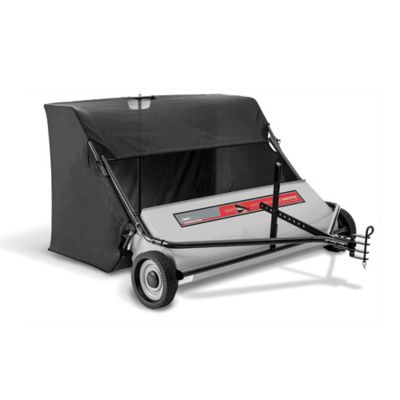
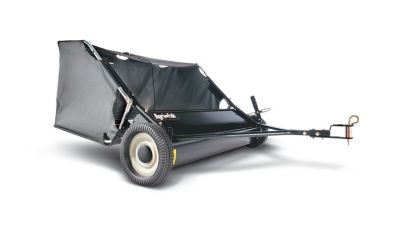
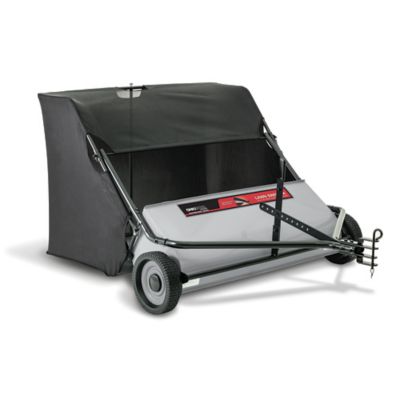
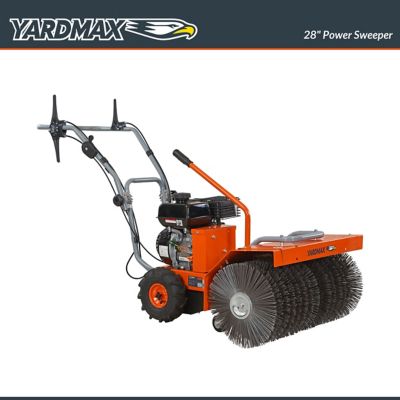
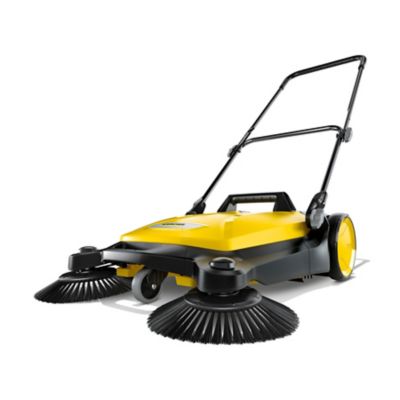
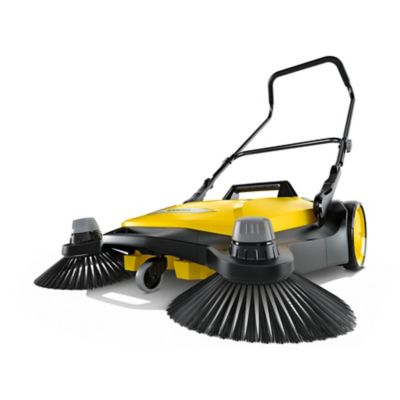
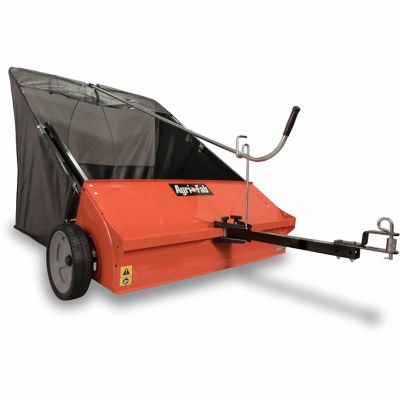
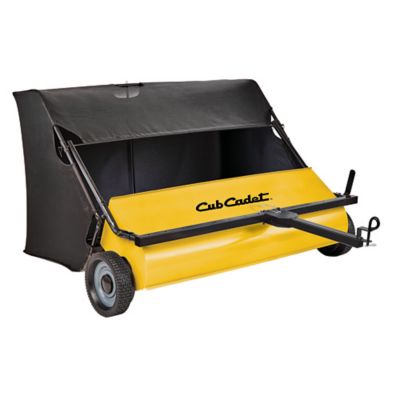
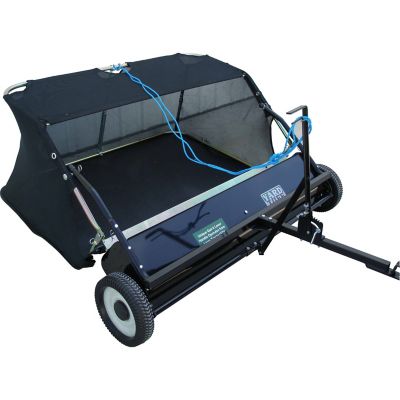
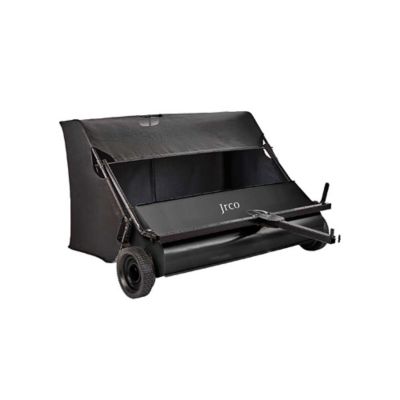
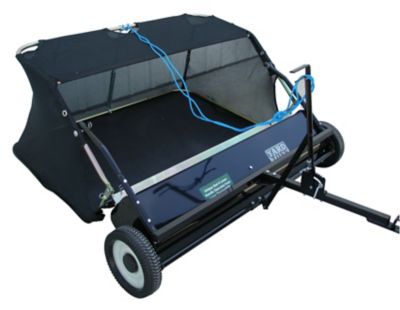
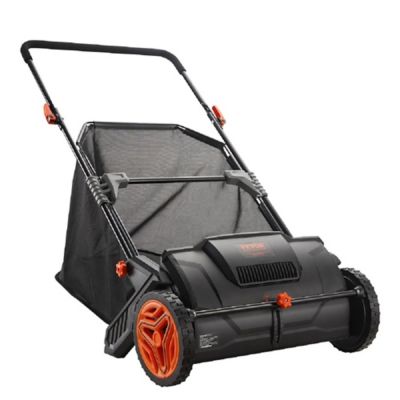
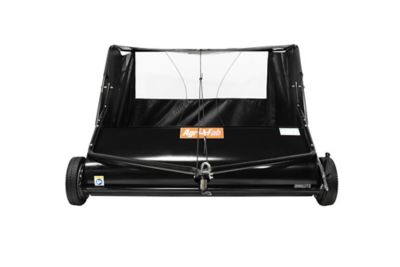
Lawn mower sweepers pick up loose yard debris with rotating brushes that toss it into a collection hopper. On most models, the wheels turn the brushes as the sweeper rolls, so there’s no separate engine or vacuum to run. A tow-behind lawn sweeper hooks to a compatible riding mower or lawn tractor, while a push lawn sweeper rolls by hand and works on its own. Both types can gather leaves, grass clippings, pine needles, and small twigs that are lying loose on the lawn. Where a rake pulls that material into piles, a sweeper picks it up along the way, leaving fewer piles to scoop by hand. That can make a difference on a long stretch of grass between the house and the barn, where even a thin layer of leaves adds up by the time it’s hauled off. Sweepers can also pick up the loose rows of clippings a mower sometimes leaves on a wide lawn. They generally do their best work when the brushes can lift the material without digging into the turf. Loose leaves are easier to gather than leaves pressed flat into the grass, and a heavy mat of clippings may take more than one pass. A sweeper isn’t a substitute for picking up rocks, thick branches, or anything that could jam the brush assembly. It also doesn’t collect clippings through the mower deck like a bagger does. Because the brushes work at ground level, they can gather debris that was already on the lawn before the mower came through. If leaves account for most of the cleanup, the
Lawn Mower Leaf Collector page covers other ways to collect them, including setups that gather material directly from the mower deck.
Fit comes down to the mower, the layout of the property, and where the hopper gets emptied. On a tow-behind sweeper, a hitch pin that fits is only part of the picture. The mower needs to be rated to tow the attachment, and the hitch height needs to fall within the sweeper’s adjustment range so the frame sits as intended. Owners of zero-turn mowers should check the mower’s towing guidance and leave enough room for the attachment to follow through a turn, particularly around fence posts and at the ends of narrow runs. Sweeping width is the span the brushes cover in a pass, not necessarily the overall width from wheel to wheel. A wide sweep path can cut down on passes across an open lot, but the overall width matters when the route goes through a gate or between a shed and a fence. A push sweeper may be the better fit for a smaller yard with garden beds or trees close together, where backing up and turning a mower with an attachment takes longer than walking the route. Hopper capacity changes the job, too. A larger hopper can mean fewer trips to the leaf pile, but a load of grass clippings can be heavier than it looks, even when the hopper isn’t full. That’s worth thinking about if the dump spot is up a grade or the last stretch calls for moving the sweeper by hand. Some tow-behind designs let the operator tip the hopper from the seat once the mower is stopped. Others are arranged for unloading by hand. The easiest setup to live with leaves enough room to pull up to the dump spot, empty the hopper, and turn back toward the lawn without backing into a tight corner. For someone who keeps several open stretches of grass tidy, that trip can matter nearly as much as how much the sweeper picks up in a pass.
The frame, brush assembly, wheels, and hopper each take a different kind of wear. Steel frames are common on tow-behind sweepers, and a coated finish helps protect the metal from rust where the coating stays intact. Stiff synthetic bristles have enough spring to flick leaves and clippings into the hopper, but running them too low can wear them down and make the sweeper harder to pull or push. Height adjustment is handy on a property where the grass is short by the driveway but taller at the back fence. The brushes should reach far enough to lift debris without scraping the soil or tugging at the grass. If a sweeper starts leaving a strip of pine needles behind, the brushes may be set too high for that stretch, or there may be stems wrapped around the brush shaft. It’s worth paying attention to the hopper fabric and seams as well, especially where the bag rests against the frame or folds during dumping. A fabric hopper keeps weight down and may fold for storage, but dragging it across gravel or letting it sag under a heavy load can wear the bottom. Emptying the hopper after a run and brushing off stuck clippings helps keep debris from building up around the moving parts. A hopper that’s dry before it’s folded is less likely to develop mildew in the shed. On a sweeper that sees regular laps around a big yard, replaceable brushes and wheels can help keep it in service after the parts that touch the ground start to show wear. Storage space matters just as much for a push sweeper tucked beside the mower as it does for a tow-behind parked in an equipment bay. A folding or removable hopper can leave more room to get past it, especially when the rake, mower, and sweeper all share the same corner.