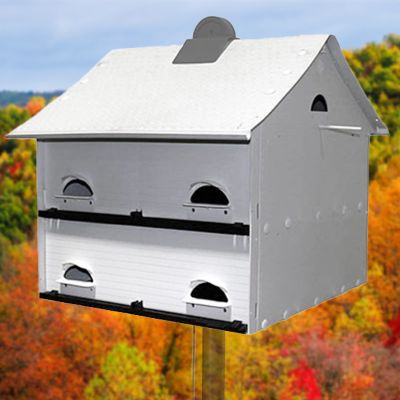
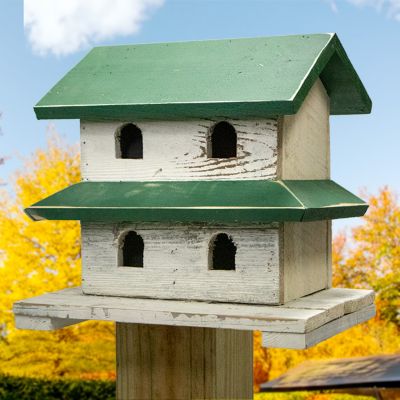
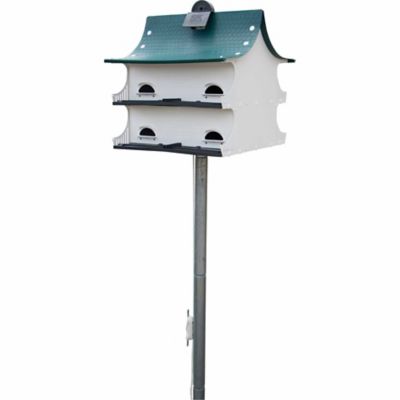
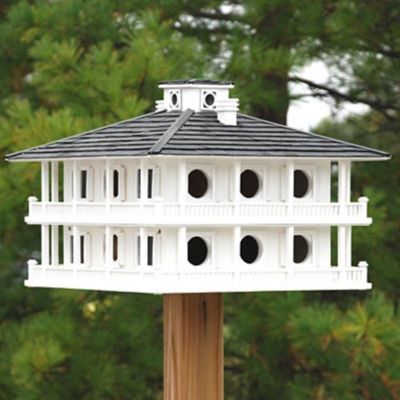
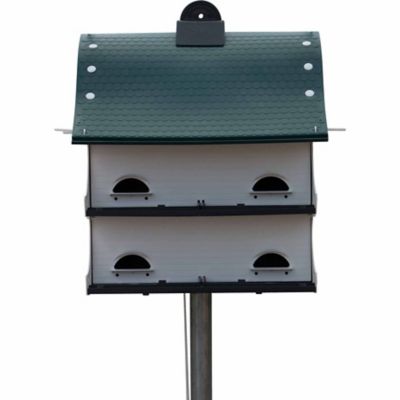
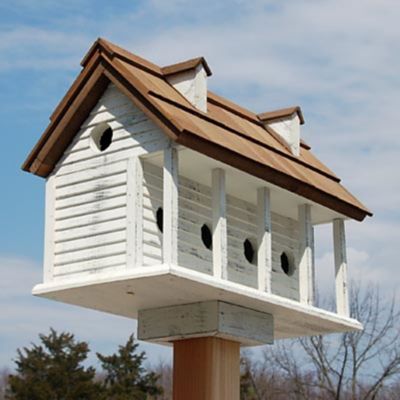
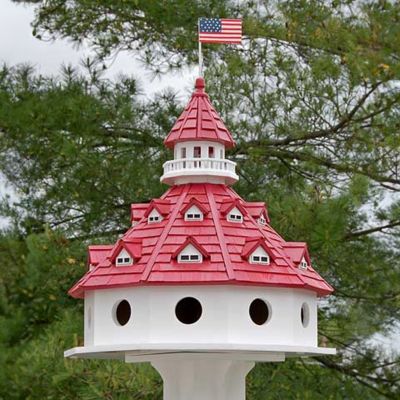
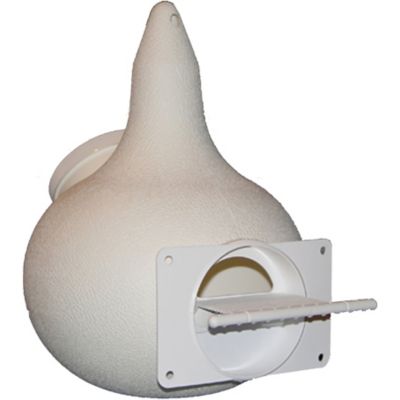
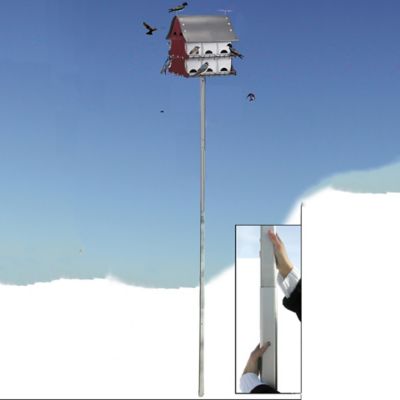
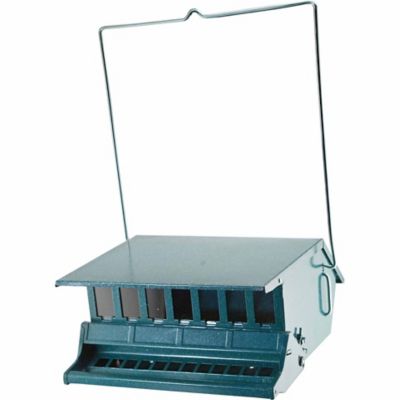
Purple Martin bird houses give these lively, colony-nesting birds a safe place to raise young while adding plenty of activity to an open yard, pasture, or garden. Unlike a one-room songbird nest box, a Martin house is built with several separate compartments, often arranged in tiers, so a group of birds can nest together. Some shoppers prefer a traditional box-style house made from wood, plastic, or aluminum, while others choose a gourd-style setup with individual cavities hung from a rack. Both styles can work when they are placed and maintained properly. Look for compartments with enough room for nesting material and young birds, entrances sized for Purple Martins, and access panels that make seasonal cleaning and inspection less of a chore. White or another light color is commonly used because it reflects heat and helps keep the nesting area more comfortable during hot weather. A sturdy construction matters, too, especially in open country where wind can turn a poorly secured house into a swaying hazard. Telescoping poles or systems with a winch and pulley make it easier to raise and lower the house without climbing, which is helpful when checking nests, removing unwanted nesting material, or preparing the house for the next season. A dependable Martin bird house can be a thoughtful gift for a bird lover, landowner, gardener, or grandparent who enjoys sharing outdoor projects with children. It also makes a fine addition to a larger backyard habitat alongside native plants, a clean water source, and a separate
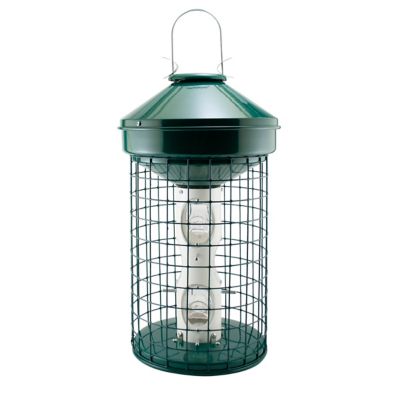
Metal Bird Feeder for finches, cardinals, and other seed-eating visitors. Keep in mind that Purple Martins catch much of their food in flight, so a seed feeder is not a substitute for good habitat or a reason to place the martin housing in a crowded feeding area.
Placement often makes the biggest difference in whether a Martin house gets noticed and used. Choose an open location with a clear approach from every direction, such as a broad lawn, pasture, field edge, or spacious garden area. A pole height of roughly 12 to 18 feet is common, with the exact height depending on the house, surrounding landscape, and the way the pole is anchored. Martins need room to circle, glide, and reach the entrances, so avoid tucking the house beneath thick branches or close to tall, dense trees. A useful general guideline is to keep the setup well away from heavy tree cover and give the birds an unobstructed flight path; many experienced hosts place martin housing about 40 to 60 feet from dense trees and roughly 30 to 120 feet from a home or other frequently used building. These are starting points rather than hard rules, since every property has its own mix of trees, fences, buildings, slopes, and prevailing wind. Before setting the pole, walk the area and picture a bird approaching from above, then look for anything that could block that flight. Firm anchoring is essential, and predator protection deserves just as much attention as the house itself. Snakes, raccoons, squirrels, and other climbers can threaten eggs and nestlings, so a properly fitted baffle or predator guard on the pole is a smart part of the setup. Keep grass, brush, and stored materials trimmed or moved away from the base to reduce hiding places for climbing or crawling pests. When a house can be lowered safely, check it at appropriate intervals for damaged compartments, wasp nests, damp nesting material, or signs of unwanted occupants. Avoid disturbing active nests more than necessary, and follow local wildlife guidance when handling birds or nesting material. During the warmer part of the year, shade is helpful if it does not interfere with the birds’ view or flight, while ventilation and light-colored surfaces help limit heat buildup inside the compartments.
A Martin bird house is best viewed as a small outdoor project rather than a set-it-and-forget-it decoration. Give the setup time to become familiar to passing birds, and keep the surrounding area welcoming through the changing seasons. Native flowers, low shrubs, and healthy turf can support insects and other backyard wildlife without crowding the flight zone. A shallow water source placed safely away from the pole may also bring more life to the yard, though it should be cleaned often so it stays fresh. If starlings, house sparrows, or other unwanted birds begin taking over compartments, regular observation and responsible management can help protect the housing space; local regulations and wildlife recommendations should guide any control measures. At the end of the nesting season, lower the house when conditions are dry and calm, remove old nesting material as appropriate, and inspect every panel, entrance, fastener, and pole connection. Some hosts close or store compartments during the cooler months to discourage pests and prevent early occupation by birds that are not welcome in the house. Others leave the structure available according to local practice and monitor it closely. A little maintenance now can save a good deal of trouble when warm weather returns. For families, the setup offers an easy way to turn ordinary outdoor chores into a lesson in patience: children can help spot returning birds, keep a simple nature journal, or watch from a distance as nest material comes and goes. For an experienced bird host, a larger multi-compartment house or gourd rack can expand an established colony, while a smaller, straightforward setup may suit someone beginning with a new property. Whether it stands beside a barn, beyond the garden fence, or in a wide patch of lawn, well-planned Martin housing brings the quick swoop of wings and cheerful calls of Purple Martins close to home while giving them a maintained place to nest.