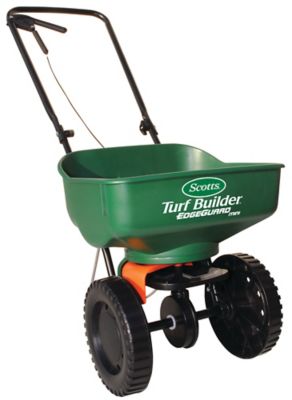
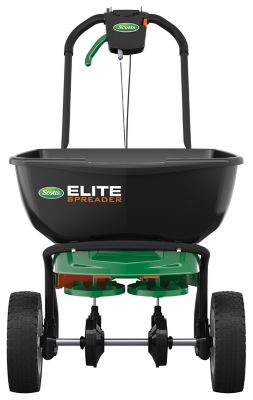
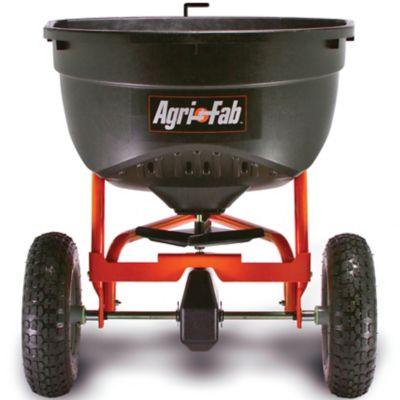
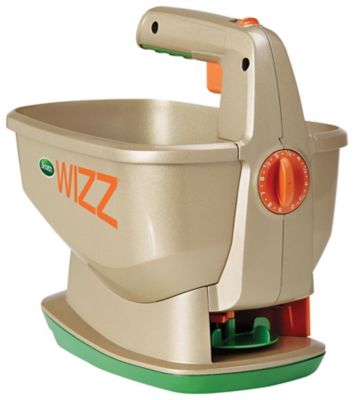
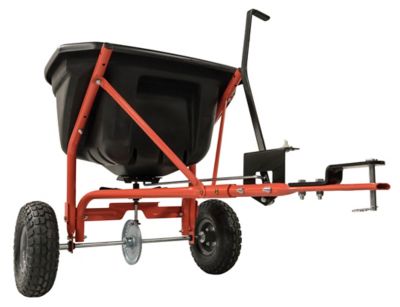
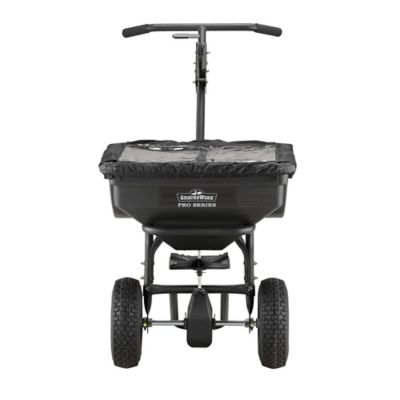
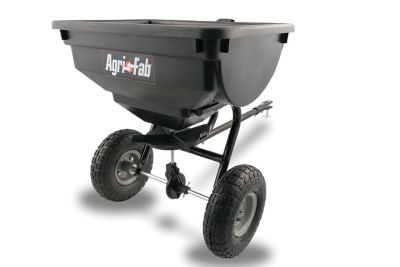
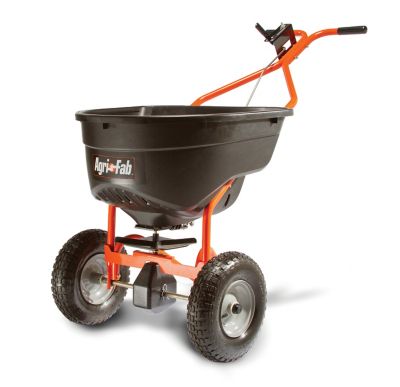
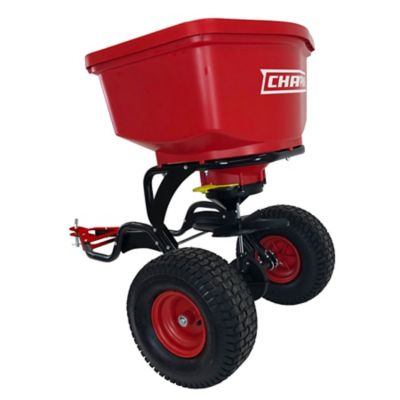
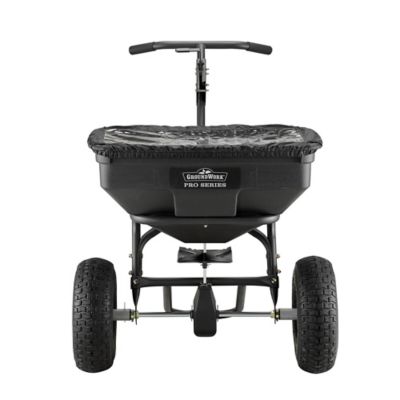
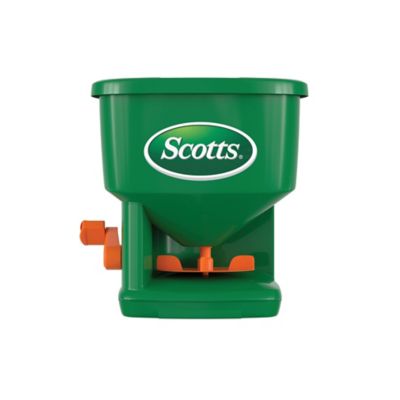
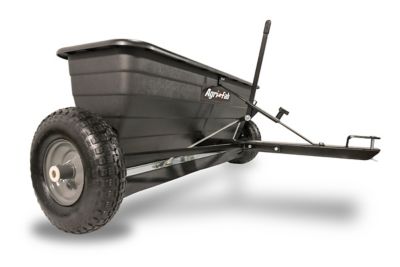
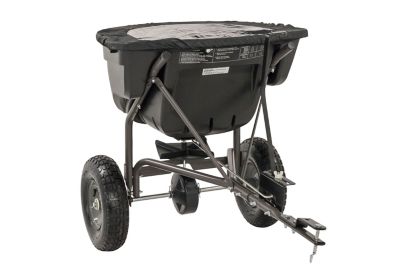
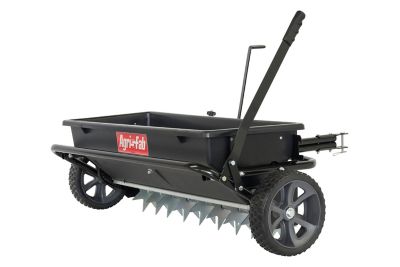
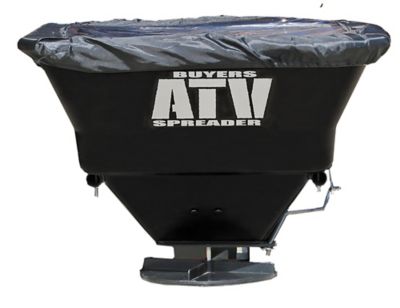
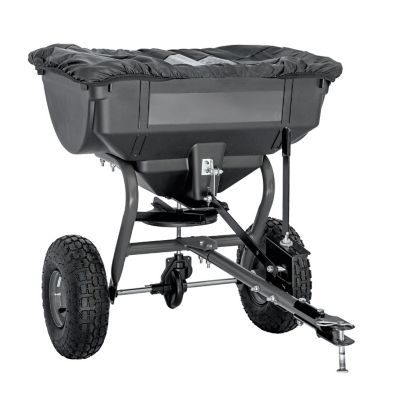
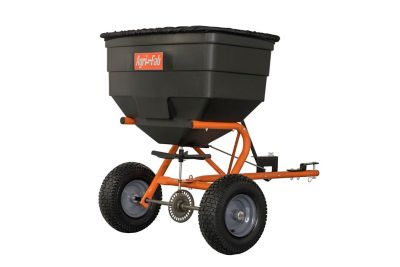
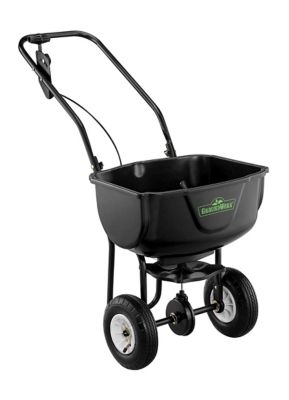
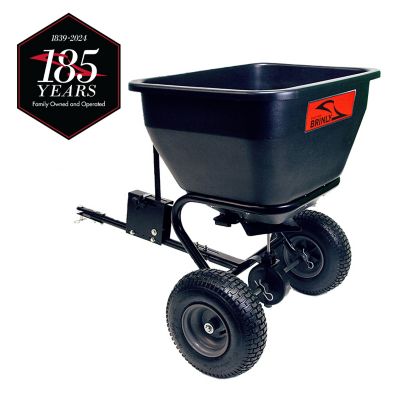
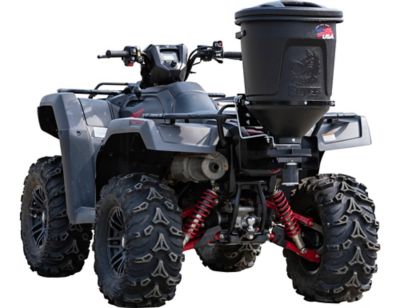
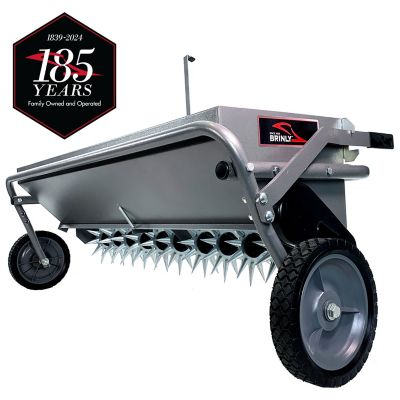
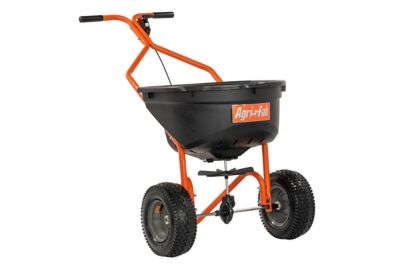
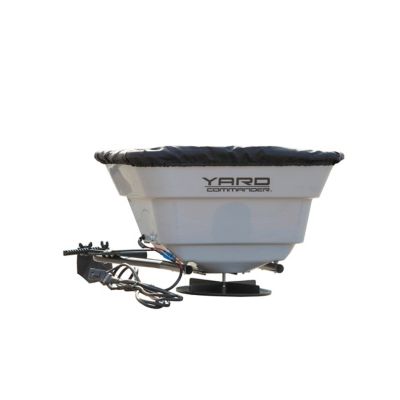
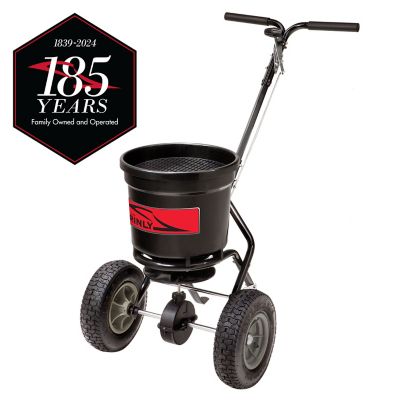
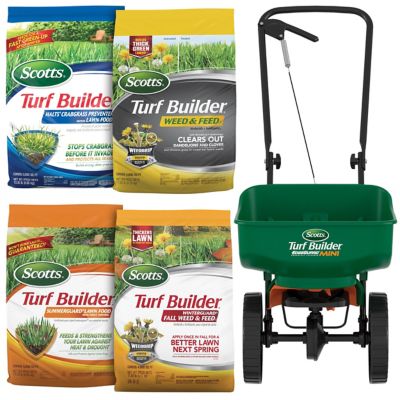
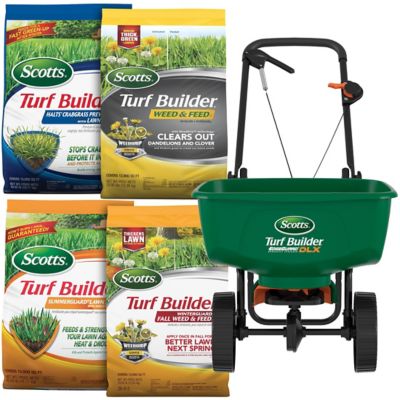
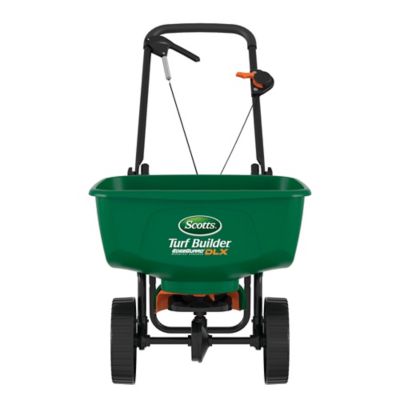
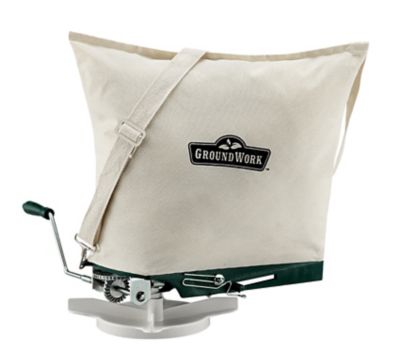
Fertilizer spreaders distribute granular lawn fertilizer across a measured area, helping turf get an even application without the patchy coverage that can come from tossing material by hand. Many also handle grass seed, provided the seed type and application settings match the equipment’s specifications. From a small yard beside the house to the grass around a barn, the right spreader fits both the ground to cover and the person doing the work. Handheld fertilizer spreaders suit small lawns, narrow strips, and touch-ups where a larger machine would be awkward to maneuver. Hand-crank models keep the setup simple, while powered handheld designs reduce the cranking involved. Walk-behind spreaders carry material in a wheeled hopper and work well for yards with room to make steady passes. Tow-behind fertilizer spreaders connect to compatible riding equipment, making more sense for broad lawns and larger properties where covering ground on foot would take a while. The spreading mechanism matters just as much as the way the equipment moves. Broadcast spreaders send granules outward from a rotating plate, covering a wider swath with each pass. That wider pattern suits open stretches of grass, though its reach calls for extra attention near vegetable beds, ponds, sidewalks, and property lines. Drop spreaders release material directly below the hopper between the wheels, offering a more confined pattern along straight edges and tighter spaces. Their narrower coverage can mean more passes across a big lawn, but it also makes the application boundary easier to see. Side shields and shutoff controls can help limit where material lands, depending on the design. Homeowners caring for a front yard, small-acreage owners maintaining open turf, and groundskeepers working around buildings all have different needs. A spreader that turns comfortably around a gatepost or follows a long fence line without constant refilling can make a routine property chore feel a lot more manageable. Neither the largest hopper nor the widest pattern is automatically the best fit; usable space and maneuverability carry plenty of weight.
Hopper capacity, construction, and controls help separate fertilizer spreaders built for occasional yard work from equipment suited to longer stretches of ground. Capacity may be listed by material weight or hopper volume, while coverage estimates depend on the material and its application rate. A full hopper does not represent the same square footage for every fertilizer, and a large lawn does not necessarily require enough capacity to finish the entire job without a refill. Smaller loads can be easier to push and turn, especially around established trees or through narrow gates. Molded plastic hoppers resist rust and keep overall weight down, while metal frames provide support under a loaded bin. Fertilizer salts can corrode exposed metal, so protective finishes and accessible parts matter for long-term upkeep. Wheel size and tread deserve a close look on rural properties, where turf may include shallow ruts, uneven ground, or rough transitions beside an outbuilding. Pneumatic tires can soften the ride over uneven surfaces, while solid tires eliminate air-pressure checks; either option still needs to suit the machine and its rated load. Handle height, grip shape, and the placement of the flow-control lever affect comfort during repeated passes. A control that is easy to reach makes it simpler to stop material flow before a turn or while crossing a driveway. Clear setting marks help with repeat adjustments, but settings are not interchangeable across spreaders or fertilizer formulas. Calibration connects the equipment’s setting with the amount actually delivered over a measured area. Granule size, walking or towing speed, and the condition of the flow mechanism can all affect that result. For tow-behind equipment, hitch compatibility, tongue clearance, turning room, and the towing vehicle’s limits are part of the fit. A broad, open lawn may welcome a wide spread pattern, while grass divided by sheds, beds, and fencing often favors a more compact setup. Those details matter more in daily work than hopper size alone.
Material compatibility is another important distinction within fertilizer spreading equipment. Free-flowing granular fertilizer behaves differently from grass seed, and fine particles or larger pellets may require different openings or settings. A hopper opening, agitator, and distribution mechanism need to match the material passing through them; damp clumps and oversized particles can interrupt flow or leave an uneven pattern. Compost, shredded mulch, and other bulky landscape materials generally call for equipment designed around their texture rather than a standard granular fertilizer hopper. For projects involving those materials,
Mulch Spreaders offer a related equipment category with a different purpose. Keeping those jobs separate helps match the tool to the task instead of expecting one spreader to handle everything around the place. Routine care also plays a big part in how smoothly a fertilizer spreader works over time. Leftover granules can collect around gates, axles, and rotating parts, where buildup may interfere with movement or contribute to corrosion. Emptying the hopper after the job, cleaning it according to the equipment instructions, and letting it dry before storage help keep the mechanism ready for its next outing. Some components tolerate rinsing, while powered sections and certain bearings require different care, so the manufacturer’s directions matter. Covered storage keeps the hopper clear of debris, and periodic checks of fasteners, wheels, cables, and moving parts can catch looseness before it becomes a bigger repair. Fertilizer labels supply application limits, protective-equipment requirements, and any restrictions involving children, pets, or nearby water. Granules that land on hard surfaces belong back on the intended lawn area rather than in a drain. For a household lawn, the grass around a workshop, or a broad stretch beside the barn, fertilizer spreaders bring controlled material delivery to a familiar chore. The best match combines manageable capacity, suitable coverage, comfortable handling, and straightforward upkeep for the ground ahead.