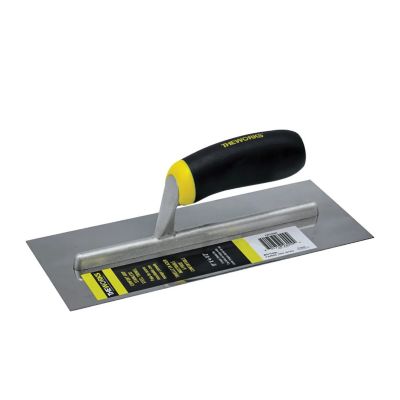
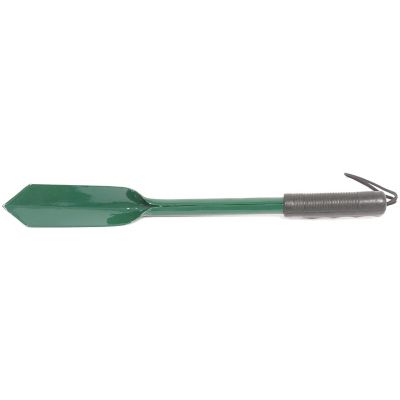
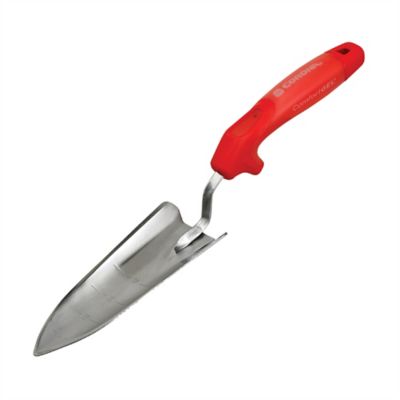
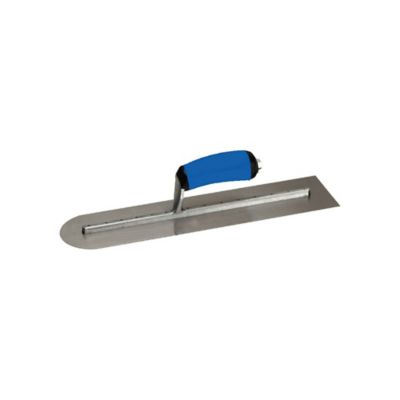
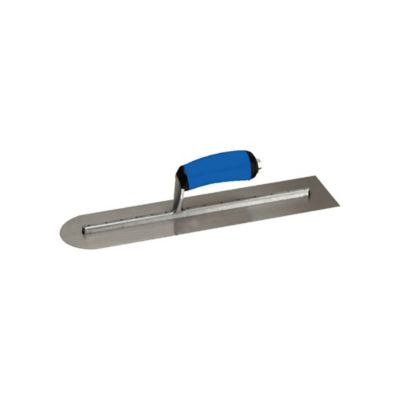
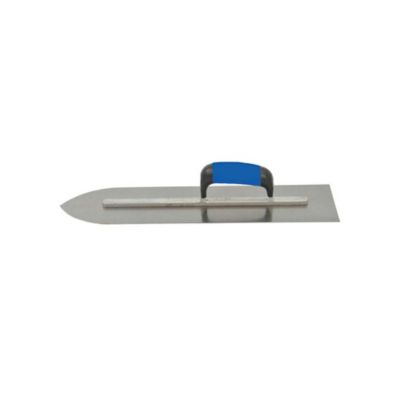
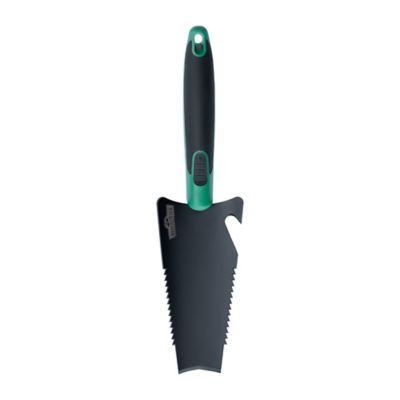
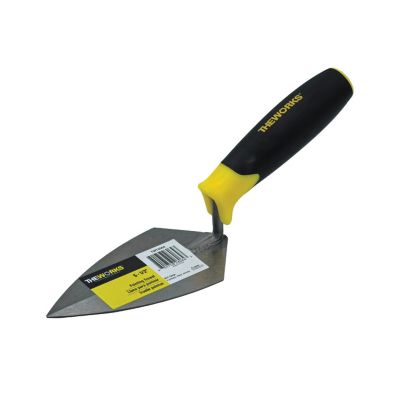
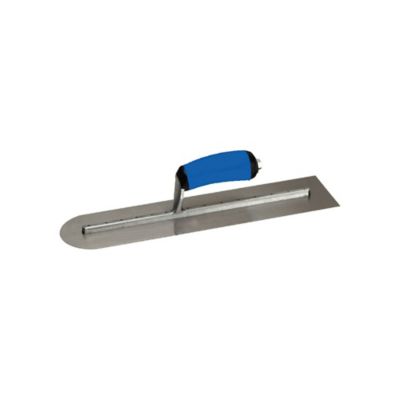
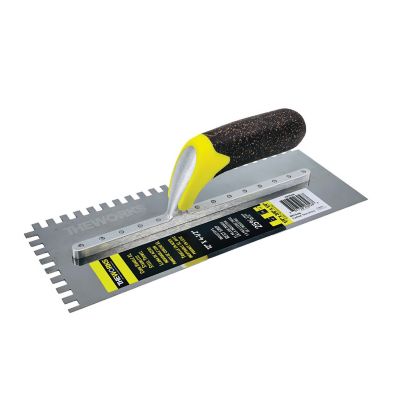
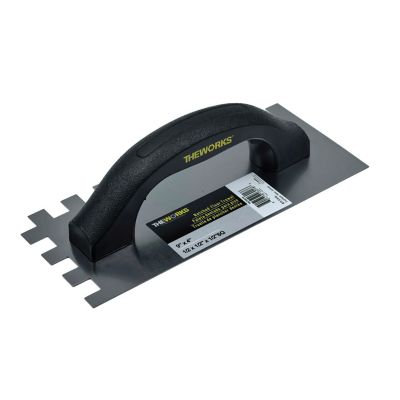
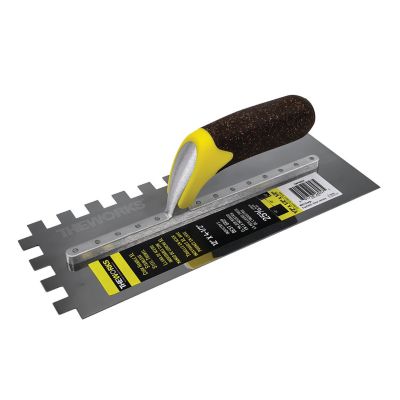
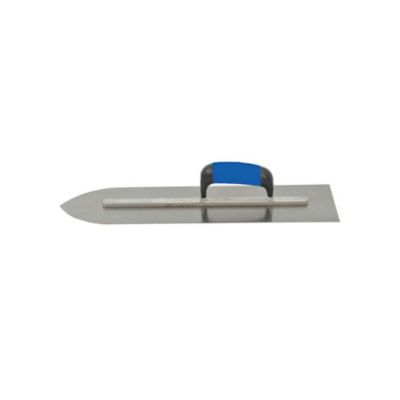
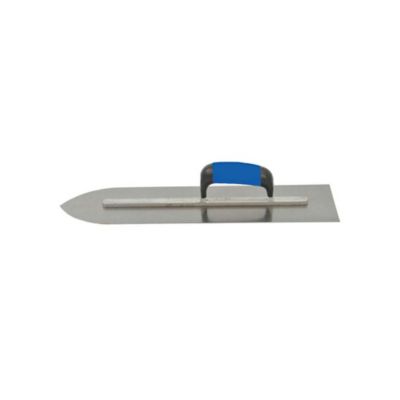
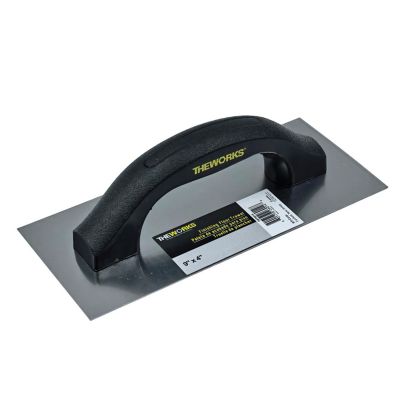
Steel trowels are hand tools for spreading mortar, smoothing concrete, and finishing plaster or drywall compound. The blade shape tells a lot about the job it’s meant to do. A broad, flat finishing trowel makes long passes over a slab, while a pointed brick trowel carries mortar and lets it slide off where the next brick will sit. A narrow margin trowel reaches spots where a wide blade would bump into a form, a pipe, or the side of a bucket. On a concrete job, a steel finishing trowel comes into play after the surface has been struck off and floated. It smooths and tightens the surface rather than leveling out big dips. On a shop floor or a small equipment pad, a longer blade covers more ground with each pass, while a shorter one is easier to steer around an anchor bolt or along a feed-room threshold. Square ends give a flat blade good reach into corners, while rounded ends are less apt to leave tracks at the ends of a stroke. A pool trowel takes that rounded shape a step further, pairing it with a flexible blade that follows curves in plaster around steps and along the transition from wall to floor. Timing matters as much as blade shape on a slab. A steel blade can leave ridges or trap water at the surface if it goes to work while bleed water is still present. Once the concrete is ready for finishing, a flatter blade leaves less of an edge mark, and a slightly raised leading edge on later passes helps keep the blade from digging in. A smooth, dense finish makes sense where a shop floor needs to sweep clean, but a walkway or ramp that needs traction often calls for a broom finish instead.
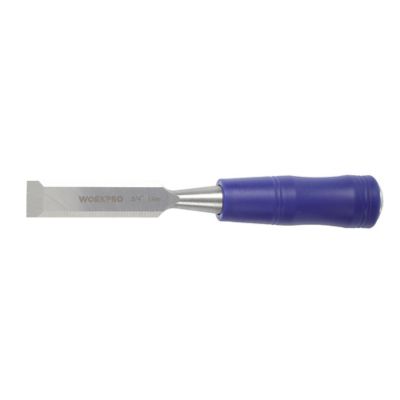
For brick, block, and stone work, steel masonry trowels do more carrying and placing than surface finishing. The triangular blade of a brick trowel has room for a scoop of mortar and a point that helps tuck it into a narrow bed or fill the end of a joint. The side of the blade can slice away the mortar that squeezes out as a brick settles into place. A larger blade holds more mortar for laying a run of block, but a smaller one is easier to manage when resetting a loose brick on a step. A margin trowel has a straight, narrow blade that comes in handy for packing mortar beside a post base or scraping the last workable bit from the side of a pail. A gauging trowel has a rounded nose that suits mixing small batches and placing plaster or patching mortar without dragging a pointed tip across the surrounding surface. On repair jobs,
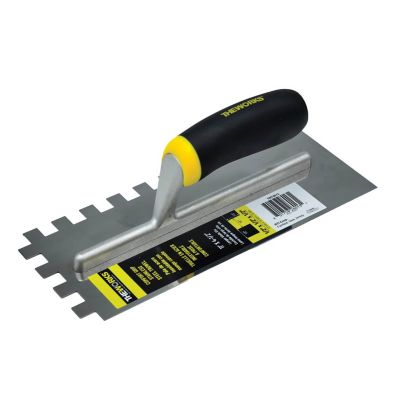
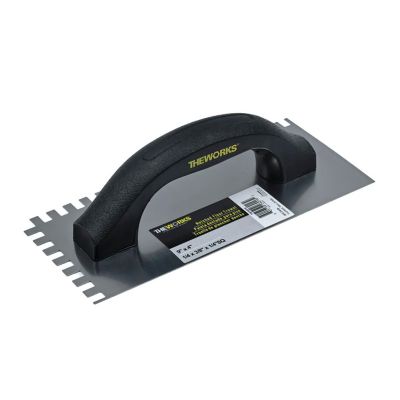
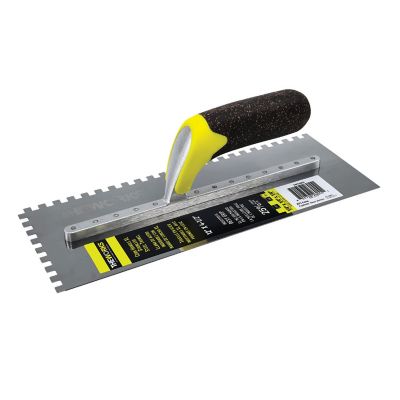
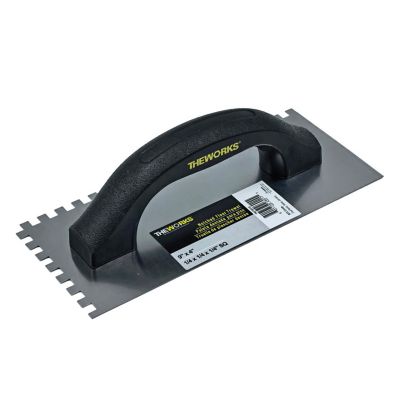
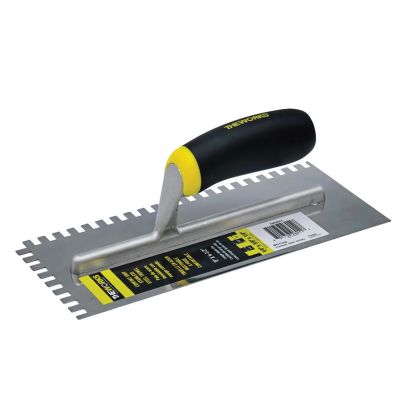
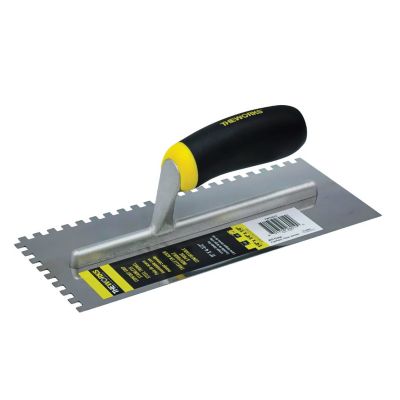
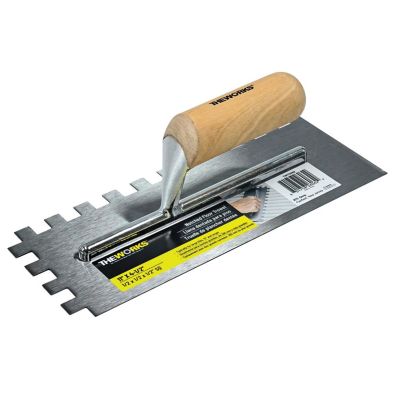
Steel Chisels can help remove loose mortar before fresh material goes into the joint. For plaster and drywall work, a flat steel finishing trowel spreads material across a wider area. A blade with a little give makes it easier to feather a patch into the wall without leaving a hard lip. Tile work calls for a different edge: A notched steel trowel combs setting mortar into even ridges that flatten as the tile is bedded. Notch shape and size should match the tile and the setting material’s directions, since a small wall tile and a large floor tile don’t need the same mortar bed. The flat side spreads mortar before the notched side combs it, and a narrow margin trowel makes it easier to transfer mortar from the bucket without loading up the handle or the back of the blade.
Stainless steel and high-carbon steel are both common blade materials, and each has a place on a job. Stainless steel resists rust and is a practical choice for work that puts the blade in wet mortar or compound day after day. High-carbon steel can take and hold a crisp edge, but it’s more prone to rust if it goes back in the toolbox damp. Either type can come in a stiff or flexible blade. Thickness and temper matter, so the steel name alone won’t tell how the trowel will feel across a slab or a wall. A stiffer blade keeps its shape when spreading mortar, while a blade with some flex is easier to ease over a shallow curve or blend the edge of a plaster patch. Handle fit matters, too. A grip that fills the palm without forcing the fingers to stretch makes it easier to hold a steady angle through repeated passes. Wood has a firm feel, while a cushioned grip can be more comfortable for long stretches of finishing. Clearance beneath the handle is worth a look, especially for gloved hands, and a solid connection between the handle and blade keeps the tool from twisting under pressure. Cleanup is simpler before concrete, mortar, or compound hardens. Washing off residue and drying the blade and its mounting area keeps crust from scratching the next finish and moisture from sitting in the joints. A light coat of oil can protect a clean carbon-steel blade in storage, as long as it’s wiped away before the blade touches fresh material. Storing trowels where their edges won’t knock against heavier tools helps prevent nicks that can leave lines across a fresh pass. For a mason, a concrete finisher, or someone who keeps up with repairs around the farm, the best fit comes down to the material on the blade, the room to swing it, and the finish the job needs.