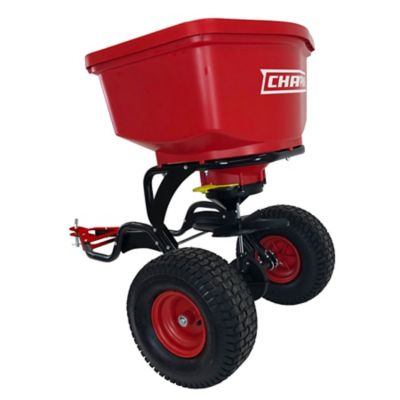
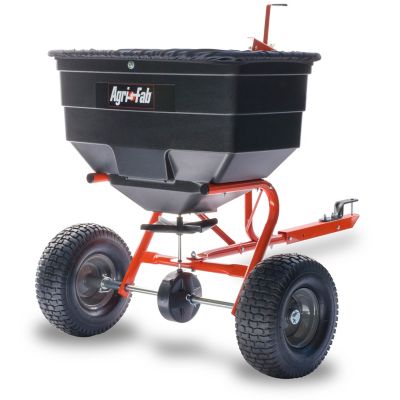
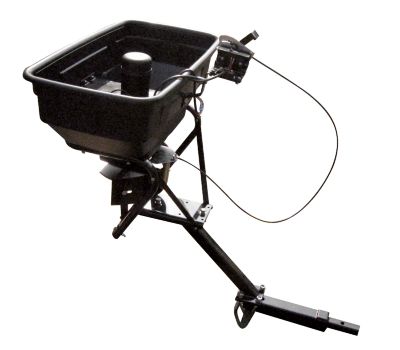
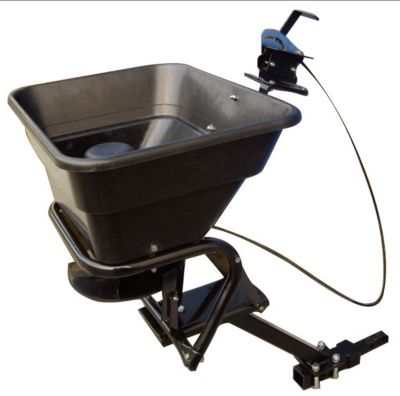
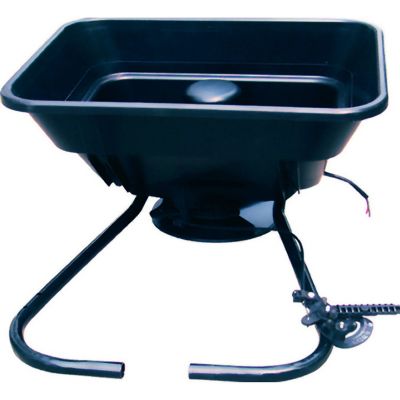
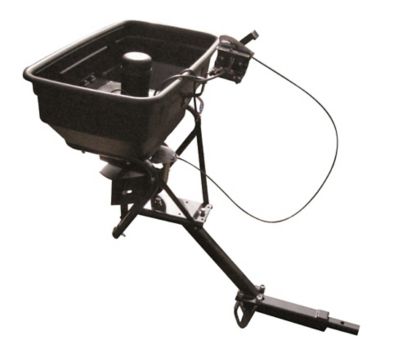
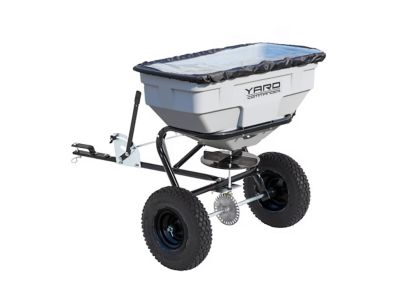
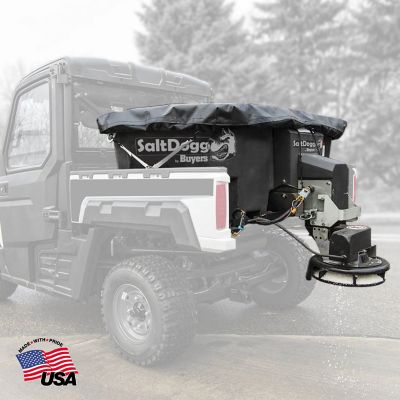
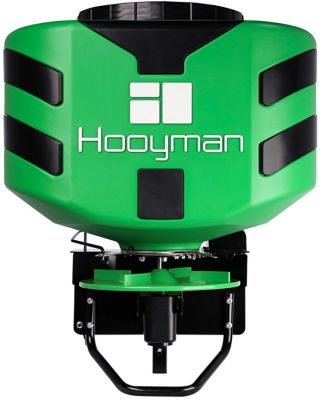
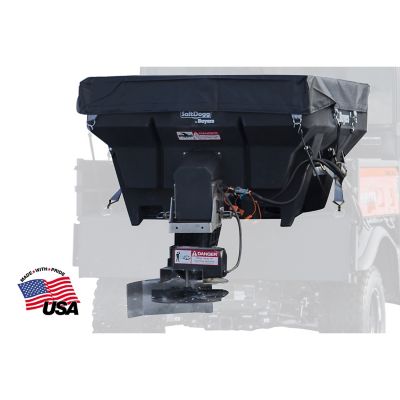
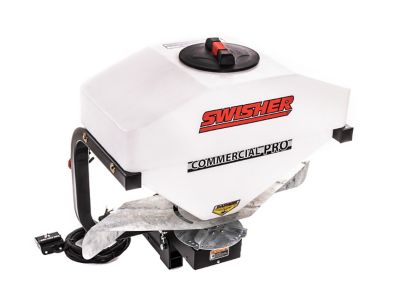
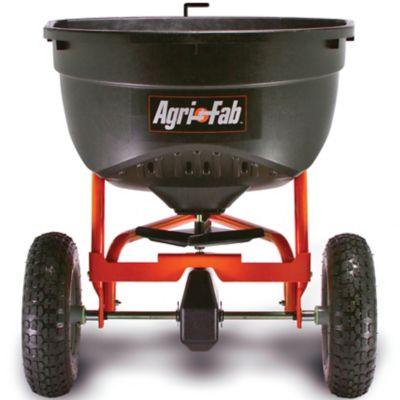
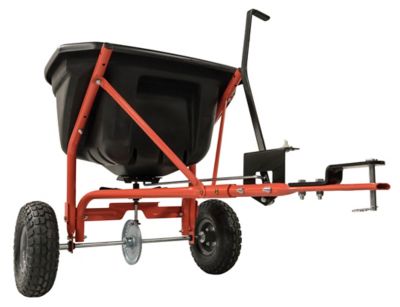
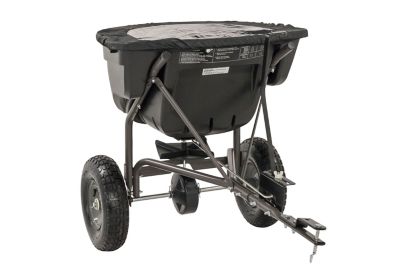
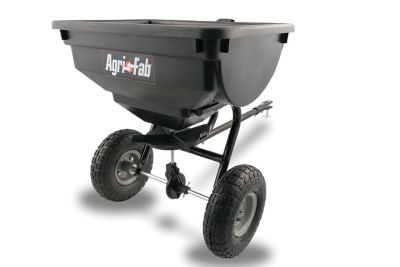
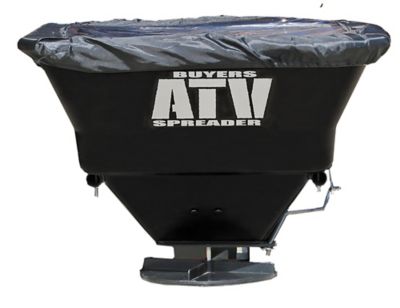
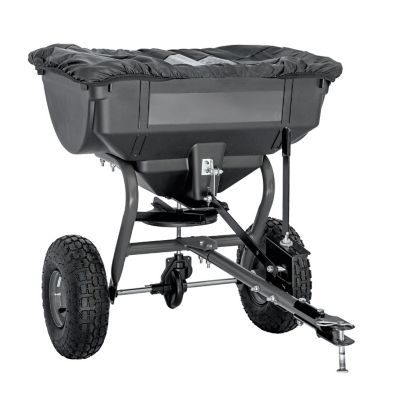
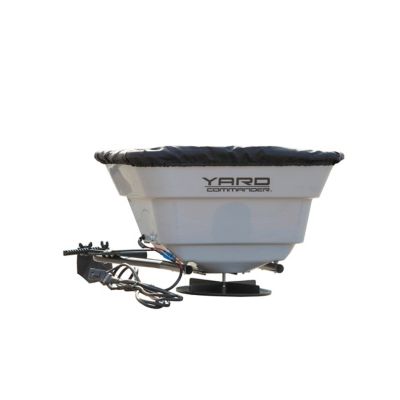
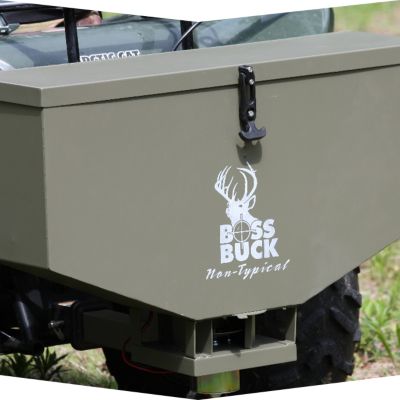
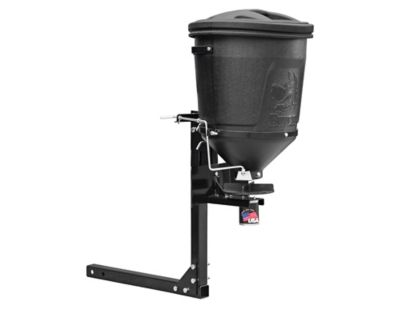
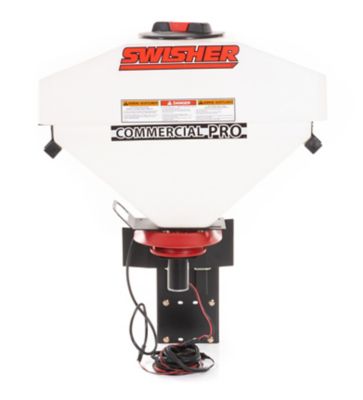
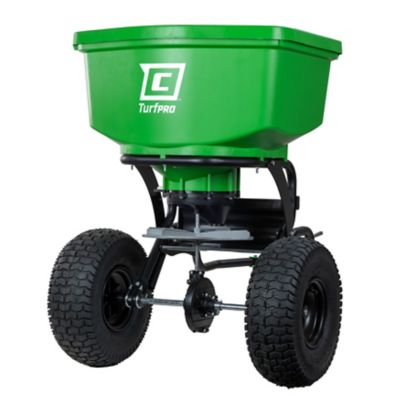
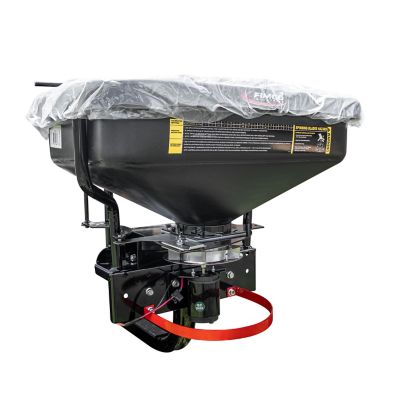
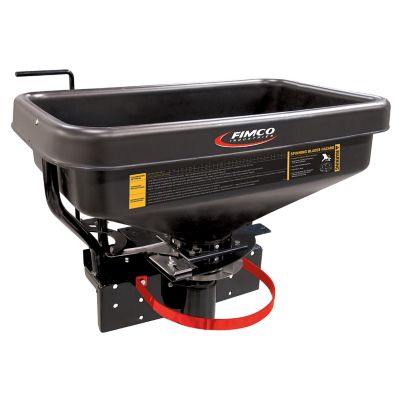
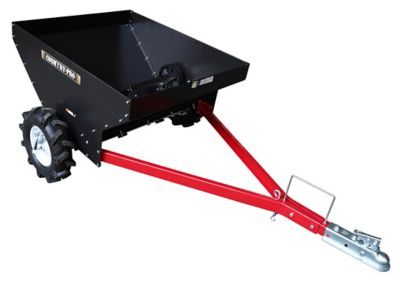
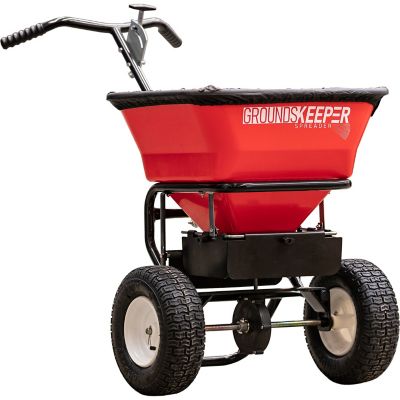
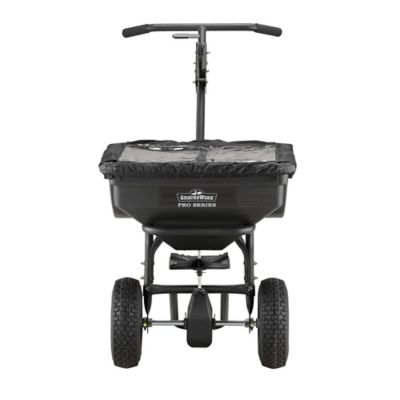
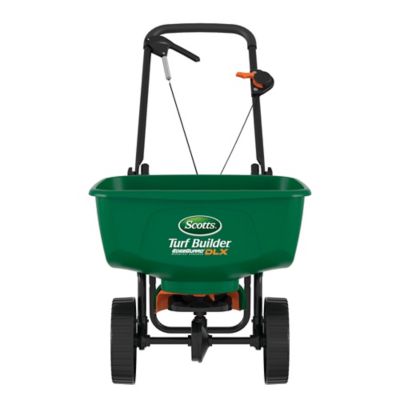
A UTV broadcast spreader attaches to a utility vehicle and distributes dry seed, granular fertilizer, or other approved materials across a broad swath with a rotating spinner. Depending on the design, it may mount in the cargo bed, connect to a receiver hitch, or trail behind the vehicle. These spreaders put a utility vehicle to work on lawns, pasture edges, food plots, and other open ground where carrying a bag or pushing a small spreader would mean a lot of walking. For a landowner tending several separate plots, the appeal is straightforward: the vehicle carries the material between locations while the spreader handles distribution. A wide spreading pattern suits open acreage, while adjustable output helps match the equipment to smaller spaces and different application rates. The hopper holds the material, a gate meters its flow, and the spinner throws it outward as the vehicle moves. Those three parts work together, but spreading width and application rate are not the same thing. A broad throw does not necessarily mean more material reaches each square foot; travel speed, gate opening, spinner speed, and the material itself all affect coverage. Small grass seed behaves differently from heavier fertilizer granules, so material compatibility matters just as much as hopper size. Flow control is especially helpful when a route includes a narrow strip beside a fence, an open patch beyond a barn, and a turn at the end of a plot. A shutoff within reach of the operator helps prevent a pile from forming when the vehicle stops. For jobs centered on feeding turf or supporting established plantings, UTV models are part of the broader selection of
Fertilizer Spreaders, with mounting arrangements and operating features suited to different properties. The best match comes down to the ground being covered, the material going through the hopper, and how the spreader fits into everyday work around the place.
Fit starts with the utility vehicle, not just the amount a hopper can hold. Receiver size, mounting height, cargo-bed dimensions, and the vehicle manufacturer’s load limits all shape which configurations make sense. A receiver-mounted spreader places weight behind the vehicle, while a bed-mounted design puts equipment and material in the cargo area. Tow-behind configurations bring their own hitch and towing requirements. In every case, the combined weight of the spreader, its contents, and any other cargo matters, along with the limits for the attachment point. Clearance around the tailgate, tires, exhaust, and hitch hardware also deserves attention. A setup that looks fine standing still still needs room through turns and over uneven ground. For electrically powered spreaders, the specified voltage, wiring connection, fuse protection, and reach of the control cable determine whether installation works with the vehicle. Controls should be accessible from the operator’s position without stretching or reaching behind the seat. Hopper capacity is another practical tradeoff. More capacity can mean fewer refill trips across a large property, but a smaller load may be easier to manage on tighter routes or where vehicle capacity is limited. Capacity figures may describe volume or the weight of a particular material, so two materials filling the same hopper can put different loads on the vehicle. Construction matters, too. Poly hoppers resist corrosion and offer a smooth interior that helps dry granules move toward the outlet. Steel frames provide support at the mounting points, while coatings and stainless steel components can help limit corrosion where fertilizer touches hardware. The condition of fasteners, brackets, wiring, and the gate mechanism matters as much as the hopper shell. A lid helps keep loose debris out during transport, and a wide opening makes filling less awkward. For someone loading from bags beside a shed or barn, access to the hopper can matter just as much as the number printed beside its capacity.
The most useful UTV broadcast spreaders make repeated property chores feel less fussy, with controls and service points that are easy to reach. An adjustable gate with clearly marked settings makes it easier to return to a previous setup, though each material still needs its own rate check. Fertilizer recommendations and seed labels describe how much material belongs on a given area; the spreader’s settings provide a starting point rather than a guarantee of that rate. A measured test area helps establish how the equipment performs with a particular material and steady travel speed. Consistent passes and the overlap specified by the manufacturer help avoid thin strips or concentrated bands. Near a pond, garden bed, driveway, or property boundary, control over the spreading pattern becomes especially important. Some designs offer a deflector or directional adjustment to limit where granules travel. Those features are worth checking in the specifications rather than assuming every spreader includes them. Material condition also affects performance: dry, free-flowing granules move through an opening differently from clumps, damp material, or fine powder. Not every hopper and agitator can handle every seed blend or fertilizer formulation, and powdered materials may require different equipment altogether. Care is straightforward but important after the work is done. Emptying the hopper keeps leftover material from packing around the gate, while cleaning according to the manufacturer’s directions helps remove fertilizer residue from surfaces and hardware. Motors, electrical connections, and bearings may require different treatment from the hopper, so cleaning methods should match the component. Dry storage, sound wiring connections, and periodic checks of mounting bolts help keep the setup ready for the next job. Moving parts need to be stopped and power disconnected before clearing a blockage or making adjustments. With compatible materials, a suitable mounting arrangement, and manageable controls, a UTV broadcast spreader becomes a practical piece of equipment for landowners, grounds crews, and anyone maintaining more ground than a small walk-behind setup comfortably covers.