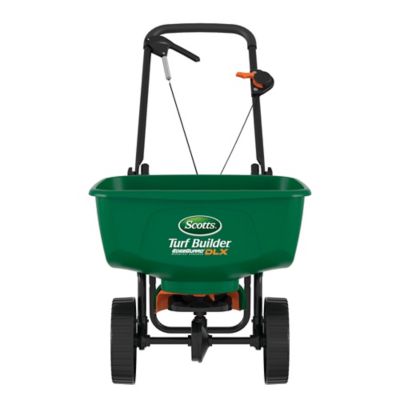
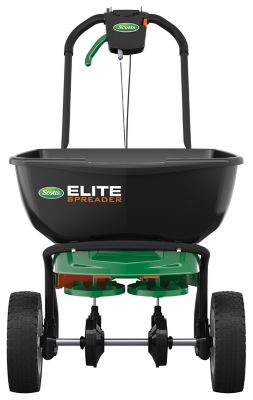
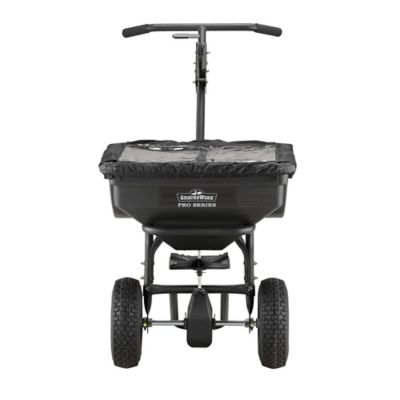
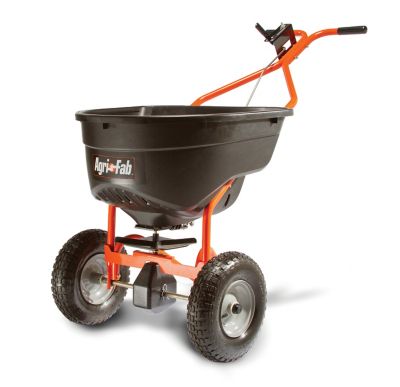
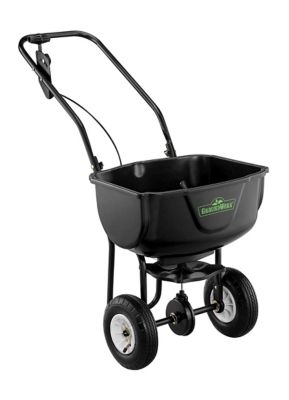
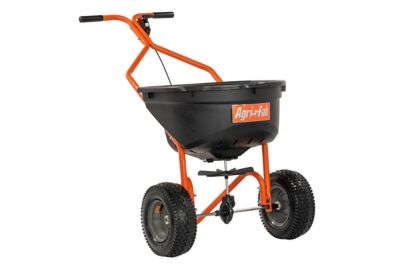
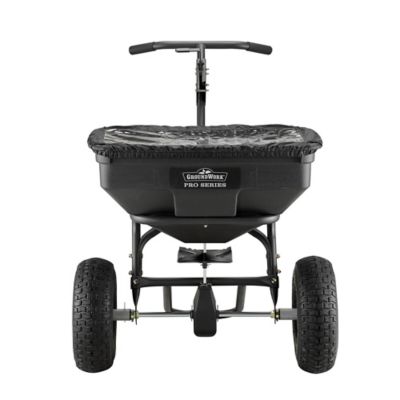
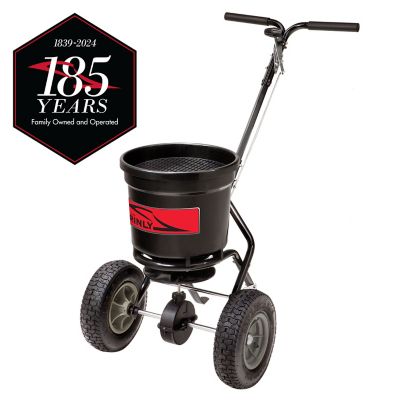
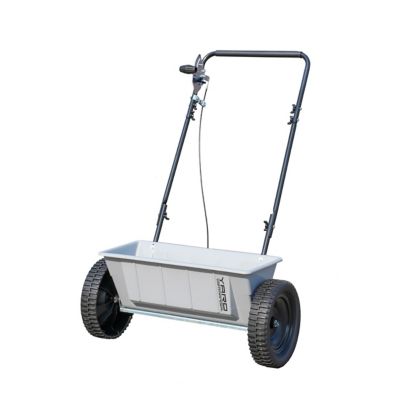
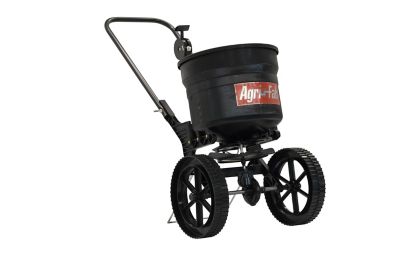
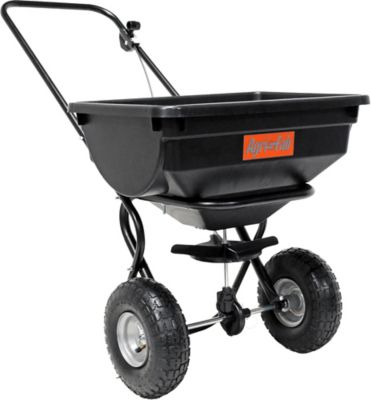
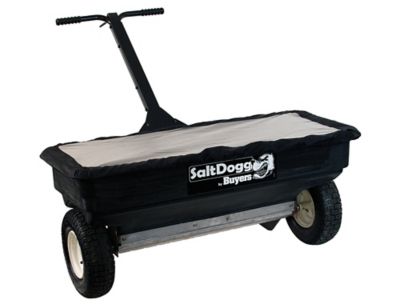
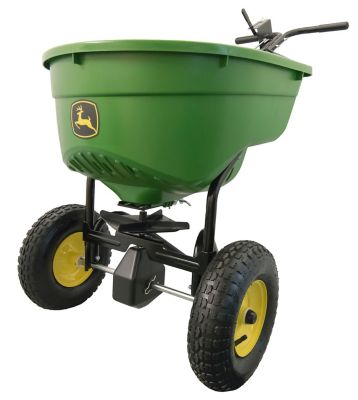
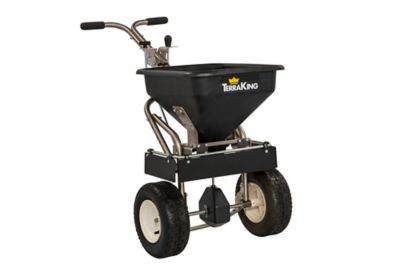
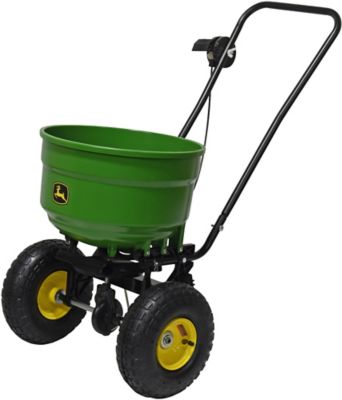
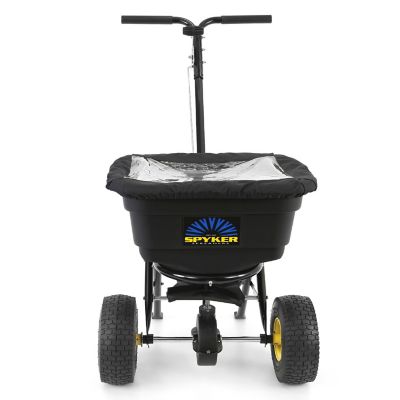
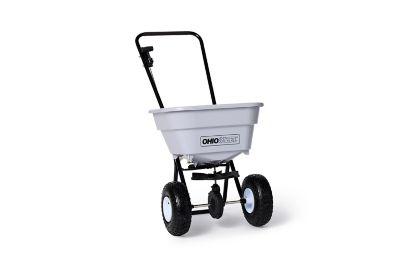
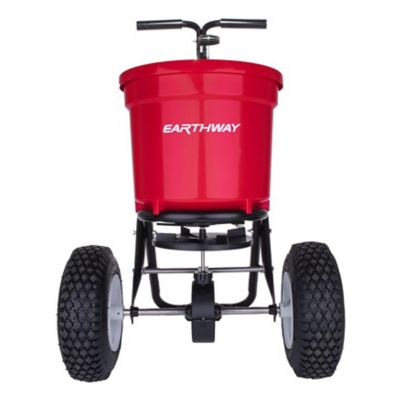
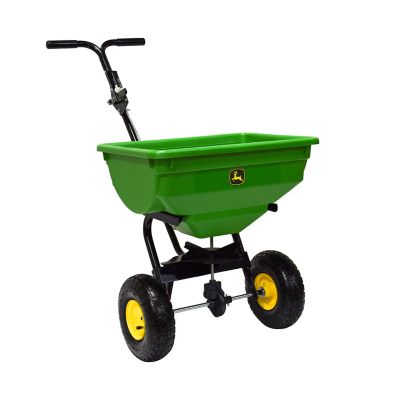
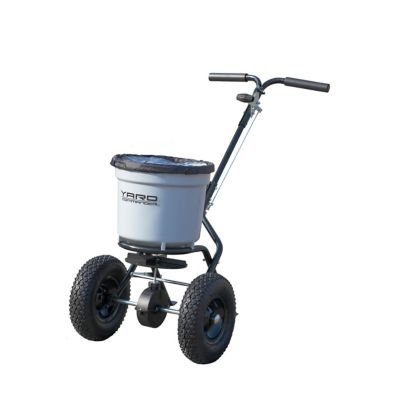
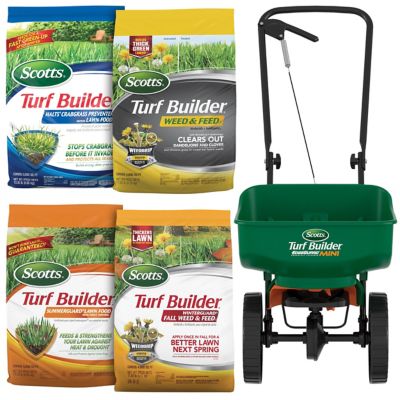
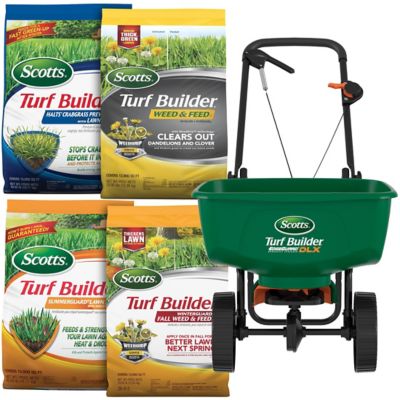
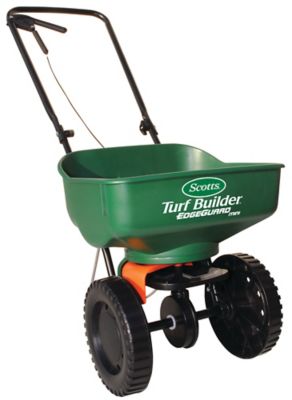
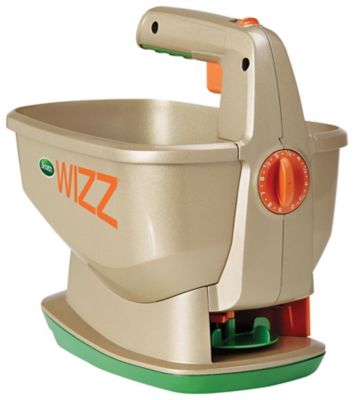
Push spreaders are walk-behind tools that distribute grass seed, fertilizer, and other compatible granular lawn care materials as the operator pushes them across the ground. A hopper holds the material, an adjustable opening controls its flow, and the movement of the wheels powers the spreading mechanism on many designs. They suit homeowners tending a backyard, folks maintaining grass around a barn or outbuilding, and property caretakers covering several lawn areas without hauling a powered attachment between them. The two main types are broadcast spreaders and drop spreaders. A broadcast spreader sends material outward from a rotating plate, covering a swath wider than the machine itself. That wider pattern makes it a practical match for open lawns and longer stretches of turf where fewer passes can save some legwork. A drop spreader releases material through openings underneath its hopper, keeping the application within a narrower path. That controlled placement can be helpful along garden borders, beside walkways, and in smaller spaces where spreading beyond the grass creates extra cleanup. Neither style fits every property equally well. An open yard with broad turns presents a different job than a fenced backyard with gates, trees, and planting beds to work around. Broadcast patterns also vary with the material and walking pace, so a stated spreading width is not a promise of identical coverage with every load. Edge-control features on some broadcast designs help limit discharge toward one side, though they do not replace the setbacks required on a lawn treatment label. For someone maintaining a lawn near a vegetable patch, pond, or livestock area, that distinction matters. The right push spreader matches the working space as well as the material, balancing coverage with the ability to keep seed or treatment where it belongs.
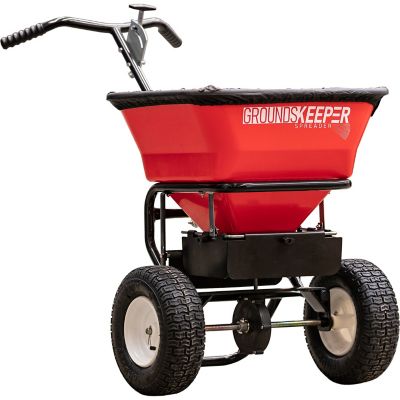
Hopper size, wheel design, and handle fit have a lot to do with how a push spreader feels after several trips across the yard. A larger hopper means fewer refill stops, but a full load also takes more effort to start, steer, and bring up a slope. Capacity may be described by weight, volume, or estimated lawn coverage, and those measurements are not interchangeable. Different materials have different densities and application rates, so the same hopper can cover very different amounts of ground from one task to another. For a modest lawn divided by sidewalks, a manageable load and easy turns may matter more than maximum capacity. On a broad stretch of grass between the house and a fence line, more room in the hopper can cut down on trips back to the bag. Poly hoppers do not rust, while steel frames provide structural support beneath the load; protective finishes and the condition of joints and fasteners matter wherever fertilizer residue can collect. Enclosed drive components can help shield moving parts from scattered granules, although routine cleaning still matters. Pneumatic tires can soften the ride over uneven turf, while solid tires avoid air-pressure checks and puncture repairs. Larger wheels generally roll across small dips and bumps more readily than smaller ones, but tread, load weight, and ground conditions also affect handling. A steady stance helps when filling the hopper, and a comfortable handle height keeps the job from becoming an awkward, arms-out push. Controls within easy reach make it simpler to shut off flow before a turn or a stop. Adjustable handles and folding designs can also help a spreader fit its operator and its storage spot. A machine that feels comfortable in motion, clears the gate, and parks neatly alongside the mower is often a better match than one chosen by hopper size alone.
Material compatibility deserves just as much attention as the frame and wheels. Push spreaders generally handle dry, free-flowing granules, but not every model accepts every type of seed, fertilizer, lawn treatment, or deicing material. Small grass seed, coarse granules, and irregular particles move through a hopper differently, and some materials can bridge over an opening or clog the feed system. Product labels and spreader instructions establish which combinations belong together. Grass seed work calls for a feed opening that suits the seed, while fertilizer and granular weed-control products need a setting that delivers the label rate. Numbered controls make adjustments easier to repeat, but settings are not universal across manufacturers or materials. Even two products with similar-looking granules can require different settings. Calibration checks help establish how much material a spreader releases over a measured area, which matters when an application depends on a specific amount per square foot. For compatible salt or ice melt, a design approved for that task is important because particle size and corrosive residue can place different demands on the hopper, gate, and drive parts. A spreader intended for lawn fertilizer should not automatically be treated as a deicer spreader. Cleanup and storage also affect how smoothly the equipment works the next time it comes out. Leftover fertilizer can draw moisture, cake inside the hopper, and contribute to corrosion around metal components. Seed caught near the gate can interfere with closure, allowing material to trickle out during transport. Following the maker’s cleaning directions, letting parts dry, and storing the hopper empty help keep moving parts clear. Storage away from animal feed and out of reach of children and pets keeps lawn care materials separate from everyday barn and household supplies. For crews handling repeated applications across larger properties,
Commercial Spreaders offer another category to consider alongside the workload, terrain, and materials involved. For everyday property care, a well-matched push spreader brings manageable handling and controlled material flow to the job, whether the route follows a garden fence or crosses a wide patch of lawn.