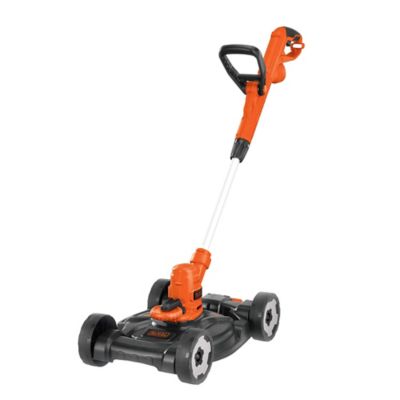
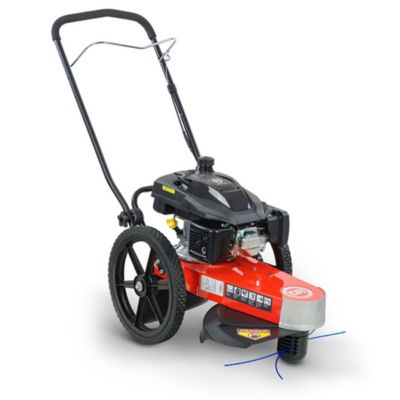
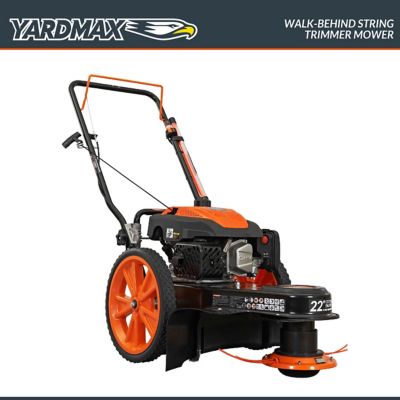
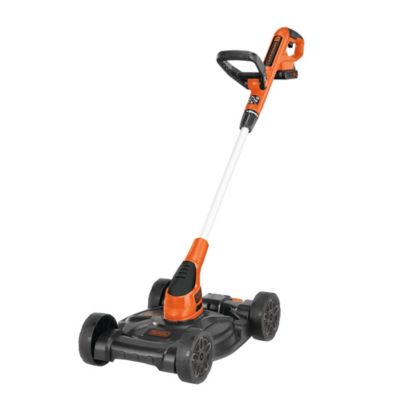
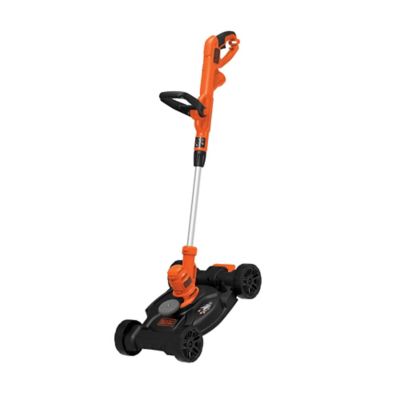
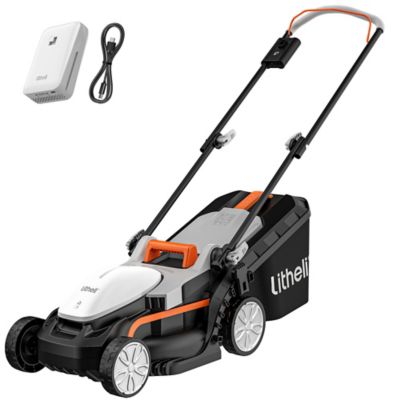
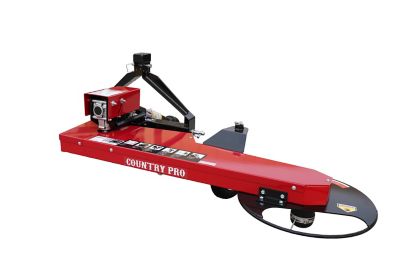
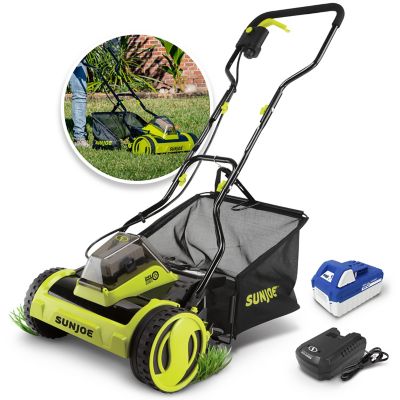
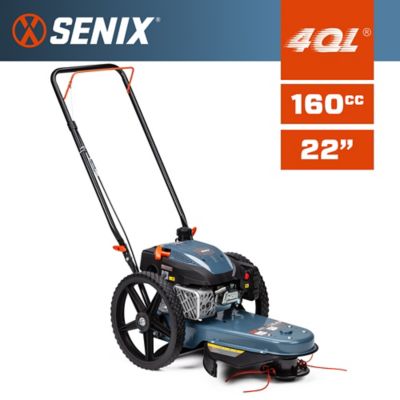
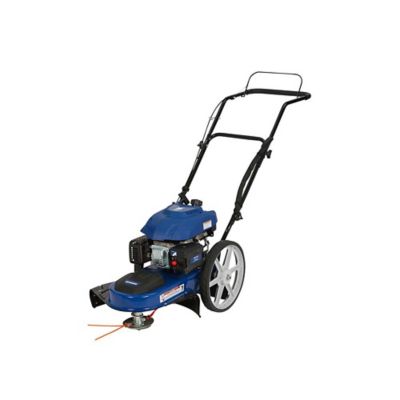
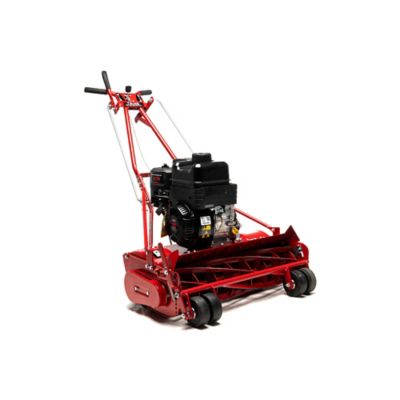
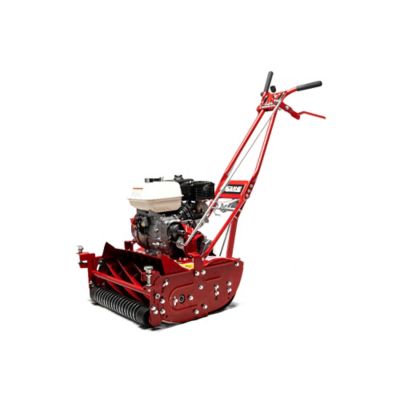
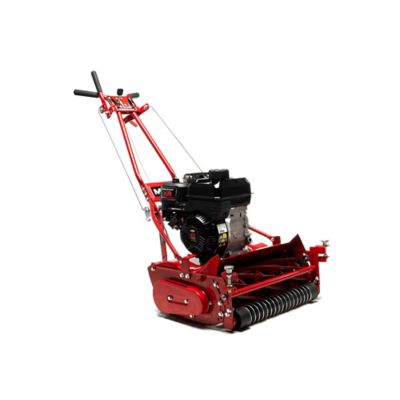
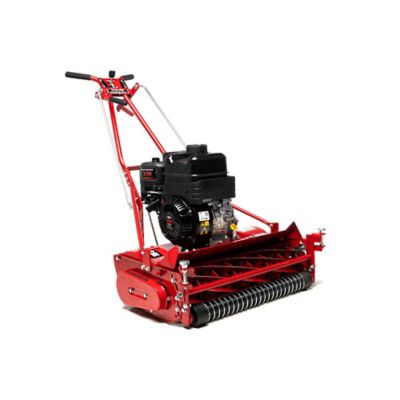
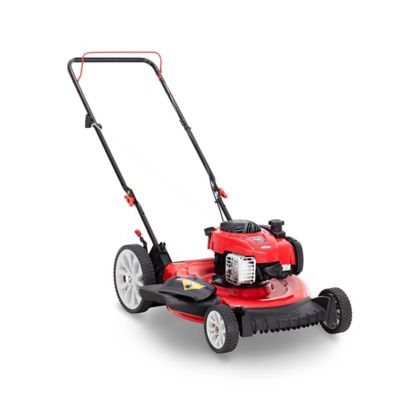
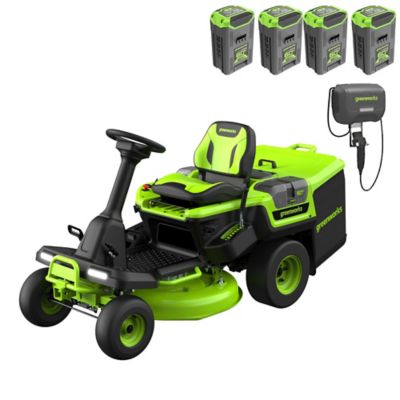
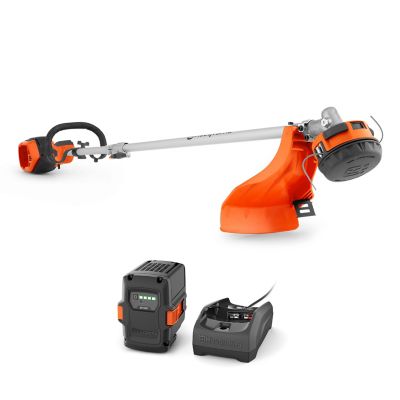
A trim mower is a wheeled string trimmer that cuts tall grass, thick weeds and other nonwoody growth with spinning line instead of a metal blade. Often called a wheeled string trimmer mower, it puts the cutting head out in front of a walk-behind frame. The wheels carry the machine’s weight, so the operator can work along a long fence run without holding a motor and cutting head off the ground the whole way. Most trim mowers are push machines, though some have a self-propelled drive. Either way, the idea is to knock down growth in places where a regular lawn mower can bog down or where a full mowing deck is more than the job calls for. Think of the strip of tall grass between a gravel drive and a fence, the weeds that come up along the back of a barn or the patch beyond the part of the yard that gets a regular cut. Those stretches are often wide enough to make a handheld trimmer feel slow but too broken up by posts, roots or shallow ruts for a riding mower to cover neatly. A wheeled trimmer can clear the open stretch, leaving the close work around posts and gate hardware for a handheld tool. It’s a practical fit for folks who look after acreage, a farmhouse yard or an outbuilding with a fair bit of ground around it. It isn’t a substitute for a finish mower on a broad lawn, and the string head isn’t meant to take down woody brush or saplings. A farm lane lined with tall grass is a different job from a ditch full of woody stems, even if the two look much the same from the seat of a truck. The better fit for a trim mower is ground the wheels can roll across steadily, with room for the head to work without striking rocks, wire or other debris.
Cutting width tells how much grass the line can sweep in one pass, but it doesn’t tell how much room the machine needs to get through a gate or turn at the end of a run. A wide cutting path makes sense on an open strip behind a shed. A frame that’s easier to turn may count for more between a raised bed and a fence, especially if there’s no room to swing wide at the far end. Larger wheels can roll more readily over small dips and uneven ground, though they don’t make steep banks or deep ruts good places to mow. Where the cutting head sits matters, too. A head that reaches to one side can cut closer along a straight boundary without putting the wheel right against it, while cutting height affects how close the line runs to bare dirt and shallow roots. Handle height and control placement are worth a look for anyone who will spend more time walking a fence than tidying a little patch by the pump house. A comfortable reach makes it easier to steer without hunching over the handle. Frame materials matter most where the machine takes everyday knocks. Steel frames and brackets add heft, and a protective finish helps keep rust from getting started where the coating is intact. Guards help shield the operator from material thrown by the line, but they don’t take the place of eye protection or a clear work area. On a property with several scattered patches to trim, machine weight can matter as much as cutting width, especially if the mower has to be moved between them. Gas power brings fuel handling and engine upkeep into the picture, while battery power makes charge time and run time part of figuring out how much ground can be covered in one go. The best match comes down to how the machine fits the space and how often there’s a long stretch to clear rather than a handful of short passes.
The line does the cutting, and its fit matters more than simply getting the thickest line on hand. Trim mower heads are made for particular line sizes and lengths, so a replacement needs to match the maker’s specifications. Line wears faster when it keeps brushing against concrete, stone or wire than when it’s cutting grass. Along a fence, leaving a narrow margin and coming back for the last few tufts can be easier on the line and the fence alike. The same goes around young trees, where repeated contact can damage thin bark. For that kind of close work, the
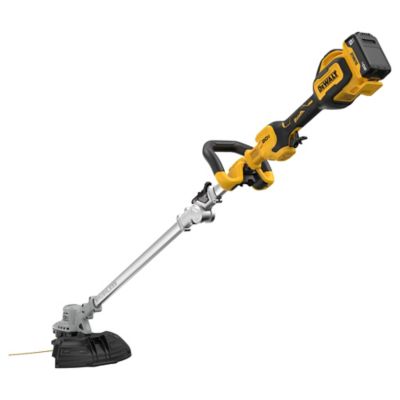
Trimmers and Edgers selection covers tools that serve a different purpose: a handheld trimmer can reach into a tight corner, while an edger is meant to cut a defined border where turf meets a walk or driveway. A trim mower earns its keep on the longer, rougher runs between those spots. A little upkeep helps keep it ready for those jobs. Grass can pack around the head and guard, and twine or stray wire can wind up where it’s hard to see. Clearing the buildup with the machine shut down and the power source disconnected as directed in the manual makes it easier to spot a worn head, a cracked guard or loose hardware before the next pass. Keeping the machine clean and storing it in a dry spot helps protect metal parts, especially where the finish has been scuffed. On properties with a mix of lawn, fence lines and ground that doesn’t get a finish cut, a trim mower fills the gap between the full mowing deck and the handheld trimmer. It gives the operator a way to stay on foot and take down a long strip of growth without carrying the tool from one end to the other.