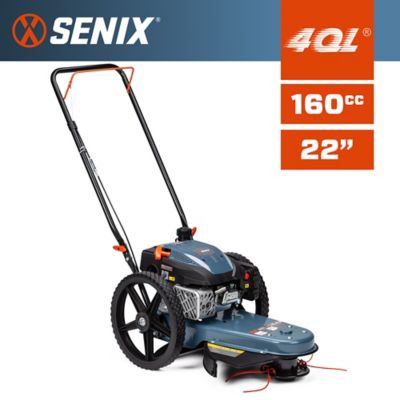
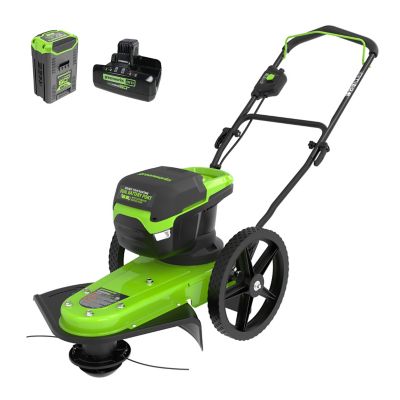
Wheeled trimmers bring the reach of a string trimmer to a walk-behind frame, giving property owners a practical way to knock down tall grass and thick weeds without carrying the machine’s full weight. Also called walk-behind string trimmers or field trimmers, these machines cut with rotating nylon line rather than the rigid blade found beneath a typical lawn mower. That setup suits the rougher stretches of a place: grass along a pasture fence, weeds beside an equipment shed, or an open patch beyond the regularly mowed yard. The wheels support the engine or motor while the operator steers from behind a handle, which can make longer trimming jobs less taxing on the arms and shoulders than carrying a handheld machine. There is still pushing, turning, and footing to account for, especially on soft ground or uneven stretches. Compared with
handheld trimmers, wheeled machines generally make more sense for broad runs of vegetation than for weaving between closely spaced shrubs or reaching into narrow corners. A wider cutting path can cover more ground with each pass, while an offset cutting head, where included, can help reach alongside fence lines and other boundaries. That reach does not mean the line should strike posts, siding, or tree trunks; fast-moving line can damage surfaces and bark. These machines are primarily grass-and-weed cutters, not substitutes for equipment rated for woody stems, saplings, or heavy brush. For folks tending a few acres, maintaining a rural homesite, or keeping access clear around outbuildings, that distinction helps put wheeled trimmers in their proper place. They handle the in-between work that can overwhelm a light trimming routine without necessarily calling for a larger field-cutting machine. They also fit into seasonal property upkeep wherever standing grass and weeds remain after regular mowing slows down, with the work shaped by local growing conditions rather than the calendar. Along a long fence or across an untended yard edge, that combination of ground coverage and line-cutting reach can be especially useful.
Power source, cutting width, wheel design, and handle fit all affect how a wheeled string trimmer feels once it leaves the shed. Gas-powered wheeled trimmers offer engine-driven cutting without a cord and can suit extended work away from electrical outlets, though they bring fuel handling, engine noise, and routine engine maintenance into the picture. Battery-powered designs avoid gasoline handling and may simplify starting, while working time depends on battery capacity, vegetation thickness, and operating conditions. Neither engine displacement nor battery voltage alone tells the whole story about cutting performance. Thick, damp grass puts a different load on a machine than a dry stand of scattered weeds, and taking an overly wide bite can slow progress regardless of power source. Cutting widths in this category are often broader than those of handheld tools, but more width also means more space to turn around gateposts, garden borders, and parked equipment. Tall wheels can roll over small ruts and uneven ground more readily than smaller wheels, though wheel height does not make rocky ground or steep slopes safe. Tire construction, tread, overall weight, and balance matter when the route includes packed soil, gravel edges, and grassy stretches. Many wheeled trimmers depend on the operator for forward movement; powered cutting does not necessarily mean powered wheels. Where self-propelled operation is a consideration, that feature needs to be stated in the machine’s specifications. Handle height and grip position also deserve attention because a comfortable stance helps with steering through a long pass. Adjustable handles can accommodate different operators, while folding handles can reduce the space needed for storage. Steel frames or housings offer a substantial structure, and their protective finishes benefit from attention to scratches and lingering moisture. Guards help manage thrown debris, but eye protection, sturdy footwear, long pants, and hearing protection as appropriate remain part of the job. Keeping people and animals outside the manufacturer’s stated clearance distance matters around yards, lanes, and livestock areas alike. A quick look for wire, stones, and hidden obstacles is especially important along old fence rows.
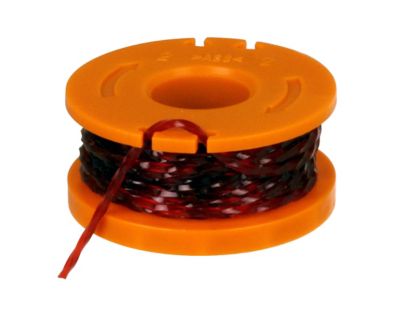
The cutting line is a small part of a wheeled trimmer, but it has a big say in day-to-day performance. Many walk-behind designs take thicker nylon line than lighter handheld machines, with attachment systems that may accept precut lengths rather than a bump-feed spool. The specified line diameter, length, shape, and attachment method matter more than simply choosing the thickest line on the shelf. Oversize or incorrectly installed line can affect operation, and wire or other improvised cutting materials do not belong in a nylon-line cutting head. For anyone maintaining long property edges, access to the line attachment points and the steps involved in replacement are worth considering alongside cutting width and power. Contact with masonry, gravel, and fencing wears line faster than trimming grass alone, so the amount of hard edging on a property affects ongoing upkeep. Adjustable cutting height, where offered, can help match the finished height to the setting, whether that is a maintained strip beside a driveway or a taller cut at the edge of an open field. A wheeled trimmer typically leaves cut vegetation behind rather than collecting it, and its finish is not necessarily the same as a lawn mower’s. Care centers on keeping grass buildup from collecting around the cutting assembly, maintaining clear cooling passages, and checking wheels, fasteners, and guards according to the owner’s manual. Cleaning or servicing calls for a stopped machine and the manufacturer’s specified steps to prevent an unexpected start. Gas engines also need the prescribed oil, filter, and fuel care, while battery equipment needs compatible batteries and chargers plus storage within the stated temperature limits. As outdoor work tapers off during the cooler months, a clean, dry storage spot helps protect metal surfaces and keeps the machine out of standing moisture. Floor space matters even with a folding handle, particularly in a shed shared with a mower, feed tubs, and fencing tools. Matching the machine’s footprint, upkeep, and cutting ability to the property makes wheeled trimmers a useful part of a well-planned yard and acreage equipment lineup.