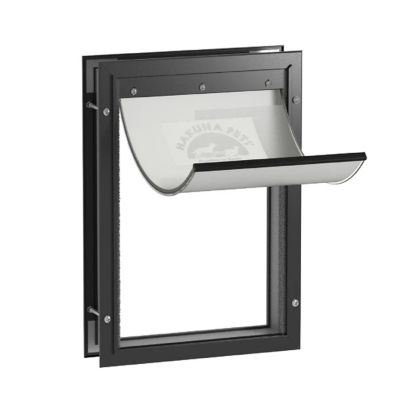
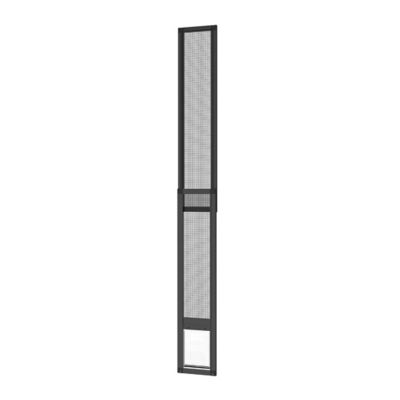
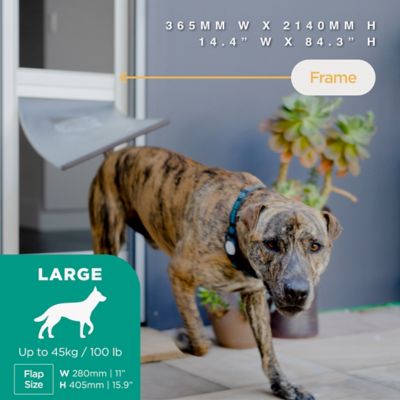
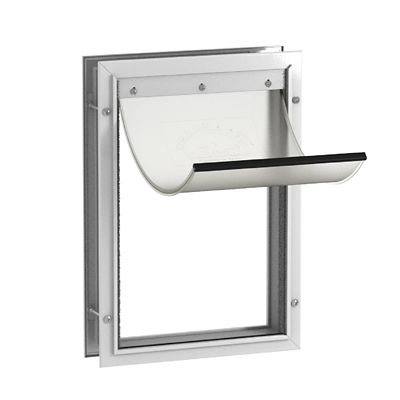
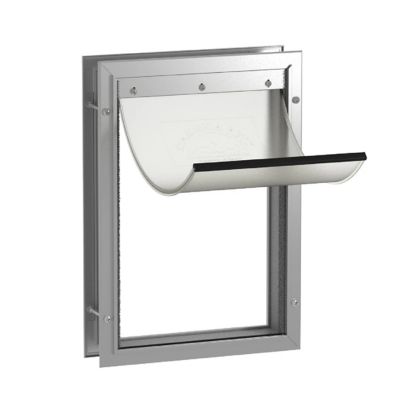
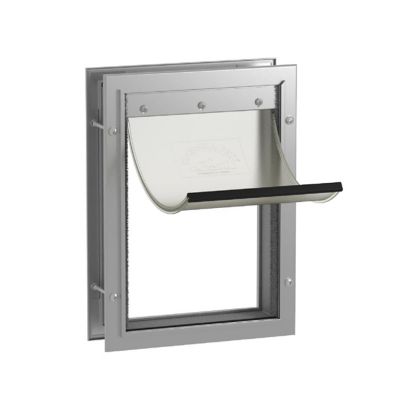
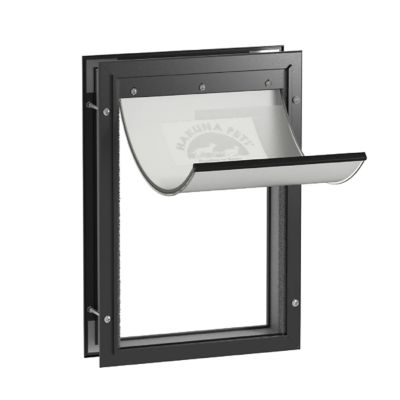
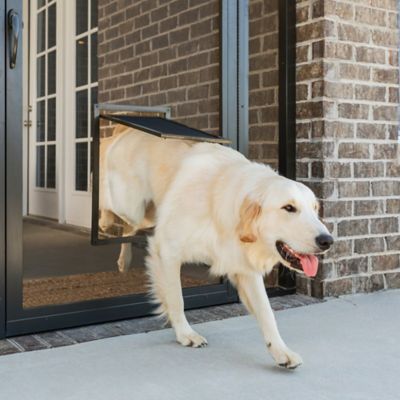
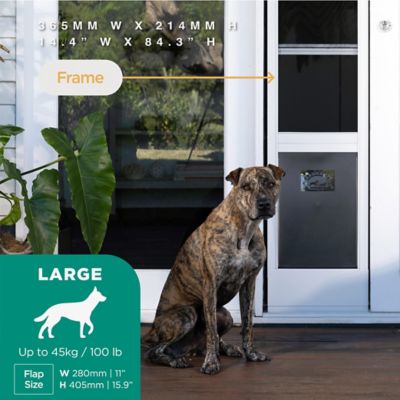
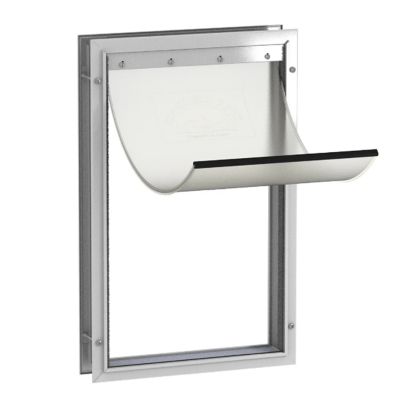
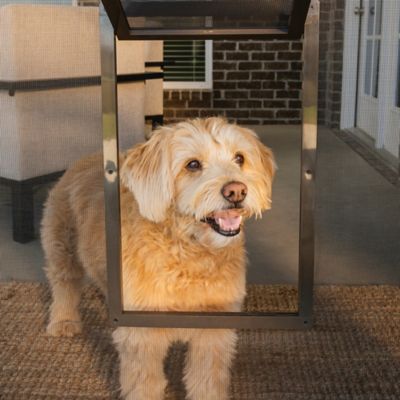
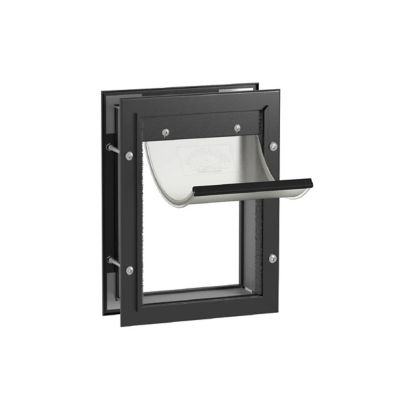
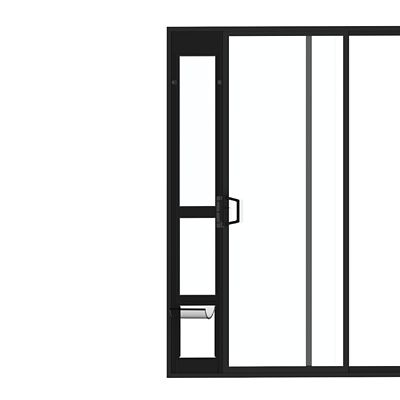
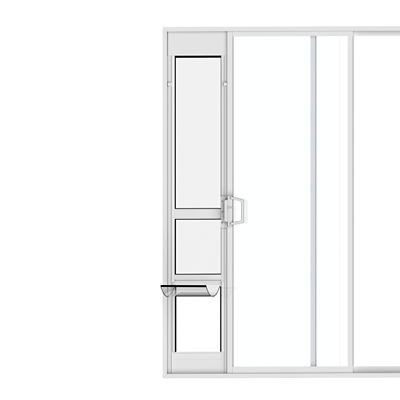
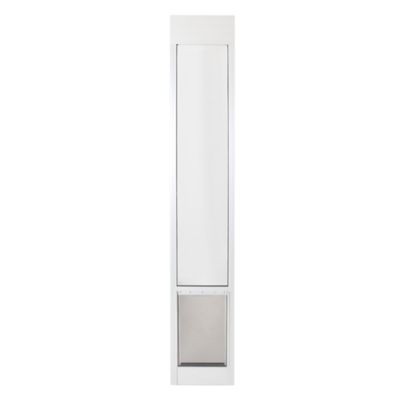
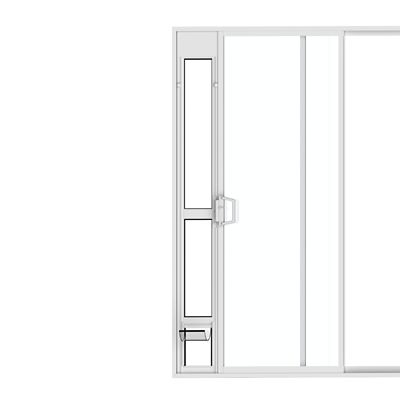
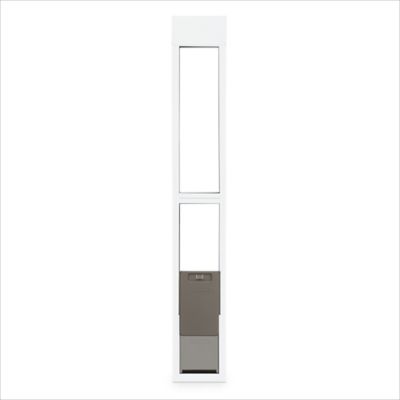
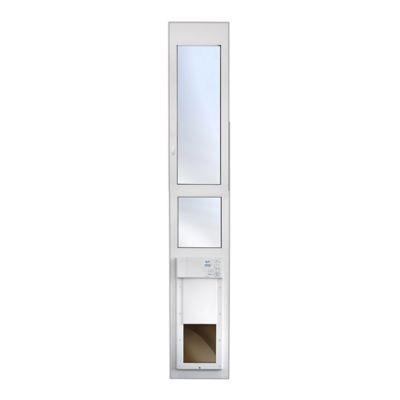
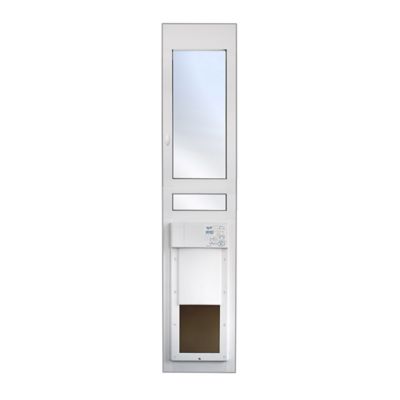
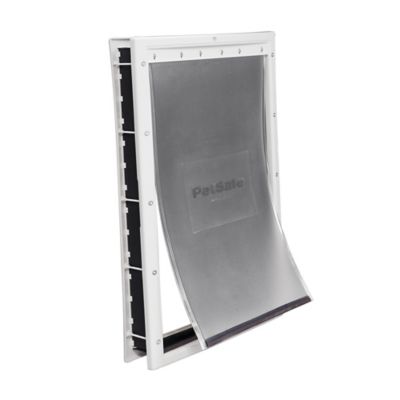
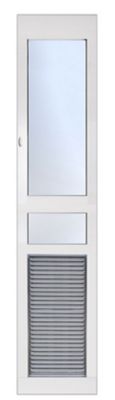
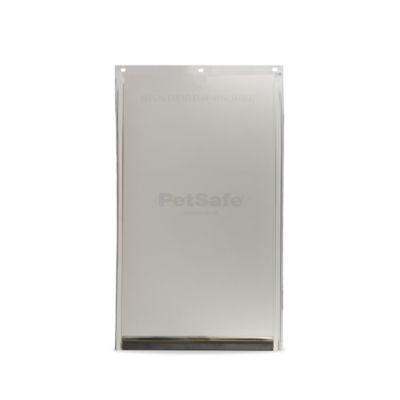
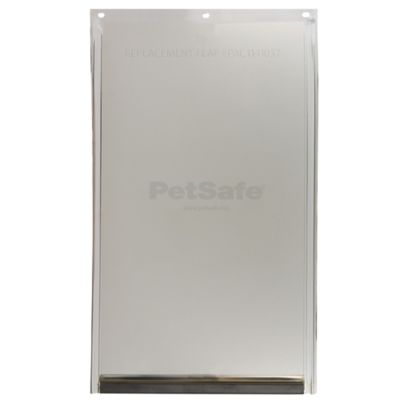
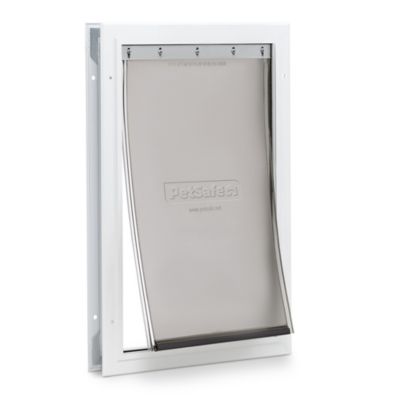
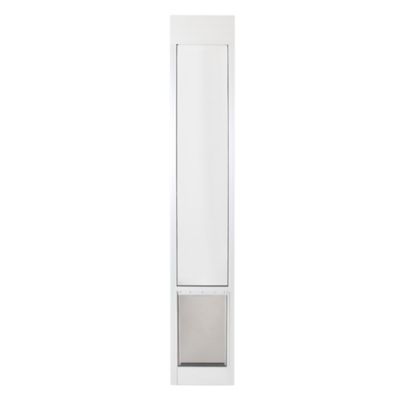
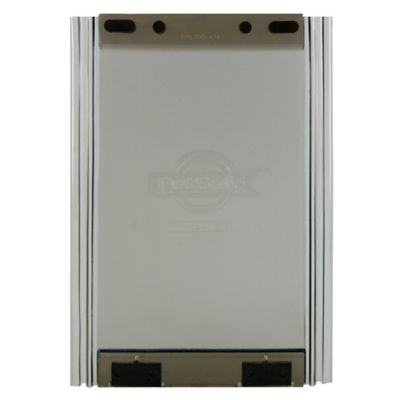
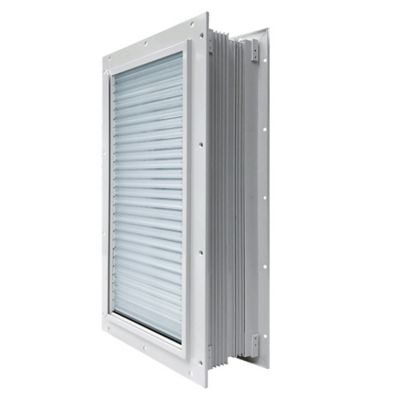
Dog doors for sliding screen doors give pets a passage through a screen panel, letting them move between the house and an enclosed porch, patio, or fenced yard without someone opening the screen each time. Screen-mounted pet doors and patio insert panels are the two main options shoppers encounter under the sliding-door label, but they fit different parts of the doorway. A screen-mounted dog door installs within the screen panel, with a frame that supports a swinging flap and attaches to compatible mesh or screen framing. A patio insert is a tall, rigid panel that generally fits into a sliding glass door track, with a pet opening near the bottom; it is not automatically compatible with the separate screen track. That distinction matters when the goal is to keep the screen in place while giving a dog access to the back porch. With a screen-mounted opening, the glass door still needs to be open far enough for the dog to pass. The screen itself remains a lightweight barrier rather than a security door. Molded plastic or metal framing, mesh flap panels, flexible flaps, hinges, and closing mechanisms all affect how an opening feels to a pet and how much support it needs. A lightweight flap can be easier for a smaller dog to push, while a larger opening puts more movement and leverage on the surrounding screen. Compatibility with fiberglass mesh, metal screening, or pet-resistant mesh depends on the door’s mounting requirements, not just the size printed on the package. Reinforcement around the opening can matter as much as the flap itself, especially where a dog regularly noses through on the way to a favorite spot by the fence. For a household with an established outdoor routine, these doors can reduce trips to the handle while keeping the main screen panel closed around the pet’s passage.
Fit has two parts: room for the dog and room for the hardware to operate without interfering with the sliding assembly. A dog’s shoulder width, body height, and natural stride tell more about a comfortable opening than weight alone. Two dogs of similar weight can have very different builds, and a broad-chested dog may need more clearance than a taller, slimmer companion. The passage should accommodate the body without tight rubbing, awkward crouching, or a high step that catches the belly. A low threshold can be especially helpful for short-legged dogs and older pets with limited mobility, though the screen frame and mounting design determine how low an opening can sit. Puppies bring another consideration: an opening that fits at an early growth stage may not suit an adult dog. In homes with several pets, the largest dog’s clearance and the smallest pet’s ability to move the flap both matter. Around the doorway, frame thickness, panel dimensions, track spacing, roller condition, and latch placement influence whether a screen-mounted door makes sense. Added hardware needs enough clearance to travel past the stationary panel without scraping, catching, or preventing the screen from closing. A screen that already sags or jumps its track may need attention before it can support a pet passage. Patio inserts involve a different set of measurements, including the full track height, panel width, and the way the sliding glass door closes against the insert. For that style of opening,
Pet Doors For Glass Sliding Doors offers a related category to consider. Insert panels also take up part of the human walkway, which can matter when carrying a feed sack, moving a dog crate, or bringing groceries through the back door. The best match suits the whole doorway, not merely the space a dog needs to squeeze through.
Everyday wear tends to show up where paws, noses, mesh, and moving parts meet. A dog that walks calmly through an opening places different demands on a screen than one that charges toward every squirrel beyond the porch. Frame strength, attachment points, hinge movement, and the condition of the surrounding mesh all contribute to long-term performance. A screen-mounted passage is not a substitute for a solid barrier when a dog scratches, chews, or pushes hard against the panel. Smooth edges and snug connections help keep the opening comfortable, while loose corners, torn mesh, or a flap that drags can make a pet hesitate or catch a collar tag. Care usually centers on clearing hair and grit from the flap edges, wiping compatible surfaces with a mild cleaner, and keeping the sliding track free of debris. Cleaning methods and replacement parts should match the materials and the manufacturer’s directions, since harsh solvents or abrasive tools can damage some plastics, finishes, and screen fabrics. An occasional look at fasteners and attachment points helps catch movement before a small gap becomes a larger tear. Closing features also deserve attention: depending on the design, a flap may have a latch, sliding closure, magnetic catch, or another way to limit passage. Those features control the pet opening, but they do not make the surrounding screen a security barrier or replace a properly secured exterior door. Outdoor access still depends on sound fencing, closed gates, and supervision suited to the dog. Children, visiting pets, and animals outside the household may also be able to reach an open passage. For a cautious dog, a quiet flap with an easy push can make the doorway less intimidating; a rattling frame or stiff hinge may have the opposite effect. In a busy home, the most practical setup is one that fits the pet’s movement, works with the existing screen, and can be closed whenever outside access needs to stop.