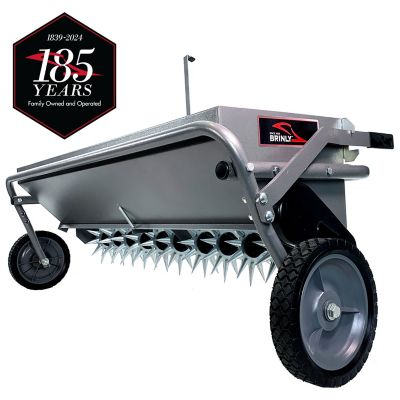
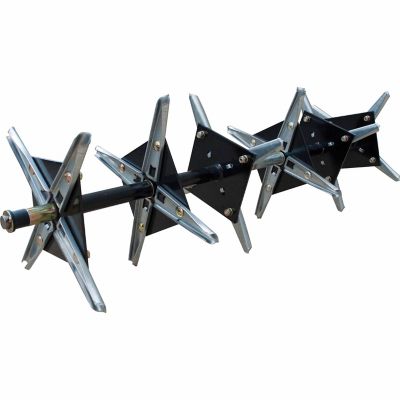
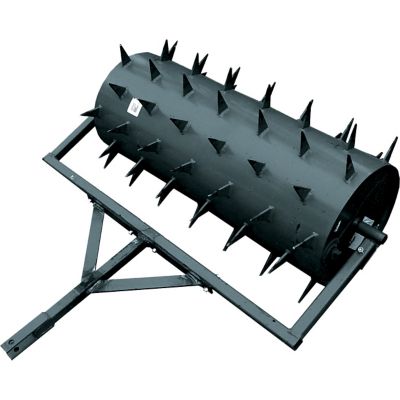
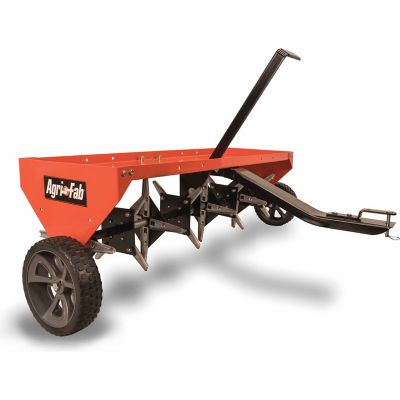
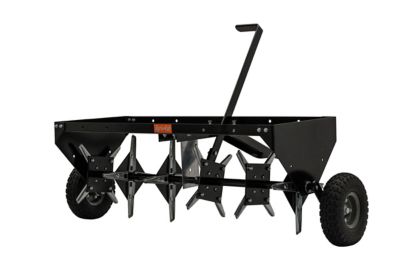
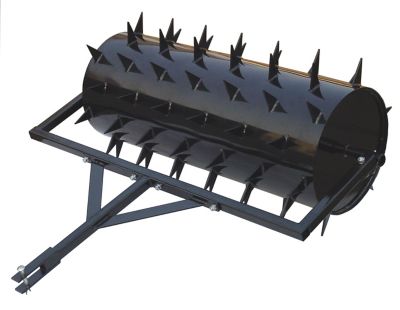
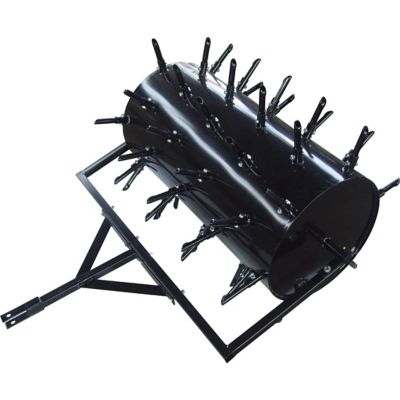
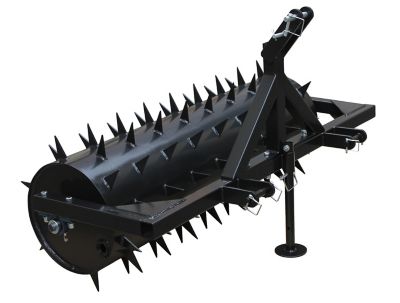
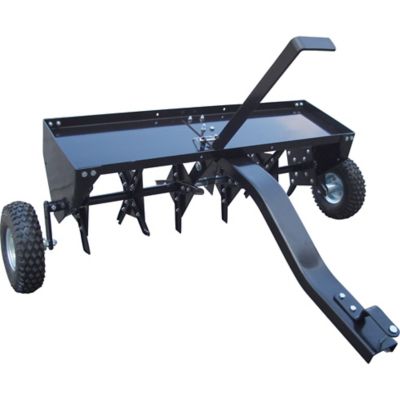
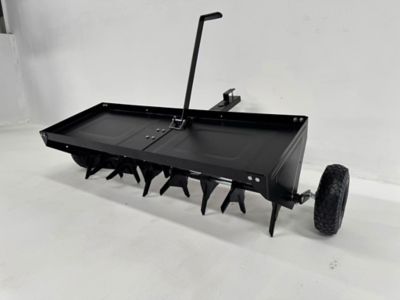
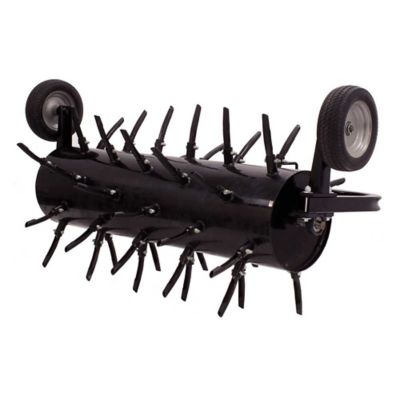
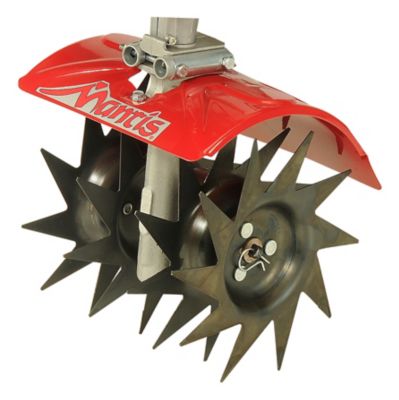
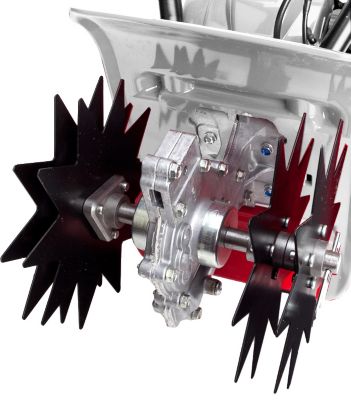
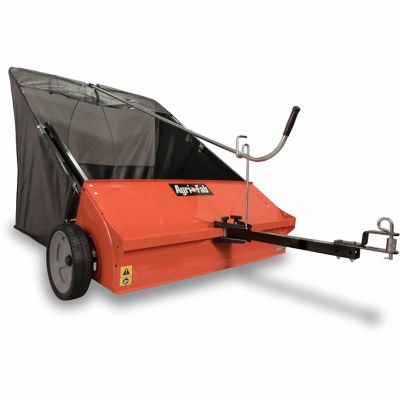
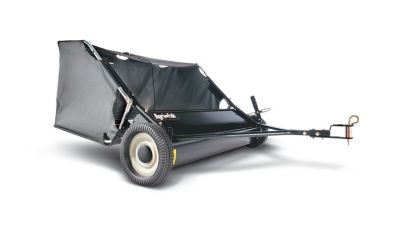
Aerator attachments connect to compatible riding mowers, lawn tractors, zero-turn mowers, or utility vehicles to open small holes in the soil beneath a lawn. Those openings help air, water, and nutrients reach the root zone where packed ground can otherwise slow their movement. For a homeowner tending a broad front yard, a groundskeeper maintaining turf around outbuildings, or a property owner managing several grassy acres, an attachment puts existing equipment to work on another lawn-care job. Repeated foot traffic, mower passes, and activity around gates or play areas can press soil together, especially in ground with a high clay content. Aeration addresses that compaction mechanically, though different attachments work in different ways. Plug, or core, aerators have hollow tines that pull small cylinders of soil from the ground, leaving open spaces that give surrounding soil room to loosen. Spike aerators have solid points or star-shaped tines that puncture the surface without removing soil. That distinction matters more than how similar the frames may look: core aeration generally offers more relief for compacted lawns, while spike attachments suit lighter surface work where removing plugs is not the main goal. A lawn with a well-traveled path between the house and barn may call for a different approach than an open stretch with little traffic. For shoppers comparing soil-removing attachments,
plug aerators are a practical category to consider for turf where compaction is the main concern. Aeration can also support overseeding by creating openings where some seed can reach the soil, although seed-to-soil contact and follow-up care still matter. These attachments belong in a turf-maintenance setup rather than taking the place of a tiller, grading blade, or brush-clearing implement. Their job is to work through established grass and into the soil below while leaving most of the lawn surface intact. The right style depends on the ground, the amount of turf, and the equipment doing the pulling.
Attachment fit starts with the connection, not just the name of the towing machine. Tow-behind aerators commonly connect through a pin-style hitch, but a broadly compatible hitch still needs to match the vehicle’s hitch arrangement, permitted towing load, and operating requirements. A zero-turn mower, for example, may have towing restrictions even when a hitch can be fitted to it. Utility vehicles likewise need a compatible connection and must operate within the aerator’s specified speed limits. Direct-mounted and front-mounted aerators rely on mounting systems intended for particular machines, so they are not interchangeable with ordinary tow-behind equipment. Working width is another useful point of comparison. Many residential tow-behind designs have working widths around 40 to 48 inches, while dimensions vary across attachment types. A wider tine pattern covers more ground with each pass, but the full frame and wheel span determine whether the attachment fits through a narrow gate or between fence posts. Broad, open lawns offer room for wider equipment; yards broken up by garden beds, trees, and sheds put more value on maneuverability. Turning clearance also matters because a trailing attachment follows a different path from the mower, especially around tight corners. Some designs have independently rotating tine sections that help accommodate turns, though sharp turns with the tines engaged may still damage turf. Transport wheels and a lift mechanism let the working points clear the ground for travel across a driveway or walkway. Lift-lever placement can make a noticeable difference when a property has several separate patches of grass connected by hard surfaces. Weight trays are another common feature, giving approved ballast a place on the frame when additional downforce is needed. The tray’s rated capacity, the specified way to secure the load, and the towing vehicle’s limits all belong in that comparison. Extra weight is not a substitute for suitable soil conditions, and loading beyond the stated limits can strain both the attachment and the machine pulling it.
Materials and construction help determine how an aerator attachment handles repeated contact with the ground. Steel frames provide support for the tine assembly and ballast tray, while hardened steel working points can offer greater resistance to wear where that construction is specified. Painted or powder-coated surfaces help protect exposed metal, but scratches, trapped soil, and moisture can still lead to rust. Frame joints, axle supports, hitch hardware, and wheel assemblies all take stress as the attachment moves across uneven turf. Replaceable tines, accessible grease fittings where fitted, and serviceable bearings or bushings can make ongoing upkeep more manageable. Hollow coring tines also need enough clearance to release soil plugs; sticky soil or debris can clog their openings and interrupt the work. Ground that is moist enough for penetration, without being saturated, generally supports better operation than soil that is either rock-hard or soft enough to rut under the towing vehicle. Actual penetration depends on tine design, attachment weight, soil texture, and ground conditions, so a stated maximum depth is not a promise of the same result across every yard. A stretch beside a gravel lane may contain buried stones, while the turf near a shade tree may have shallow roots that call for extra care. Irrigation heads, valve boxes, shallow lines, and other hidden obstacles also affect where an aerator can safely work. For properties with slopes, the operating limits of both the towing machine and attachment matter, especially when ballast adds weight behind the vehicle. After the job, clearing packed soil and grass from the working parts makes inspection easier and helps keep moisture from sitting against the metal. Hollow tines benefit from having their openings cleared, and moving parts need lubrication according to the equipment manual. Covered storage, secure hardware, and replacement of bent or worn working points help keep the attachment ready for the next round of lawn maintenance. For acreage owners and folks keeping a busy home lawn in shape, the most useful aerator attachment is one that matches the mower, reaches the intended areas, and offers practical access for cleaning and service.