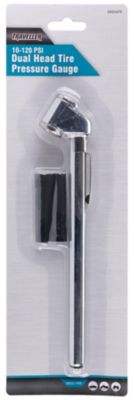
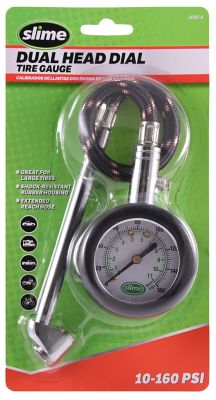
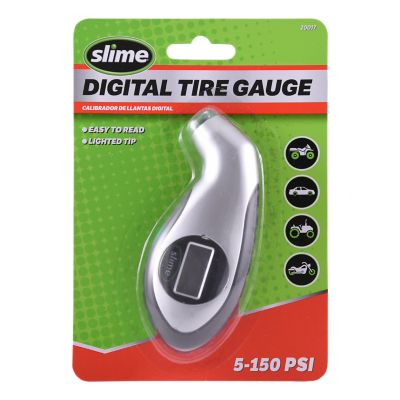
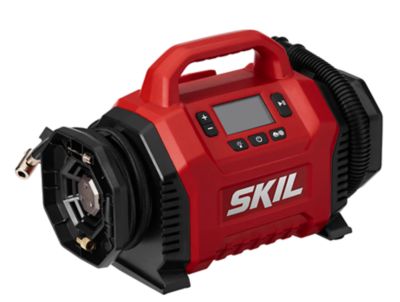
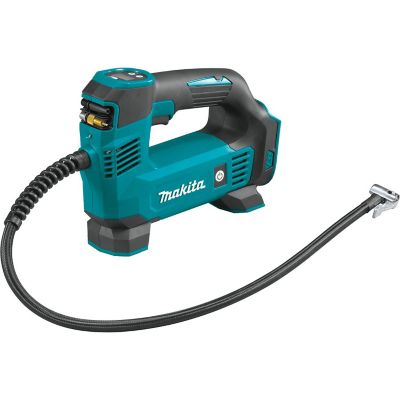
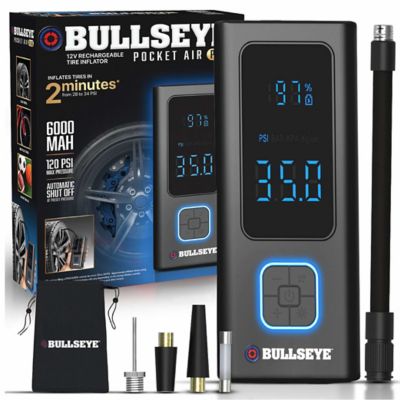
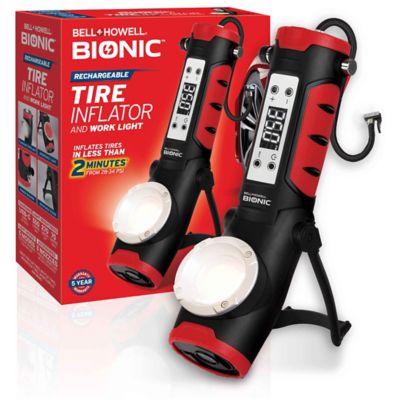
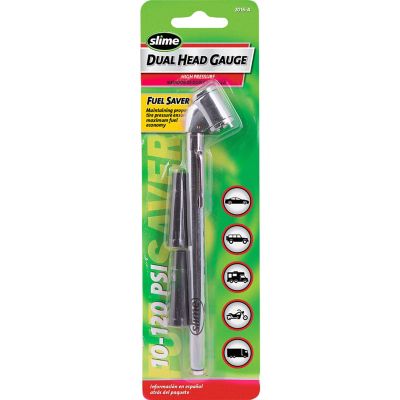
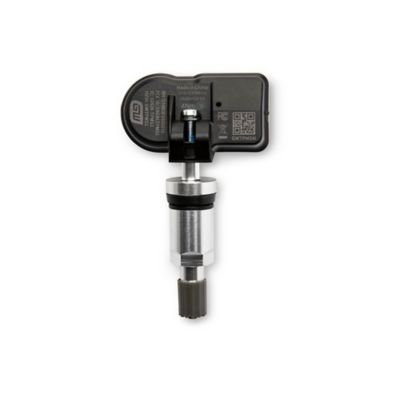
Tire pressure tools make it easier to keep cars, pickups, trailers, tractors, ATVs, motorcycles, bicycles, and other equipment riding on properly filled tires. Correct tire pressure supports safer handling, steadier braking, more even tread wear, and better fuel economy, while underinflated tires can run hotter and wear along the edges. Overinflation can reduce traction and make a rough road feel even rougher. A dependable gauge belongs in the glove box, tool chest, or shop cabinet for the same reason a flashlight and tire repair kit do: it is a small tool that can save a long walk down a gravel road. Check pressure when the tires are cool, before driving far enough to build heat, and use the vehicle or equipment manufacturer’s recommended pressure rather than the maximum number molded into the tire sidewall. A digital tire pressure gauge displays a clear numerical reading on an LCD or LED screen and can be a handy choice for drivers who want quick, easy-to-read measurements, especially in low light. Digital models may offer features such as automatic shutoff, selectable pressure units, and backlit displays, though they depend on batteries. Analog or dial gauges use a mechanical needle, do not require batteries, and are often easy to read at a glance in a busy barn or garage. Pencil-style gauges are compact, simple, and convenient to leave in a toolbox or carry in a work truck. Whichever style fits your routine, look for a pressure range that covers the tires you plan to service and a readable scale that lets you make small adjustments without guessing.
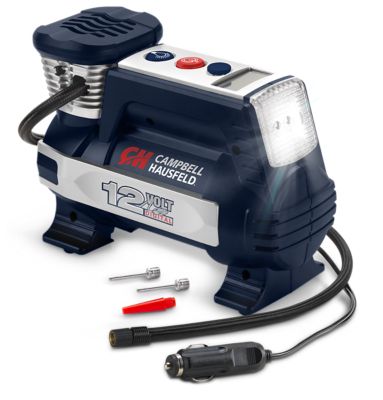
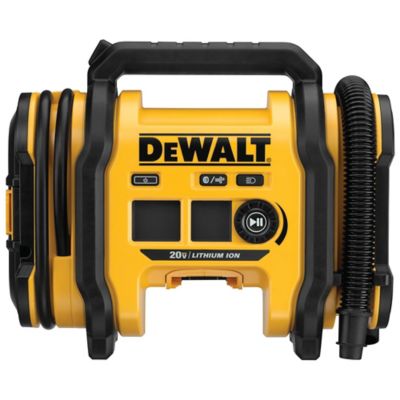
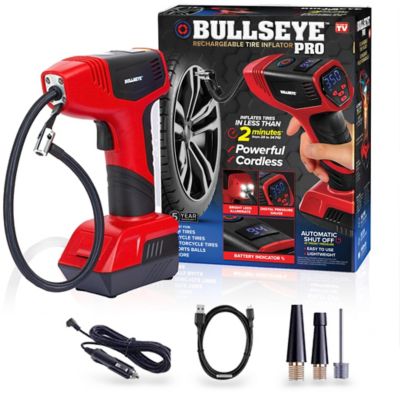
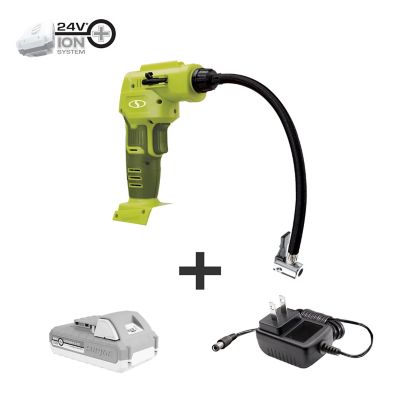
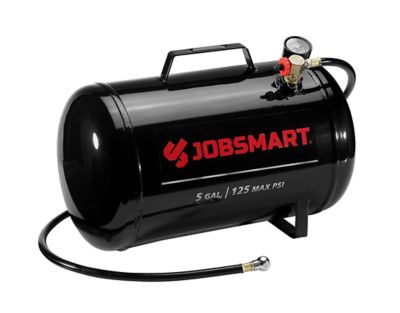
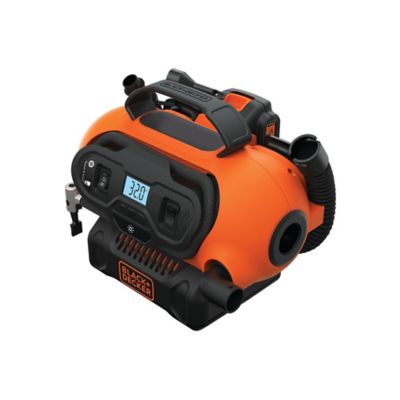
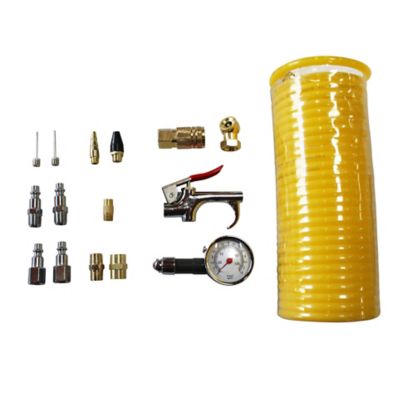
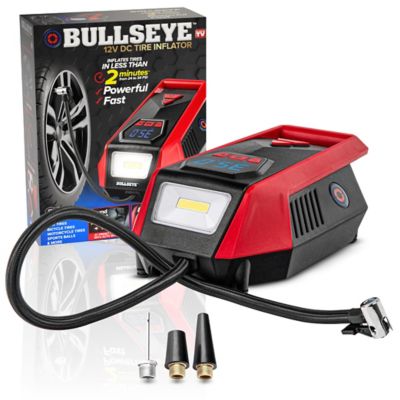
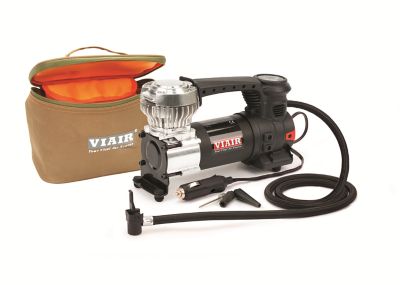
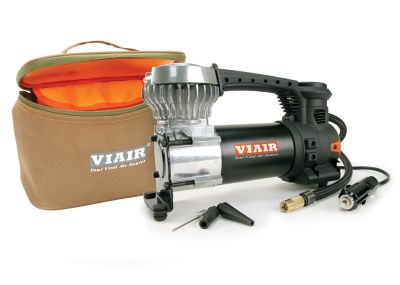
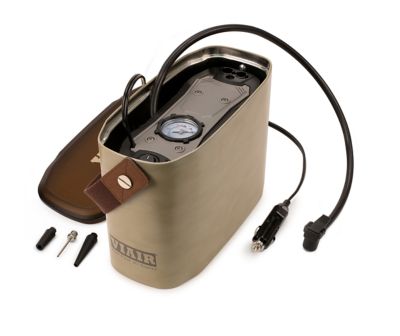
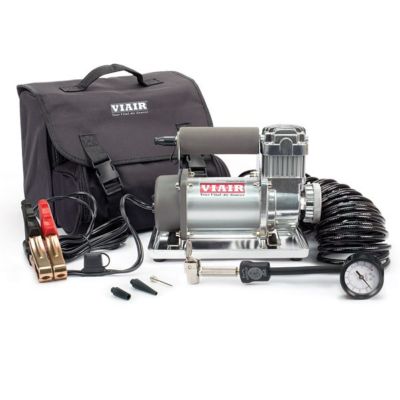
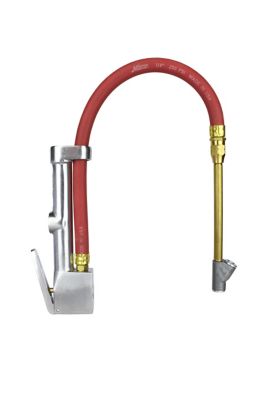
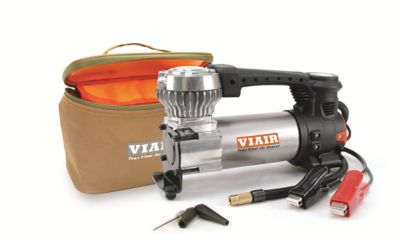
Some tire pressure tools are designed to measure pressure, while others combine a gauge with an inflator, deflator, hose, or air chuck for a more complete setup. An inflator tool can connect to an air compressor and add air in controlled bursts, helping prevent the familiar cycle of filling a tire, removing the hose, checking it, and starting over. A deflator function is useful when airing down for loose ground, sandy paths, or certain off-road conditions, but pressure should be checked often so the tire is not lowered farther than intended. Pay close attention to the tool’s pressure range and accuracy, particularly when working with light-duty tires, high-pressure trailer tires, or equipment with different pressure requirements at each axle. The connection at the valve stem matters, too. A firm seal helps reduce air loss and produces a more dependable reading. Straight chucks work well in many everyday applications, while extended, angled, dual-head, or swivel-style designs can make hard-to-reach valve stems easier to access behind wheel covers, between paired trailer tires, or on compact equipment. For more options that focus on the connection between an air hose and a tire valve, see
Tire Air Chucks. Before purchasing, consider whether the tool fits your compressor hose, valve stems, and preferred pressure units. A long hose can be helpful around a truck or utility trailer, while a compact gauge may be all that is needed for a passenger vehicle or bicycle. A sturdy housing, protected face, comfortable grip, and storage case can make a difference when the tool rides around in a dusty pickup or gets used with work gloves. If the tool uses batteries, keep a spare set nearby and remove old batteries before storing it for a long stretch.
Tire pressure tools are useful for nearly anyone who handles regular driving or property upkeep. Commuters can check pressure before a long highway trip, parents can keep family vehicles ready for school runs and errands, and farmers can inspect tires on tractors, wagons, sprayers, and utility vehicles as changing loads and field conditions call for it. Owners of campers, boat trailers, livestock trailers, and fifth wheels may appreciate a gauge with an extended reach or a hose that makes dual-wheel assemblies less of a chore. During the warmer and cooler stretches of the year, temperature swings can change tire pressure, so a quick check can be worthwhile when a vehicle has been sitting outside overnight or after a sharp change in weather. It is also smart to inspect pressure after loading a trailer, hauling heavy feed or fencing supplies, or preparing for a trip over rough country roads. These tools make practical gifts for a new driver, a ranch hand, a weekend mechanic, a cyclist, or anyone who keeps a well-stocked emergency kit. A simple pencil gauge suits someone who values no-fuss reliability, while a digital gauge or inflator setup may be appreciated by a driver who likes precise readings and faster maintenance. Store the tool where it is easy to reach, check it against a trusted gauge from time to time, and replace worn seals or damaged hoses rather than relying on a loose connection. With a few minutes of attention and the right tire pressure tool, routine maintenance becomes less of a hassle and more like checking the oil or topping off the washer fluid—one small job that helps keep every trip, chore, and backroad mile moving along.