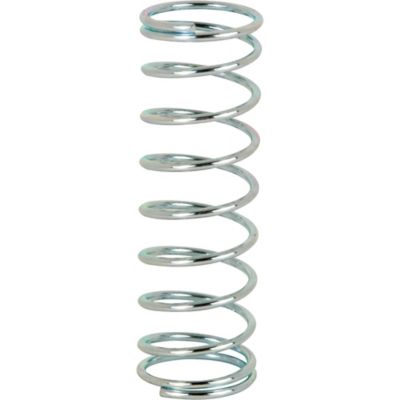
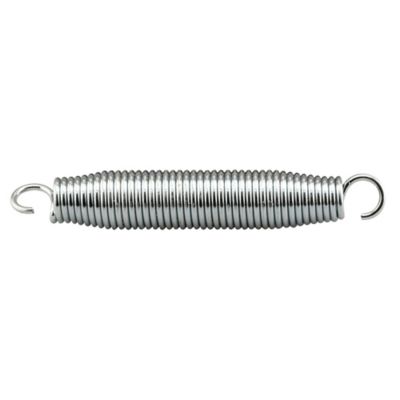
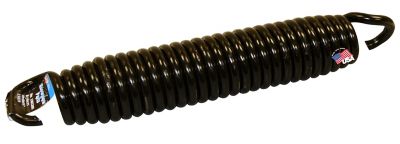
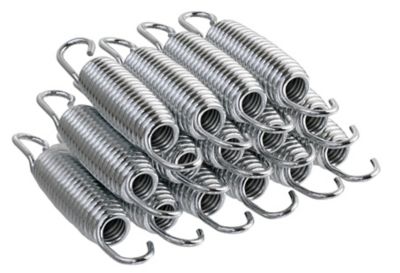
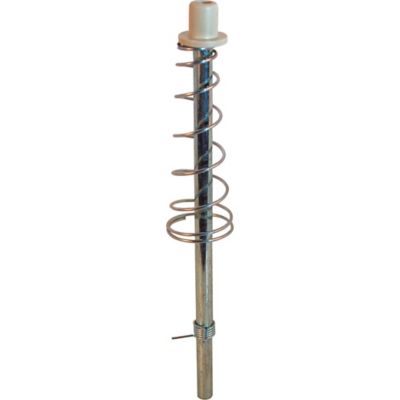
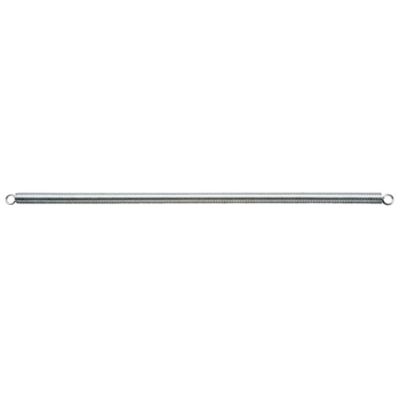
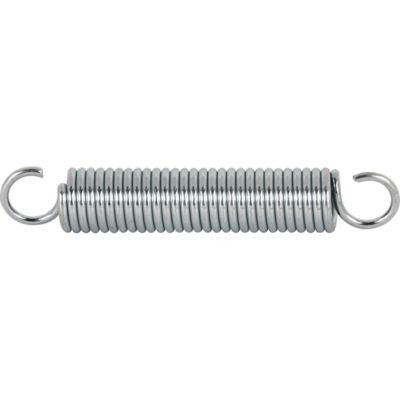
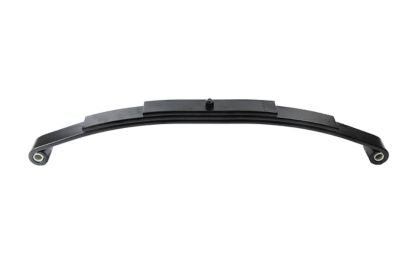
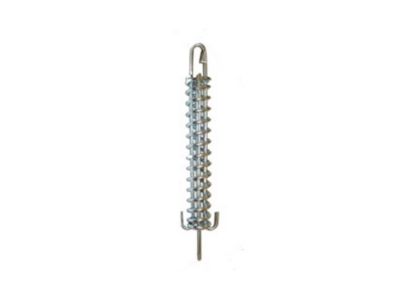
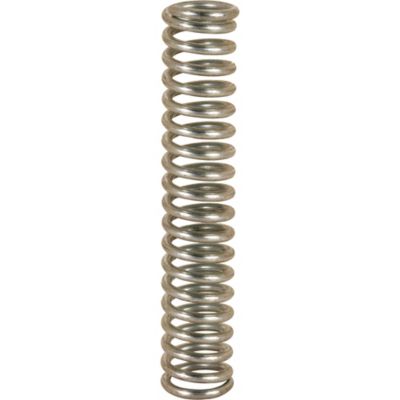
Steel springs store mechanical energy when compressed, stretched, or twisted, then release that energy as the force eases. Within their designed working range, they return toward their original shape, helping parts move, hold tension, cushion movement, or return to a starting position. That simple action supports plenty of work around a farm, shop, or home, from keeping a latch engaged to bringing a control lever back after each pull. The right spring does more than fit an opening: it supplies the force a mechanism needs through its full range of travel. Compression springs push back when squeezed, making them a common choice for mechanisms that need resistance between two surfaces. Extension springs pull their attachment points together as they stretch. These
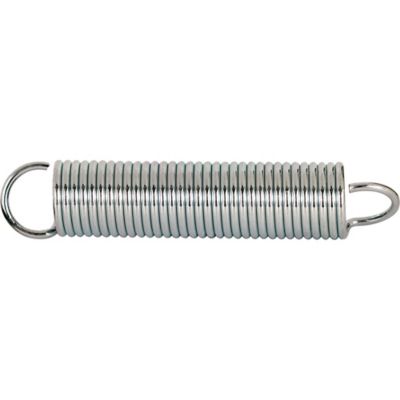
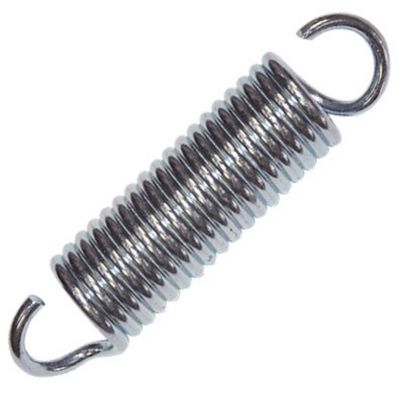
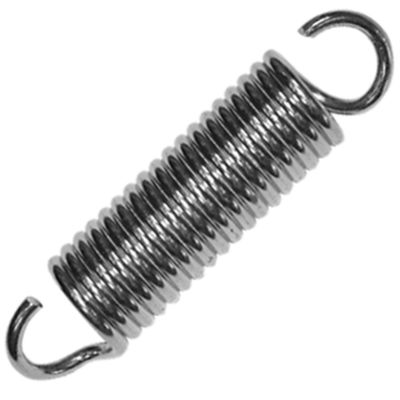
Tension Springs often have hooks or loops at each end and suit applications that call for a pulling or return force. Torsion springs work through angular movement, with legs that resist rotation around a coil. Although these designs share the same basic purpose of storing and releasing energy, they are not interchangeable. A spring that pushes against a sliding part cannot simply take the place of one that pulls a linkage back. For property owners, equipment operators, and folks who keep a workbench ready for repairs, those differences help narrow the choice to the right kind of movement. Picture a small latch that no longer snaps back into place: the trouble may involve spring force, but worn attachment points or a binding pivot can cause similar symptoms. Looking at the whole mechanism helps keep a spring replacement from masking another problem. Steel springs belong in that broader system, working alongside pins, brackets, shafts, and housings rather than making up for parts that no longer line up.
Material and dimensions both shape how a steel spring performs. Spring steel generally refers to steel formulated and processed for resilience, allowing it to flex repeatedly within a specified range without taking a permanent set. High-carbon steel and certain alloy steels are common choices, while music wire is a high-carbon spring wire suited to many small mechanical applications. Stainless steel offers corrosion resistance that can matter around water, washdown areas, and damp equipment spaces, though its performance depends on the alloy and exposure. Stainless steel is not immune to corrosion, and a material change may also change the force a spring delivers. Zinc plating and other finishes can help protect some carbon steel springs, but a coating does not replace a suitable base material or sound maintenance. Fit starts with more than a quick side-by-side look at the old part. Wire diameter, outside diameter, inside diameter, free length, and end shape each affect whether a spring belongs in a particular assembly. Free length describes the spring in its unloaded state; the installed length and working travel show what happens once the mechanism is together. For a compression spring, clearance around a guide rod or inside a pocket matters, as does enough room to compress without reaching solid height, where the coils contact one another. For an extension spring, hook shape, opening size, and attachment direction affect seating and movement. A torsion spring also needs the proper winding direction, leg arrangement, and clearance around its supporting shaft. Spring rate describes how force changes with deflection, so two coils with similar dimensions may behave quite differently under load. Extension springs can also have initial tension, the force that must be overcome before their coils begin to separate. Manufacturer specifications provide a better match than appearance alone, especially when a spring must return a lever without making it hard to operate. A stronger spring is not automatically a better fit; extra force can strain brackets, increase wear, or interfere with the movement the equipment was built to provide.
Long service life depends on keeping a spring within its intended load and travel limits. Repeated overextension, excessive compression, sideways loading, and rubbing against nearby metal can lead to fatigue or permanent changes in shape. A spring that stays stretched, sits crooked, or no longer returns a part to its resting position deserves attention, but the surrounding assembly matters just as much. An elongated mounting hole can let a hook rock back and forth, while a rough guide surface can scrape a coil every time a handle moves. On equipment that sees dust, grit, or frequent washdowns, clean contact points and an appropriate protective finish help limit wear and corrosion. Care should follow the equipment maker’s recommendations, including whether lubrication belongs on the spring, its supports, or neither. Oil is not helpful everywhere; in a gritty setting, the wrong lubricant can collect debris around moving parts. Rust pits, cracks, damaged hooks, and distorted coils are reasons to take a spring out of service rather than try to bend it back into shape. Cutting coils, heating the wire, or reshaping an end can alter spring behavior and create weak points. Stored energy also calls for care during replacement. Equipment should be shut down, isolated from its power source, and supported as its manufacturer directs before any spring attachment is disturbed. High-force assemblies, including garage door and vehicle suspension mechanisms, call for proper tools and trained service rather than a general replacement chosen by size. For routine shop and property maintenance, the most useful spring is one matched to the job’s motion, load, mounting points, and operating environment. Clear measurements and documented specifications make future repairs easier, particularly when several similar-looking springs serve different functions on the same equipment. Whether the job involves a frequently operated latch, a return linkage, or a small shop mechanism, a well-matched steel spring helps the parts move together without forcing the operator to fight the equipment.