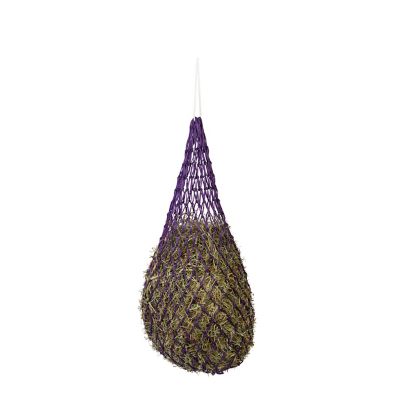
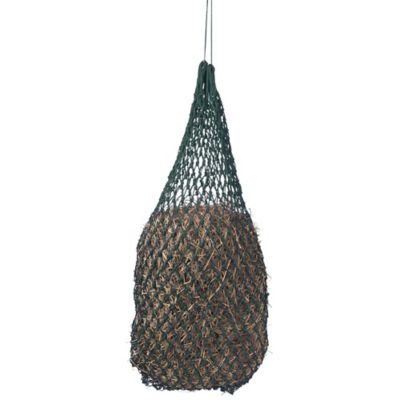
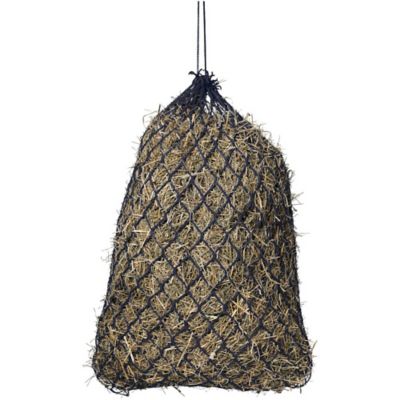
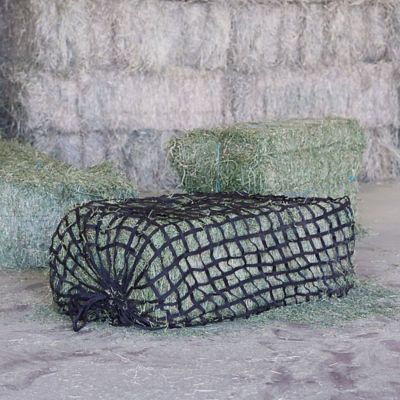
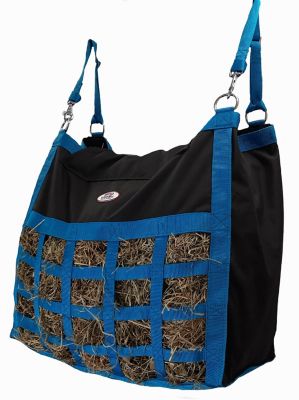
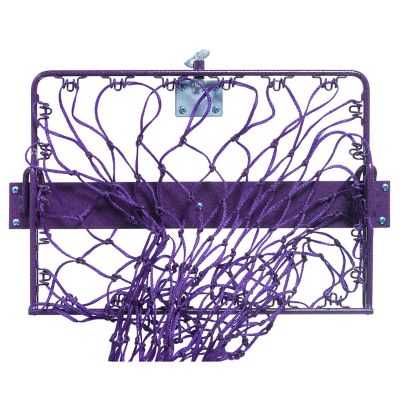
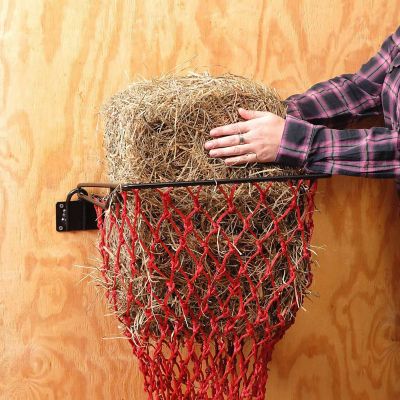
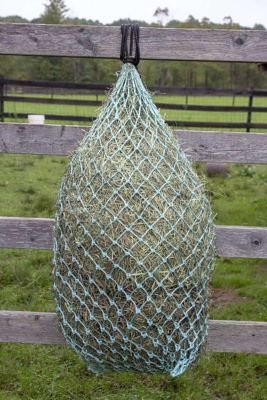
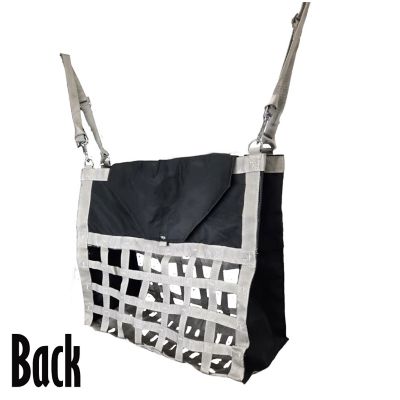
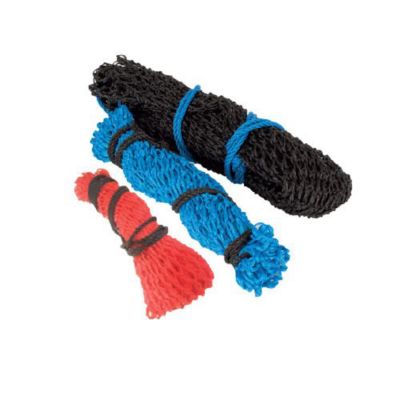
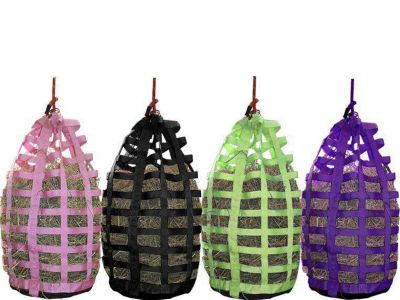
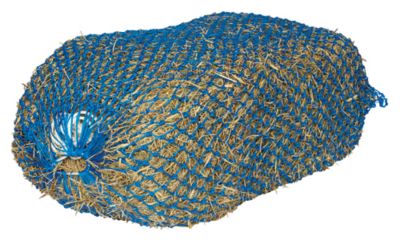
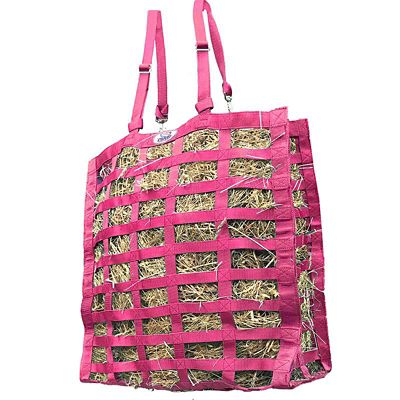
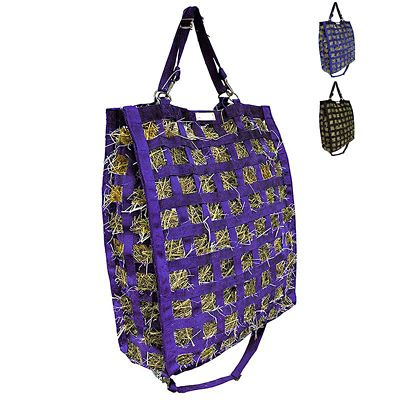
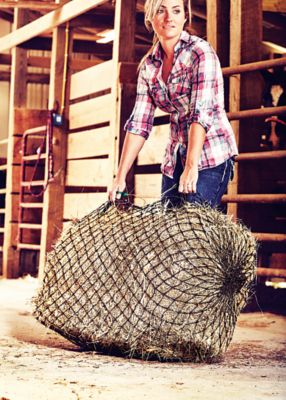
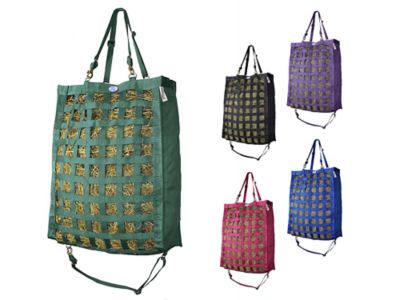
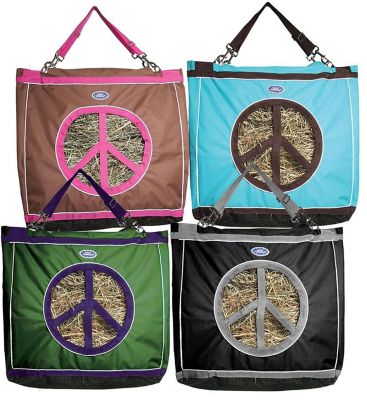
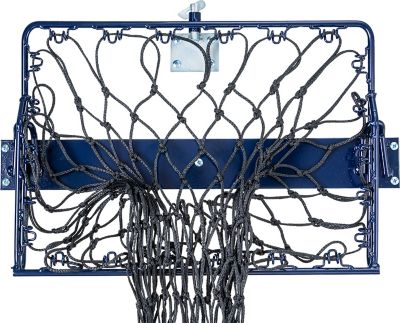
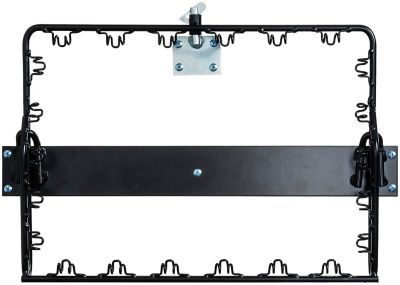
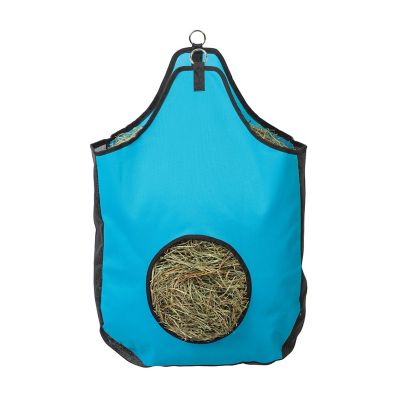
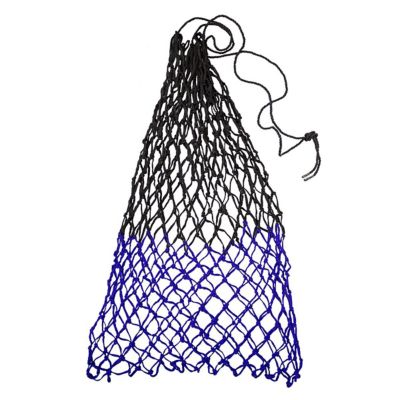
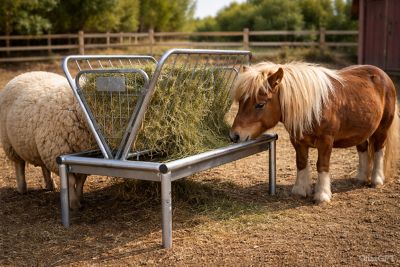
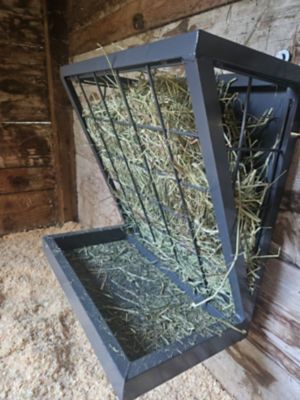
Slow feed hay nets are made to help horses and other hay-eating livestock take smaller bites over a longer stretch of time. Instead of pulling large mouthfuls from an open pile or feeder, an animal works through the netting a little at a time, much like grazing naturally across a pasture. This can help stretch a supply of hay, keep hay cleaner and drier, and reduce the amount scattered into bedding, mud or manure. For many horse owners, less waste is reason enough to make the switch, especially when good hay is hard to come by or costs more during the cooler months. A slow feed hay net can also give a stalled, dry-lot or paddocked animal something to do between meals. Longer eating time may help support a steady routine and reduce boredom, though every animal has different needs and a slow feeder should be part of an overall feeding plan rather than a replacement for advice from a veterinarian or equine nutrition professional. These nets are commonly used for horses, ponies, donkeys, goats and other livestock that receive grass hay, square bales or portions of a larger bale. They can be useful at home, in a barn aisle, in a trailer during travel or at a boarding stable, provided the net is secured in a safe location. A well-chosen hay net also makes a practical gift for a horse-owning friend, a new barn resident or someone preparing a stall for an older animal that spends more time indoors. As with any feeding equipment, match the net to the animal, the type of hay and the way the animal is housed.
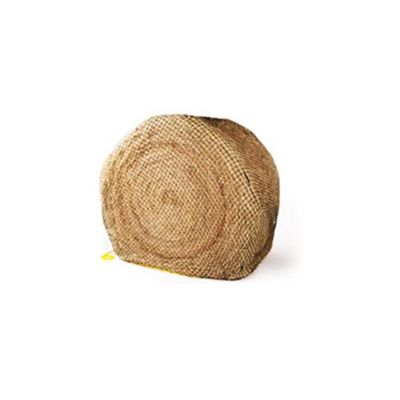
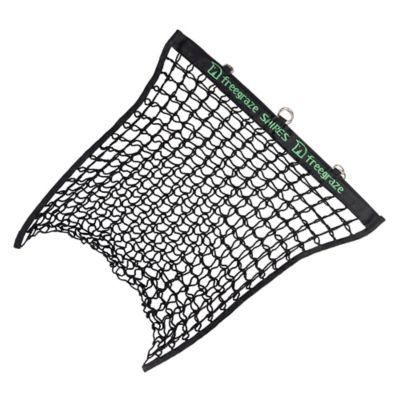
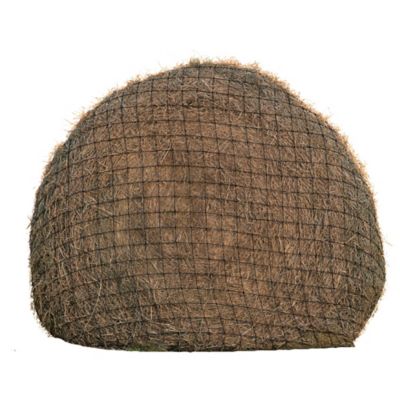
The size of the openings is one of the most important details to compare when shopping for a slow feed hay net. Smaller openings provide more restriction and usually make the hay last longer, while larger openings let an animal pull out hay more easily and can be a better starting point for animals that are new to slow feeding. Openings around 1 inch offer a more controlled pace, while openings in the 1.75- to 2-inch range are generally less restrictive and may work well for easier acclimation, larger flakes or animals that become frustrated with a tighter mesh. There is no single best hole size for every horse. A hard keeper, a senior with worn teeth, a young horse or an animal that has never used a net may need a more open design at first. If the animal struggles to get enough hay, loses weight, becomes agitated or leaves most of the hay untouched, adjust the setup and check with a knowledgeable professional. Consider whether the net is intended for individual flakes, several flakes, a small square bale or a full round bale. A compact bag can be convenient for stall feeding and travel, while a larger net can save time when filling a group feeder. Look for strong seams, dependable closures, reinforced corners and mesh that can stand up to regular pulling and pawing. A top-loading style may be simple to hang in a stall, while a bottom-access or bale-style design can make it easier to fill larger amounts of hay. Think about where you will fill it, too. Filling a net on a clean rubber mat or beside the hay stack is often less frustrating than trying to stuff it in a muddy paddock. Shaking out loose stems before loading can help keep dust down, and keeping a spare net on hand makes rotating for washing much easier.
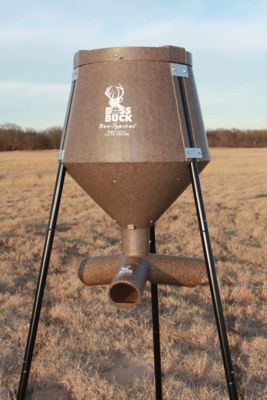
Safe placement matters just as much as mesh size. Hang a slow feed hay net securely so it cannot drop, swing into a fence or leave loose loops where a hoof, shoe or leg could become caught. Many owners position a net at about chest height or use a bottom anchor so it stays close to the wall and does not move around excessively. Follow the care and hanging instructions included with the net, and inspect the setup often for stretched openings, broken straps or worn stitching. Extra caution is needed around animals wearing shoes, since a shoe can catch in mesh more readily than an unshod hoof; a low-hanging net may not be a suitable choice in that situation. Keep the feeder away from sharp edges, gates and places where several animals might crowd one another. When introducing a new net, start with a more open mesh or a partially filled net, then gradually move to a smaller opening if the animal is eating comfortably and maintaining a healthy condition. Watch how the animal uses it during the first few feedings. Some horses learn quickly, while others need time to figure out how to pull hay through without biting or pawing at the net. Remove wet, moldy or spoiled hay and clean the net as needed, especially after rainy or snowy weather. A net that is easy to fill, hang and wash is more likely to become a dependable part of the daily routine. Slow feed hay nets are intended for hay management, not grain or pelleted feed, and animals should always have access to clean water. For other outdoor feeding setups, including equipment used to offer feed to wildlife, see
Hanging Deer Feeders. With the right size, sturdy construction and careful placement, a slow feed hay net can help make feeding time tidier, steadier and more natural from the first crisp days through the colder stretch of the season.