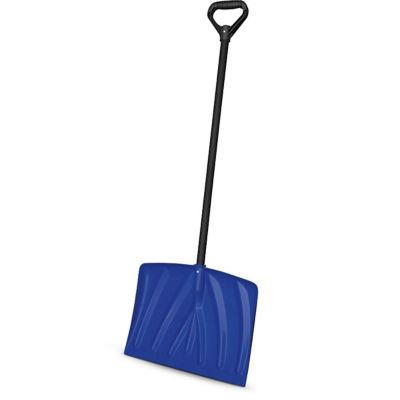
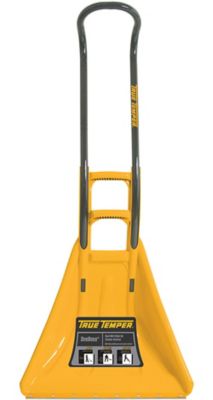
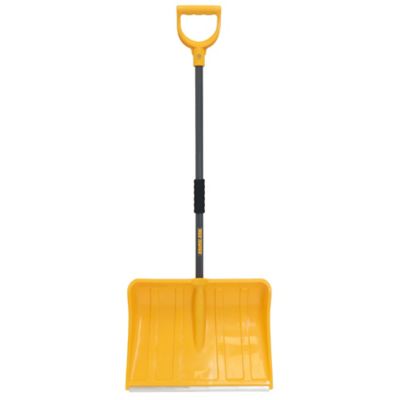
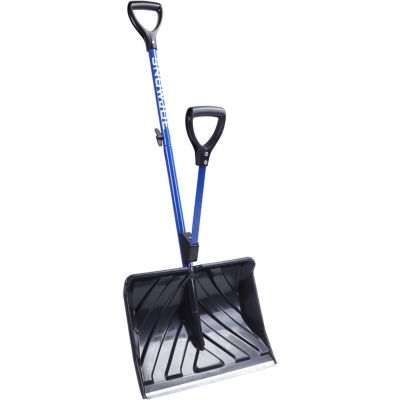
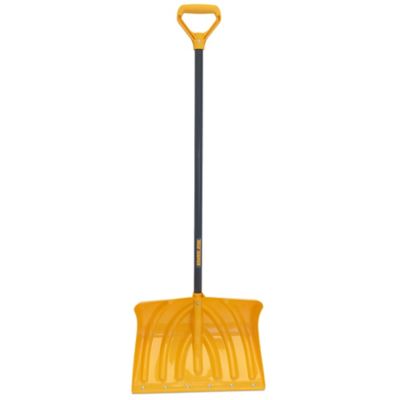
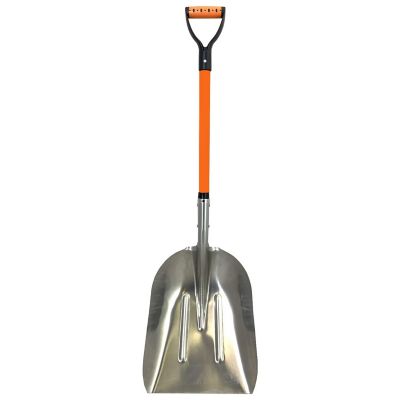
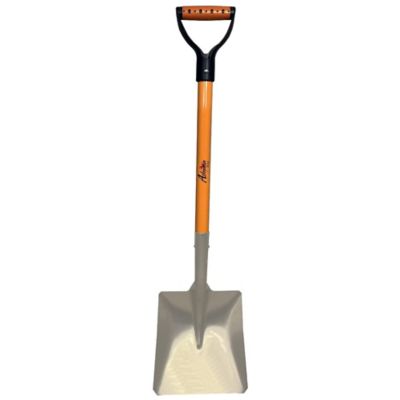
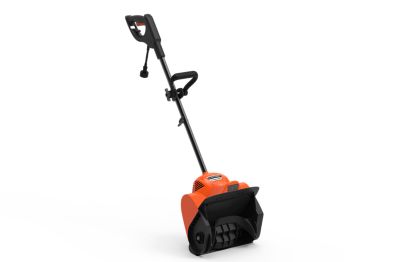
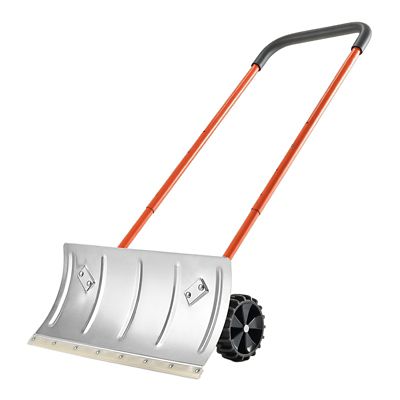
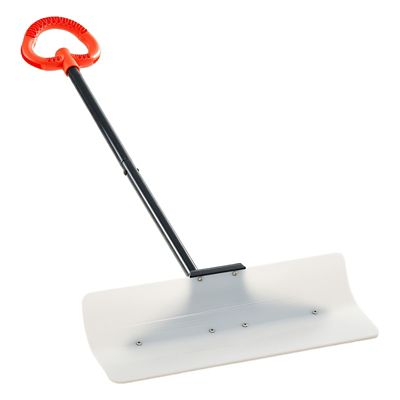
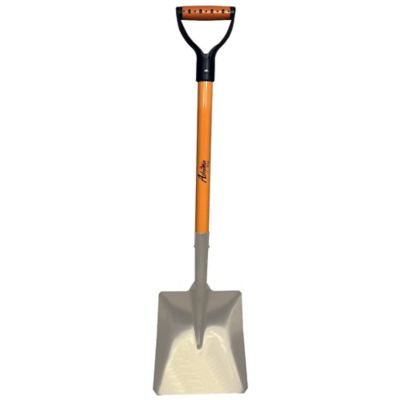
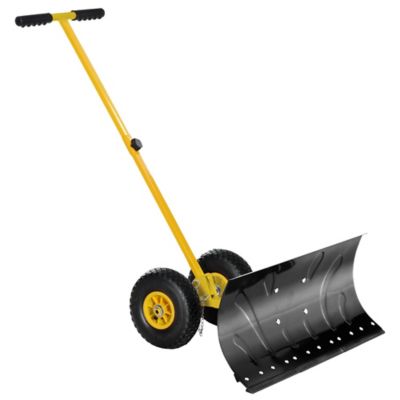
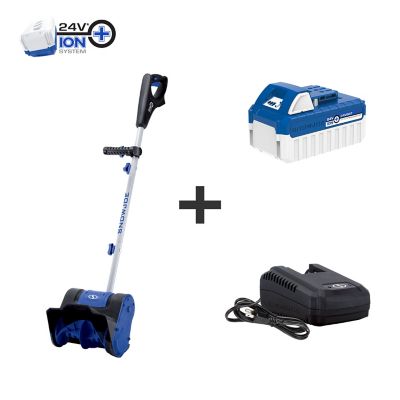
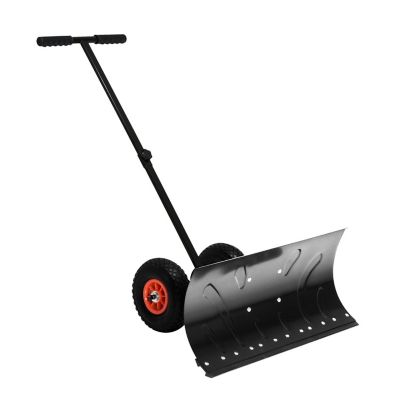
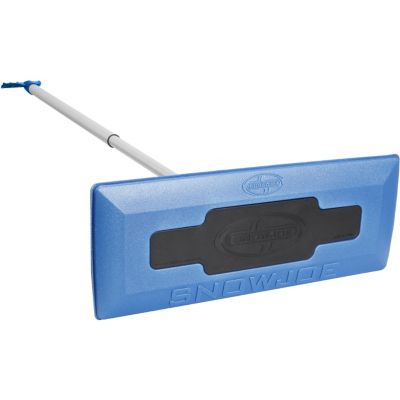
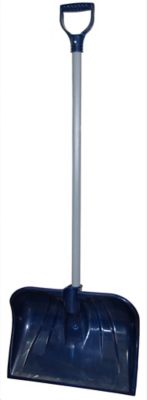
Snow shovels help keep the everyday paths around a home or property open, from the front steps to the barn door. The main designs serve different jobs: snow pushers move snow ahead of the blade, scoop shovels lift and toss it, and combination snow shovels handle a little of both. A snow pusher has a broad, curved blade that rolls snow forward, making it a good match for light accumulation on sidewalks, paved driveways, and other fairly level surfaces. Many pushers have blades around 24 to 30 inches wide or wider, covering more ground with each pass. That extra width also means more resistance when snow gets wet or deep, so the widest blade is not always the easiest one to handle. A scoop-style shovel generally has a narrower blade with raised sides to hold snow while it travels over a low bank or away from a doorway. This shape suits steps, tight corners, and spots where there is no room to push snow aside. Combination blades pair a curved face with enough depth to carry a manageable load, making them a practical choice when one stretch of a walkway needs pushing and another needs lifting. Sleigh-style snow shovels have a large scoop and a broad handle for sliding loads toward a nearby dumping spot rather than carrying them. They need room to maneuver and a reasonably smooth route, especially when the scoop is full. For rural properties, the right design often depends on the chore: opening a narrow path to a chicken coop calls for different handling than clearing the concrete apron outside a garage. Powder, wet snowfall, and snow packed down by boots all behave differently. Blade shape, width, and weight matter together, and a shovel that feels easy to carry empty can become a handful once its blade fills with slushy snow. Matching the tool to the clearing area helps keep each load within comfortable reach.
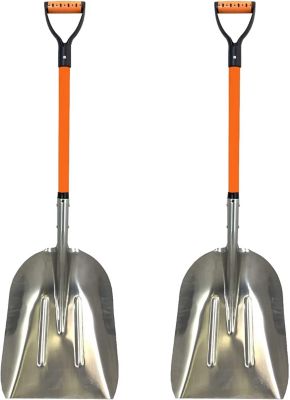
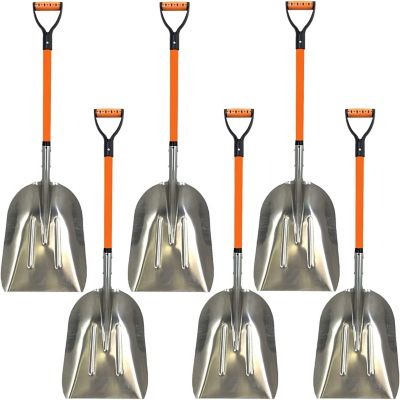
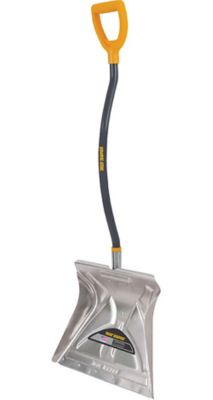
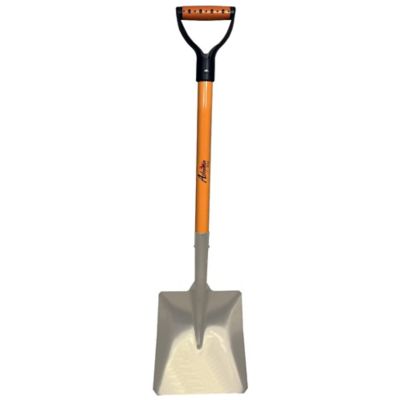
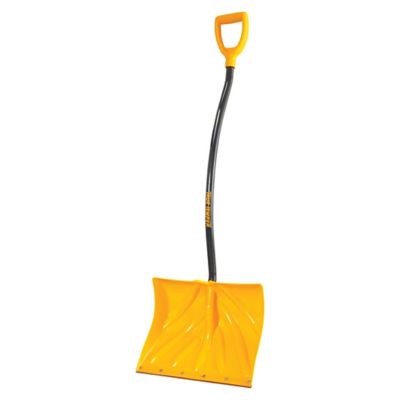
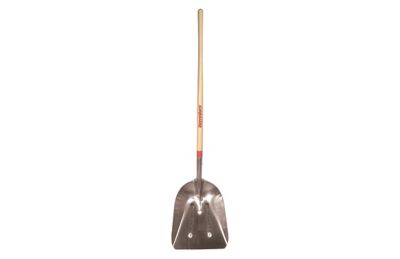
Blade materials affect how a snow shovel feels against the ground and how much weight it adds to each lift. Plastic blades, including polypropylene and high-density polyethylene, are generally lighter than comparable steel blades and can help keep loose snow moving without adding much heft. Their flexibility and cold-temperature performance vary by construction, so the intended conditions matter as much as the material name. A plastic blade without an exposed metal edge may be a better fit for certain decks and finished surfaces, although no blade is suitable for every surface. Grit caught underneath can leave marks, and deck or paver care recommendations still apply. Aluminum blades offer a relatively light, rigid option for scooping and moving snow, while steel blades bring more weight and a firm working edge. Metal edges can help cut through compacted snow, but they can also catch on raised pavement seams, damage softer surfaces, or wear down with repeated scraping. Thick ice is a separate job; forcing a snow shovel under a frozen ridge can bend the blade or strain its connection to the shaft. Handle construction deserves the same attention as the blade. Wood, fiberglass, aluminum, and steel shafts differ in weight, feel, and maintenance needs. A curved shaft or an added lifting grip is designed to reduce how far a person bends to reach a load, though fit and technique still make a difference. Shaft length should allow a comfortable working position without making the blade awkward to control. A D-shaped grip gives a gloved hand a defined place to hold, and generous clearance matters when thick work gloves are part of the job. For steps, porch landings, and narrow gates, a shorter or narrower shovel may be easier to position. Across an open driveway, a longer handle and wider blade may make more sense, provided the person handling them can comfortably control the load.
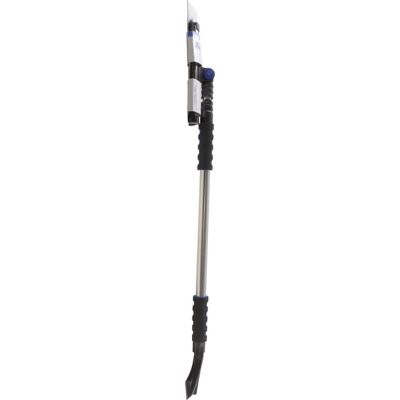
A snow shovel earns its place by fitting the property and the person doing the work, not just by moving the biggest pile. On a gravel lane, an edge pressed hard against the ground can gather stones along with snow, while uneven brick paths and cracked concrete can snag a blade mid-push. Around gates and outbuildings, room for the gate to swing matters just as much as a cleared walking strip. A narrow scoop can reach beside a feed room door or along a porch rail where a broad pusher will not fit. For a longer paved stretch, pushing smaller amounts toward the sides can be more manageable than letting a heavy ridge build across the entire blade. Wet snow carries much more weight than loose powder, so smaller scoops and short carries help keep the task under control. Lifting with the load close and turning with the feet rather than twisting at the waist can reduce awkward movement, but an ergonomic handle does not remove the exertion involved in shoveling. Snow shovels and
Snow Brooms also serve different parts of a winter cleanup: a shovel handles snow on the ground, while a broom designed for vehicles can move loose snow off suitable exterior surfaces according to its care directions. Keeping those jobs separate helps protect paint, glass, and other finishes from a shovel’s working edge. Between snowfalls, simple care helps a shovel stay ready for the next round. Loose grit and road salt should be rinsed away when practical, with the blade and hardware allowed to dry before storage. Cracks, loose fasteners, splintered handles, and worn edges deserve attention before another heavy load puts them to the test. Storage off the ground, away from direct heat, and without weight pressing against the blade helps limit corrosion and distortion. A shovel kept within easy reach of the door is handy when the first job is clearing a path just to get outside.