Rock Tumblers for Beginners

Got a budding rock collector in the family? Rock tumblers for beginners turn rough stones into a hands-on project, with plenty to learn along the way. Explore starter kits for stone polishing, geology lessons and jewelry-making. Compare the included rocks, polishing supplies and age recommendations to find a good fit, whether you're picking out a gift or starting a hobby together.
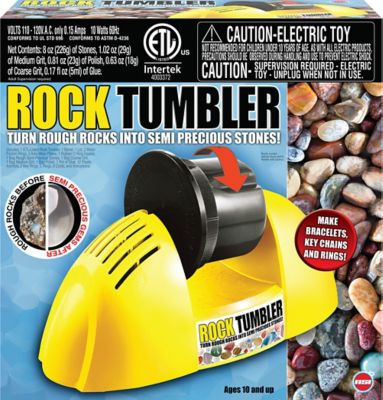
Rock Tumbler
Unbranded Rock Tumbler
A multi-colored electric kit that polishes rough rocks into stones for making jewelry and keychains.
(0)
$49.99 $39.99
SALE
$49.99 $39.99
SALE
Make It Real Polish & Shine Bead Tumbler
Make It Real Make It Real Polish & Shine Bead Tumbler
A multi-colored bead tumbler kit that polishes stones and beads for creative jewelry-making projects.
(0)
$41.99 $33.59
SALE
$41.99 $33.59
SALE
Rock tumblers for beginners turn rough stones into smooth, polished pieces through a steady mix of motion, abrasive grit, and water. Inside a rotary tumbler, a motor turns a barrel so the stones roll against one another, gradually wearing away rough edges. That rounded finish makes rotary machines a practical starting point for first-time rock collectors, families, and anyone who enjoys seeing what is hiding beneath a stone’s dull surface. Small rotary tumblers with a barrel capacity of about 1 to 3 pounds are often a manageable fit for a first setup. They keep batches modest without requiring a large collection of suitable rocks to get started. Capacity deserves a close look, though: a rating may describe the weight of the rocks or the complete barrel load, depending on the manufacturer. Loading directions help keep the motor from carrying more than it should. Barrel material also makes a noticeable difference around the house or shop. Rubber barrels soften the clatter of tumbling stones compared with hard plastic, although the motor and moving load still make sound. A secure lid, a well-supported barrel, and a stable base matter when a machine will run for long stretches. For a beginner, straightforward controls and clear operating directions can be more useful than a long list of settings. Timers and adjustable speeds may add convenience, but neither replaces the time stones need to move through the finishing process. Rotary rock tumbling commonly takes about four to eight weeks, and some batches take longer, depending on the starting material, equipment, and desired finish. A single-barrel design keeps one batch together, while a two-barrel setup can separate loads or keep different stages moving independently. The best fit comes down to the amount of rock being tumbled, the space on hand, and how much ongoing attention the hobby will receive.

Rock tumbler kits and standalone machines suit different starting points. A kit may bring together a tumbler, rough stones, abrasive grit, and polishing compound, while a standalone machine leaves more of those choices to the shopper. Package contents matter because a machine alone does not provide everything needed for a finished batch, and a small packet of supplies may cover only a limited amount of rock. Rotary tumbling generally involves coarse grinding, medium grinding, fine grinding, and a separate polishing stage. Silicon carbide is a common grinding abrasive, while polishing compounds such as aluminum oxide serve a different purpose at the end of the process. A polishing compound should be intended for the material and equipment involved; fine grinding grit is not automatically a substitute. Suitable stones matter just as much as the machine. Agate, jasper, and sound pieces of quartz are familiar choices because they can take a polish, but cracks, crumbly surfaces, and deep pits can keep a batch from turning out as expected. Stones with similar hardness generally work better together than a random mix from the driveway. A few small stones mixed with larger ones help fill spaces and support the rolling action, within the manufacturer’s loading recommendations. Rounded creek stones can still need substantial grinding, and not every interesting rock will develop a bright shine. Cleaning is another part of the hobby worth considering before choosing a setup. Stray coarse grit carried into a later stage can scratch surfaces that were nearly ready for polish. Barrels, lids, seals, and stones need thorough cleaning between stages, with special attention to grooves where grit can hide. Rock slurry can settle and harden in plumbing, so it belongs out of household drains and should be collected for disposal according to local requirements. Accessible barrel parts and clear care directions make these regular cleanup jobs less of a chore.

A beginner rock tumbler fits best where there is room for both the machine and the small jobs that go with it. A level workbench in a dry utility area or workshop can provide a practical spot, as long as the location meets the manufacturer’s requirements for ventilation, electrical connections, and safe operation. A kitchen counter beside the family’s everyday gathering spot may be less comfortable once the steady rolling sound becomes part of the background. Rubber feet and a solid surface can help limit vibration, but enclosing a running motor to muffle noise can interfere with airflow. Construction details such as a snug-fitting lid, a barrel that is easy to handle when wet, and accessible drive components are worth considering for routine care. Belts, rollers, and other moving parts may need attention over time, and maintenance should follow the machine’s directions. For children, rock tumbling offers a hands-on connection to geology, observation, and patience, with an adult handling the responsibilities appropriate to the equipment and materials. Age recommendations still apply, and small stones, grit, and polishing powders need careful storage away from young children and pets. Dedicated cleanup tools, handwashing, and keeping powders from becoming airborne help make the work area easier to manage. As a birthday gift or a shared family hobby, a tumbler offers something that unfolds over time rather than a finished result in one afternoon. Polished stones can become part of a labeled collection, a classroom display, or a jewelry project when their size and shape suit the work. For people who also enjoy searching a field or exploring a property with permission, Metal Detectors For Beginners connect with another collecting hobby, though detectors locate metal rather than ordinary gemstones. With a manageable barrel size, suitable supplies, and a sensible workspace, rock tumbling gives curious beginners a satisfying way to turn a handful of rough material into pieces worth a closer look.

FAQ

Back to top