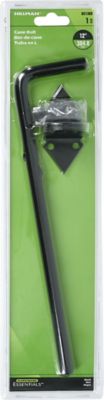
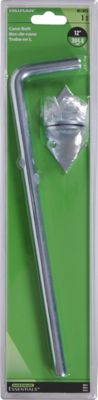
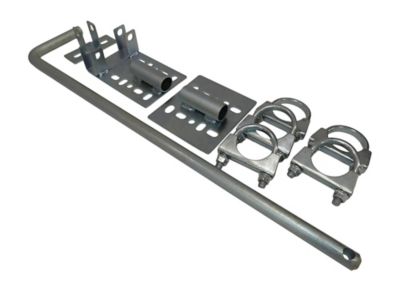
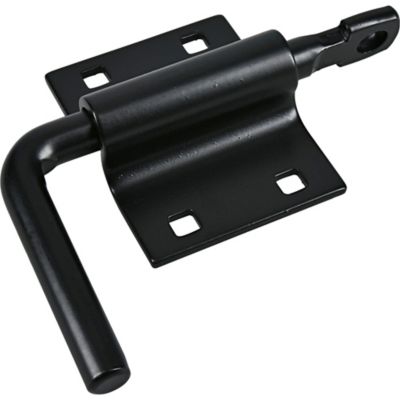
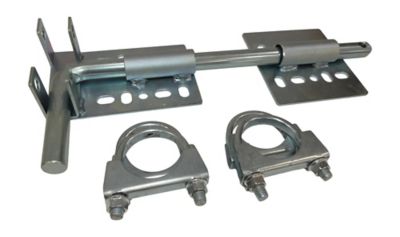
Cane bolts for double gates help keep one gate leaf in place while the other opens and closes for everyday traffic. Also called drop rods or drop bolts, these vertical rods slide through brackets on the gate and seat in a ground opening or receiver below. On a typical double-gate setup, the rod secures the less frequently opened leaf, giving the working leaf a steady place to meet its latch. That arrangement suits a driveway entrance, equipment yard, garden enclosure, or pasture access where a full-width opening matters for a tractor or trailer but isn't necessary for every trip through. Some double gates have a cane bolt on each leaf, allowing both sides to be anchored separately when the hardware and layout support it. The familiar bent handle gives a handhold for raising and lowering the rod, while a retaining feature on some designs holds it clear of the ground during travel. Rod length, diameter, bracket spacing, and handle shape all affect how the hardware fits and feels in daily use. A longer rod may put the handle within easier reach on a taller gate, but overall length alone doesn't tell the whole story. The distance from the gate's bottom rail to the ground, the rod's travel, and the depth of the receiving opening determine whether the bolt can engage fully and lift clear. A rod that drags across the driveway makes opening a chore; one that barely enters its receiver may not provide the intended hold. For gates opened several times a day, a comfortable handle position and a positive raised position deserve as much attention as appearance. Cane bolts help control unwanted gate movement, but they don't replace sound hinges, firm posts, or proper bracing. A gate that already sags needs its underlying support addressed rather than relying on the drop rod to carry its weight.
Materials and mounting details make a big difference when matching a cane bolt to a double gate. Steel offers the rigidity needed for many farm and yard applications, with rod thickness and bracket construction contributing to resistance against bending and wear. Galvanized or zinc-plated finishes help protect the steel beneath, while powder-coated finishes provide another protective layer and a finished appearance. Stainless steel is another material to consider where corrosion resistance matters, though the fasteners and mounting hardware also need to suit the setting. Scratched coatings, exposed edges, and contact between dissimilar metals can affect long-term performance, so the finish is only one part of the picture. Wood gates need mounting points with enough solid material to hold the brackets securely, especially where repeated lifting and lowering put stress on the fasteners. A thin picket is a different mounting surface from a substantial frame rail. Tubular metal and chain-link gates may call for clamps or brackets shaped for a round frame rather than flat mounting plates. Vinyl gate compatibility depends on the gate's construction, reinforcement, and the hardware manufacturer's requirements; the outer surface alone may not provide enough support. Bracket clearance also matters around wire mesh, cross braces, projecting fasteners, and the latch on the neighboring leaf. On closely spaced double gates, a handle or bracket that projects into the center opening can interfere with the other leaf. The better match leaves room for the gate to swing without the rod striking a post, fence board, or latch component. For a broad equipment entrance, heavier construction may be appropriate, but a thicker rod still needs compatible guides and a receiver with enough clearance for smooth operation. The fit should allow the rod to slide without excessive side-to-side play. These details separate hardware that simply attaches to a gate from hardware that suits the way that gate gets opened, shut, and secured throughout the day.
The receiving point below the gate is just as important as the hardware above it. A cane bolt needs a firm, properly positioned opening that accepts the rod without forcing the gate out of line. Depending on the surface and hardware design, that may be a suitable ground socket, sleeve, or receiver set into the driveway or entry area. Loose soil, gravel, and paved surfaces present different mounting needs, and the receiver's dimensions must match the rod and the intended engagement depth. A second receiving point can hold a gate leaf open where the layout allows, keeping the opening clear while a trailer backs through or equipment passes. Any open-position arrangement still needs to keep rods and fittings out of the path of tires, feet, and livestock. Dirt, small stones, and packed debris can interfere with seating, so an accessible receiver is easier to keep clear. Routine care centers on removing buildup, checking bracket fasteners, looking for bent sections, and watching for wear where the rod passes through its guides. Any lubrication should follow the hardware maker's directions rather than leaving a sticky coating that collects grit. Keeping protective finishes intact and checking the surrounding gate frame helps extend service life, particularly at high-traffic entrances. Locking features are another consideration for gates guarding equipment yards or other restricted areas. Some cane bolt designs accept a padlock or have a retainer that limits lifting, but locking capability varies by design and doesn't automatically secure the entire double-gate assembly. The main latch, hinges, mounting points, and access to fasteners all play a part.
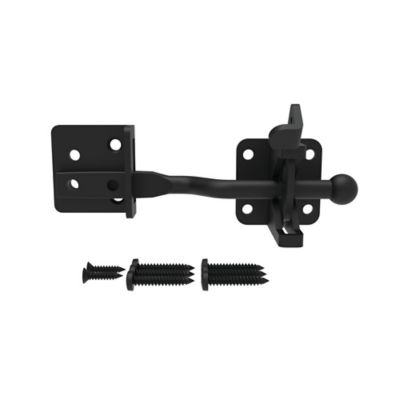
Gate Latches For Wood Gates can complement a cane bolt on a timber entrance, with the latch holding the leaves together and the drop rod anchoring one leaf below. For livestock areas, hardware placement also deserves attention so an animal cannot easily nose or rub a handle out of position. Whether the entrance serves a small acreage, a workshop yard, or a busy farm lane, the right combination comes down to compatible mounting, full engagement, unobstructed travel, and hardware suited to the gate's everyday workload.