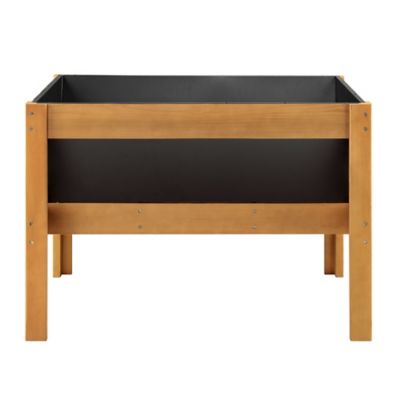
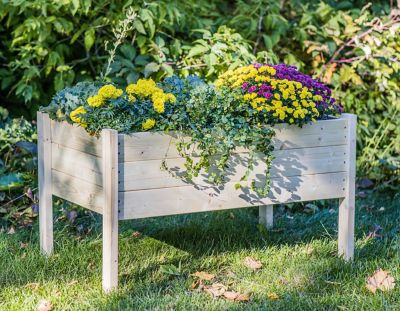
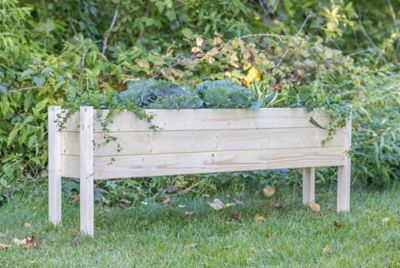
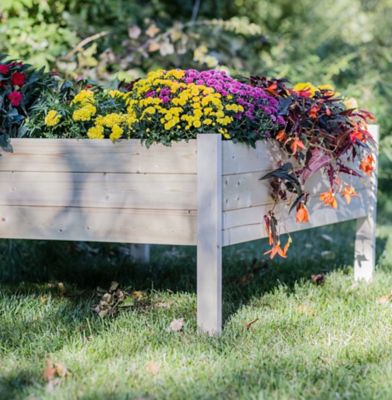
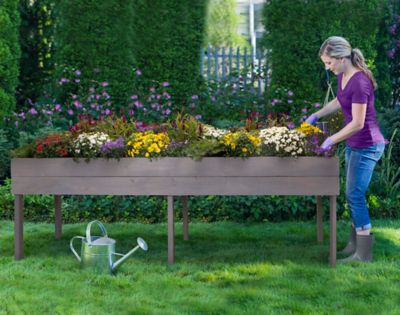
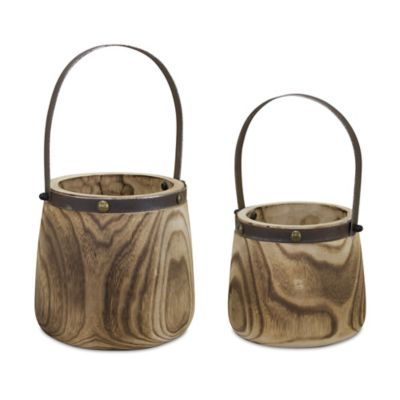
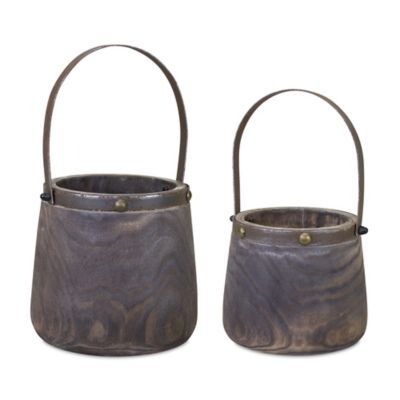
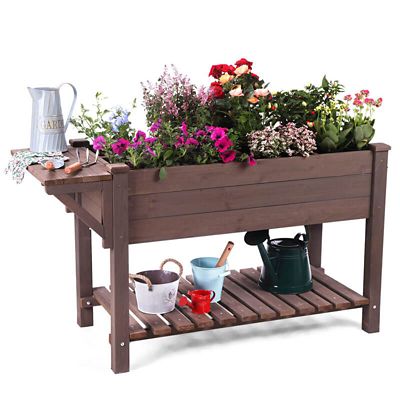
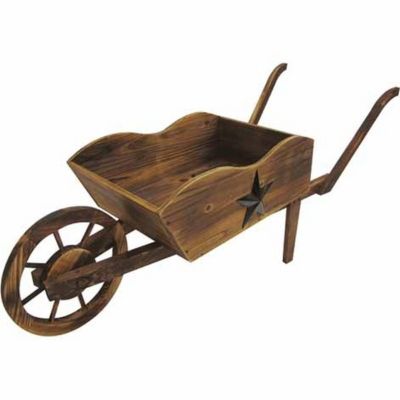
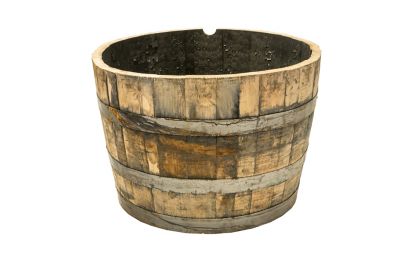
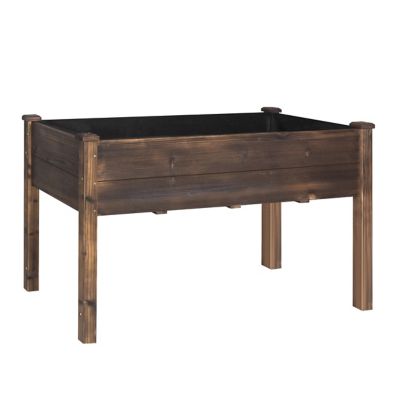
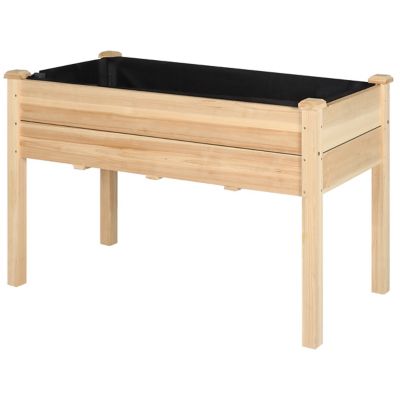
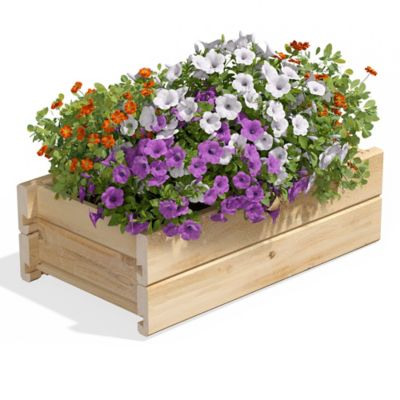
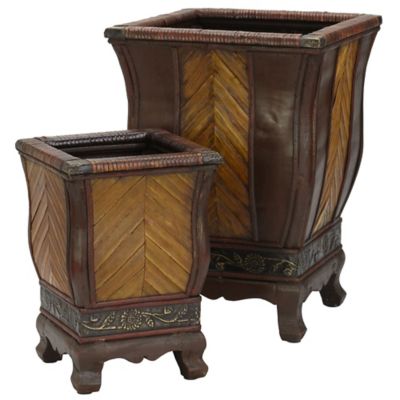
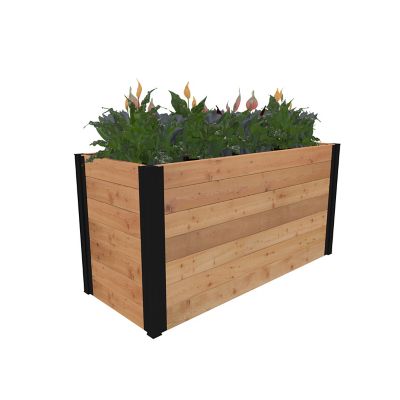
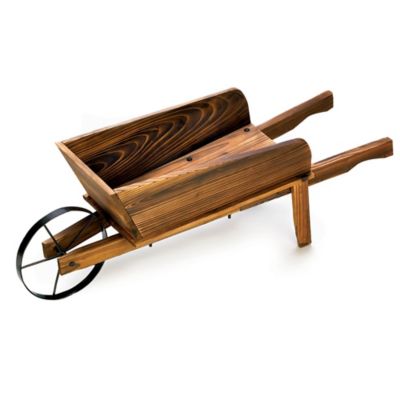
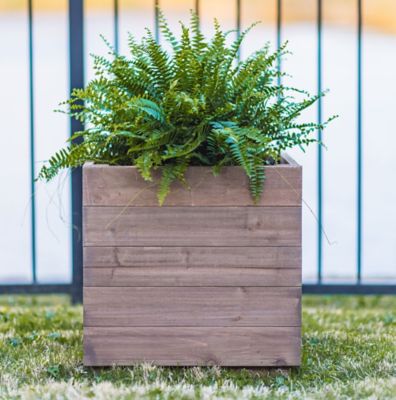
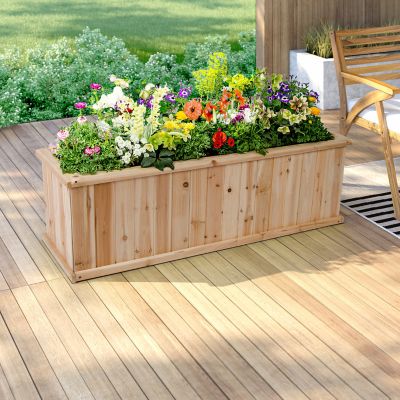
Wooden planters bring a warm, lived-in look to porches, patios, walkways and garden spaces. The natural grain fits right in beside a farmhouse, cabin, workshop or country home, and the right planter can make even a small growing space feel settled and welcoming. Use one to frame a front door with hardy greenery, add height to a mixed flower display or keep herbs close to the kitchen where they are easy to snip while cooking. Wooden planters also work well for gardeners who want a little more control over soil, drainage and placement than an in-ground bed provides. They can help define a growing area on a deck, soften the edge of a gravel drive or bring color to a sunny spot where digging is difficult. When choosing a planter, start with the space and the plants you have in mind. Measure the area carefully, including room for walking, watering and seasonal upkeep, then consider the mature size of the roots and foliage rather than judging by the size of a young plant at the garden center. A deeper planter gives many vegetables, flowers and small shrubs more room to establish, while a narrower box may be just right for trailing plants or a tidy row of herbs. Look for sturdy construction, even joints and a stable base that will not rock when the soil is added. Drainage matters, too. Excess water needs a way out so roots do not stay soggy, especially during cooler, wetter stretches of the year. If a planter will sit on a porch, wooden deck or finished surface, use feet, risers or another method of allowing air to move beneath it and water to drain away from the surface. A liner can make filling and changing the soil easier, but it should not block drainage unless the planter is designed for that purpose. Remember that soil gets heavy when wet, so place large planters where they will stay before filling them. Once planted, they are not always easy to slide across a porch. For gardeners who like to rearrange displays, smaller wooden planters are convenient to move as sunlight shifts or the seasons change. Larger boxes offer more room for layered plantings and make a strong visual anchor near an entrance, fence line or outdoor seating area. Those looking for extra room for roots and a generous planting display can browse
Large Cedar Planter Boxes for ideas suited to broad outdoor spaces.
The type of wood and the way the planter is cared for will also affect how it looks over time. Natural wood may deepen in color, show a little weathering and develop the character that makes outdoor pieces feel at home in a rural setting. Placement makes a difference: a planter tucked under an overhang may stay drier than one exposed to steady rain, while strong afternoon sun can dry out the soil quickly and cause some plants to need more frequent attention. During the cooler months, remove spent annuals, fallen leaves and loose soil that has broken down, then check the corners, base and drainage openings for trapped moisture or buildup. If the planter will sit empty for a while, letting it dry in a covered, well-ventilated spot can help keep it ready for the next planting. Perennials, evergreen foliage and cold-tolerant plants can keep an outdoor display looking alive when summer color fades, while empty planters can be filled with cut branches, ornamental grasses, pinecones or other natural accents for a simple seasonal arrangement. Be mindful of the weight of wet soil, snow or standing water, and move lightweight planters to a sheltered location when rough weather is expected. Wooden planters make thoughtful gifts for new homeowners, gardeners, teachers, grandparents or anyone who enjoys adding a personal touch to a porch or yard. They are especially useful for people with limited garden space, raised beds that are easier to tend without bending as far, or busy households that appreciate keeping fresh herbs and flowers within reach. A planter can also be a practical housewarming gift when paired with a packet of seeds, gardening gloves or a favorite flowering plant, though it is wise to consider the recipient’s available sunlight and outdoor space before choosing a size. For everyday use, fill the bottom and main planting area with a quality growing mix suited to the plants, leave enough room for watering without spilling soil over the sides and add a layer of mulch to help hold moisture and keep roots more even through changing temperatures. Water slowly until moisture reaches the full root zone, then allow the surface to dry according to the plant’s needs rather than following a rigid schedule. With a solid location, good drainage and a little seasonal care, a wooden planter can become part of the landscape instead of just another container—holding bright blooms, useful herbs, leafy greens or evergreen color year after year.