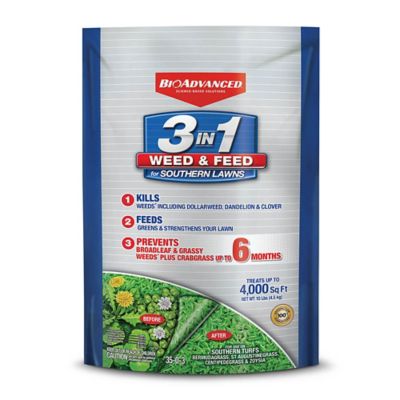
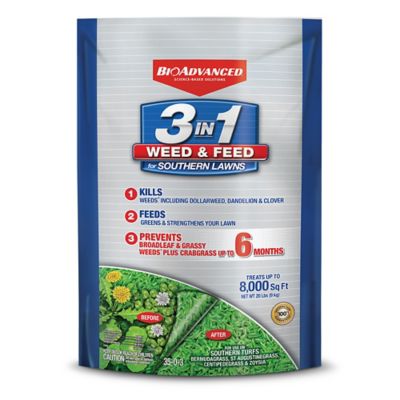
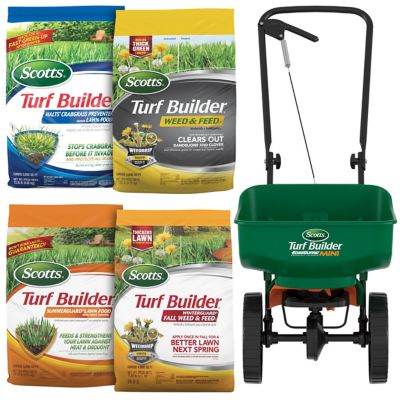
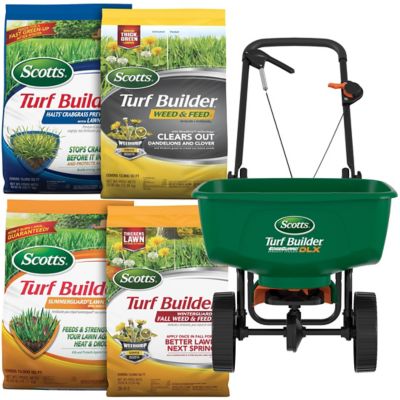
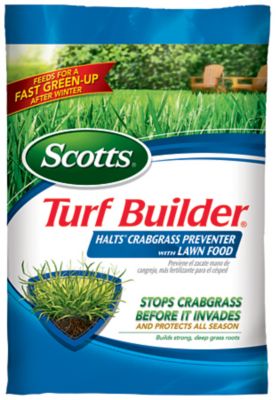
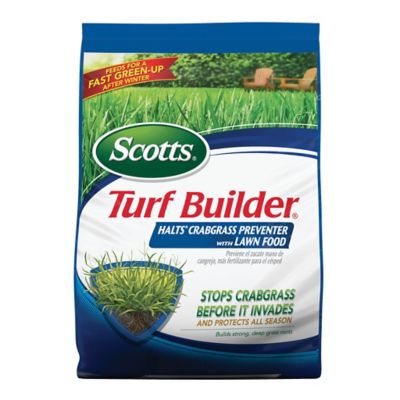
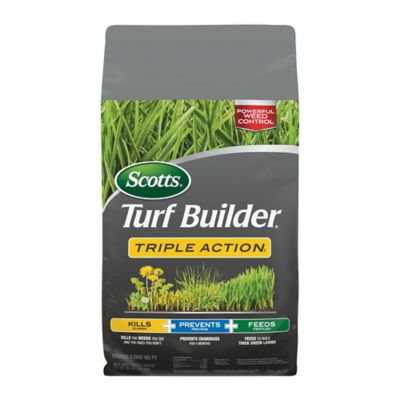
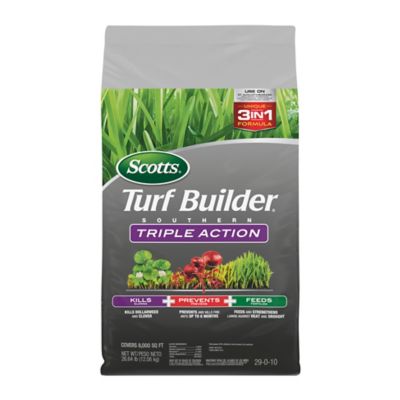
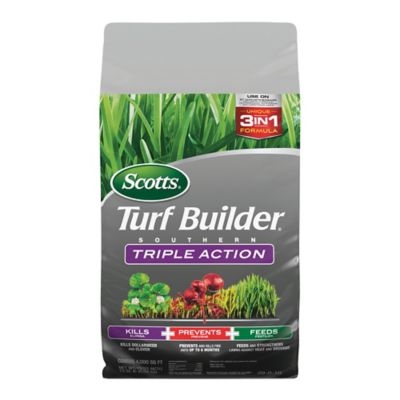
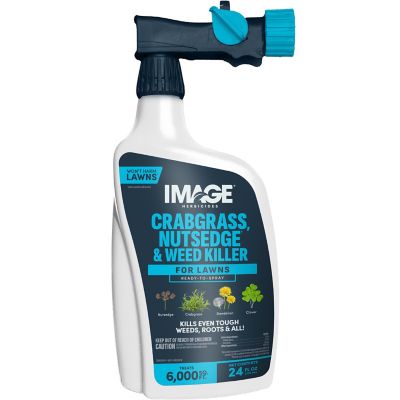
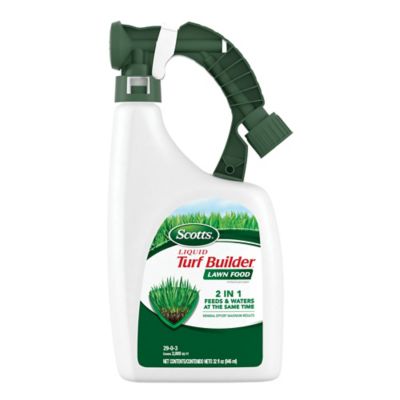
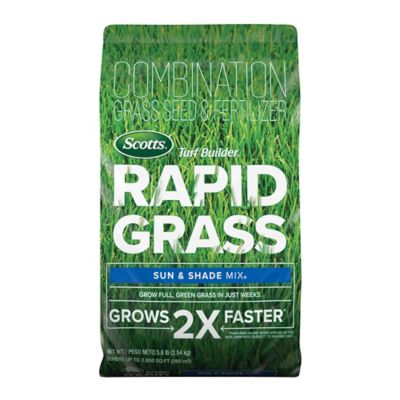
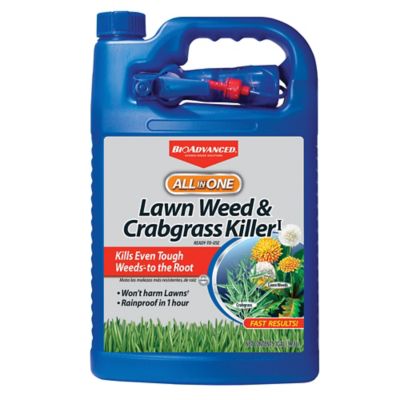
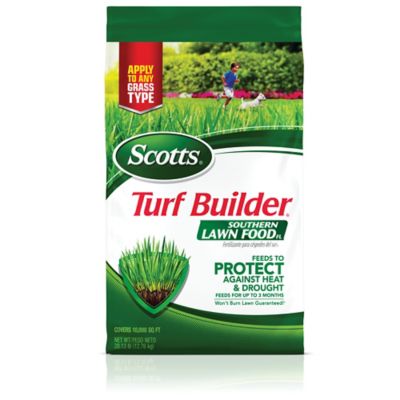
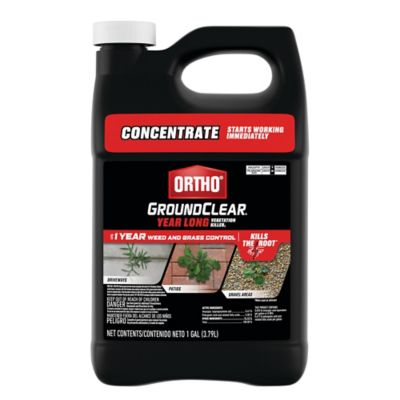
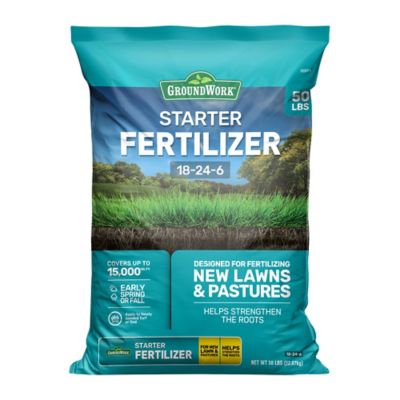
Spring lawn treatments support grass as it returns to active growth, with fertilizers, weed controls, soil amendments and lawn repair materials serving different purposes around the yard. The right match depends on the grass variety, soil conditions and what needs attention, whether that’s crabgrass along a gravel drive, thin turf beside the porch or a worn path between the house and barn. Lawn fertilizer supplies nutrients for growth, while pre-emergent herbicides help prevent certain weeds from establishing and post-emergent herbicides target weeds that have already emerged. Those differences matter: a crabgrass preventer won’t clear out a stand of mature weeds, and fertilizer alone won’t fix compacted ground. For spring crabgrass prevention, a common timing cue is soil temperatures approaching 50°F to 55°F for several consecutive days, with treatment in place before germination and within the product label’s application window. Weather patterns and local conditions matter more than a date on the calendar. Fertilizer timing also follows the grass, not simply the first warm afternoon. Warm-season lawns generally need feeding after they green up and begin active growth, while cool-season lawns have different feeding schedules and may need only modest spring nitrogen depending on their condition and earlier applications. Combination weed-and-feed treatments bring two jobs together, but they make sense only when the lawn needs both ingredients at the same time. Separate treatments offer more flexibility when weeds need attention before the grass needs feeding. That distinction is especially helpful on rural properties, where the lawn around the house may sit beside a garden, pasture or drainage ditch. A treatment labeled for residential turf is not automatically suitable for those neighboring areas. During the cooler months, notes about recurring weeds, shaded patches and traffic patterns can make planning for spring lawn treatments more straightforward. The goal is a lawn that fits everyday life outdoors, with treatment choices based on the ground beneath it rather than a one-size-fits-all routine.
Lawn fertilizers come in granular and liquid forms, and their nutrient content is more important than package size alone. The three numbers on a fertilizer label represent nitrogen, phosphate and potash; a soil test helps determine which nutrients the lawn actually needs. Nitrogen supports leafy growth, but more is not always better, especially on stressed grass or turf that has barely begun growing. Slow-release nitrogen supplies nutrients over a longer period, while readily available nitrogen acts faster and calls for careful attention to application rates. Phosphorus may be unnecessary on an established lawn unless a soil test indicates a need, and local restrictions can affect its application. Soil amendments have a different job from fertilizer. Lime raises soil pH when testing shows the ground is too acidic for the intended grass, while sulfur can lower pH under suitable conditions. Neither belongs on every lawn, and neither substitutes for correcting poor drainage. A damp patch at the foot of a slope may need a different solution from a pale patch on sandy ground. Product form also affects how a treatment fits the property and the equipment on hand. Granules generally pair with a compatible broadcast or drop spreader, while liquid formulations may require a hose connection or a suitable sprayer, depending on the label. Coverage should be based on the actual turf area, leaving out the driveway, buildings and planting beds rather than counting the entire lot. For homeowners maintaining a broad front lawn or a smaller fenced yard, that measurement helps keep application rates within label directions. Pairing treatments with
Spring Lawn Care Tools brings the supporting equipment into the picture, from tools for clearing matted leaves to equipment for even distribution. Spreader settings vary by formulation and equipment, so calibration matters more than borrowing a neighbor’s setting. Proper storage matters, too: tightly closed original packaging, protection from moisture and storage conditions that follow the label help preserve the material between applications.
Weed control and lawn repair often meet on the same stretch of ground, which makes compatibility an important part of choosing spring lawn treatments. Many pre-emergent herbicides can also interfere with grass seed establishment, so a bare spot that needs seeding may require a different approach from an established lawn receiving crabgrass prevention. Label directions spell out seeding restrictions, waiting periods and any exceptions. Post-emergent weed controls vary as well: some target broadleaf weeds without harming listed turfgrasses when applied correctly, while nonselective herbicides can injure lawn grass along with the unwanted plants. Grass identification is worth the effort, especially where a treatment tolerated by one turf species could damage another. Patch and repair materials should match the existing lawn’s growing conditions, including sunlight, regional climate and foot traffic. A sunny stretch beside the mailbox calls for different seed characteristics than a shaded side yard beneath mature trees. Cool-season grasses often establish best during cooler growing periods, while warm-season grasses need warmer conditions; spring is not automatically the best seeding window for every lawn. Seed blends, seed-and-fertilizer mixtures and moisture-holding mulch materials offer different combinations, making the contents and coverage directions worth comparing. For a spot worn bare by repeated trips to the gate, lasting coverage also depends on reducing traffic while seedlings establish. Compacted soil may benefit from aeration at a time suited to the grass, since a surface treatment cannot create the same openings for air and water. Across fertilizers, herbicides and repair materials, application conditions and aftercare matter. Some treatments need watering to activate or move into the soil, while others require a rain-free period or foliage to remain dry afterward. Heavy rain, frozen ground and runoff-prone areas call for particular caution. Keeping granules off pavement and following label setbacks helps protect nearby water, and people, pets and livestock should stay clear for the full interval specified on the label. With grass type, coverage, compatibility and care requirements accounted for, lawn treatments can support thicker growth around the places where the family gathers, chores get done and boots cross the yard every day.