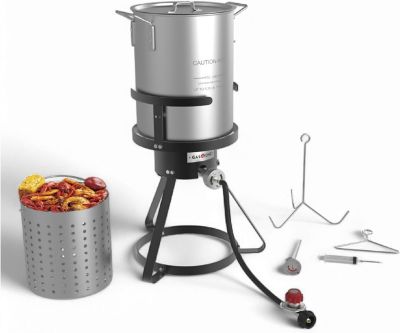
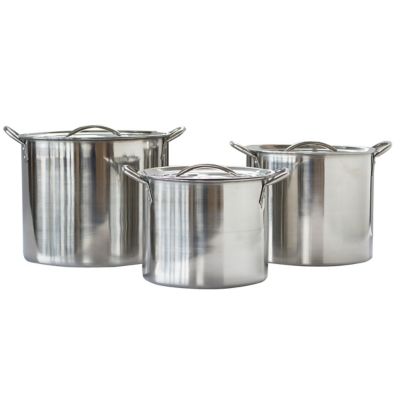
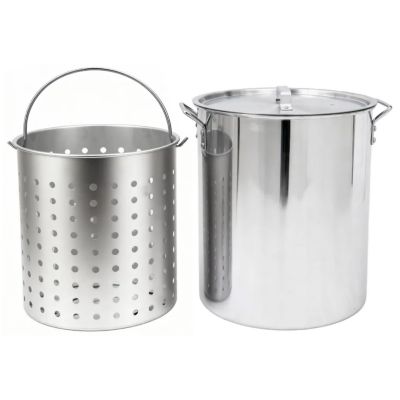
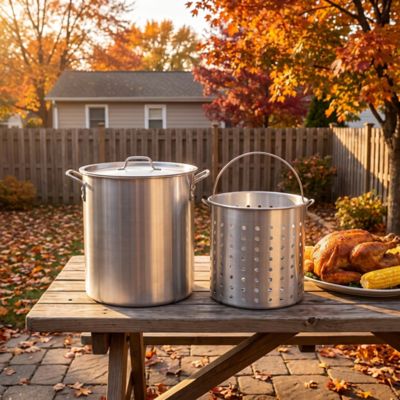
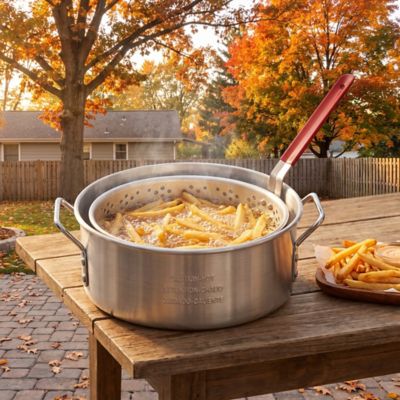
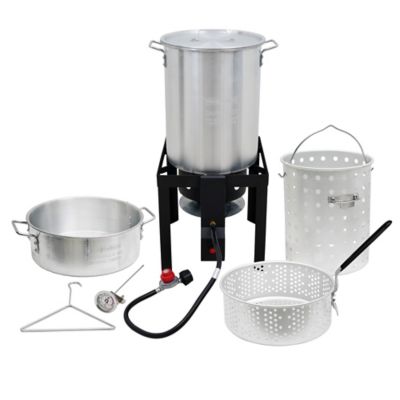
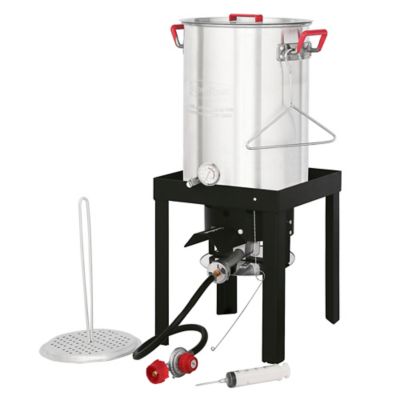
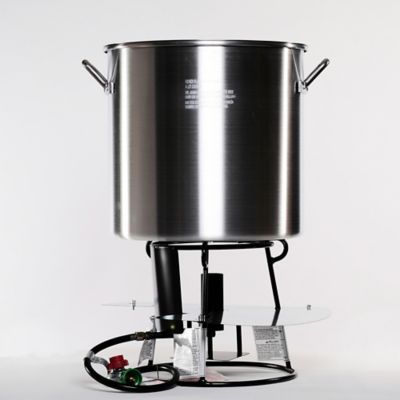
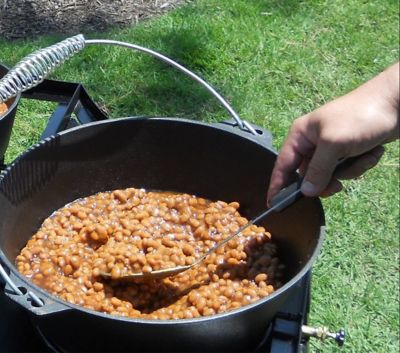
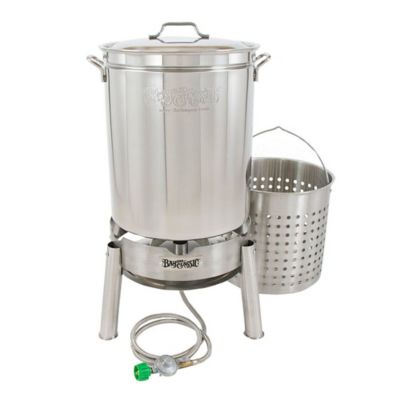
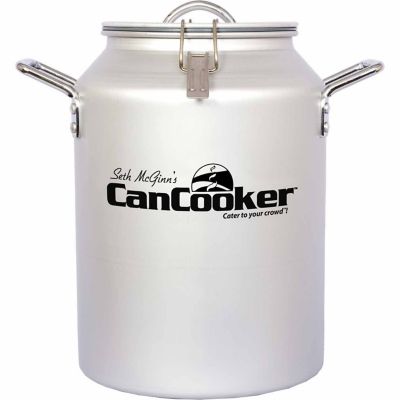
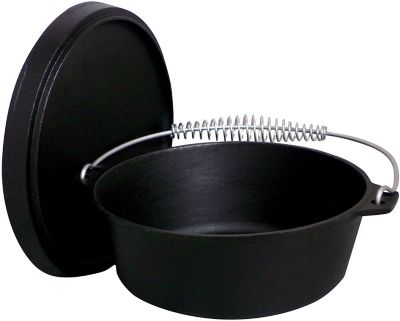
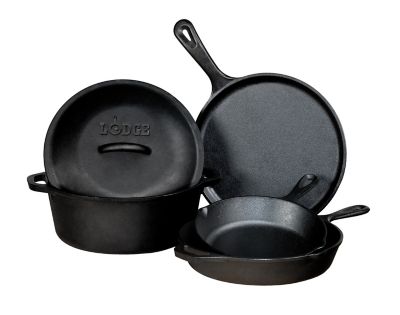
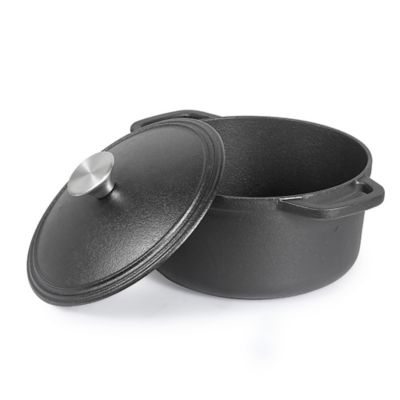
Outdoor cooking pots bring a proper meal within reach whether supper is simmering beside a campsite, a fish boil is feeding the family, or a pot of beans is rounding out a backyard cookout. This cookware ranges from compact backpacking pots that tuck into a pack to roomy stockpots and cast iron Dutch ovens built for cooking near camp. The best fit comes down to the food being prepared, the number of people eating, the distance the pot has to travel, and the heat source beneath it. Materials make a noticeable difference in both handling and cooking performance. Cast iron holds heat well, making it a good match for slow-simmered chili, braised meat, and campfire baking. That heat retention comes with weight, so cast iron generally makes more sense beside a parked truck or at an established cooking spot than on a long hike. Aluminum weighs less and conducts heat readily, helping spread warmth across the cooking surface. Hard-anodized aluminum has a treated surface that resists wear, though any added nonstick coating still calls for utensils and cleaning methods approved by the manufacturer. Stainless steel stands up well to frequent handling and offers a cooking surface suited to a wide range of meals. Plain stainless steel does not spread heat as evenly as aluminum, while some pots incorporate an aluminum layer or base to improve heat distribution. Titanium keeps pack weight down and resists corrosion, making it appealing for hikers who mainly boil water for coffee or trail meals. Thin titanium cookware needs more attention with thick sauces or foods that stick because heat can concentrate directly above the flame. No material is the best choice for every outdoor kitchen. A short walk from the tailgate leaves room for heavier cookware, while carrying everything several miles puts more value on a light pot, a compact shape, and handles that fold out of the way.
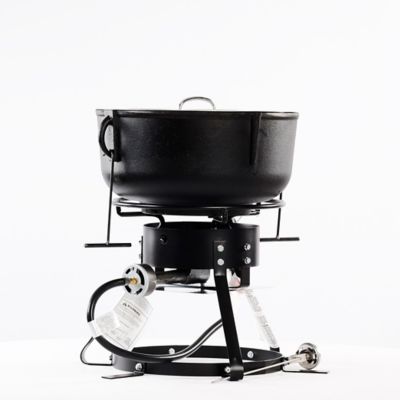
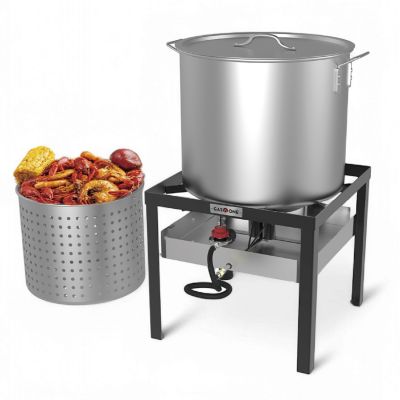
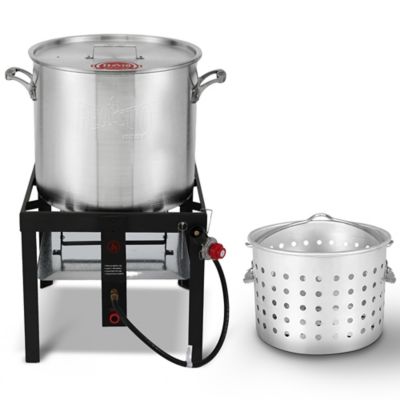
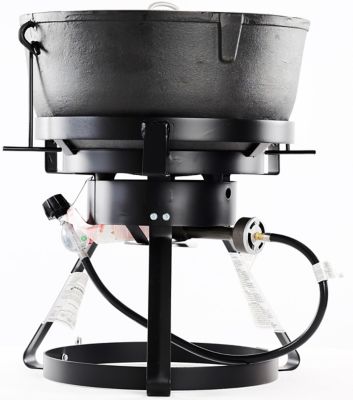
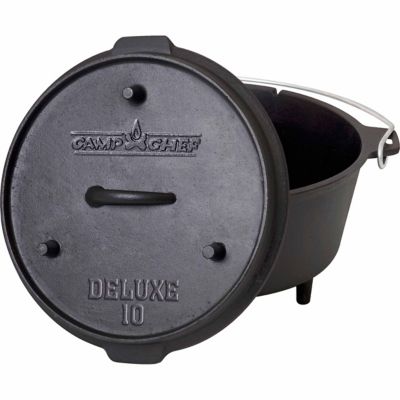
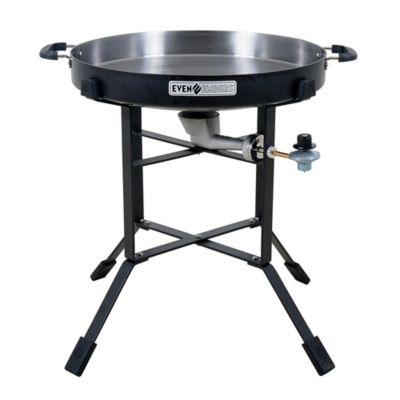
A pot’s shape and construction matter just as much as its material when matching it to a burner, grill grate, or bed of coals. Flat-bottom pots need a stable cooking surface with enough support for their base, and their diameter should fall within the stove manufacturer’s cookware limits. A tall stockpot can hold corn, seafood, or a generous batch of soup, but its height and loaded weight call for a level, sturdy setup. Wide pots offer more room for stirring and browning, although a broad base over a small burner may develop uneven heat. Camp Dutch ovens often have short legs that provide space beneath the vessel for coals and a rimmed lid that holds additional coals on top. That design supports baking as well as simmering, but the legs may not sit properly on every stove grate. A flat-bottom Dutch oven fits a different arrangement, so the two styles are not interchangeable across all cooking surfaces. Cookware intended for direct fire exposure should be clearly identified for that purpose; plastic parts, coated surfaces, and certain handle assemblies may rule out contact with flames or coals. For a burner-based setup, matching the pot’s footprint and loaded weight to the specifications of
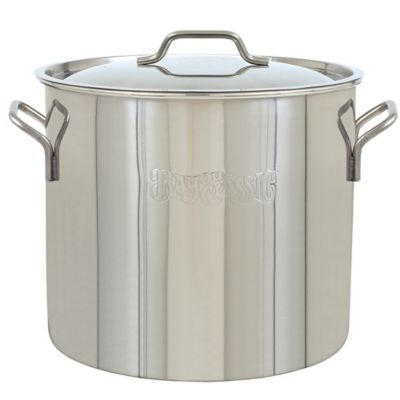
Outdoor Cooktops helps create a steady cooking station. Handles deserve a close look, too. A bail handle can help with lifting a camp pot using appropriate tools, while two side handles give a balanced grip on larger vessels. Folding or removable handles save packing space, but their locks and attachment points need to be secure before lifting. Metal handles and lids can become hot enough to burn, even when they sit away from the flame. Heat-resistant gloves, a suitable lid lifter, and clear space for setting down hot cookware belong alongside the pot. A well-fitting lid helps retain moisture and reduces heat loss during cooking, while a vent or straining feature can add convenience when designed for the task.
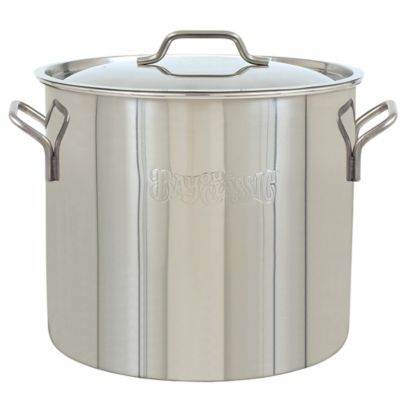
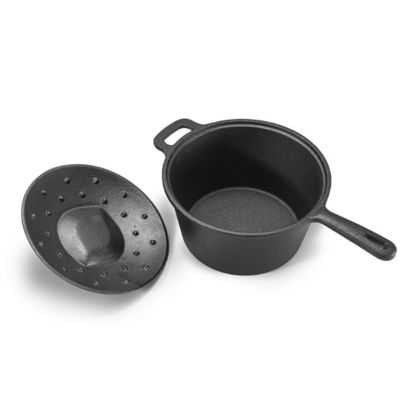
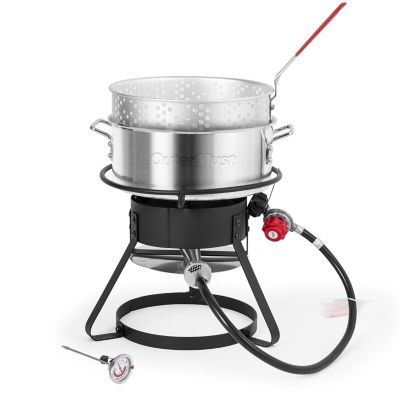
Capacity is easiest to picture in terms of the meal rather than the number stamped on the pot. A small vessel may handle water for one person’s drink and a pouch meal, but cooking pasta, stirring oatmeal, or feeding a second person takes more room. A family pot needs space for the ingredients plus headroom for bubbling and stirring; filling to the brim makes carrying and serving harder. Larger outdoor stockpots suit group meals and foods that need plenty of water, while a mid-size pot can be easier to manage for everyday camp cooking. Nesting cookware helps keep a packed camp kitchen tidy, and a cloth between pieces can protect surfaces from rubbing during transport. Interior measurement marks are handy when adding water, and an opening wide enough for a spoon, ladle, and cleaning cloth makes regular use simpler. Care requirements also shape how well a pot fits the routine. Bare cast iron needs thorough drying after washing and a light application of cooking oil to maintain its seasoning. It should not sit soaking in a wash tub or go into storage damp. Enameled cast iron has different surface-care needs and should only go over heat sources approved by its manufacturer. Stainless steel can develop discoloration or stuck-on food, but a soak and an appropriate nonabrasive cleaner often make cleanup easier. Aluminum, titanium, and coated cookware each have their own cleaning limits, so dishwasher suitability and utensil compatibility should never be assumed. Letting hot cookware cool before washing helps avoid burns and sudden thermal stress. Dry storage, protected coatings, and occasional checks of handles, rivets, and lids support a longer working life. Outdoor cooking pots also make practical gifts for campers, backyard cooks, and folks who enjoy feeding a crowd. Matching the cookware to the recipient’s stove, lifting comfort, and favorite meals matters more than choosing the largest vessel. The right pot earns its place by fitting the way someone actually cooks, from a simple breakfast beside the tent to a shared supper ladled into bowls around the picnic table.