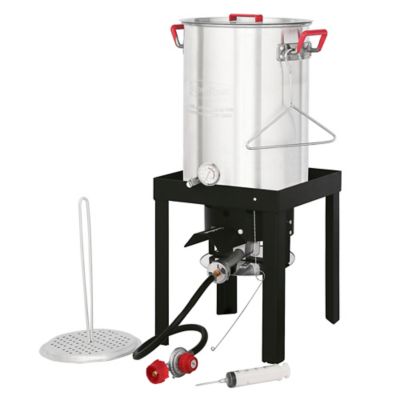
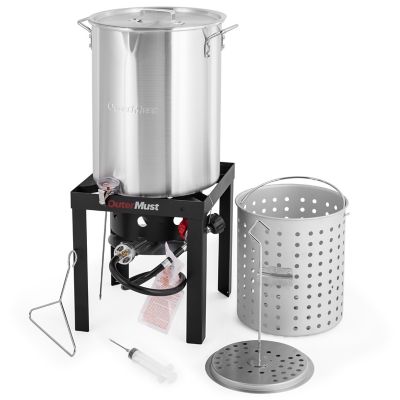
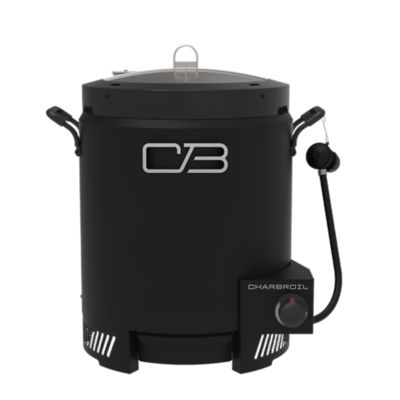
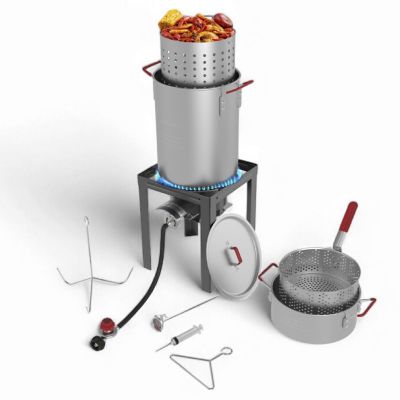
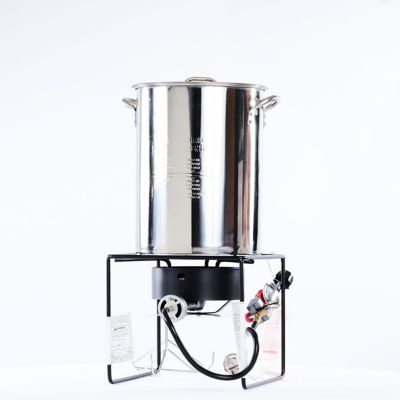
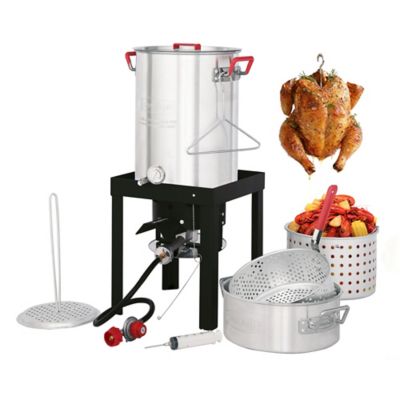
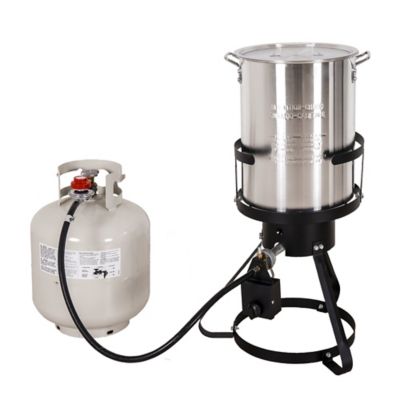
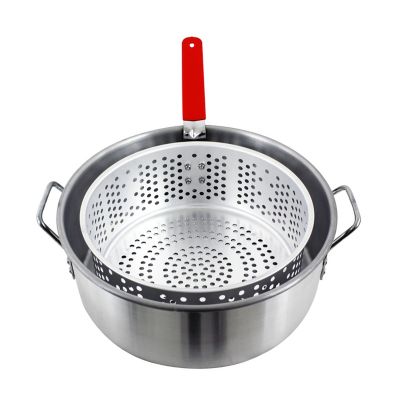
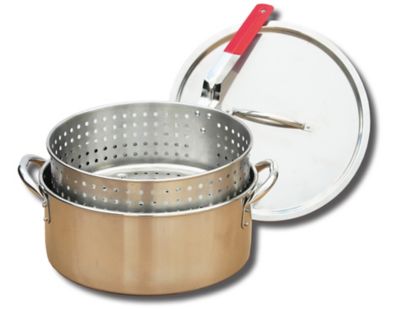
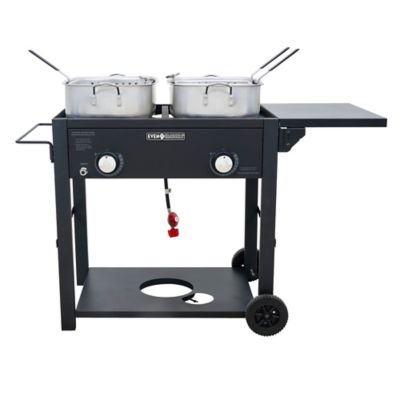
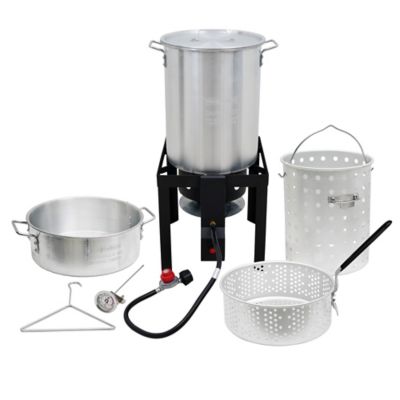
Outdoor turkey fryers are outdoor cooking appliances that cook whole turkeys with either hot oil or, in oil-less designs, radiant heat. Traditional setups pair a large cooking pot with a stand and a propane burner, giving cooks room to prepare a holiday bird without tying up the kitchen oven. That extra cooking space comes in handy when casseroles, rolls, and pies all need their turn before supper. For Thanksgiving gatherings, family reunions, and cool-weather get-togethers, a turkey fryer brings another cooking option to the backyard, with crisp skin and tender meat as the goal. The right fit depends on more than how many people are coming over. Pot capacity, the manufacturer’s maximum turkey weight, burner design, and the space needed for safe operation all matter. A pot’s quart rating describes its volume, not a promise that any bird below a certain weight will fit. A broad turkey may need more clearance than a narrower bird of the same weight, and oil needs room to rise when the turkey goes in. Matching the bird to the appliance’s stated limits helps keep the setup manageable. Traditional propane turkey fryers generally include a tall pot and a way to support and lift the bird, though components vary by design. Oil-less turkey fryers take a different approach, surrounding the bird with heat rather than submerging it in cooking oil. They eliminate the need to handle a potful of frying oil, but still have hot surfaces and require careful outdoor placement. Neither style belongs inside a house, garage, barn, or enclosed porch. For households that enjoy outdoor cooking beyond the holiday table,
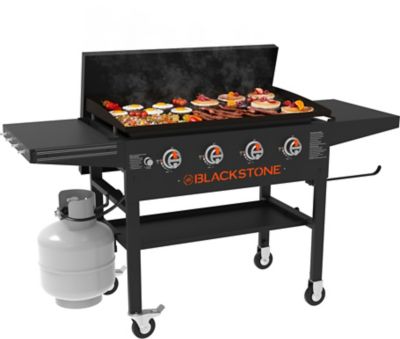
Outdoor Propane Fryers offer a related category to consider, with different pot shapes and cooking arrangements suited to different meals. Intended cooking tasks should lead the choice, whether that means a whole turkey for a family dinner or other foods that the appliance’s manufacturer specifically allows.
Materials and construction make a noticeable difference when a turkey fryer moves from storage to the cooking area and back again. Aluminum pots generally weigh less than comparable stainless steel pots, which can make handling and washing an empty pot easier. Stainless steel resists corrosion and can be a good match for cooks who want a heavier-feeling vessel, though pot thickness and overall construction matter alongside the metal itself. Either material needs care that suits its finish, especially after cooking with oil, salt, or seasoning. Sturdy handles, a well-supported base, and a stand that holds the pot securely deserve close attention. A large vessel full of hot oil is not something to shift around once cooking begins. The burner and stand should match the pot rather than simply look large enough beneath it. Propane connections, regulators, and hoses also need to match the appliance’s specifications; swapping parts without checking compatibility can create a hazard. Burner output, often listed in BTUs, indicates heat input, but a larger number does not tell the whole story. Pot size, outdoor conditions, and burner design also affect heating, while responsive flame adjustment helps a cook manage oil temperature. A long-probe thermometer suited to deep frying serves a different purpose from a food thermometer: one tracks the oil, while the other checks the turkey’s internal temperature. Lifting racks, hooks, and baskets should fit the vessel and support the intended load, with enough clearance to move the bird without catching on the rim. For a cook who already handles backyard meals, these practical details often matter more than extra attachments. A turkey fryer can also make a thoughtful gift for someone who enjoys feeding a crowd, provided that person has a suitable outdoor cooking area and is comfortable tending a propane appliance. It is a hands-on cooking setup, not something to light and leave while watching the game or finishing chores.
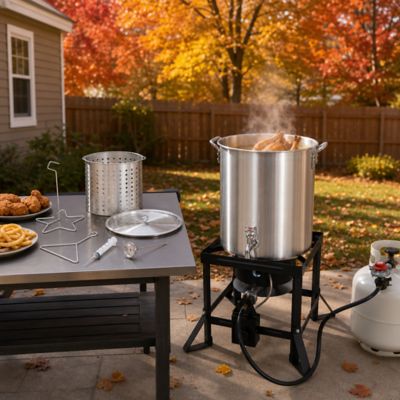
Safe placement and straightforward care are part of choosing an outdoor turkey fryer that fits life at home. A level, noncombustible surface such as concrete, well away from buildings, wooden decks, fences, dry grass, and overhead cover, gives the setup an appropriate starting point; the appliance’s instructions determine the required clearances. A sheltered-looking spot beside the shed is not a substitute for those clearances, and rain or snow must not reach hot oil. Children, pets, and foot traffic need to stay clear of the cooking area, with an adult attending the fryer throughout operation. For oil-frying designs, a completely thawed, thoroughly dried turkey is essential because ice and water can cause violent splattering and overflow. The manufacturer’s fill instructions and maximum oil level matter just as much as pot capacity. When the manufacturer specifies a water-displacement check to establish the fill level, that check happens before heating, followed by emptying and thoroughly drying the vessel and drying the bird. Oil temperature requires ongoing attention rather than guesswork; many turkey-frying recipes call for about 350°F, but the appliance instructions and recipe should govern the setting. The burner should be turned off before the turkey is slowly lowered into or lifted from hot oil, following the manufacturer’s procedure. Brown skin alone does not establish doneness. Turkey needs to reach at least 165°F in the thickest part of the breast and the innermost portions of the thigh and wing, with the thermometer kept away from bone. Keep a fire extinguisher rated for cooking-oil fires within reach, and never put water on an oil fire. After the meal, the pot and oil need to cool completely before draining, cleaning, or moving. Washing approved removable parts, drying metal surfaces thoroughly, and checking hoses and connections as directed help keep the equipment ready for another gathering. Dry storage for the cooled appliance and proper outdoor propane-cylinder storage round out ownership, leaving the kitchen a little less crowded when the next big family dinner rolls around.