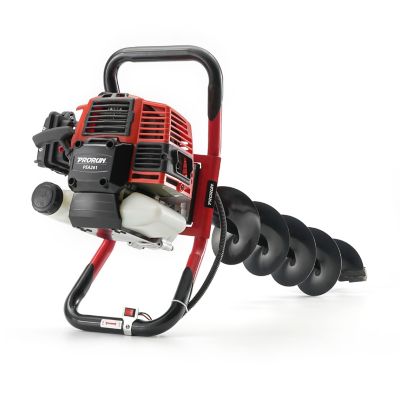
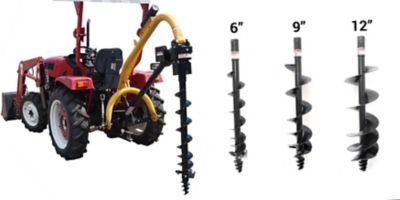
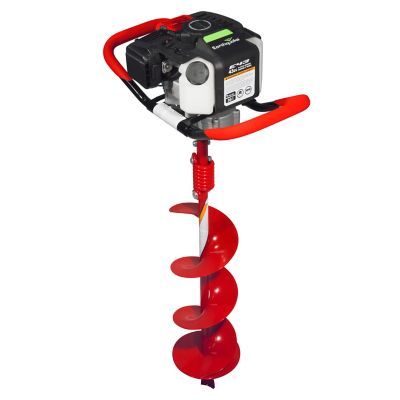
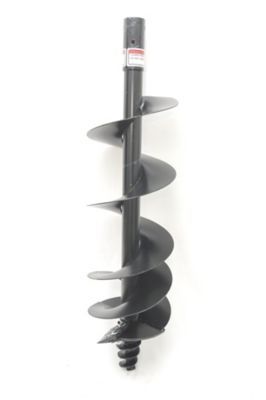
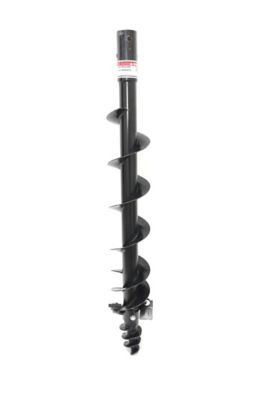
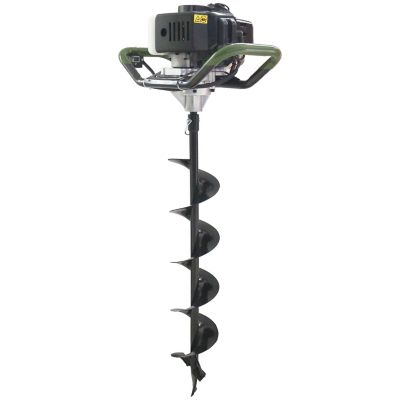
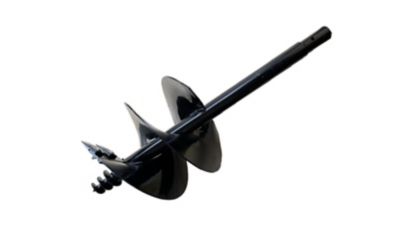
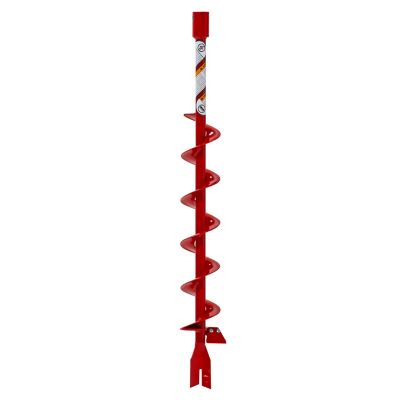
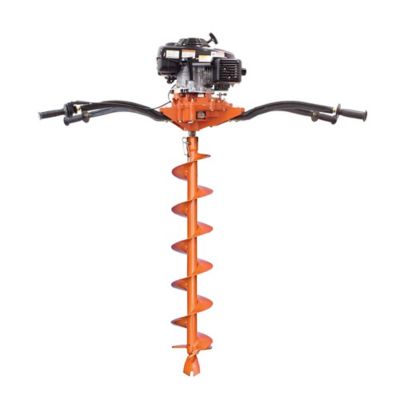
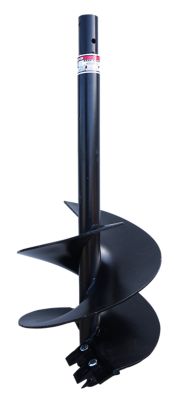
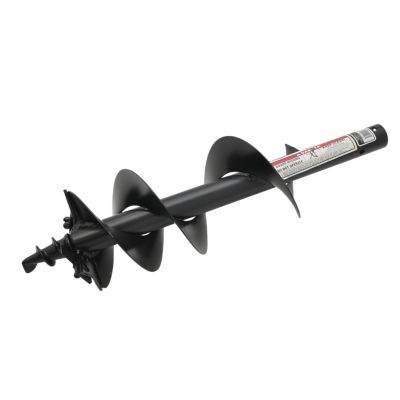
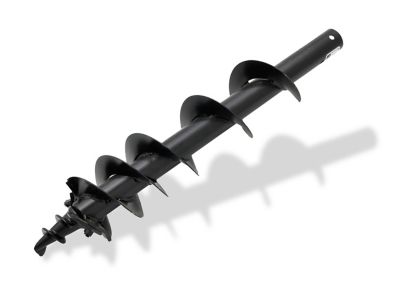
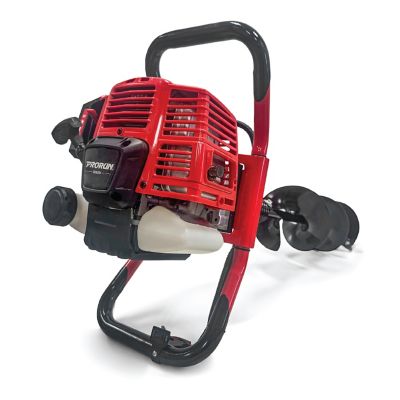
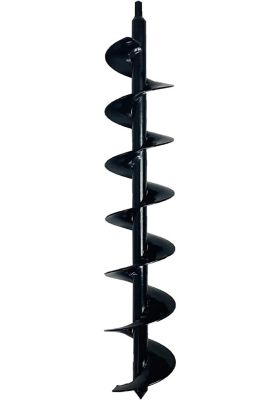
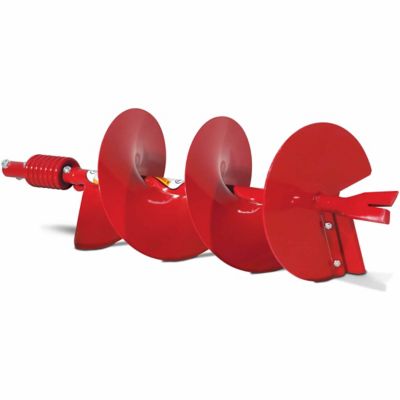
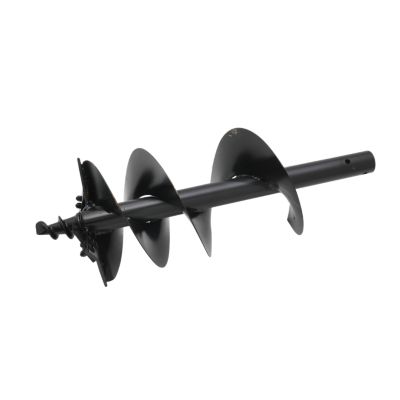
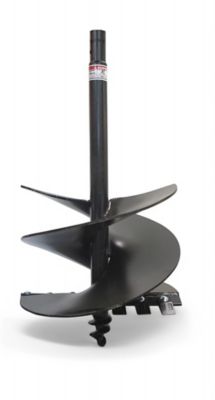
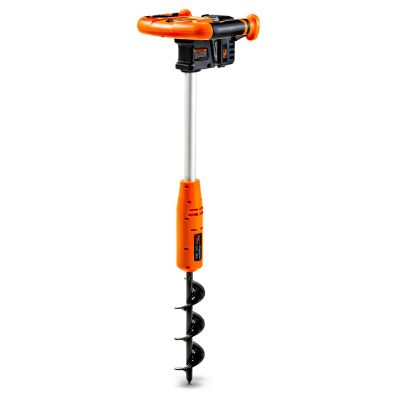
Machine augers are powered drilling tools that turn a spiral-shaped bit to cut into material and carry loosened material out of the hole. For farm, ranch, and property work, that usually means earth augers built for digging post holes, preparing planting holes, and tackling repeated boring jobs without doing all the digging by hand. The spiral section, called flighting, moves soil upward as the cutting edge works below the surface. That action makes a powered earth auger a practical match for long stretches of pasture fencing, replacement gate posts, and rows of shrubs along a property line. Different machine designs suit different workloads: handheld models bring the power source and controls together at the handles, wheeled machines support the drilling assembly on a frame, and tractor-mounted or hydraulic attachments put larger equipment to work. Gas-powered machines offer mobility without an electrical cord, while battery-powered models bring another option for work spread across a property. Motor or engine size matters, but it is only one part of the picture. Torque, gearing, bit diameter, cutting teeth, and ground conditions all affect how a machine handles a hole. A narrow hole through loose soil is a different job from a wide opening in packed clay, and buried roots or stones can interrupt either one. Farmers, fencing crews, landscapers, and acreage owners often look at the number of holes ahead, the distance between them, and the equipment already on hand when comparing machine augers. For someone replacing a few fence posts, portability and manageable controls may matter most. For a crew laying out a lengthy fence line, repeated operation, attachment compatibility, and access for maintenance can carry more weight. An auger can take on much of the boring work, but it does not replace proper layout, checking hole dimensions, or removing material that the bit cannot lift. Its value lies in matching a powered digging system to the ground and the work.
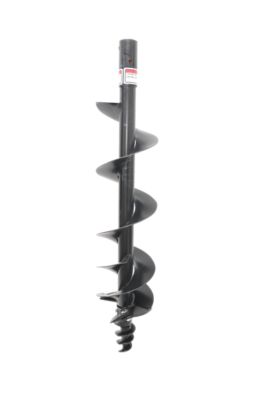
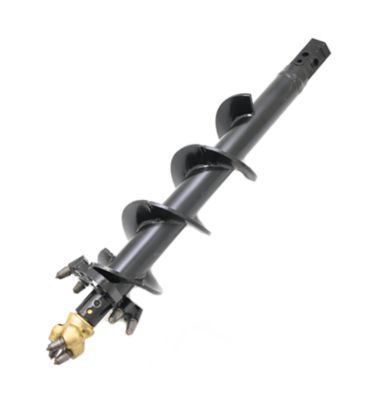
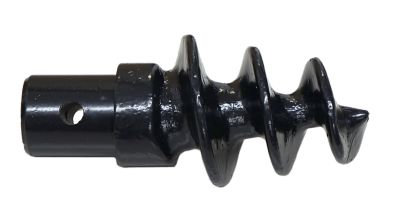
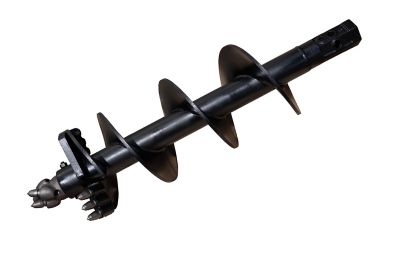
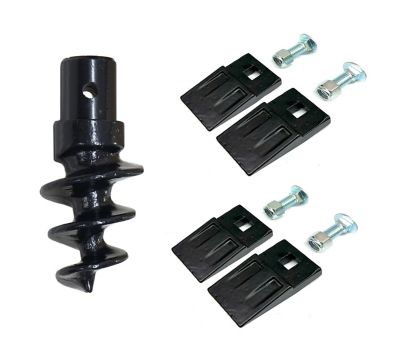
The bit and drive connection deserve as much attention as the machine itself. Earth auger bits commonly have steel shafts and flighting, with cutting edges and pilot points designed to start the hole and break up soil. Depending on the design, replaceable teeth or tips allow worn cutting parts to be changed without replacing the entire bit. Weld construction, flighting thickness, and the condition of cutting surfaces influence how well the assembly stands up to repeated digging. Standard soil bits and attachments intended for rocky ground are not interchangeable simply because they look alike; the drive unit must support the intended attachment and application. Bit diameter establishes the approximate hole width, while usable drilling depth depends on the bit, machine geometry, and any manufacturer-approved extension. Fence posts generally need room for the specified backfill or concrete, so post width alone does not determine the right bit size. Planting holes have their own requirements, including room for the root ball and surrounding root growth. A neat, narrow bore is not necessarily a finished planting hole, especially where compacted or slick clay walls need loosening. Fit also includes shaft shape, connection diameter, pin placement, rotation direction, and the machine’s permitted bit sizes. Tractor attachments bring additional considerations such as hitch category, power take-off requirements, driveline fit, and shielding. Hydraulic auger drives must match the carrier’s mounting system, hydraulic flow, and pressure specifications. For shoppers considering
Electric Augers, the distinction between battery-powered and corded equipment is worth noting, along with battery platform compatibility, charger requirements, and the manufacturer’s intended tasks. Reverse operation, variable speed, and torque-control features can help with handling on machines that include them, but they do not make every attachment suitable for every surface. Complete machine weight, handle spacing, transport dimensions, and the number of operators specified by the manufacturer also affect fit. Those details become especially noticeable when moving between fence corners, loading equipment onto a trailer, or working where access is tight.
Long service life comes from a sound match between the machine, its attachments, and the care it receives. Soil is abrasive, and dull teeth or a worn pilot point can make an auger work harder while slowing progress. Replaceable cutting parts, accessible grease fittings where provided, and clear service requirements are useful details for equipment that will see regular work. Gas engines bring fuel, air-filter, ignition, and oil requirements that vary by engine design; two-stroke and four-stroke machines do not share the same fueling instructions. Battery equipment has its own charging and storage requirements, while hydraulic attachments need attention to hoses, couplers, and signs of leakage. Removing packed soil, checking fasteners with the power safely isolated, and inspecting flighting for bends or cracks help keep small problems from carrying into the next job. Storage matters, too: a clean, dry location and secure support protect cutting edges and keep a heavy bit from becoming a tipping hazard in the shed. Handling features should be considered alongside maintenance needs. An earth auger can react sharply when its bit catches a root or rock, making the specified operator setup, stable footing, fitted clothing, and appropriate eye, hearing, and foot protection important parts of the job. Underground utilities must be located before digging; calling 811 starts that process, and private lines may require a separate locating service. Tractor power take-off shafts and rotating bits also need intact guards and plenty of clearance from people nearby. The term machine auger can describe drain-cleaning equipment as well, though those machines do a different job. A drain auger rotates a flexible cable and suitable head through piping to address obstructions rather than lifting soil with rigid flighting. Pipe diameter, cable size, and the type of line determine that equipment’s fit. Keeping the application clear helps separate post-hole digging equipment from pipe-clearing machines and other specialized augers. For property work, the right combination of power source, bit construction, attachment fit, and service access makes a machine auger a practical addition to the equipment shed.