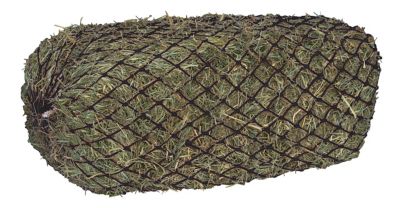
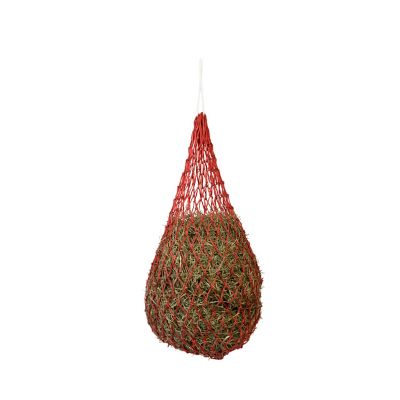
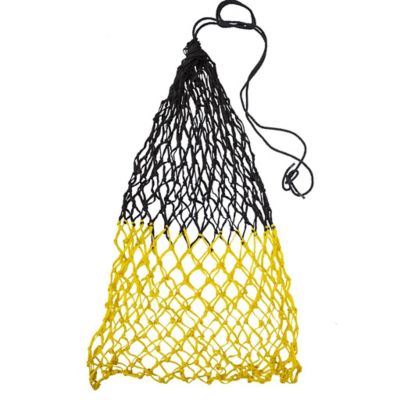
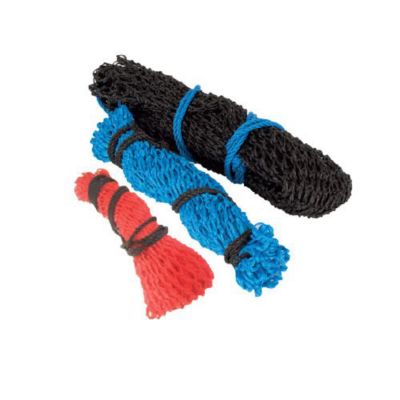
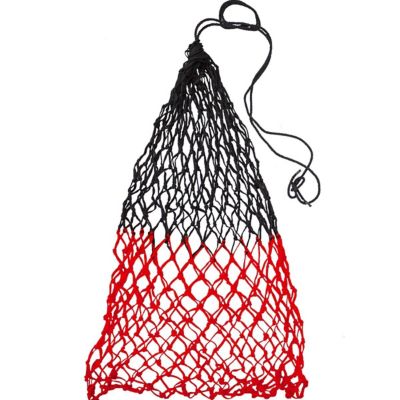
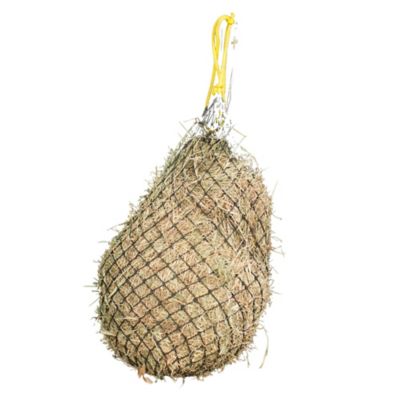
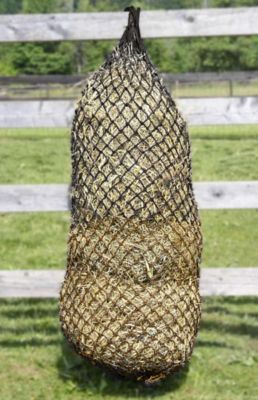
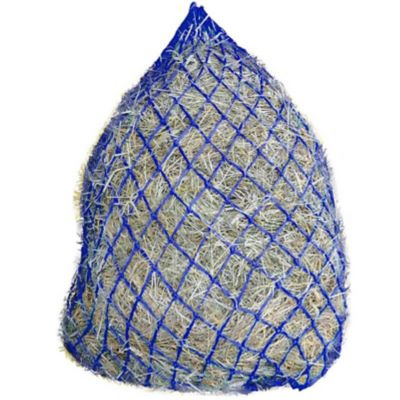
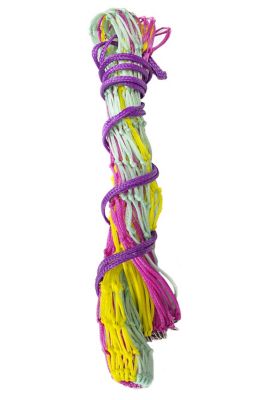
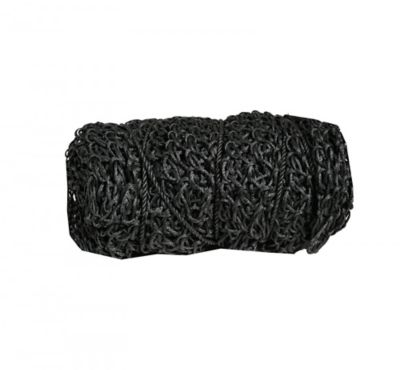
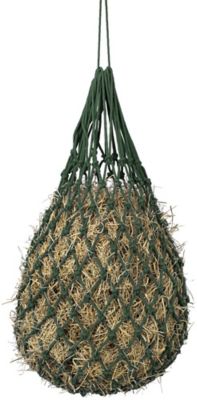
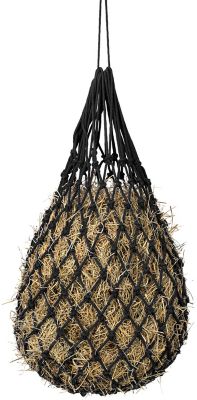
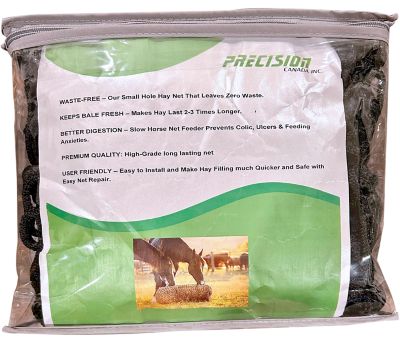
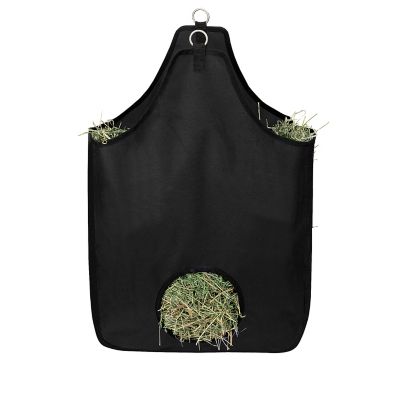
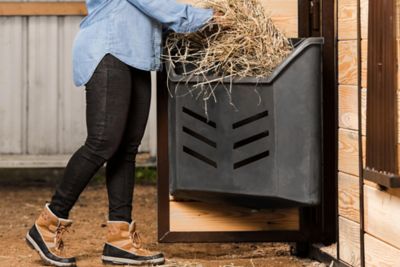
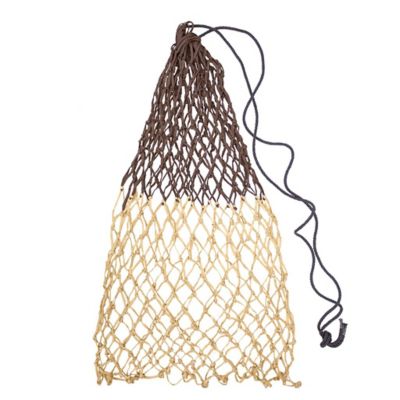
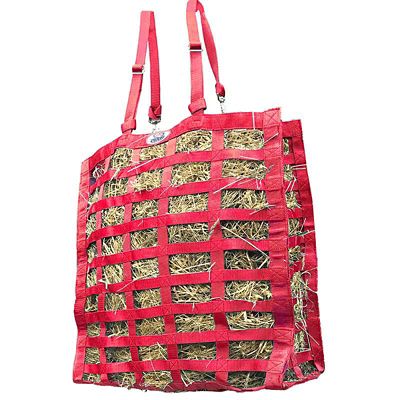
Hay nets are mesh feeders that hold hay for horses and other suitable livestock, helping reduce hay waste and, with smaller openings, slow the pace of eating. Instead of pulling apart a loose pile and trampling the leftovers into bedding, an animal draws forage through the net a mouthful at a time. That makes these feeders a practical part of many barn routines, from feeding a pony in a stall to keeping hay contained during a break at the showgrounds. They can also help stretch feeding activity over a longer period, although the actual pace depends on the animal, the forage and the mesh opening size. A net does not change the amount of hay an animal needs or replace a balanced feeding plan. Its job is to manage how that hay is presented. Smaller openings generally restrict the size of each bite, while larger openings allow easier access. The smallest opening is not automatically the right choice: an eager horse that pulls hard, a youngster learning to eat from a net and an older horse with dental trouble can have very different needs. Forage texture matters, too. Long, coarse stems may take more effort to pull through tight mesh than finer hay, and tightly packed hay can be harder to reach than a loosely filled net. Watching an animal eat gives a clearer picture than judging by the opening size alone. A comfortable feeding pace should not come with repeated head tossing, forceful yanking or giving up on the hay. For horses that need careful weight management or have trouble chewing, a veterinarian can help match forage access to the feeding plan. In shared spaces, access matters just as much as mesh size. A single hanging net may let a dominant horse guard the feed, so the number and placement of feeding stations deserve attention alongside the amount of hay offered.
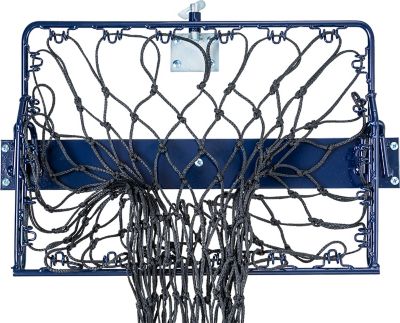
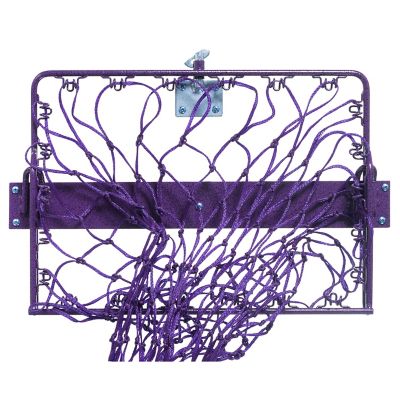
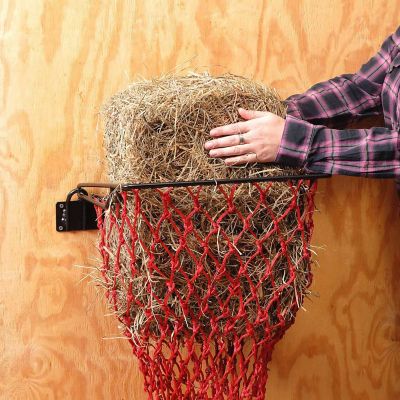
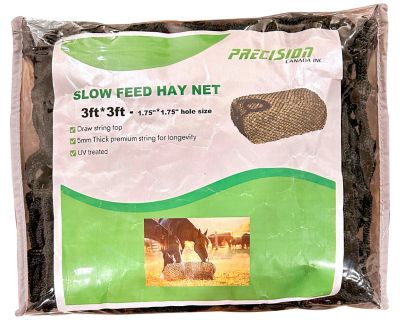
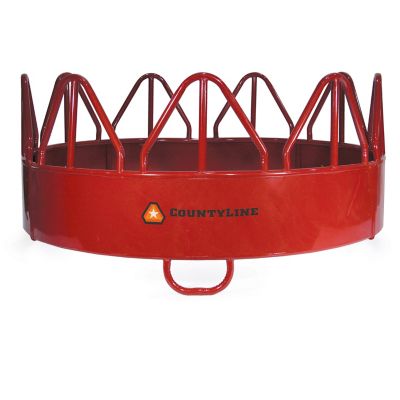
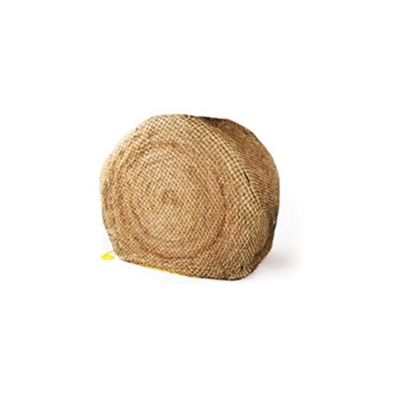
The shape, capacity and construction of a hay net affect how it fits into daily chores. Smaller hanging styles can suit individual portions, while larger formats are intended to contain more forage or fit around particular bale shapes. Capacity descriptions are worth reading closely because the amount a net holds varies with hay density and how firmly it is packed. A net that fits several flakes of one bale may hold a different weight from another, so weighing portions remains more dependable than counting flakes or judging fullness. Nets intended for large bales also need the right supporting feeder and installation; a loose net draped around a bale is not interchangeable with a properly secured feeding setup. Common materials include nylon, polyethylene and polypropylene, with differences in flexibility, stretch and resistance to wear. Knotted mesh has junctions at each crossing, while knotless construction has a different surface feel and structure. Neither description alone tells the whole story. Cord thickness, reinforced edges, closure design and the animal’s pulling habits all influence how a net holds up. A horse that takes small, steady bites puts different demands on mesh than one that grabs and tugs. Look beyond the body of the net to the hanging rope, attachment points and seams, since those areas carry repeated loads. Filled weight matters for the person doing chores, too: a large net can be awkward to lift, especially when reaching over a stall door or carrying feed down a barn aisle. Placement needs to follow the feeder’s directions and account for the net’s changing shape as hay disappears. Loose loops, trailing cords and sagging mesh can create entanglement hazards. Feet, shoes and halter hardware should not be able to catch in the net or its attachments. Horned livestock require particular caution and equipment intended for their species. A feeder that suits a horse should not automatically be assumed suitable for goats, sheep or cattle.
Everyday care starts with the hay going into the net and continues through the last handful left behind. Clean-smelling forage without visible mold, excessive dust or foreign material belongs in the feeder; mesh cannot make spoiled hay safe. Keeping forage contained may cut down on hay scattered through bedding or manure, but it does not eliminate waste or replace regular cleanup. Fine leaves and short stems can fall through openings, and uneaten material can collect beneath the feeding spot. Clearing that area helps keep the barn tidy and makes it easier to see whether a horse is finishing the ration or sorting through it. Before refilling, check for broken strands, enlarged openings, frayed hanging ropes and damage around knots or seams. A small failure can become a much larger gap under repeated pulling, changing both feeding access and the chance of a hoof getting caught. Equipment with damage that affects safe containment or attachment belongs out of service rather than back on the wall for one more feeding. Cleaning methods depend on the material, so follow the care directions and rinse away any cleaner thoroughly. Nets should dry completely before storage, with cords gathered so they do not tangle around tools or other gear. If a net is part of a hay-soaking routine, account for the extra weight of wet forage and keep it within the equipment’s stated limits. Having a straightforward place to fill, drain and hang the net makes that chore easier without dragging wet hay across the aisle. For properties with a garden or orchard alongside the barn,
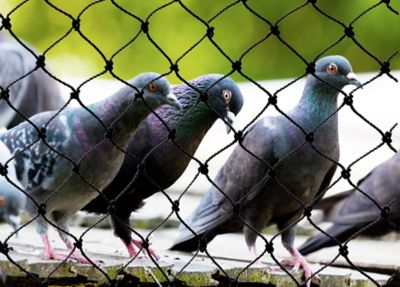
Bird Protection Nets serve a separate purpose; crop-protection mesh should never stand in for a feeder intended for animals. The right hay net fits the forage, the feeding space and the animal’s habits, while remaining manageable for the person filling it day after day.