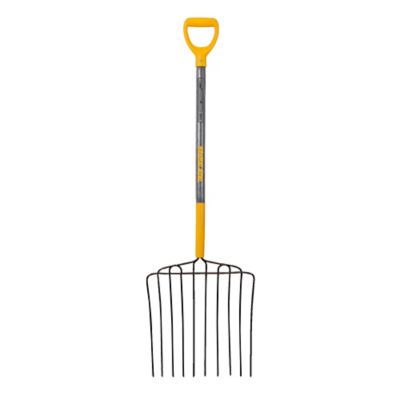
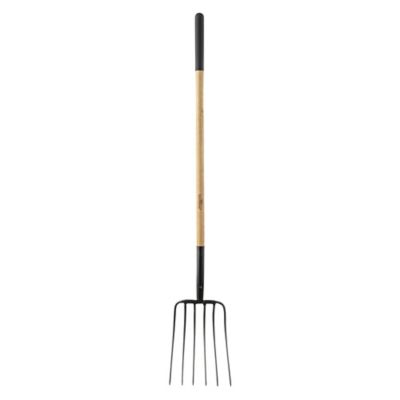
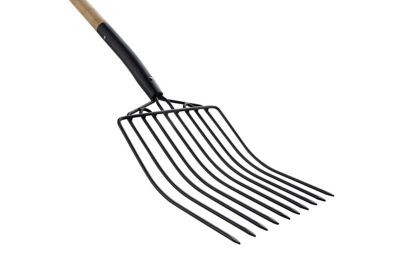
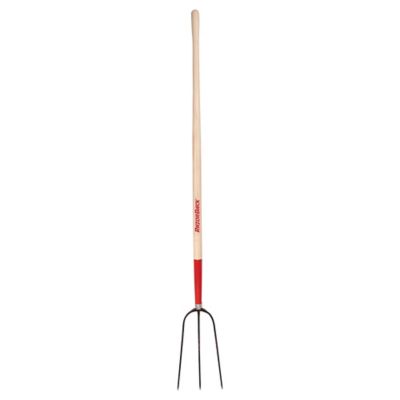
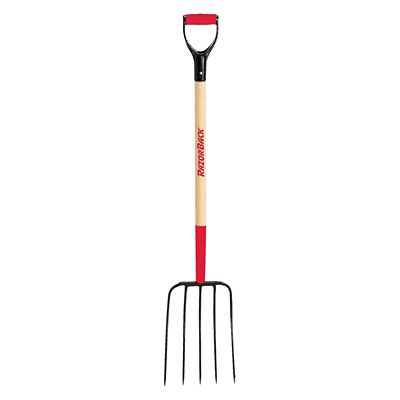
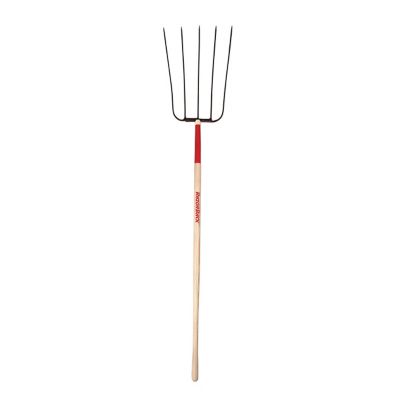
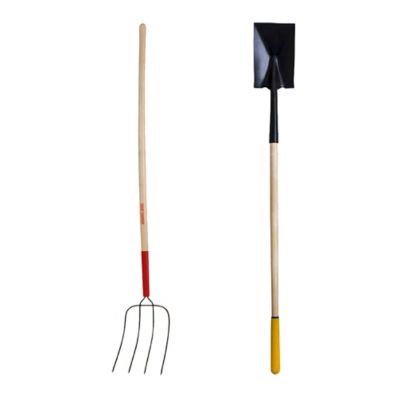
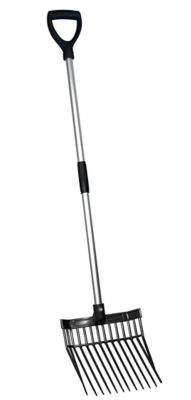
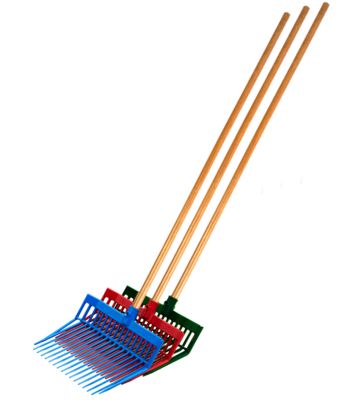
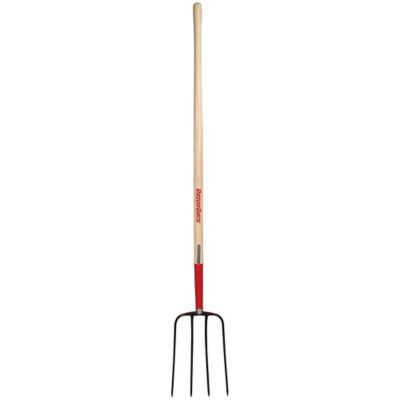
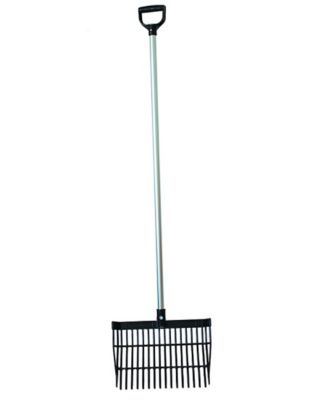
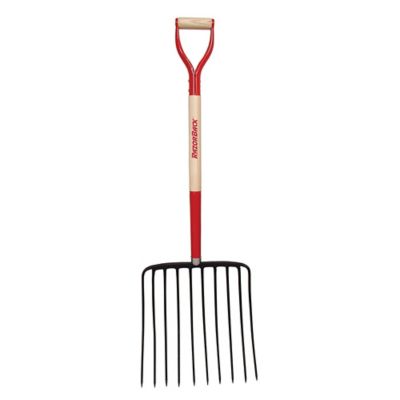
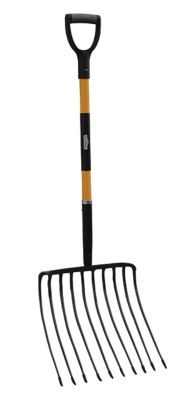
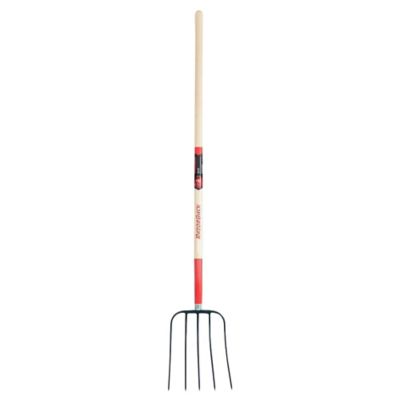
A hay fork is an agricultural hand tool for lifting, loosening and moving loose hay or straw. It typically has two or three long, slender, curved tines attached to a handle, with enough space between the tines to slide into tangled stems without scooping up much dirt. That shape makes a hay fork handy for shifting a pile beside the feed area, gathering hay scattered across a barn floor or spreading straw in a livestock shelter. The curve helps cradle the material as it moves, while the narrow points slip between stems more readily than a shovel blade. On a small acreage, a hand fork can handle the loose material left after a bale is opened; around a larger livestock operation, it can take care of the corners and short moves that don’t call for machinery. Hay forks and manure forks may look alike at a glance, but their working ends serve different jobs. Manure forks generally have more closely spaced tines for holding heavier material, while spading forks have shorter, sturdier tines built for working soil. A hay fork’s slender tines are better suited to loose plant material than packed bedding, hard ground or prying against a stubborn object. Tine count alone doesn’t tell the whole story: tine length, spacing, curve and overall head width all affect how the fork carries a load. Wider spacing can work well with long, tangled hay, while shorter, broken stems may slip through more easily. A broader head can gather a larger forkful, but that also adds weight out at the end of the handle. For feeding chores, moving manageable portions offers more control than trying to carry half the pile in one lift. Whether the job is placing hay in a feeding area or shifting straw from a cart to a pen, the right fork should match the material and the room available to work.
The head and handle both matter when a hay fork becomes part of the daily chore routine. Steel tines need enough strength to hold their shape under ordinary lifting loads, and forged construction can provide a solid working head without a collection of separate joints. Details vary by design, so the connection between the head and handle deserves just as much attention as the tine shape. A secure socket, collar or other attachment helps the tool feel steady rather than wobbly when a forkful leaves the floor. Hardwood handles have a familiar feel and can offer a comfortable grip, while fiberglass handles provide another option for folks who prefer a different balance or handle construction. Neither material makes inspection unnecessary: wood can split or splinter, and fiberglass can develop cracks or exposed fibers. Handle length should suit both the person doing the work and the space around them. A longer handle gives more reach across a hay pile, but it needs clearance beneath low beams and inside narrow stalls. A shorter handle can be easier to maneuver in close quarters, though it may require more bending during floor-level chores. Straight handles allow several hand positions along the shaft, while a grip at the end can offer a defined place to hold and steer the fork. Gloves, hand size and shoulder comfort all play a part in how that arrangement feels. Balance matters, too; a head-heavy fork can feel quite different once hay is on the tines. Smooth lifting motions and smaller loads help keep the work controlled, especially near gates, partitions and feed containers. Long tine points also need a clear path away from people and animals. After chores, clearing away plant material and dirt, then drying the head before putting it away, helps limit rust. Handle care should follow the maker’s recommendations, and loose connections, bent tines or cracks deserve attention before the next round of feeding.
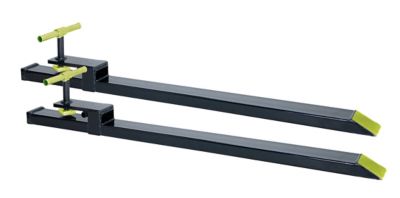
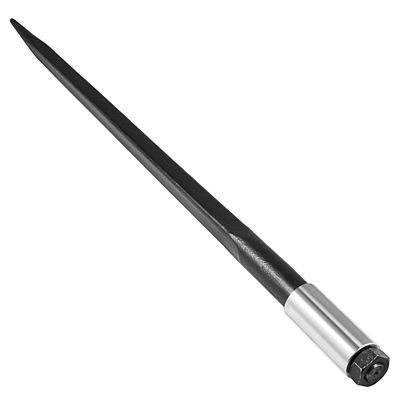
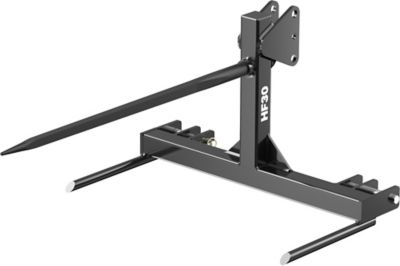
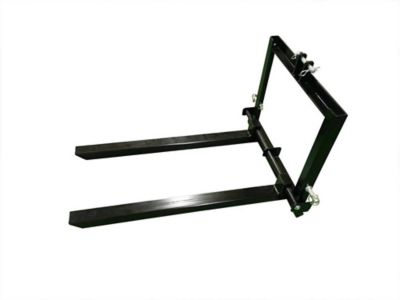
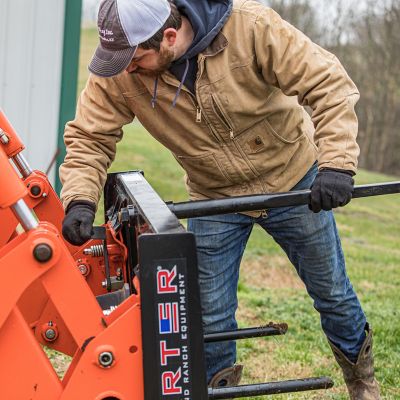
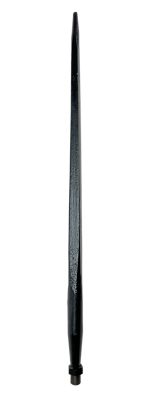
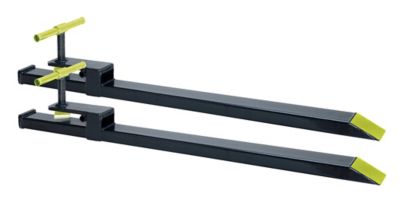
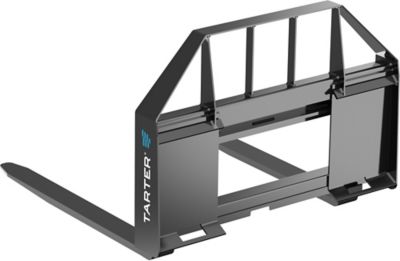
The term hay fork can also refer to tractor-mounted equipment for handling full bales, a different job from moving loose hay by hand. These attachments may feature one main bale spear with smaller stabilizing tines, or several spears arranged to support the intended bale type. A single main spear commonly handles round bales, while multi-spear arrangements can help support and steady larger loads, depending on the attachment’s design. The number of spears is only one consideration. Bale weight, bale shape, spear length, mounting style and the attachment’s rated capacity all affect whether the setup fits the job. Front-loader attachments and three-point-hitch attachments connect in different ways, and the tractor, loader or hitch must be rated for the load involved. Matching the mounting system matters just as much as matching the bale. A spear attachment is not a pallet fork, and a hand hay fork is not a substitute for equipment designed to lift an intact bale. For mechanized handling, keeping the load low while traveling, following the equipment’s operating instructions and keeping people clear of raised bales are important parts of the work. The area around the hay matters for either kind of fork. Thoughtful
Hay Storage leaves room to approach the material, open gates and move a load without catching a handle or spear on nearby equipment. Clear aisles also make scattered hay easier to gather before it becomes a footing problem. Hand forks belong in a secure rack or another designated spot where the points cannot fall into a walkway, and machinery attachments need stable storage that prevents tipping or exposed points from becoming a hazard. For someone who keeps horses, tends a few cattle or manages regular straw-bedding chores, a well-matched hay fork can make a practical gift. The best match comes from knowing the recipient’s routine, preferred handle feel and working space—not simply choosing the largest head. From a few loose flakes beside a stall to full bales headed toward a feeding area, hay-handling tools earn their place by fitting the actual chore.