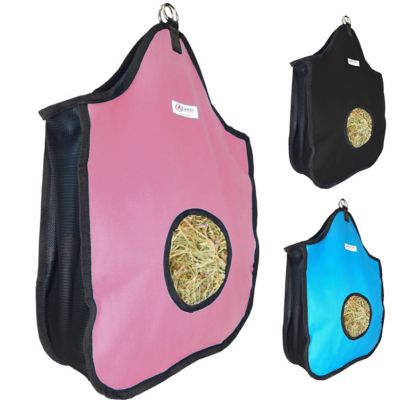
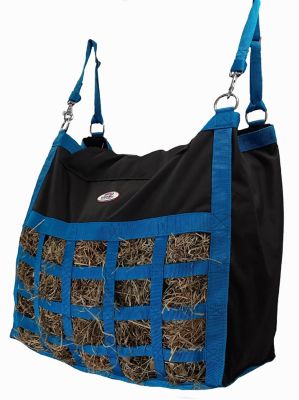
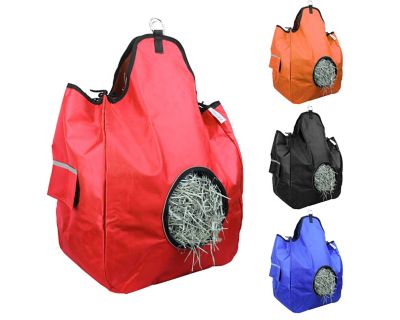
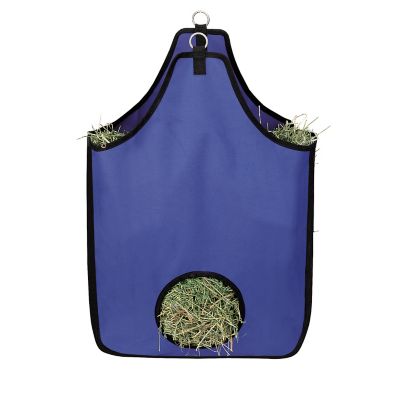
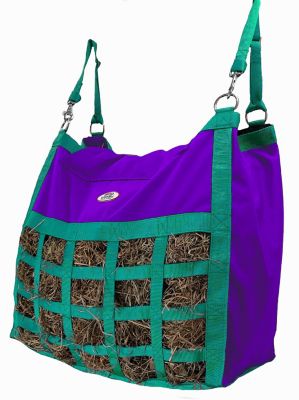
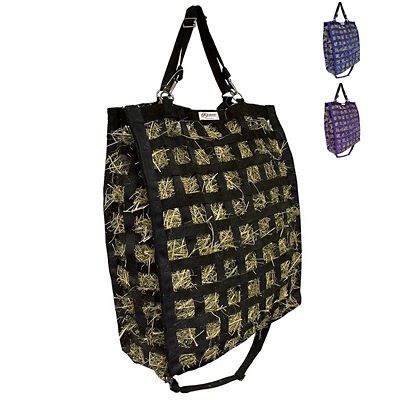
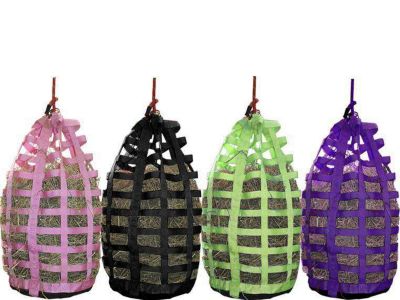
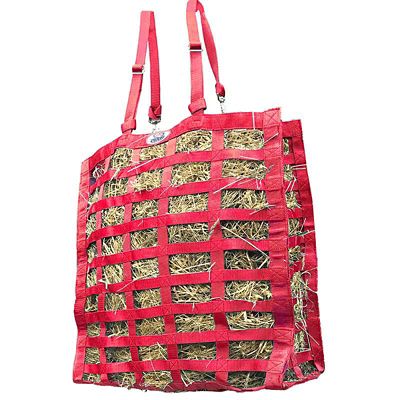
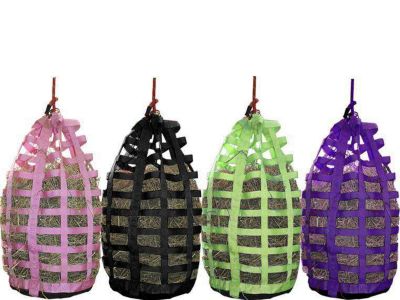
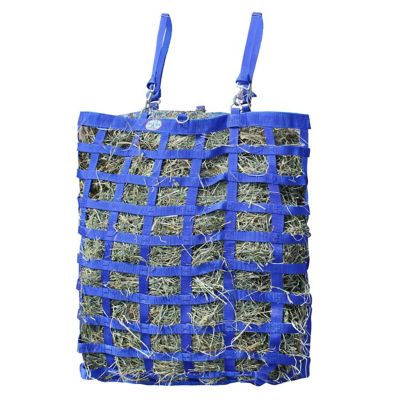
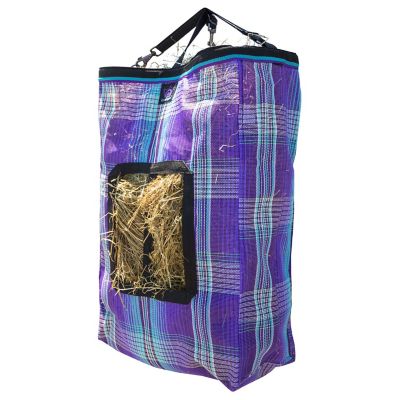
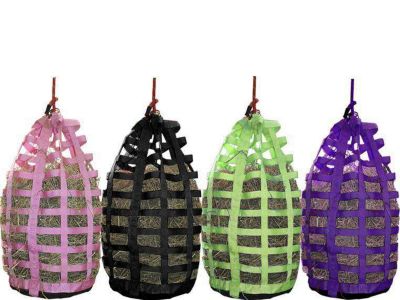
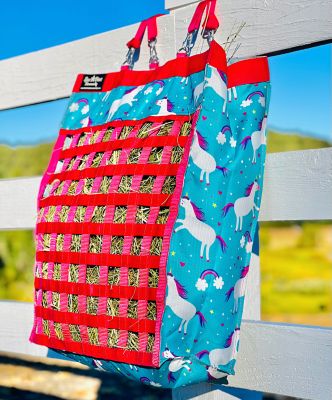
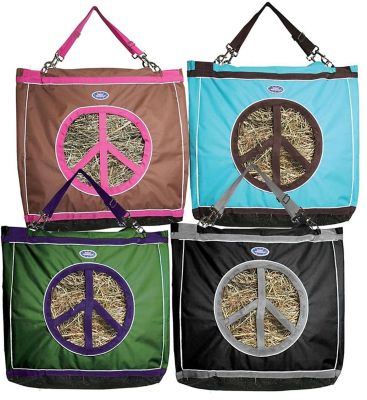
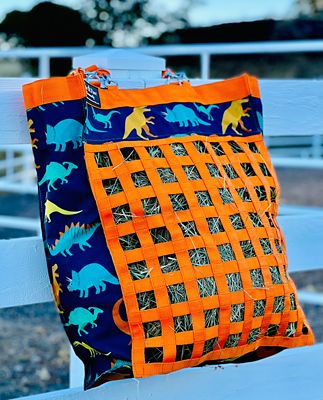
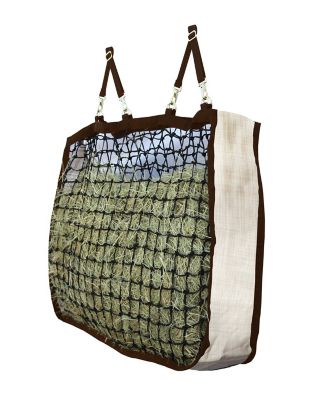
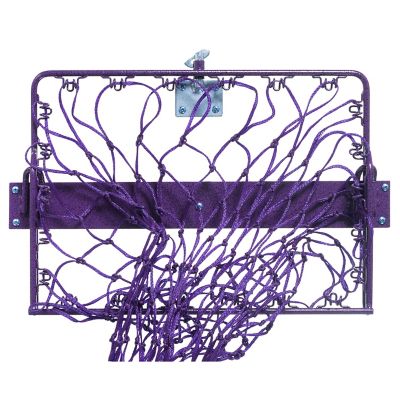
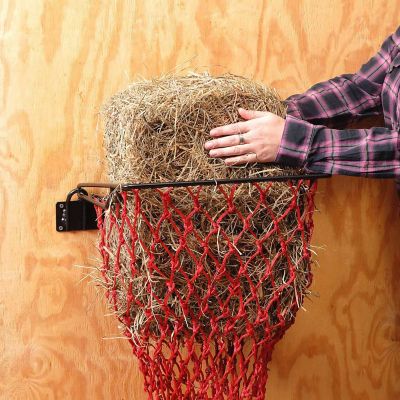
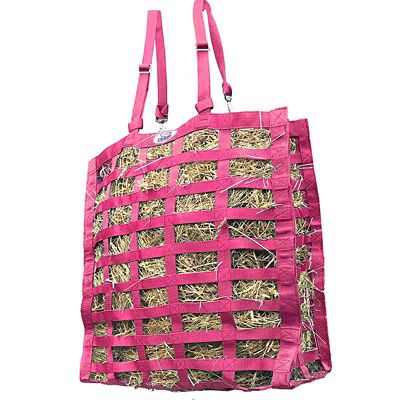
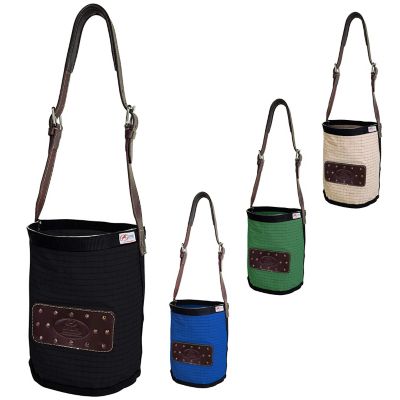
Hay bags keep forage contained and off the ground, helping cut down on hay scattered into bedding, trampled into dirt, or left across a trailer floor. They give horses a designated place to eat in a stall, at a hitching area, or while traveling, with designs that range from solid-sided bags with feeding openings to net-front styles that let horses pull hay through mesh. Slow-feed hay bags have smaller openings intended to limit the size of each mouthful, which can help stretch out a feeding session. Standard openings allow easier access and may better suit horses that struggle with tighter mesh. Neither style guarantees a set eating pace, since hay texture, the amount packed inside, and an individual horse’s habits all make a difference. Materials matter just as much as the feeding opening. Woven nylon and polyester fabrics can contain loose stems, while canvas offers another fabric option for everyday barn routines. Rope or mesh panels provide access across a larger feeding surface, and reinforced edges help support areas that take repeated pulling. Solid panels can limit the amount of hay that falls through the sides, though no bag catches every leaf or stem. Close stitching, strong webbing, and securely attached hanging points are worth a look, especially for a horse that tugs hard at each bite. The best match also depends on the horse’s mouth and feeding needs. A patient eater may handle smaller openings comfortably, while a horse with dental trouble may need easier access or a different feeding arrangement recommended by a veterinarian. Slow feeding should never mean leaving a horse unable to get enough forage. For barns with several horses, individual feeding habits matter more than having every stall set up alike. One horse may pick steadily at a mesh front, while another does better with a roomy opening and less resistance. That difference makes opening style an important part of comparing hay bags, not just a matter of appearance.
Capacity and shape affect how a hay bag fits into chores from the first armful of hay to the last sweep of the aisle. A compact bag can suit a shorter outing or a limited space, while a roomier design can hold more forage between refills. Flake counts offer only a rough comparison because flakes vary with bale size, compression, and hay type. The weight of the forage and the horse’s feeding plan give a clearer picture of how much a bag needs to hold. A wide top or accessible loading panel can make filling less of a wrestling match, particularly when a flake wants to spring apart before it reaches the opening. Closures that stay out of the way during loading and fasten securely afterward can help keep that chore moving. Flat-backed shapes may sit more neatly against a wall, while deeper bags need enough clearance that they do not crowd a narrow space. Hanging straps, rings, snaps, and attachment points deserve the same attention as the bag itself. They need to suit the mounting location and the weight of the filled bag, with all connections installed according to the manufacturer’s directions. A feeding position should allow comfortable access while keeping legs, shoes, and equipment from becoming caught in straps or mesh. Because a bag changes shape as it empties, its nearly empty position matters as much as its full one. Loose loops and dangling strap ends have no place within reach of a hoof. In a trailer, the bag also needs to stay clear of doors, latches, and other moving parts, without restricting the horse’s space. Not every hay bag is intended for every setting, so suitability for trailer feeding, stall feeding, or another location should come from the bag’s stated purpose. Shared feeding areas bring another consideration: enough access and separation for the horses involved. A bag cannot prevent one horse from guarding hay or pushing another away, so the feeding setup still needs to account for herd behavior.
Regular care helps hay bags stay ready for the next feeding and makes wear easier to spot before it becomes a problem. Loose hay, dust, and broken stems collect in corners and along the bottom, particularly in solid-sided styles. Emptying that buildup keeps old material from mixing into the next serving. Cleaning methods depend on the fabric, mesh, coatings, and hardware, so the care label should determine whether a bag can be brushed out, rinsed, or washed. After washing, thorough drying matters before fresh hay goes back inside or the bag goes into storage. Damp fabric and leftover forage are a poor combination, and a feeding bag is no substitute for keeping hay dry and properly stored. Frequent checks around seams, feeding openings, straps, and metal fittings can reveal stretched mesh, broken stitching, sharp edges, or frayed fibers. Damage near the mouth or hanging points calls for prompt attention; a loose strand or failing strap is more than a cosmetic issue. Horses that chew the bag instead of the hay may need a different opening style, a different material, or a review of the feeding arrangement. For boarding barns, lesson programs, and horse owners hauling to shows or trail rides, easy identification can be helpful, too. Distinct colors can make it easier to keep feeding gear assigned to the right horse, while a manageable empty shape makes carrying and storage simpler. A hay bag can also be a practical gift for someone setting up a first stall, organizing a trailer, or replacing worn feeding gear. Knowing the recipient’s mounting space, preferred feeding style, and horse’s habits makes that choice more useful than picking by looks alone. For another horse-themed gift direction,
Horse Surprise Bags offer a separate place to browse. For everyday feeding, the details that count are straightforward: a suitable opening, enough capacity, secure attachment, and construction that stands up to the horse and the chore.