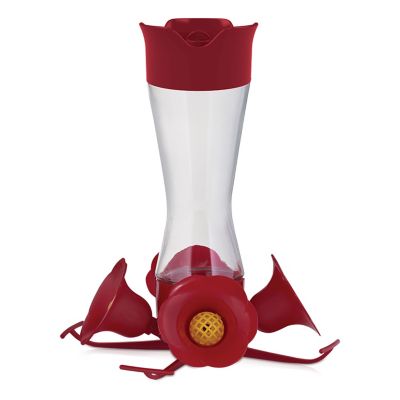
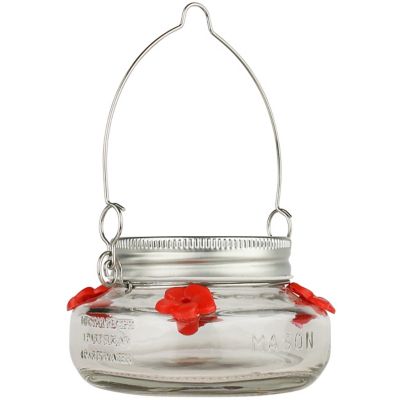
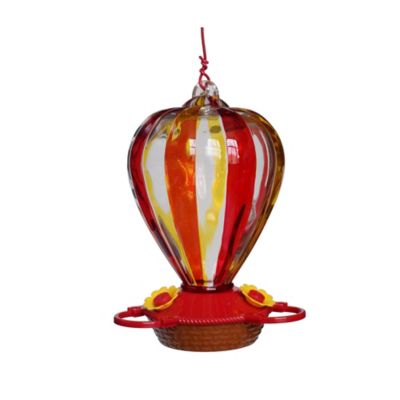
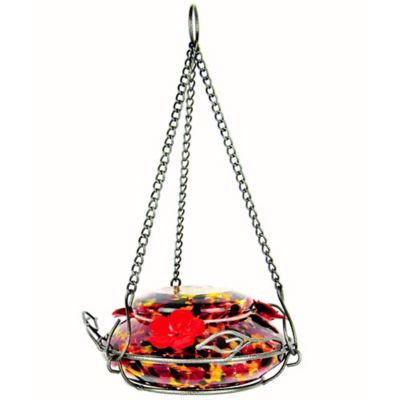
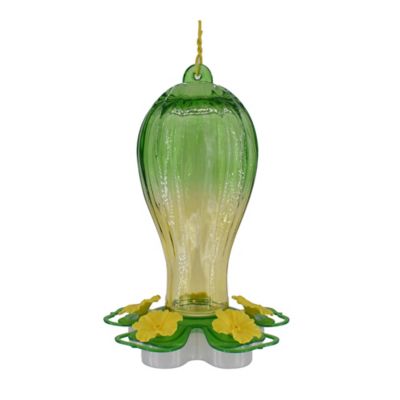
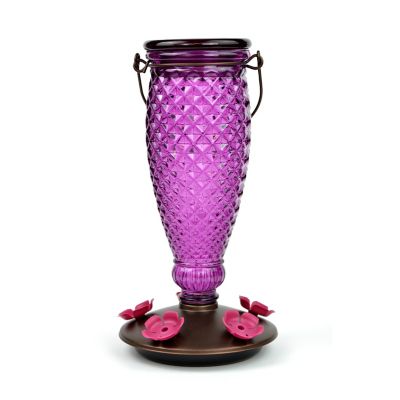
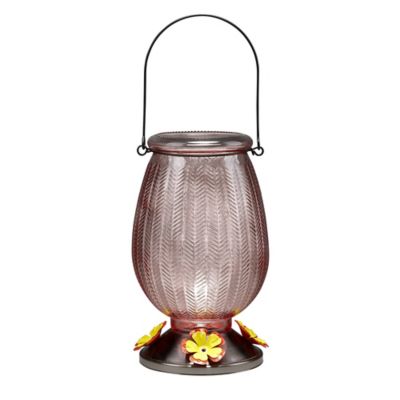
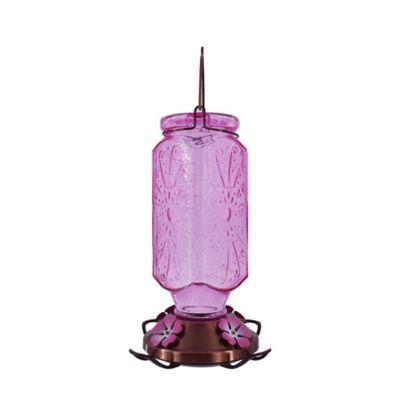
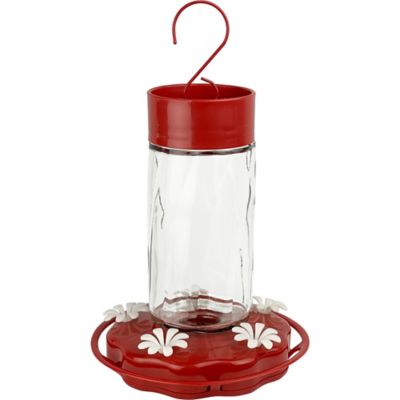
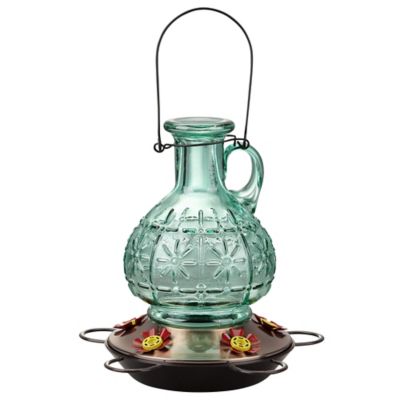
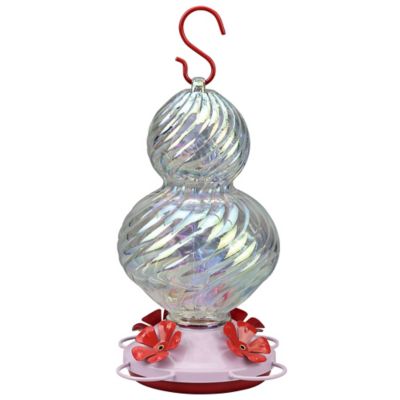
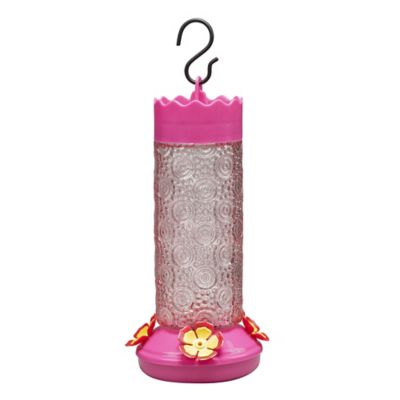
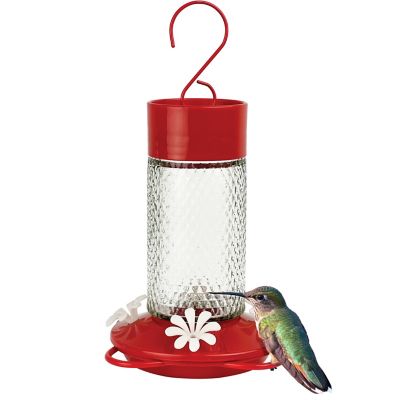
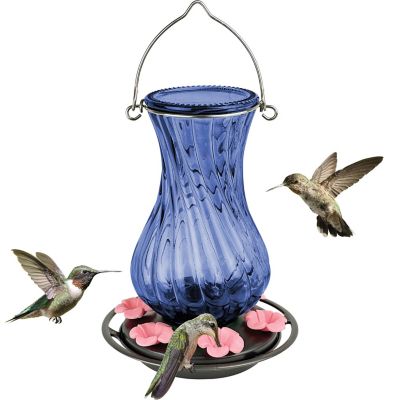
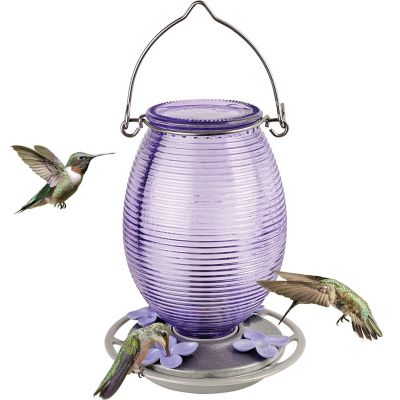
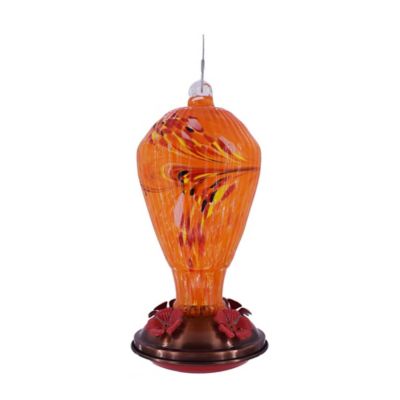
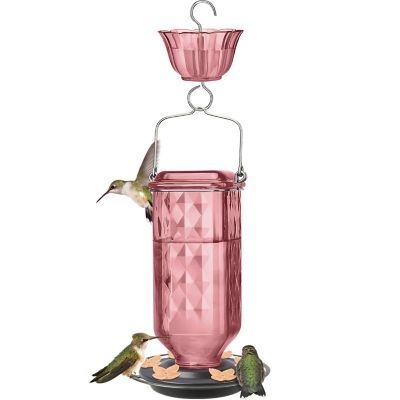
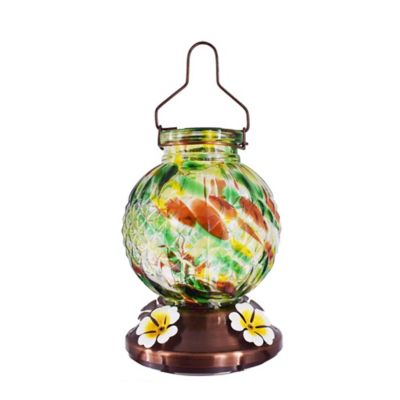
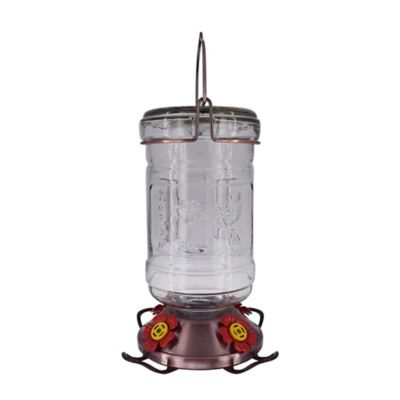
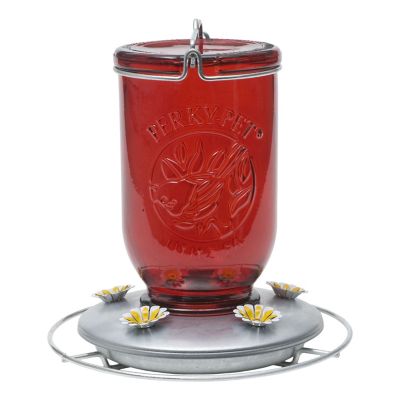
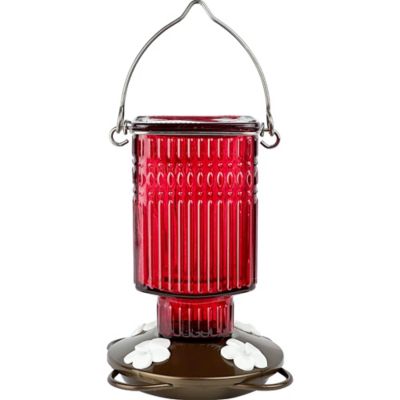
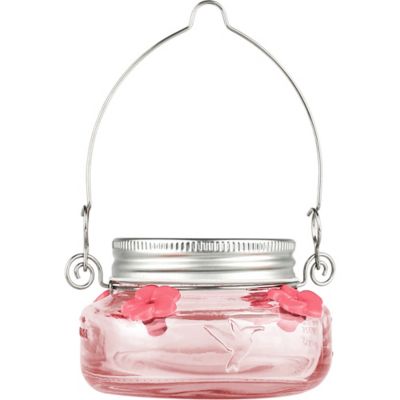
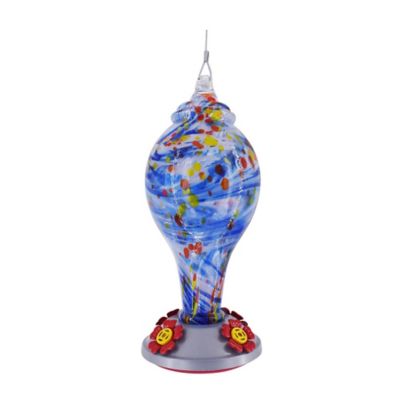
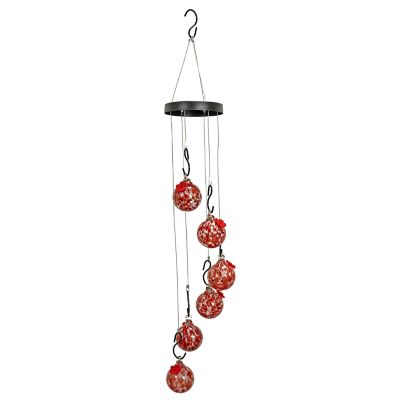
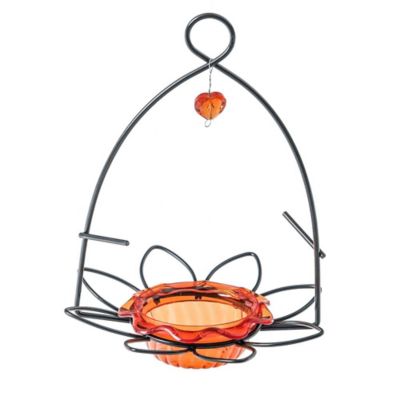
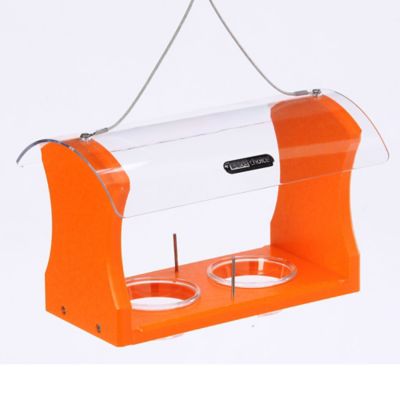
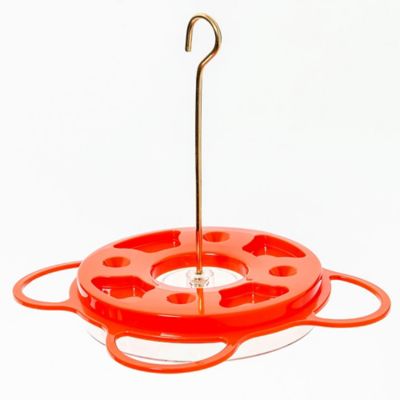
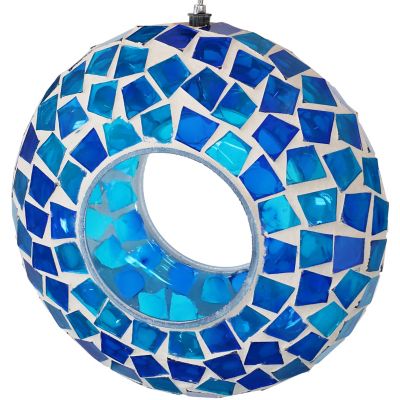
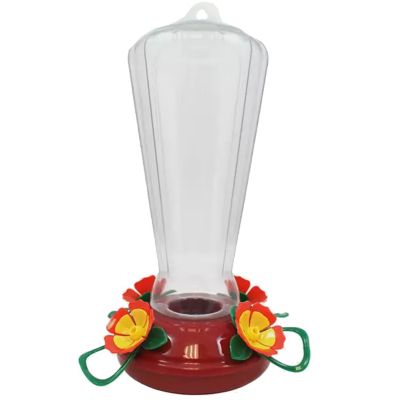
Glass hummingbird feeders hold sugar-water nectar in a glass reservoir that connects to a feeding base with small drinking ports. They bring a close-up view of hummingbirds to a porch, garden, or backyard seating area, with bottle shapes and colors that can fit right in beside flower beds and hanging baskets. Clear glass makes it easy to check the nectar level without taking the feeder down, while colored glass and molded patterns give the bottle a different look. With darker or heavily patterned glass, an open section that shows the liquid level can make refill checks simpler. Red accents around the feeding ports help catch a hummingbird’s attention without adding coloring to the nectar itself. The base matters just as much as the bottle: plastic bases are lightweight, while metal components add weight and may have painted or coated finishes. Smooth edges, snug connections, and feeding ports sized for hummingbirds are worth a close look, regardless of the material. A perch ring gives birds a place to rest while drinking and can make it easier to watch their tiny feet and quick movements from a nearby chair. Other designs leave the ports open for birds that feed while hovering. Glass has a solid feel and a nonporous surface that rinses clean, but it can break if dropped or knocked against a hard surface. A secure hanging point and enough clearance around the bottle help protect both the feeder and the birds visiting it. For a spot beside the porch steps, a compact bottle may sit neatly within reach; farther out in the garden, a larger shape may be easier to see from the house. Within the broader
Hummingbird Feeder selection, glass styles offer a balance of visibility, visual appeal, and straightforward care when the bottle and base are easy to take apart.
Capacity, mounting style, and access for cleaning help determine how well a glass hummingbird feeder fits a particular space. Capacity is generally listed in fluid ounces, but a bigger reservoir does not necessarily mean a better match. A smaller bottle makes sense for a spot with occasional visitors because it holds less nectar between cleanings. A larger reservoir can suit a busy feeding area, though it still needs regular emptying and washing rather than repeated topping off. Several feeding ports give birds more places to drink, but hummingbirds can be territorial; several smaller feeders spaced out of sight of one another may serve a yard better than one crowded station. Hanging models need a sturdy hook, bracket, or branch that can support the feeder’s weight when full, not just the empty glass bottle. The hanger should sit securely, with room around the base so it does not bump a wall, post, or railing. Window-mounted styles bring the activity closer, but their mounting hardware must be rated for the filled feeder and checked regularly. Bird-visible markings on nearby windows can help reduce collision risks. Around a garden path or porch, choose a location that leaves an open approach for birds without putting the feeder where people brush against it. Keep it beyond a cat’s reach, with nearby plants offering cover rather than a hiding place directly beneath the feeding ports. An ant moat provides a water barrier between crawling insects and the nectar when it stays filled and has no alternate path across a branch or railing. Bee-resistant ports or guards can limit insect access, although no feature removes the need to check for drips and spills. Level hanging, correctly seated seals, and a firmly attached base help reduce leaking. A wide bottle opening and a base that separates into accessible pieces also make everyday upkeep less of a chore, especially when small port brushes can reach every feeding opening.
Regular cleaning is part of owning any nectar feeder, and the easiest glass designs make that job simple enough to keep up with. A bottle brush should reach the bottom and shoulders of the reservoir, while removable feeding flowers, accessible channels, and a base that opens fully allow attention to the places where residue collects. Dishwasher care depends on the individual feeder: glass does not automatically make the whole assembly dishwasher-safe, and seals, coatings, and plastic parts may need hand washing. Follow the care directions for each component, wash with mild dish soap, and rinse thoroughly so no residue remains. Set the bottle on a folded towel during cleaning to help keep it from striking the sink, and check the rim, threads, and hanging attachment for chips or cracks before refilling. Damaged glass should be replaced rather than patched. For nectar, the standard mixture is one part plain white granulated sugar to four parts water, stirred until completely dissolved. Red dye is unnecessary, and honey, brown sugar, and artificial sweeteners are not suitable substitutes. Replace the nectar at least every two days, sooner if it becomes cloudy, contains insects, or shows any sign of growth, and clean the feeder at each refill. Empty remaining nectar instead of adding fresh mixture on top. Filling only as much as visiting birds drink between cleanings helps cut waste without stretching the cleaning schedule. These practical details also matter when a glass feeder is a gift. Someone who enjoys watching birds from the kitchen window may appreciate a smaller, easy-to-lift bottle, while a gardener with several feeding stations may value a base that opens quickly and has few loose pieces. For a household with children interested in backyard birds, a clear reservoir makes nectar levels easy to follow, with an adult handling the glass and cleaning. The best fit is a feeder that suits its hanging spot, gives hummingbirds comfortable access, and stays manageable through the regular rhythm of filling, washing, and watching.