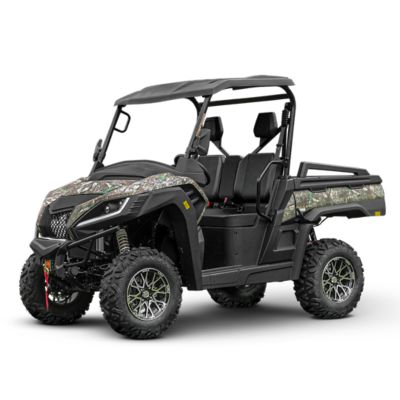
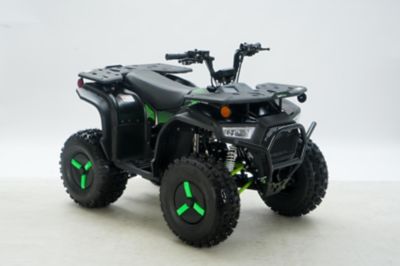
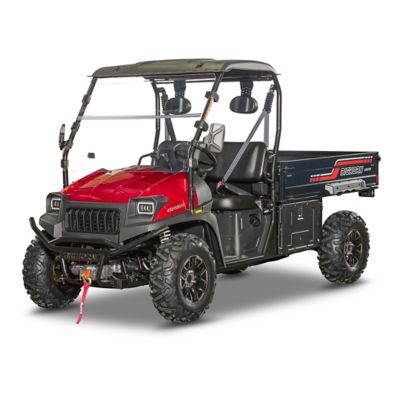
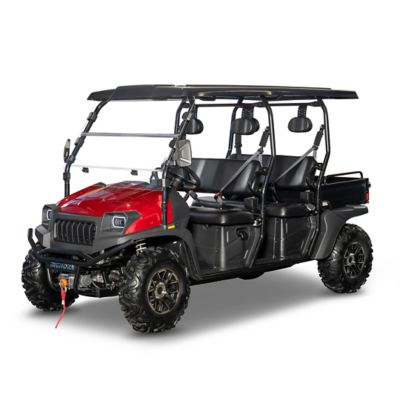
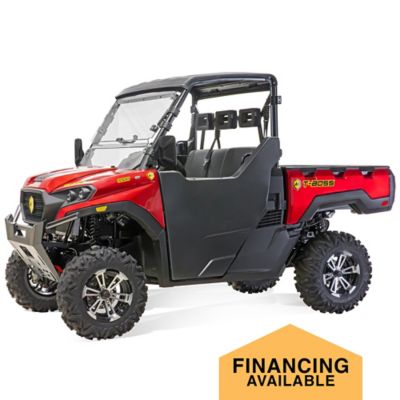
Electric UTVs are battery-powered utility terrain vehicles built for off-road transportation, hauling, and everyday property work. Often called electric side-by-sides, they combine a steering wheel, side-by-side seating, and a cargo area with an electric motor rather than a gasoline engine. Their quieter operation and lack of tailpipe exhaust make them a practical fit for checking fence lines, carrying supplies to a barn, or traveling between a house and an outbuilding. There is still tire noise, drivetrain sound, and the rattle of whatever is riding in the bed, but less engine noise can make a trip around the property less disruptive. Around livestock, a slow approach still matters; even a quiet vehicle can startle an animal. These machines suit small-acreage owners, farmers, grounds crews, and folks who want a working vehicle that can also handle a leisurely ride on permitted trails. The right match depends more on the daily workload than on top speed alone. A bed carrying fencing tools and a few feed bags has different demands than a trailer loaded with firewood, and cargo capacity, towing capacity, and total payload are separate ratings. Passenger weight, accessories, cargo, and trailer tongue weight can all affect the load the vehicle carries, so those figures need to be considered together within the manufacturer’s limits. Seating also shapes how an electric utility vehicle fits the day. A shorter two-seat layout may be easier to maneuver through a tight barnyard, while additional seating can accommodate more riders but may change bed space, vehicle length, and turning room. For properties where passenger transportation is a bigger part of the routine,
UTV Golf Carts offer another category to consider alongside work-focused side-by-sides. Similar appearances do not mean identical capabilities, though. Ground clearance, suspension, traction, and load ratings help distinguish a vehicle meant for maintained lanes from one intended for more demanding terrain. A familiar route with narrow gates, soft shoulders, and a steep stretch near the back pasture puts those differences into perspective.
Battery capacity and charging arrangements are central to living with an electric UTV. An advertised range is an estimate under particular conditions, not a promise that every trip will cover the same distance. Hills, muddy ground, heavy loads, frequent stops, tire pressure, driving speed, and cold temperatures can all change how far a charge goes. Several short runs between the shed and livestock pens may fit comfortably into a different charging routine than a long loop across scattered fields. For a working property, enough battery reserve to finish chores and return to the charging spot matters more than stretching a published mileage figure. Battery chemistry varies by vehicle, with lithium-ion and lead-acid systems having different weight, charging, and care requirements. Neither should be treated as interchangeable with the other, and replacement batteries or charging equipment need to meet the vehicle manufacturer’s specifications. Charging time depends on battery capacity, remaining charge, charger output, temperature, and the electrical supply. Some vehicles charge from a standard household outlet with their specified charger; others may need a different circuit or electrical setup. A parking place near suitable power can make the routine straightforward, especially when the vehicle comes back to the same shed after evening chores. The charging location should follow the manual’s requirements for ventilation, moisture protection, and clear space, with cords kept out of travel paths and away from damage. Cooler weather also brings battery-specific precautions. Some lithium batteries restrict charging below certain temperatures unless an approved heating system is present, while other battery types have their own cold-weather limitations. Storage charge levels and charging intervals vary, so an electric vehicle still needs attention when it sits between jobs. Electric motors deliver power promptly, which can be helpful when getting moving with a load, but controlled acceleration matters on loose gravel and slick grass. Selectable drive modes, low-range gearing, or additional driven wheels, where equipped, may help with particular conditions without removing the need to respect slopes, traction limits, and rated loads.
The frame, bed, suspension, and cab layout determine how an electric side-by-side holds up to the work and how comfortable it feels along the way. Steel frames and cargo beds can provide strength for demanding tasks, while aluminum components reduce weight and resist rust; composite bed materials resist corrosion but still have load and impact limits. Protective finishes, sound welds, secure hinges, and sturdy latches matter when tools bounce along a rutted lane or damp leaves collect in bed corners. A dump bed can simplify unloading loose material, though its lifting mechanism and rated capacity still set the boundaries. Bed height, tailgate access, and tie-down points affect the everyday job of loading a toolbox or securing supplies before crossing uneven ground. Fit goes beyond the number of seats. Legroom, pedal reach, steering position, visibility, and the ease of stepping in and out all matter for someone making repeated stops at gates. Vehicle width and overall height should fit the gates, storage space, and trailer involved in the routine, accounting for accessories such as a roof or windshield. Those additions can make cooler, breezier days more comfortable, but they may also affect clearance, weight, and energy consumption. Tire tread and construction should suit the terrain, with pressure maintained to the vehicle specifications rather than guessed by appearance. Although an electric UTV has no gasoline engine oil or spark plugs to service, it is not maintenance-free. Brakes, wheel bearings, steering parts, suspension joints, tires, and any serviceable gearbox or differential still need scheduled checks. Cleaning away mud and plant debris helps expose wear, while battery compartments, connectors, and electronics require the cleaning methods specified in the manual rather than a direct blast from a pressure washer. Safe operation remains part of every job: riders belong in designated seats with restraints fastened, not in the cargo bed, and helmets and other protective gear should follow manufacturer guidance. An off-road UTV is not automatically legal on public roads. Matched to the property and cared for consistently, an electric UTV can earn its place in the daily rhythm of hauling supplies, tending acreage, and getting back to the barn before dark.