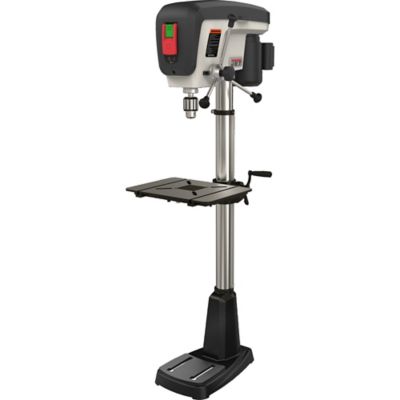
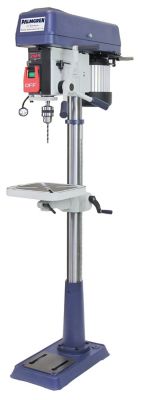
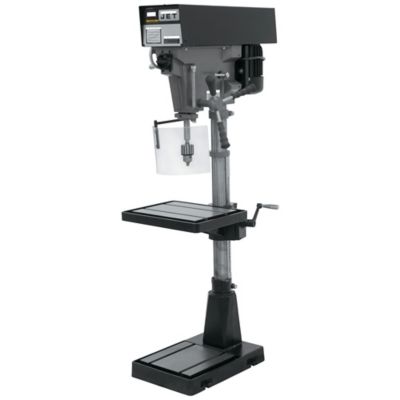
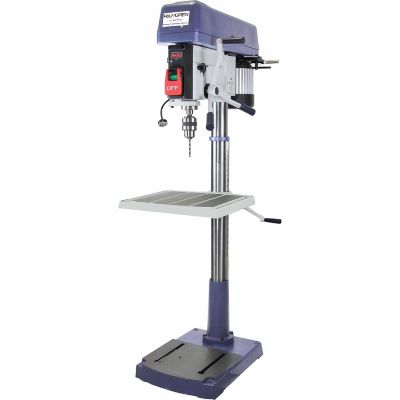
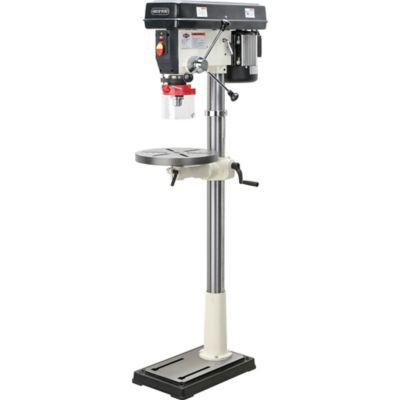
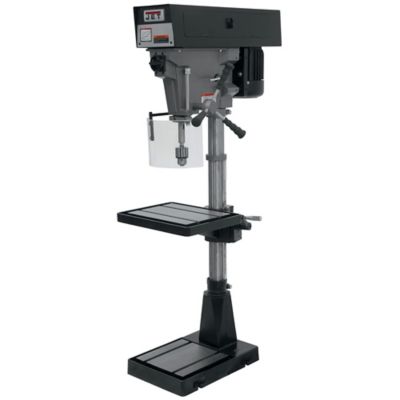
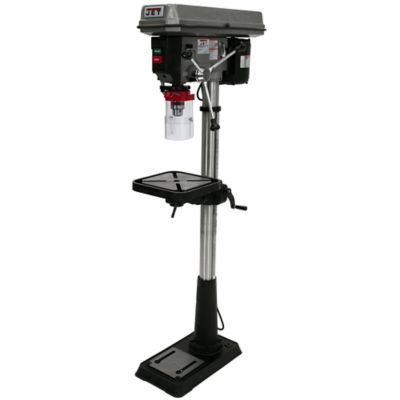
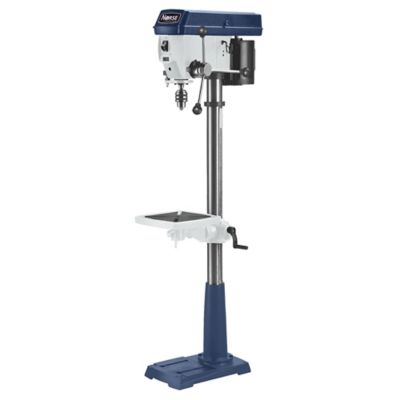
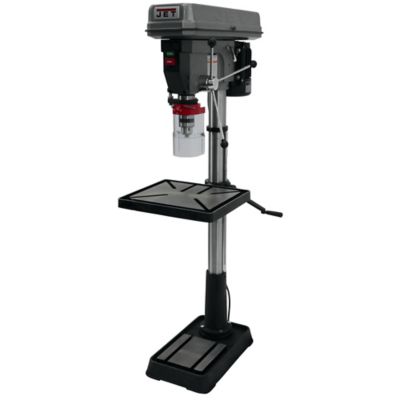
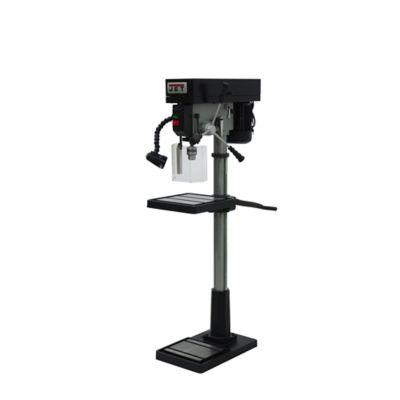
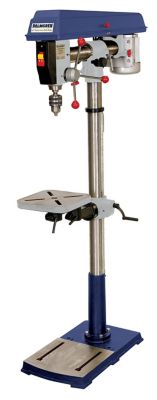
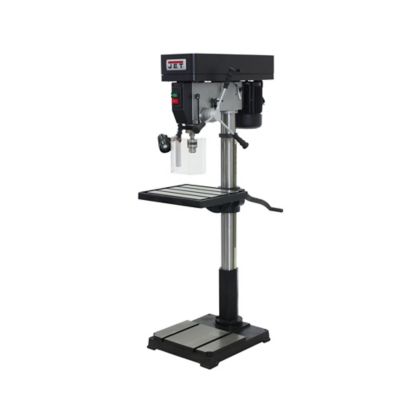
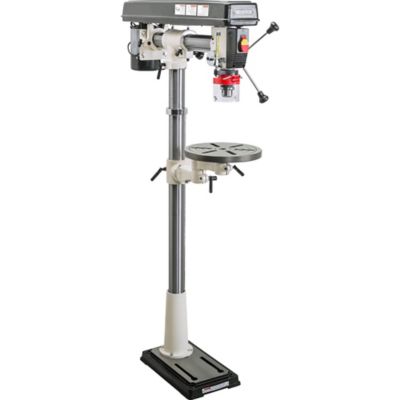
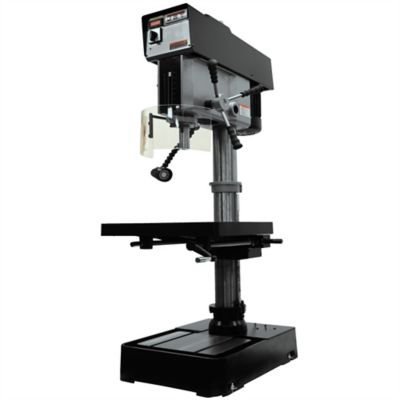
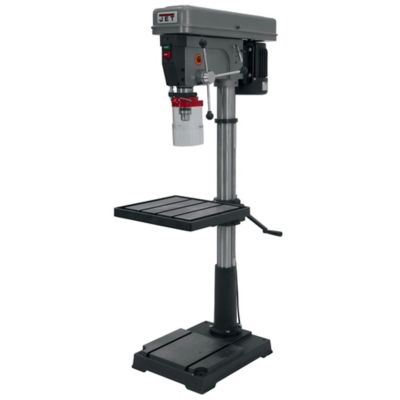
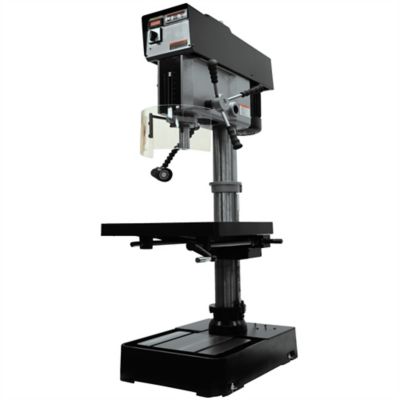
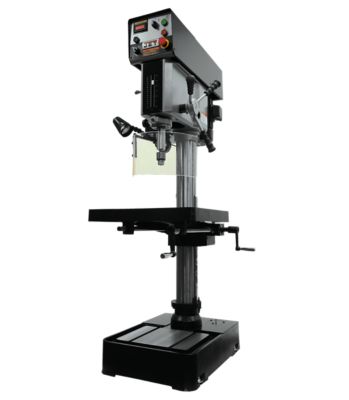
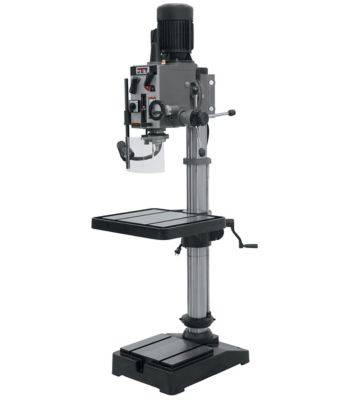
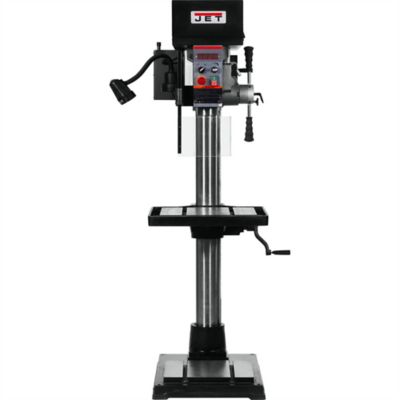
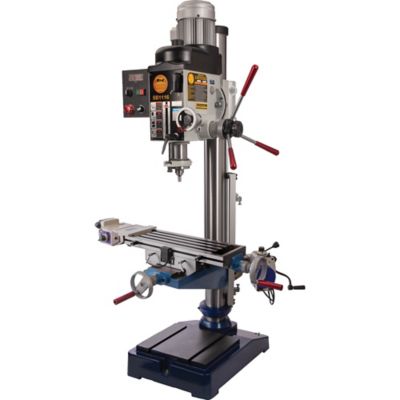
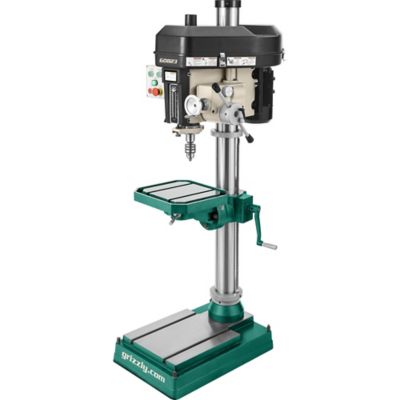
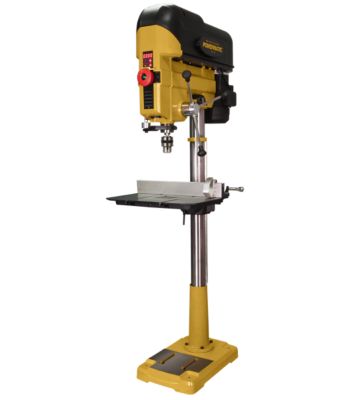
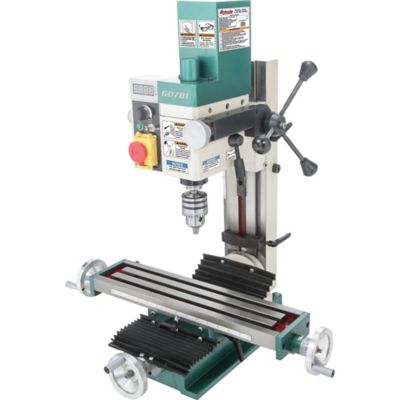
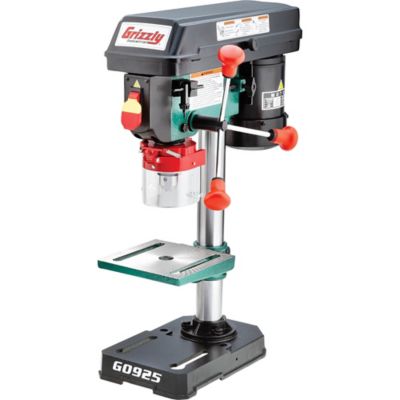
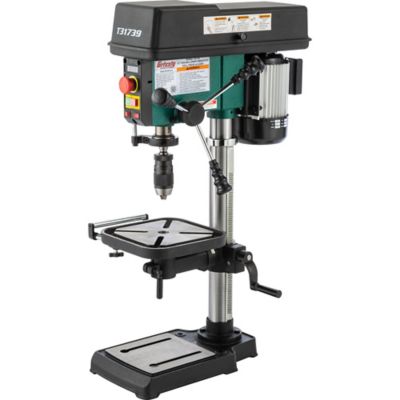
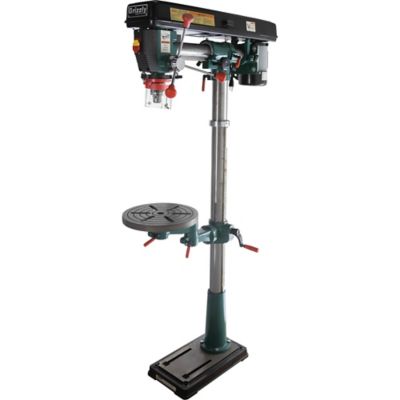
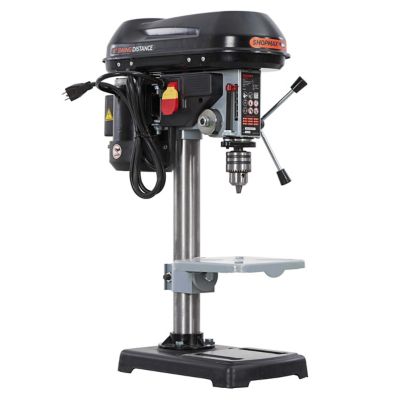
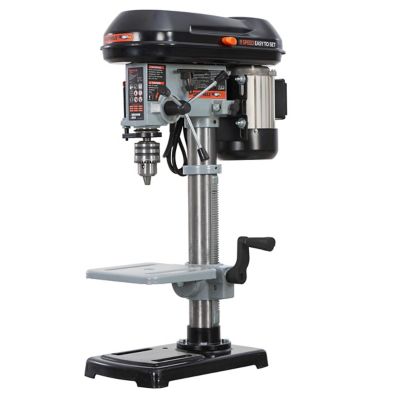
Floor standing drill presses are stationary drilling machines with a full-height column and a base that rests on the shop floor. They typically offer heavier construction, more room for larger workpieces, and greater drilling capacity than compact benchtop machines, though spindle travel and other capacities vary by model. That combination makes them a practical fit for farm repair shops, woodworking spaces, and metalworking areas where a handheld drill can be hard to keep square. A guided spindle lowers the bit along a controlled path, helping keep holes straight and spacing consistent when the work is properly positioned and secured. Whether the job involves drilling mounting holes in flat steel, boring hardwood for a furniture project, or making several matching brackets, a floor model gives the work a steady place to happen. The taller column also leaves room for thicker assemblies and longer bits without taking over valuable bench space. Floor standing drill presses still need a dedicated footprint, with clearance around the table for turning a board, positioning a vise, or supporting a length of tubing. Machine height matters in shops with low overhead storage, while base dimensions and anchoring requirements affect placement on the floor. Swing describes twice the distance between the spindle center and the nearest edge of the column, indicating the diameter of a round workpiece that can be drilled at its center. Spindle travel is the distance the spindle can move vertically during a drilling stroke; it is separate from the clearance between the chuck and table. Those measurements tell more about how a machine will fit the work than its overall height alone. A long fence rail may need extra support beside the table, while a tall assembly needs enough clearance for the material, bit, and workholding equipment together. For a busy shop, those everyday fit details make a difference.
Speed range, spindle travel, chuck capacity, and motor performance help determine which drilling jobs a floor press can handle comfortably. Wood, mild steel, aluminum, and plastics call for different bits and operating speeds, and bit diameter matters just as much as the material. Larger cutting tools generally need slower spindle speeds than smaller ones, with the bit maker’s recommendations providing the right starting point. A broad speed range gives a shop more flexibility when the work changes from small holes in steel strap to wider bores in wood.
Variable Speed Drill Presses offer adjustable spindle speeds, with the adjustment method and range depending on the machine. Other designs use stepped pulleys and belt positions to establish speed settings. The convenience of changing speeds matters when several materials share the same workday, but speed adjustment alone does not establish drilling capacity. Motor output, torque at the selected speed, machine rigidity, tooling, and feed pressure all play a part. Chuck capacity refers to the bit-shank sizes the chuck can grip, not a promise that every bit with a matching shank is suitable for the machine. A depth stop is handy for repeated blind holes in wood or for limiting travel during matching operations, while a clearly marked depth scale makes settings easier to check. The worktable deserves attention, too. A rack-and-pinion lift can make height changes more manageable, especially with a substantial cast-iron table. Tilting tables allow angled drilling, provided the work can be clamped securely and the setup stays within the machine’s limits. Table slots offer attachment points for clamps, fences, and drill press vises. For repeated bracket work, a secured fence and stop can help position each piece consistently rather than measuring from scratch every time. Long stock still needs independent support that keeps it level without pulling against the table. These features are most useful when they match the work that regularly comes through the shop.
Cast-iron tables and bases, steel columns, and well-supported head assemblies contribute to the solid feel associated with floor standing drill presses. Mass helps steady the machine, but tight adjustment mechanisms, sound bearings, proper installation, and secure workholding are just as important to a clean drilling setup. A table that locks firmly and a feed handle that moves smoothly make routine work less fussy, whether the operator is fitting hardware to a wooden gate or drilling a row of holes in a shop-made jig. The workpiece should be restrained with suitable clamps or a secured vise so the bit cannot catch it and spin it around. Thin sheet metal and small parts need particular care because they can turn suddenly if left loose. Eye protection, appropriate hearing protection, tied-back hair, and clothing clear of moving parts belong in the routine; gloves should stay away from the rotating spindle. The chuck key must be removed before startup, and chips should be cleared with a brush only after rotation stops. Keeping the machine in good working order also helps protect the investment in shop equipment. Bare cast-iron surfaces benefit from cleaning and corrosion protection according to the manufacturer’s directions, while columns, racks, and other moving parts need the specified lubrication. Belt condition, fasteners, guards, and electrical cords deserve regular inspection, with power disconnected before servicing or adjustments that require access to moving components. Floor standing drill presses suit farmers maintaining equipment, fabricators making repeat parts, woodworkers building furniture, and property owners with an established workshop. They can also make a substantial gift for an experienced tool user when floor space, electrical requirements, and the recipient’s work are already understood. The right fit is a machine whose working room, controls, and drilling capacity suit the tasks at hand, leaving room to secure the material and get the job done without wrestling the setup.