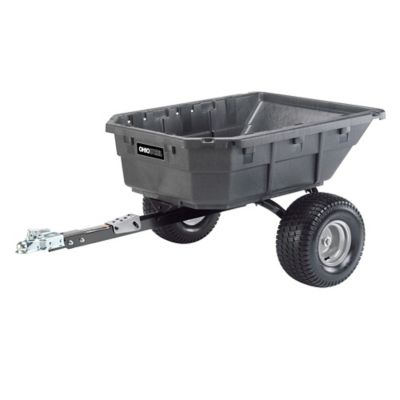
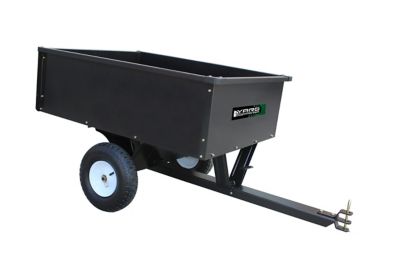
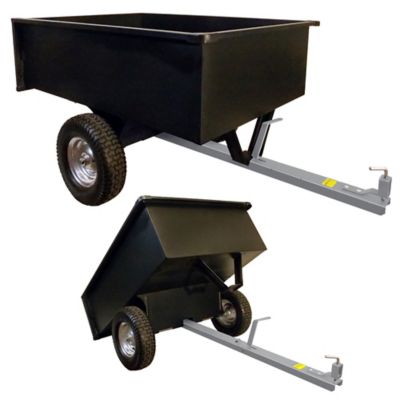
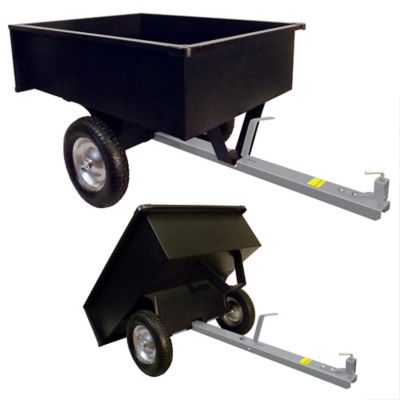
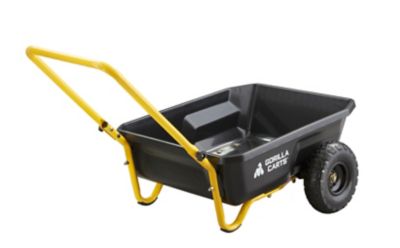
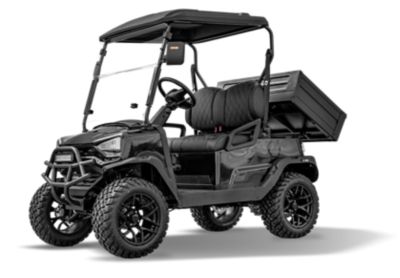
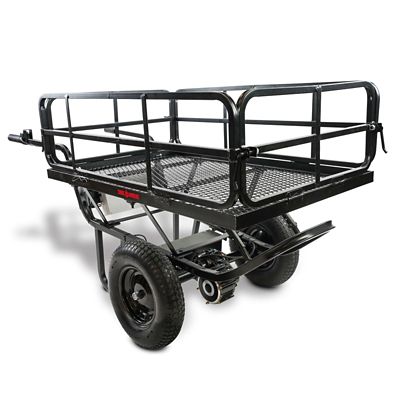
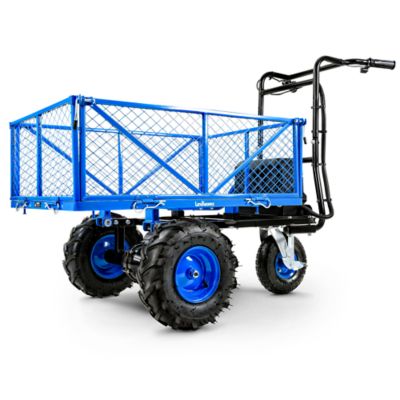
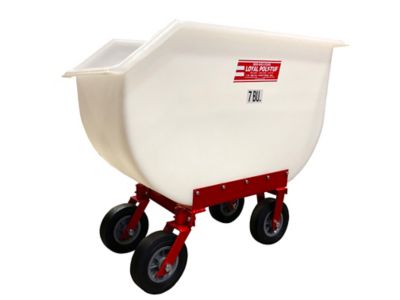
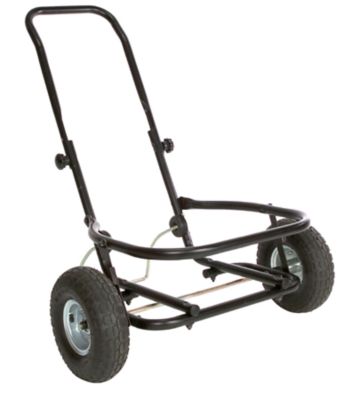
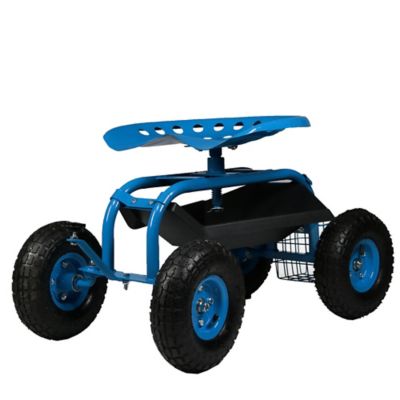
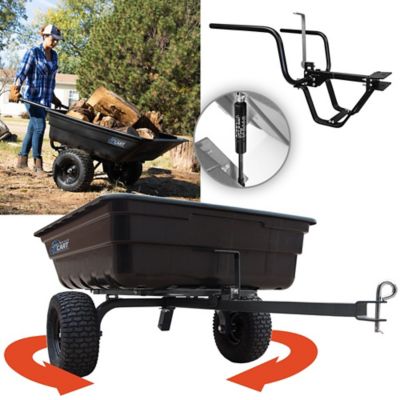
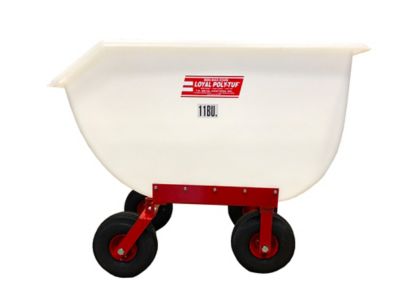
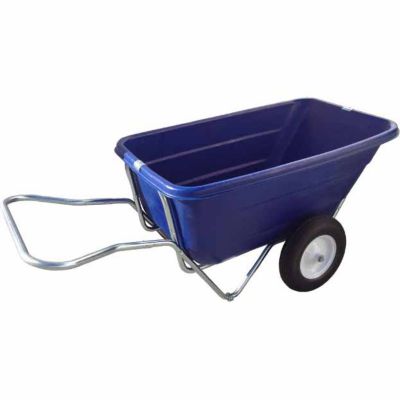
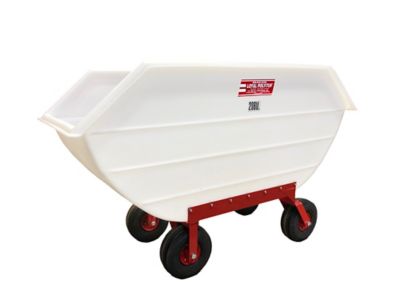
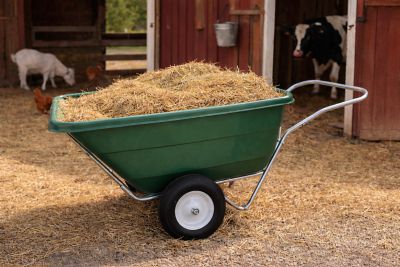
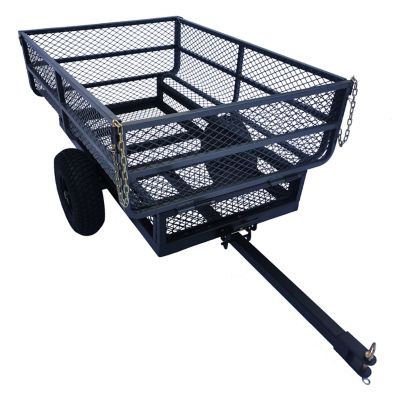
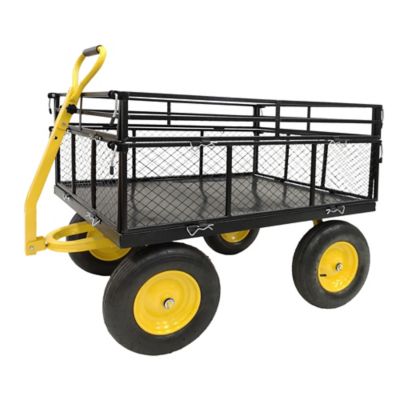
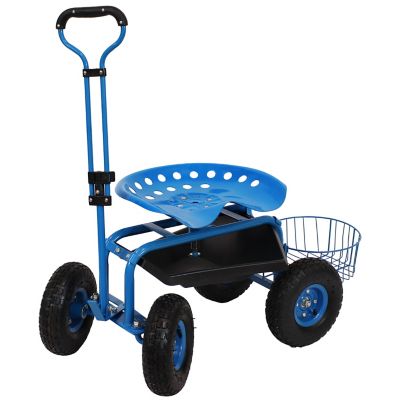
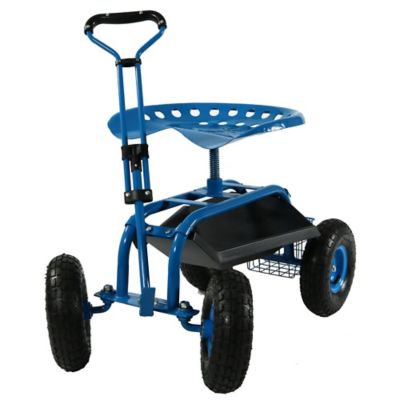
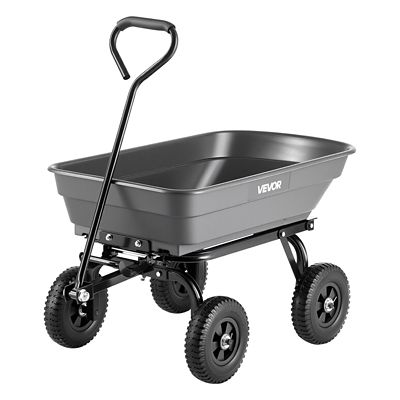
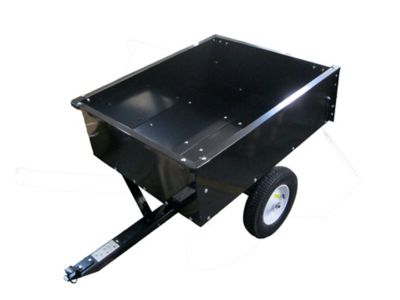
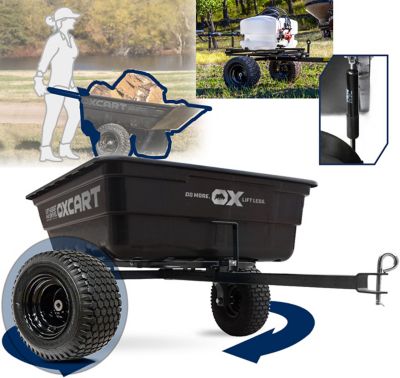
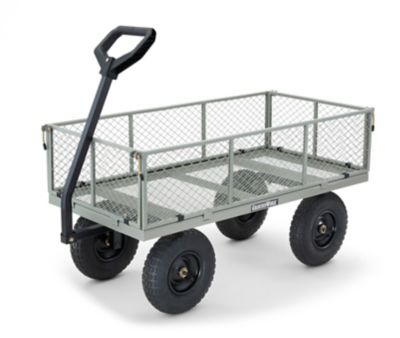
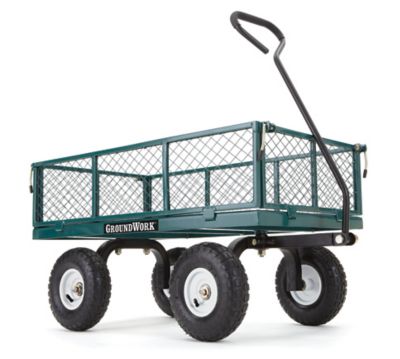
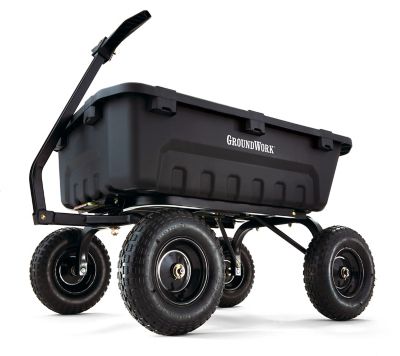
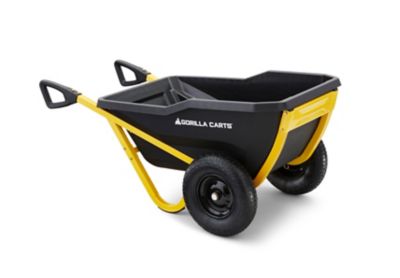
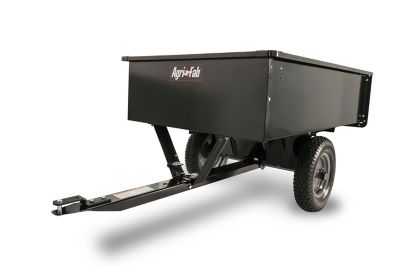
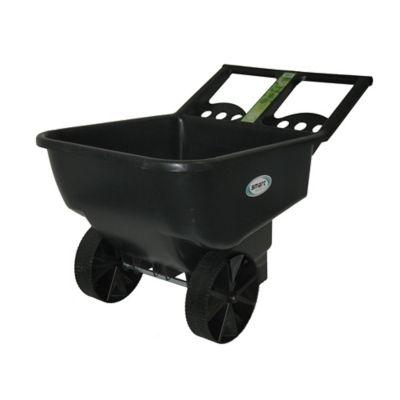
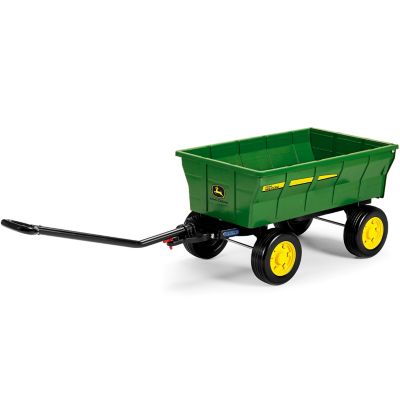
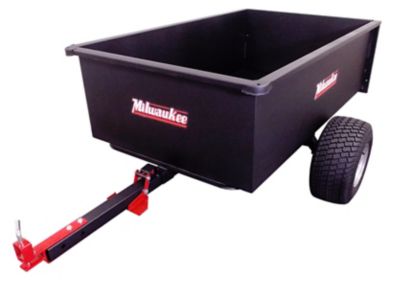
Farm carts are wheeled hauling tools for moving feed, bedding, soil, tools, harvested crops, and livestock waste around farms, barns, gardens, and homesteads. They put a load on wheels so fewer supplies have to travel by hand, whether the job runs from the feed room to the horse stalls or from the tool shed to a fence line. A cart earns its place when chores involve several buckets, awkward bags, or loose material that needs to stay together along the way. Farm utility carts come in several layouts, with differences in wheel placement, bed shape, steering, and unloading features that suit different routines. Feed and muck carts generally have deep tubs that help contain loose contents, while flat-deck carts give wide or irregular loads more room without tall sides getting in the way. Four-wheel carts support the bed at both ends, making them handy for loads that need to sit level while supplies are added or taken out. Two-wheel designs can be easier to position beside a stall or garden bed, though the person holding the handles takes part of the load when moving them. Dump carts have beds that tip to release material, reducing the need to shovel everything back out after hauling it across the property. Tow-behind farm carts connect to compatible equipment for longer trips, while hand-pulled carts suit close work around buildings and areas where powered equipment cannot comfortably travel. A cart for moving bagged feed through a narrow barn aisle may need a different shape than one carrying fencing supplies across an open pasture. Small-acreage owners, livestock keepers, gardeners, and grounds crews all have hauling chores, but the best fit comes from matching the cart to those everyday loads and routes. Even on a smaller place, a cart that holds the whole chore’s worth of supplies can cut down on back-and-forth trips.
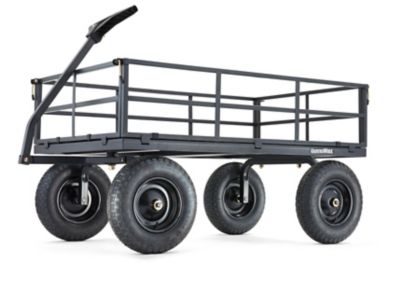
Materials make a practical difference in how farm carts carry a load, handle cleanup, and stand up to regular chores. Polyethylene tubs have solid walls that help contain fine bedding, soil, and other loose material, and their surfaces generally rinse clean without the tub itself developing rust. A smooth interior can also make it easier to scrape out residue, though sharp tools and rough loading can scratch or gouge plastic. Steel beds and frames provide firm support for tools, containers, and other substantial loads, with painted or coated surfaces helping protect the metal beneath. Scrapes that expose bare steel deserve attention before corrosion spreads. Mesh beds allow small debris to fall through and provide places for attaching suitable restraints, but fine material needs a liner or separate container to keep it from spilling. Removable side panels can make loading awkward supplies easier and leave more room for loads that extend beyond the bed, provided everything stays within the cart’s limits and is secured. Capacity deserves a close look because weight and volume tell different stories. A deep tub can hold plenty of lightweight shavings without being suitable for the same volume of stone or soil. The stated load rating, bed dimensions, and manufacturer’s operating instructions matter more than how full the cart looks. Wheel and tire construction also affects the feel of a loaded trip. Pneumatic tires can cushion the ride over rough ground, but they need inflation checks and can lose air after a puncture. Flat-free tires remove the need for air-pressure upkeep, although ride feel varies by construction and load. Larger wheel diameters can help a cart roll across small obstacles, while tire width influences how its weight rests on the ground. Bearings, axle construction, and ground clearance round out the picture, especially along gravel lanes, packed-earth paths, and routes with shallow ruts. These details matter most when the same route gets traveled several times a day with a full bed.
Fit is about the whole trip, not just the space inside the bed. Gate openings, stall doors, aisle corners, and storage spots all affect how comfortably a farm cart fits into the daily routine. A wide bed may hold more supplies but leave little room beside a water trough or through a narrow latch opening. Overall length and steering movement matter when turning around at the end of a barn aisle, while handle height and grip shape influence comfort during repeated pulling. A balanced load that sits low and stays centered is easier to manage than one piled high or shifted to one side. Bags, buckets, and long-handled tools should sit securely without blocking the handle, wheels, or hitch. For tow-behind carts, the connection, permitted towing speed, load limits, and compatibility with the towing equipment all need to match the manufacturer’s instructions; a hitch alone does not establish a safe pairing. Dumping features deserve the same practical attention. Bed angle, release-latch placement, and any lift-assist mechanism affect unloading, especially when material settles into the corners. A stable unloading spot and clear space around the bed help keep the task controlled. For hauling containers, boxed supplies, or equipment between buildings,
Cargo Carts offer another hauling category to consider alongside farm utility carts. Whichever layout suits the work, simple upkeep helps preserve its function. Clearing material from the bed, cleaning according to the manufacturer’s directions, and letting surfaces dry before storage can limit buildup and corrosion. Wheel hardware, handles, side-panel fasteners, and dump latches benefit from regular checks, with lubrication applied only where specified. Carts that carry livestock waste should be kept separate from feed-handling duties to help prevent contamination. With the right bed, wheels, and handling features, a farm cart becomes a straightforward part of getting chores done: supplies stay together, loads move with less carrying, and the next task is easier to reach.