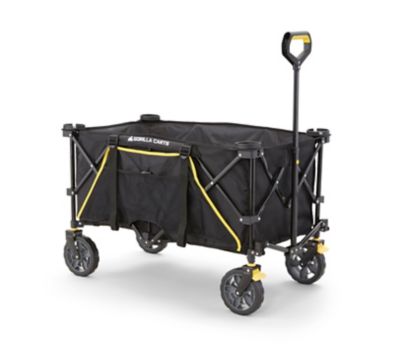
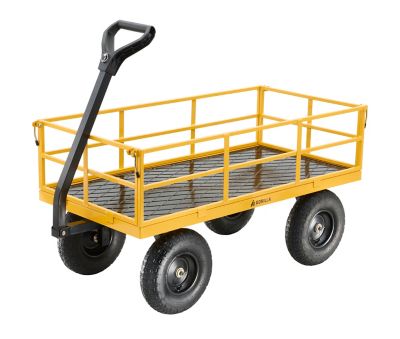
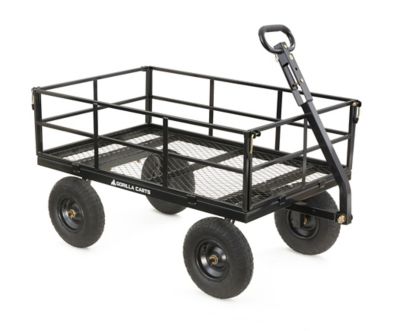
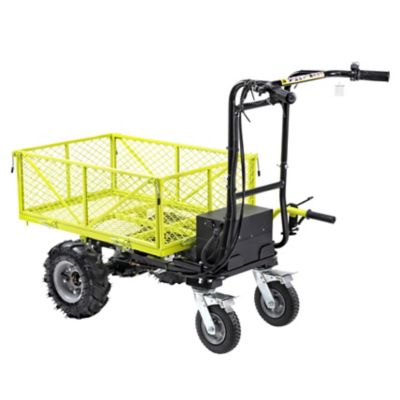
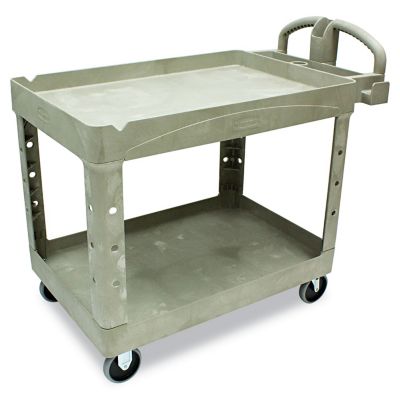
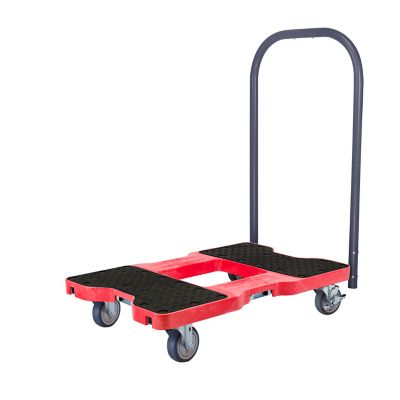
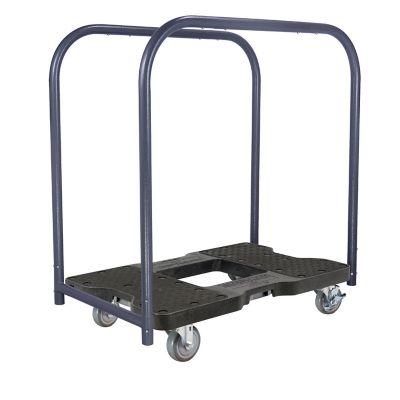
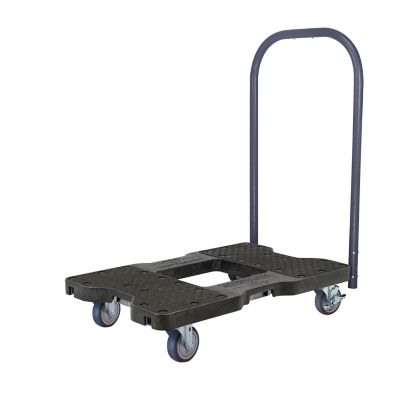
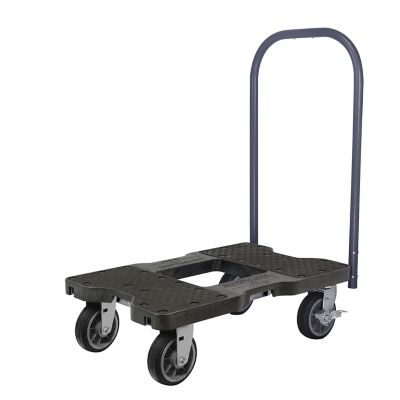
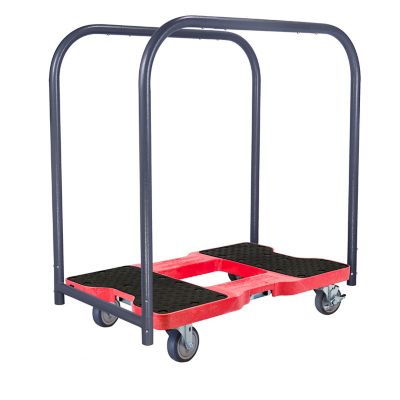
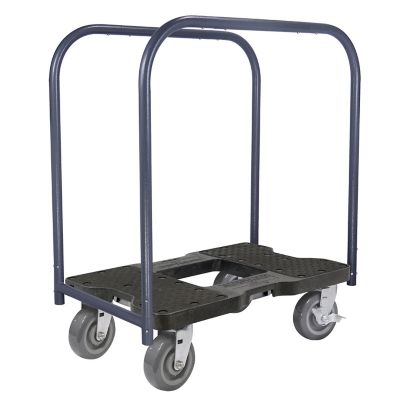
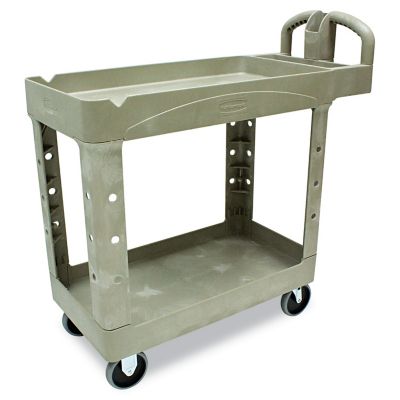
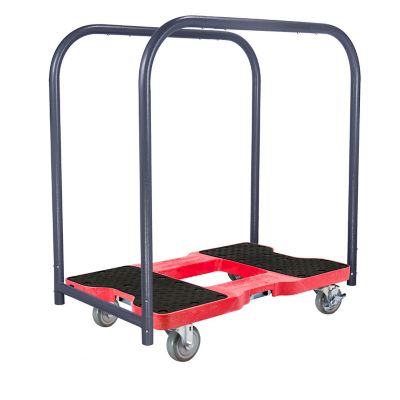
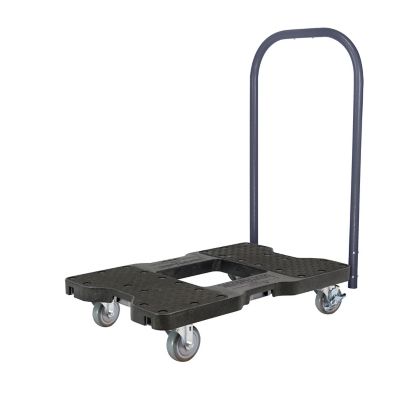
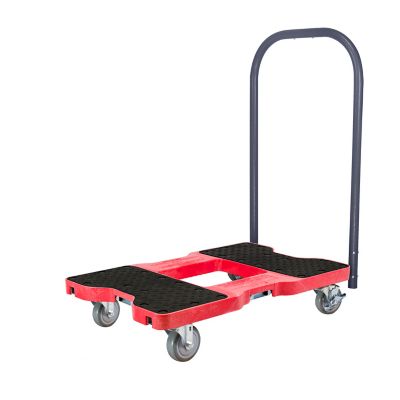
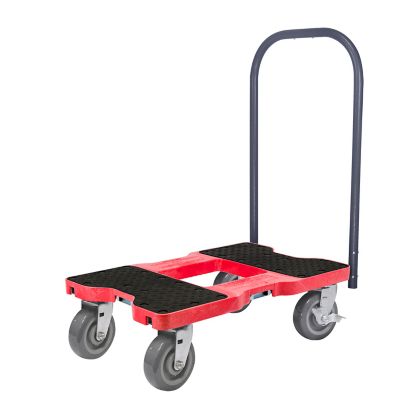
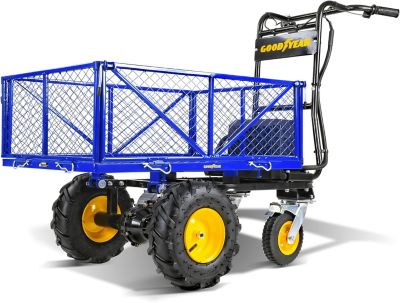
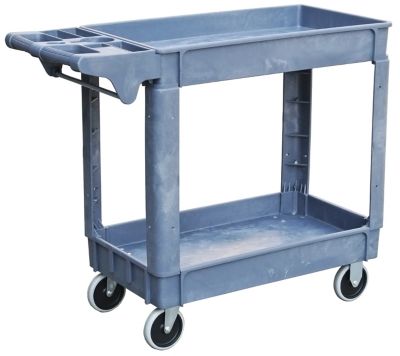
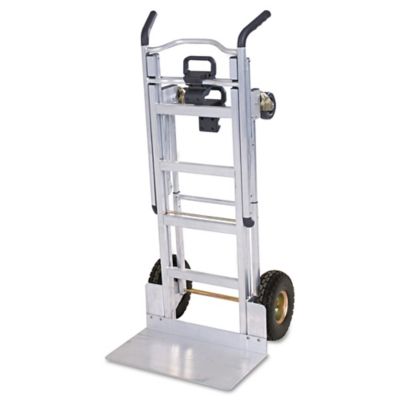
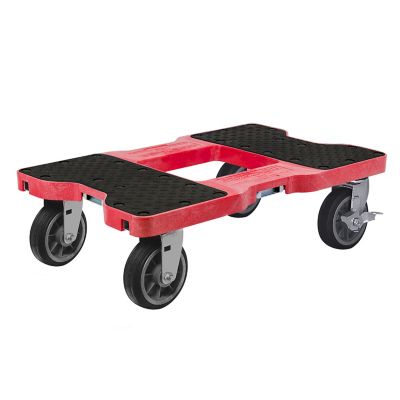
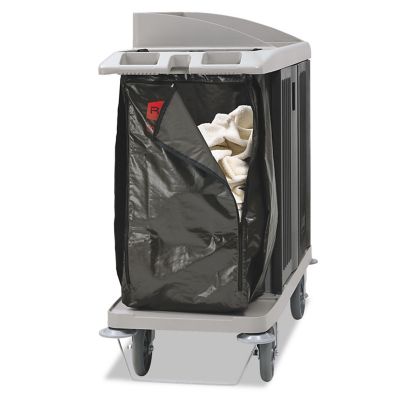
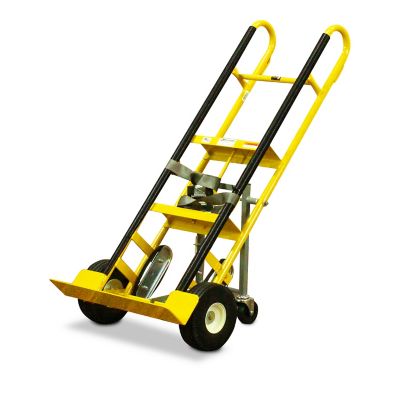
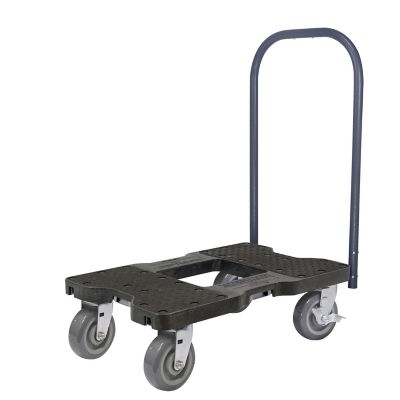
Cargo carts are wheeled carriers that help move tools, supplies and other loads without carrying everything by hand. From hauling feed between the shed and barn to rolling camping gear from the truck to a campsite, they take some of the lifting out of everyday work and weekend outings. The category covers several styles, including folding utility wagons, open platform carts, deep-sided basket trucks and heavier carts built for towing. Each has a different place around a home, acreage, workshop or business. A fabric-bed wagon keeps loose belongings together and folds down for storage, while an open platform gives long or awkward loads more room. Basket-style carts hold bags, linens and other goods within tall sides, making them a practical fit for laundry areas, hospitality work and shared facilities. Rigid-bed utility carts suit outdoor chores where dirt, damp tools and rough surfaces are part of the day. Their usefulness comes down to more than how much they can carry: bed dimensions, side height, wheel design and steering all affect how a load travels. A stack of empty containers may need plenty of space but little weight capacity, while a compact load of bagged material can reach a cart’s limit before the bed looks full. The manufacturer’s rated load capacity is the starting point, and that rating needs to account for everything placed aboard. Even weight distribution matters, too, with heavier cargo sitting low and centered rather than piled along one edge. Cargo carts work well for gardeners, property owners, maintenance crews and families moving equipment between parking areas and outdoor gathering spots. For someone who spends plenty of time tending a yard or keeping a small farm running, a cart can also make a thoughtful practical gift, especially when its size matches the chores and storage space already at hand.
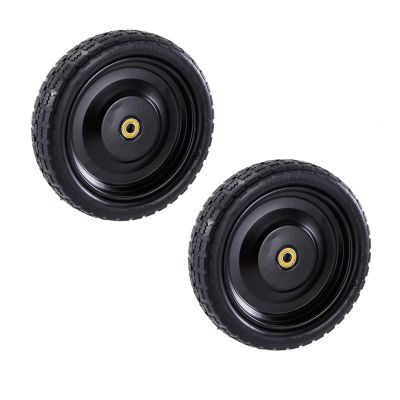
Materials and construction help determine where cargo carts fit into a daily routine. Steel frames bring strength to load-bearing joints and supports, though scratches in a painted or powder-coated finish deserve attention before moisture has a chance to reach exposed metal. Aluminum frames generally weigh less and resist rust, but the stated capacity still matters more than the material name alone. Molded plastic beds rinse out readily after hauling soil or muddy gear, while mesh beds let loose dirt fall through rather than collect in the bottom. Fabric compartments offer flexible storage for camping supplies, groceries and lighter chore loads; their seams, attachment points and cleaning directions are worth a close look. Sharp tool edges and rough firewood can be harder on fabric than on a rigid bed. Wheels make just as much difference once the cart leaves the driveway. Small swivel casters turn easily on smooth floors and through tight indoor spaces, but they can catch at gravel patches, thresholds and uneven joints. Larger-diameter wheels generally roll over small obstacles more easily, and wider treads can help limit sinking on softer ground. Air-filled tires provide cushioning over bumps but need pressure checks and can puncture. Solid or flat-free tires avoid air-pressure upkeep, although the ride may feel firmer. No wheel arrangement makes every surface suitable, especially deep mud, loose sand or ice. A cart’s overall width needs to clear gates and doorways, and its handle should leave enough room for a comfortable stride without heels catching the front end. Around a barn aisle or crowded garage, turning space can matter as much as bed size. On a folding cart, secure frame locks and a manageable folded shape help with loading it into a vehicle or standing it in a storage corner. Removable sides, drop-down panels and dumping beds serve different purposes: access for awkward cargo, easier loading or unloading loose material. Those features are most helpful when they match the work rather than simply adding moving parts.
Intended use separates an everyday pull cart from equipment meant to follow a lawn tractor, ATV or other approved towing vehicle. Hand-pulled cargo carts suit shorter trips where the operator needs close control, such as moving planting supplies along a garden path or taking equipment through a pedestrian gate. For longer runs around a property,
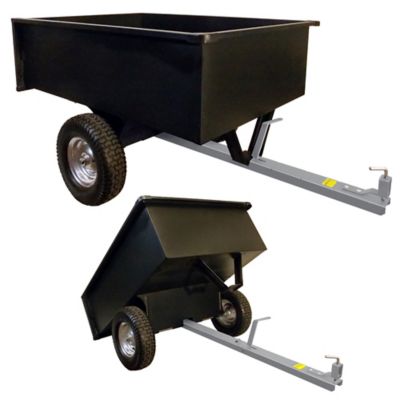
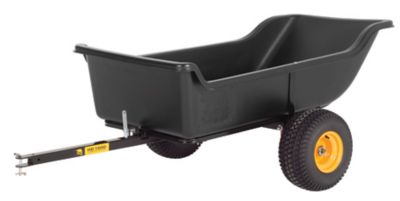
Towing Carts serve a different hauling role, with compatibility determined by the cart’s hitch connection, load rating and the towing vehicle’s limits. A pull handle alone does not mean a cart can connect safely to a vehicle, and a towing setup needs to follow the manufacturer’s speed, terrain and attachment requirements. Industrial towable platforms belong in a separate work setting, where the towing equipment, floor conditions and load requirements determine the right match. Whether a cart moves by hand or behind equipment, slopes and uneven ground call for extra care because a load can shift or push downhill. Carts intended for cargo are not passenger carriers, and tall stacks should never block the operator’s view of the route. In the cooler months, a cart might carry covered supplies toward an outbuilding, help move split firewood to a sheltered staging spot or bring folded chairs back from an outdoor gathering. Wet leaves, frost and rutted ground can change how easily that same route handles a load. Routine care helps keep wheels turning and frames working as intended through those changing conditions. Dirt and plant debris should come off before storage, fabric needs time to dry, and tire pressure, wheel fasteners and folding latches benefit from regular checks. Bearings, pivots and other moving connections may need lubrication according to the care instructions. Covered storage helps limit exposure to rain and sunlight, while a clean, dry bed keeps the next load from picking up yesterday’s mud. With a sensible match between cargo space, handling and the ground it travels, a cargo cart earns its place through ordinary tasks: fewer armloads across the yard, tools kept together and supplies arriving where the work happens.