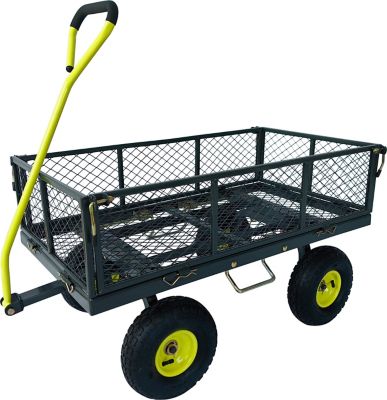
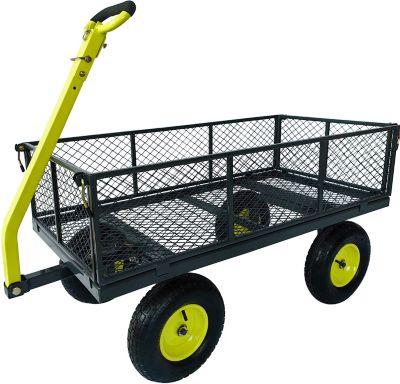
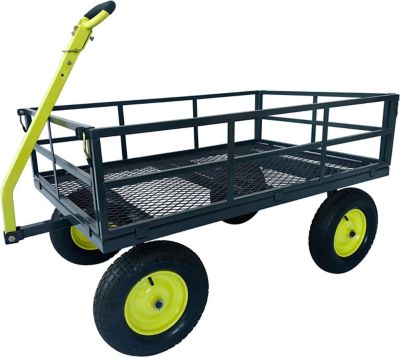
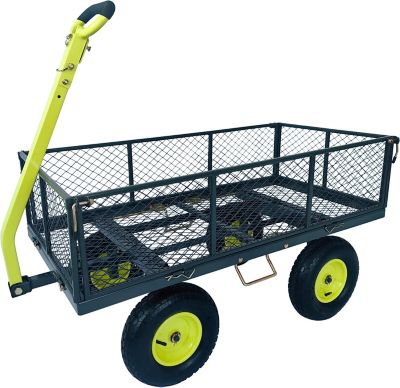
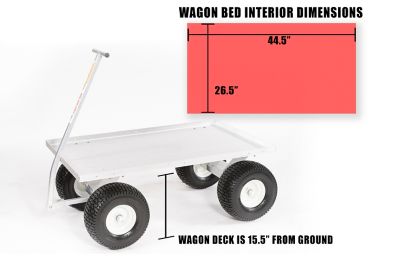
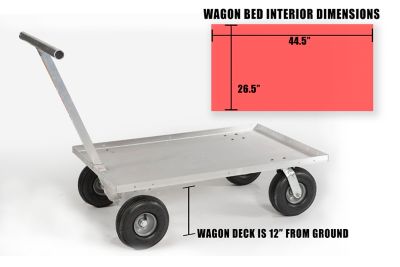
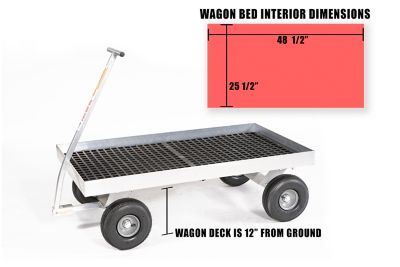
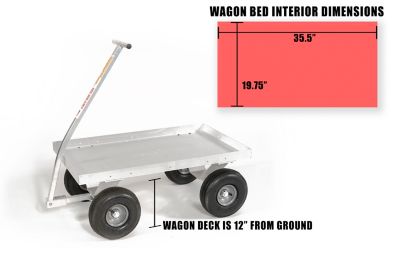
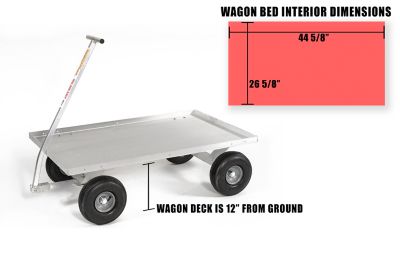
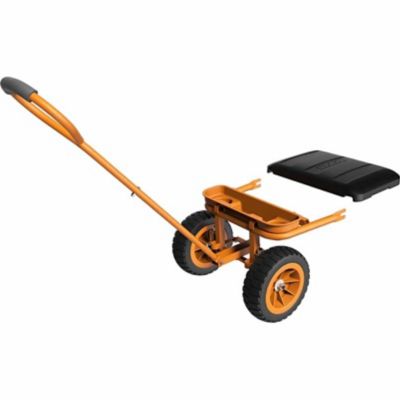
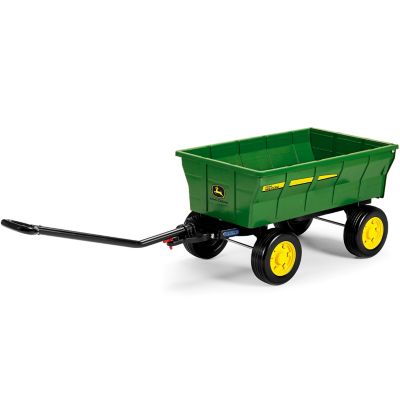
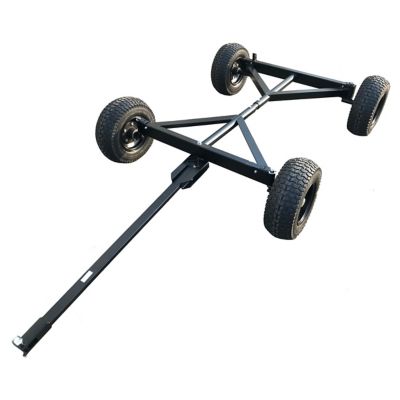
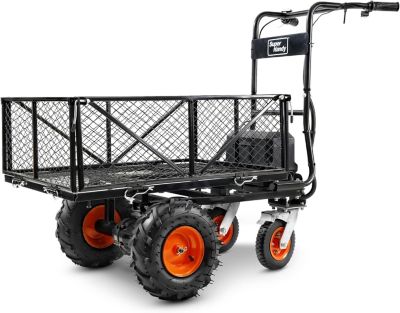
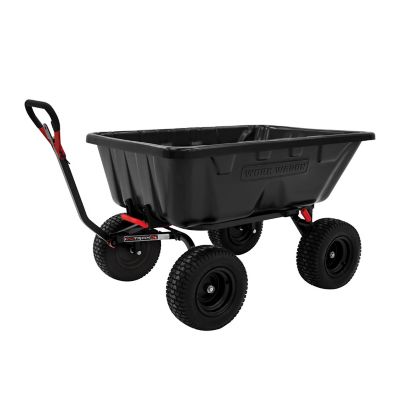
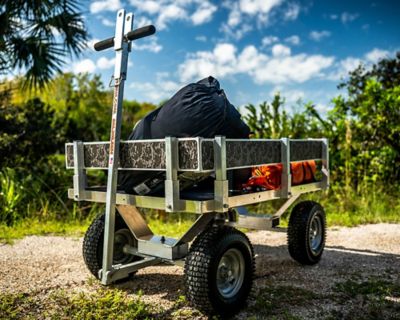
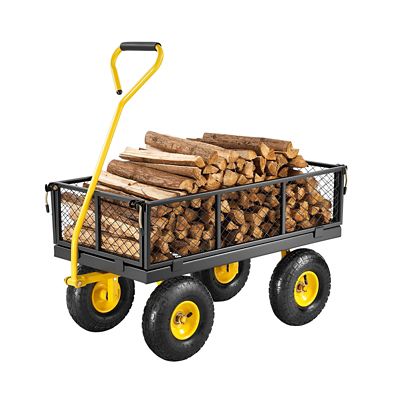
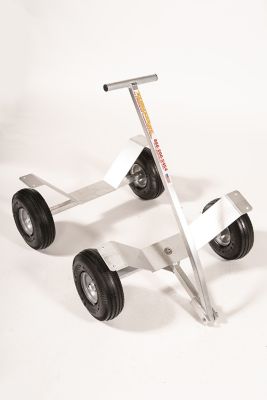
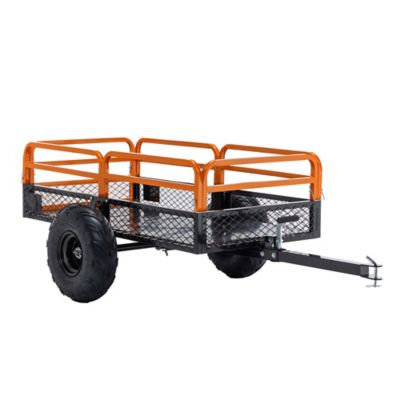
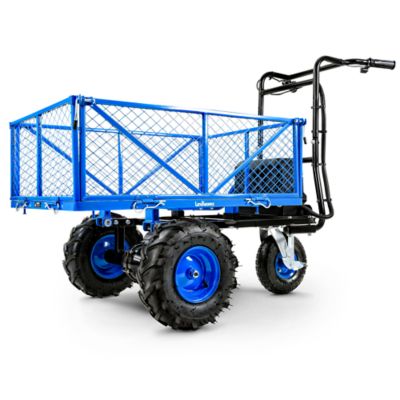
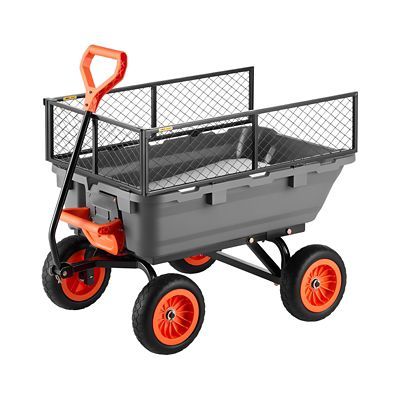
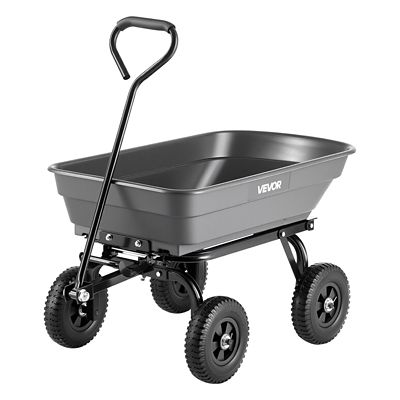
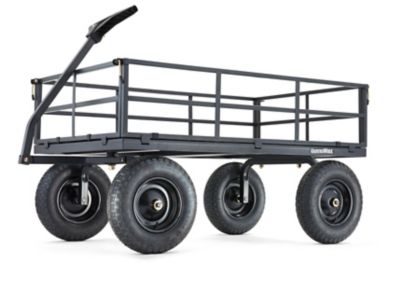
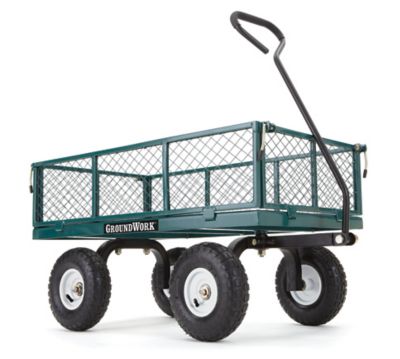
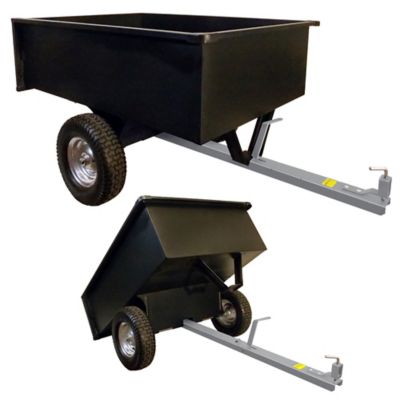
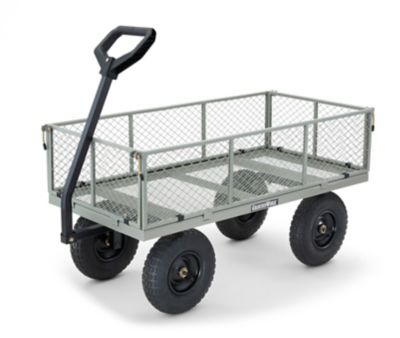
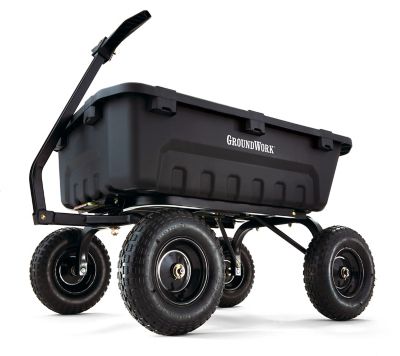
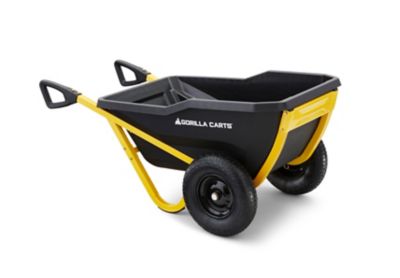
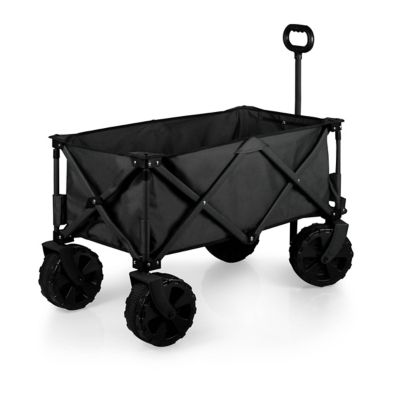
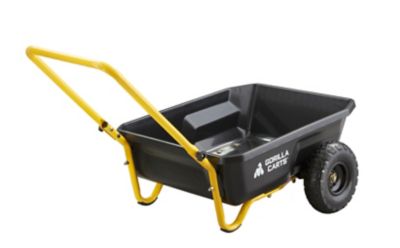
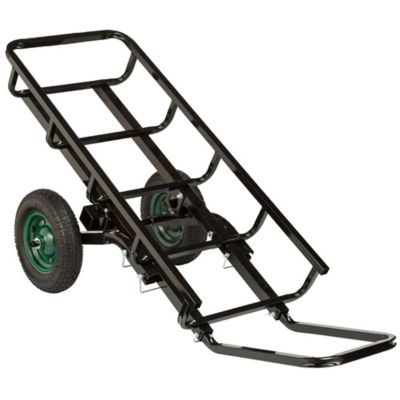
Farm wagons are unpowered hauling vehicles, typically riding on four wheels, that carry feed, hay, tools, soil, and other loads around farms, barns, gardens, and acreage. Some pull by hand for short chore runs, while others connect to a compatible lawn tractor, ATV, UTV, or farm tractor. Their purpose is straightforward: keep a load together and move it where the work is, whether that means taking bedding from the shed to the stalls or hauling fence supplies along a pasture lane. The right style depends on the load as much as the distance. Flatbed wagons offer an open platform for hay bales, bagged supplies, and longer materials that need room beyond a small box bed. Racks or side panels help contain certain loads, though loose stacks still need appropriate restraints. Utility wagons with enclosed beds suit everyday hauling, while dump wagons make unloading loose soil, mulch, and similar materials easier when the design and load permit tipping. Gravity wagons serve a different job, with sloped hoppers that direct free-flowing grain toward an outlet rather than relying on a tilting bed. Running gear is the wheeled frame beneath a wagon body, not a complete hauling bed on its own, so compatibility matters when matching the two. For smaller property chores and general transport,
cargo wagons offer another way to compare bed layouts and hauling features. Farm owners, horse keepers, gardeners, and folks managing a few acres may all need different combinations of load capacity, maneuverability, and unloading access. A wagon carrying feed sacks through a barn aisle needs a different footprint from one moving square bales across open ground. Keeping those everyday routes and loads in mind makes the differences between wagon styles more meaningful than bed size alone. Even on the same property, a compact hand-pulled wagon can fit close-in chores while a larger towable wagon handles heavier work farther from storage.
Bed and frame materials affect wagon weight, upkeep, and the kinds of loads a wagon can handle. Steel frames and beds provide strength for demanding chores, but scratched finishes and areas where moisture collects need attention to limit rust. Aluminum generally weighs less than steel, which can make a hand-pulled wagon easier to maneuver, though load ratings still depend on the complete design. Molded polyethylene beds resist rust and rinse clean after hauling soil or bedding; their suitability for sharp tools, abrasive stone, or concentrated loads depends on the manufacturer's specifications. Wood decks provide a practical surface for hay and bagged goods, with periodic checks for split boards, loose fasteners, and weakened sections. Capacity deserves the same attention as material. A bed that looks roomy enough for gravel may reach its weight limit long before it reaches the top, while loose hay can fill the available space without approaching that limit. Listed load capacity and bed volume measure different things, and neither replaces the towing vehicle's limits. For towable wagons, the hitch connection, tongue arrangement, wagon weight, and permitted towing speed all need to match the intended vehicle and task. A wagon intended for a garden tractor is not automatically suitable for a larger tractor or faster travel. Wheel and tire choices also change how a wagon feels on the property. Pneumatic tires can cushion a load over uneven ground but need proper inflation and attention to punctures. Flat-free tires eliminate air-pressure checks, though ride characteristics and load limits vary. Wider tires may help spread weight on soft ground, while overall wheel diameter affects how readily a wagon crosses small ruts and thresholds. Gate openings, stall doors, storage space, and turning clearance matter just as much as an open pasture. A long handle or wide steering sweep can make a wagon awkward in a narrow feed room, even when the bed itself fits through the doorway. Bed height matters, too, especially when lifting heavy feed sacks or sliding a bale onto the deck.
Practical wagon features earn their keep in the little details of a chore. Removable sides can open up access for loading a bag of feed without lifting it over a rail, while a tailgate can help control where loose material leaves the bed. A dump release should be accessible without putting hands near moving parts, and the latch needs to hold the bed securely in its hauling position. Dumping belongs on firm, level ground within the manufacturer's limits; a raised bed changes the balance of the wagon, especially when material hangs up on one side. For ordinary hauling, weight carried low and distributed as directed helps keep the load settled. Tall stacks, sharp turns, slopes, and uneven paths call for particular care, and a wagon's rated capacity does not mean every route can safely accommodate that load. Hay, fencing supplies, and tools need suitable restraint so they cannot shift or fall into the running gear. Passenger hauling requires equipment specifically designed and approved for that purpose, rather than an ordinary work wagon. Long service life also depends on care between jobs. Feed spilled into corners can attract pests, manure and fertilizer residue can attack metal, and packed dirt can hide wear around bolts and brackets. Cleaning the bed after messy loads, allowing it to dry, and storing the wagon under cover help protect its working parts. Wheels, axles, steering joints, hitch pins, and retaining clips deserve regular checks, with lubrication and tightening performed according to the manufacturer's directions. Replacement tires, bearings, and hardware must match the wagon's requirements rather than simply look close enough. For a place where chores run from feeding animals to repairing a fence, a well-matched farm wagon keeps supplies together and puts them within reach of the work. A stable bed, manageable steering, and an unloading setup suited to the load can make the trip from shed to pasture a lot less of a juggling act.