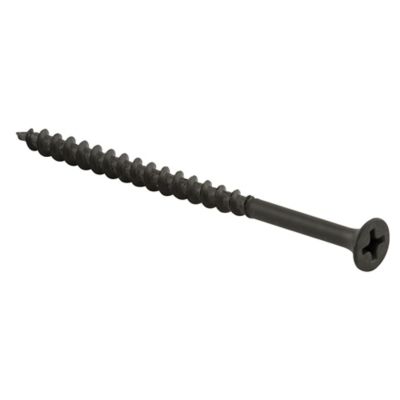
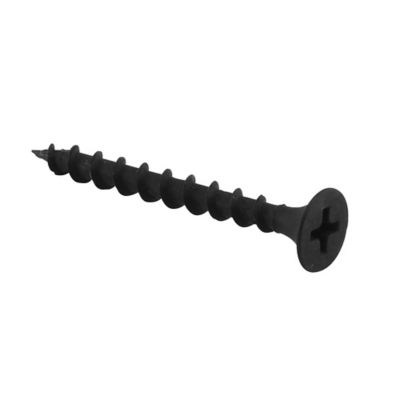
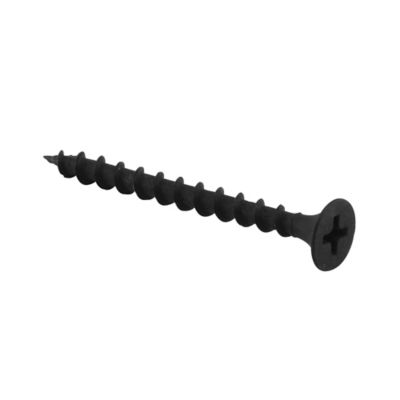
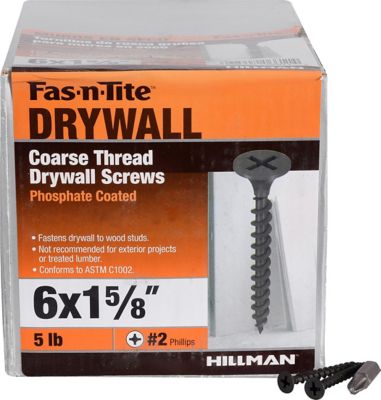
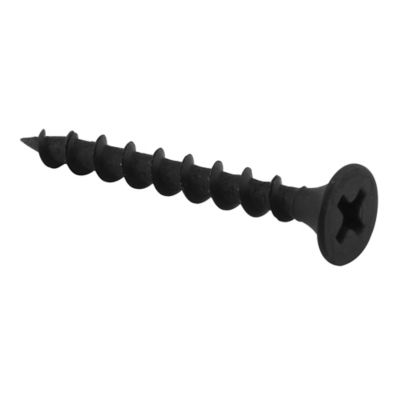
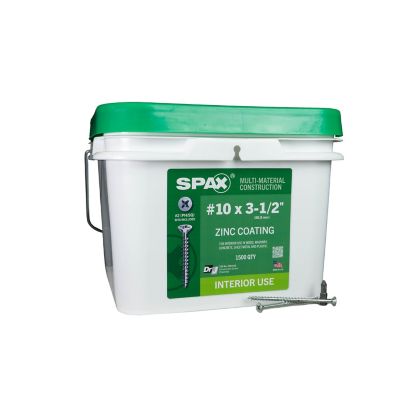
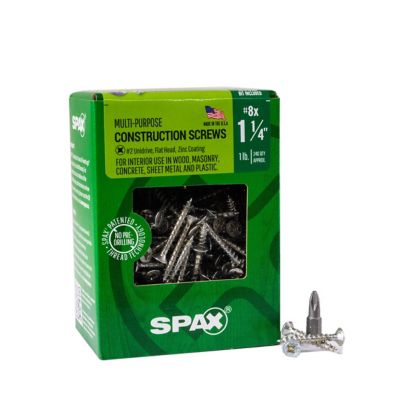
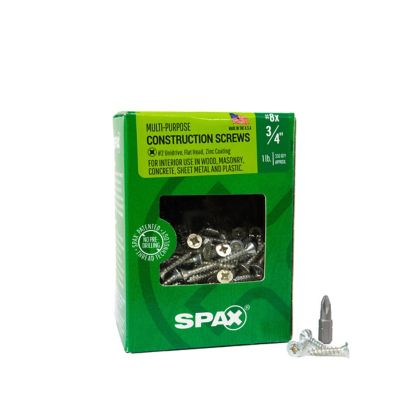
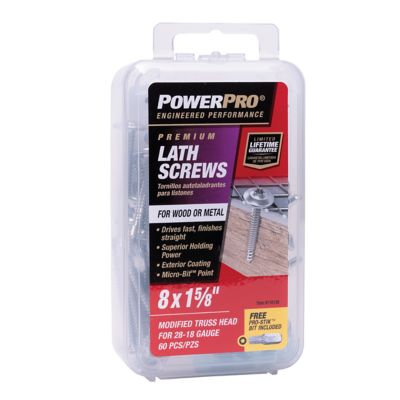
Drywall screws for woodworking are best understood as fasteners for attaching gypsum board to wood framing, not as an all-purpose choice for joining boards. For a shop wall, a garage ceiling, or a framed partition beside the workbench, coarse-thread drywall screws are the right category to consider when the backing is wood. Their widely spaced threads bite into wood fibers, while a sharp point passes through the drywall facing and gypsum core to start in the stud behind it. That combination helps draw the panel against the framing without the large head or heavy shank of some other fasteners. Fine-thread drywall screws serve a different purpose: they generally suit light-gauge steel framing rather than wood studs. Thread style matters more than how similar two screws look in the package, especially when the job involves both wood blocking and metal framing. The other defining feature is the bugle head, whose curved underside forms a shallow dimple in the drywall facing when driven to the proper depth. The head should sit just below the surface with the paper intact, leaving room for joint compound to cover it. Torn paper weakens the support around the head, so a deeper seat is not a better seat. The
Bugle Head Drywall Screws category centers on this head shape, which belongs with drywall installation rather than the countersunk holes of furniture joinery. Most drywall screws have hardened steel construction that helps the point penetrate and the threads hold their shape during driving. However, that hardness does not make them a substitute for a wood screw engineered for a different kind of load. For homeowners finishing a utility room, property owners enclosing a workshop, and contractors hanging board over studs, the value lies in matching that purpose-built shape to the panel and framing. A screw that seats neatly in drywall is doing a different job from one that holds a cabinet rail, bench leg, or shelf bracket.
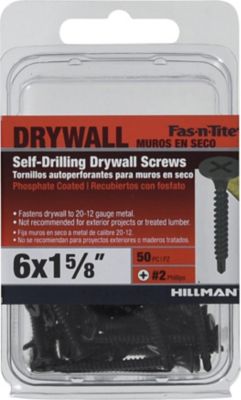
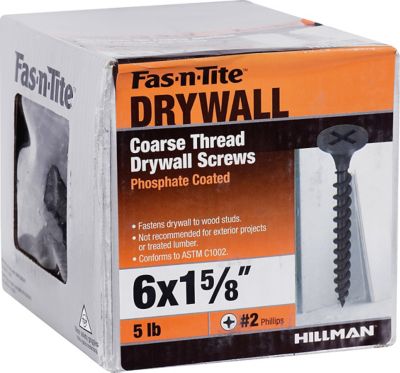
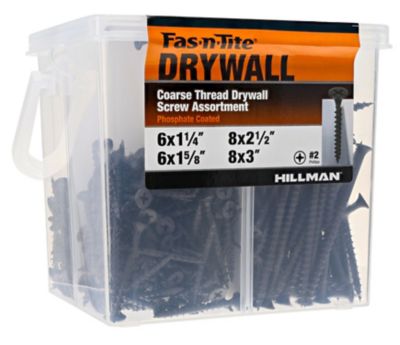
Length, diameter, thread style, and finish all deserve a look when comparing drywall fasteners for wood-backed installations. The right length depends on the total thickness of the drywall and any other approved layers between the screw head and the framing, plus the required penetration into sound wood. A single layer of board and a double-layer wall assembly do not call for the same fastener length. Common lengths such as 1-1/4 inches and 1-5/8 inches can look close at a glance, but that difference changes how much threaded shank reaches the stud. Panel manufacturer instructions and applicable building requirements determine what fits the assembly; extra length alone does not improve a fastening job. Overly long screws can also reach farther into concealed spaces where wiring or plumbing may be present. The screw gauge describes shank diameter, and it belongs in the comparison alongside length rather than being treated as an afterthought. A thicker shank is not automatically a better match for every panel or framing condition. Sound backing matters, too. Crumbling wood, split edges, and a screw driven beside the stud cannot provide the same support as a properly seated fastener in solid framing. Sharp-point drywall screws generally enter ordinary wood studs without a pilot hole, but dense lumber, knots, and existing framing can change how easily they drive. Most familiar drywall screw designs have a Phillips recess, and a properly fitting bit helps keep the driver engaged instead of chewing up the head. A drywall screw gun or a depth-control attachment can help produce consistent seating, particularly across a broad wall where dozens of small dimples need the same depth. The goal is firm contact between board and framing, not crushing the gypsum or forcing the head through the paper. These details matter on overhead work as well as walls, where panel thickness, framing spacing, fastener spacing, and the complete assembly all affect the installation. Screws are only one part of that system, even when they are the smallest parts on the bench.
Finish and intended use are just as important as fit. Black phosphate is a common coating on drywall screws, giving them their familiar dark appearance and a surface suited to interior drywall finishing. It provides limited corrosion protection and should not be mistaken for a coating intended for exposed outdoor construction or persistent dampness. A screw disappearing beneath joint compound still needs to suit the conditions within the wall, and a dark finish alone says little about its suitability for another material. Cement backer board, treated lumber, and applications with significant moisture exposure have their own fastener requirements; ordinary drywall screws are not a blanket substitute. For wood-to-wood projects, the distinction becomes even more important. Hardened drywall screws can break under bending or sideways loading, making them a poor choice for furniture, cabinetry, load-bearing shelves, and structural connections. The rocking force on a workbench leg or the leverage on a loaded cabinet calls for fasteners designed for those demands. Purpose-made wood screws, cabinet screws, or rated structural screws belong in those comparisons, depending on the connection. Deck construction likewise calls for fasteners specified for the lumber, exposure, and structural role, not leftover drywall screws from an indoor job. Keeping those categories separate makes a fastener collection more useful for anyone moving between panel hanging and general carpentry around the property. Care is straightforward: unopened packaging or labeled, closed containers help preserve length and thread information, while dry storage helps prevent rust before installation. Screws with visible corrosion, damaged recesses, or bent shanks are poor candidates for a clean installation. Separate compartments also keep similar-looking lengths from getting mixed together, a small convenience that matters when fastening a full sheet overhead. For a well-organized shop, drywall screws earn their place through a clear, narrow purpose: fastening drywall to the appropriate framing with the right thread, head, length, and finish. Matching those features to the work keeps panel installation separate from joinery and puts the right fastener in hand for each job.