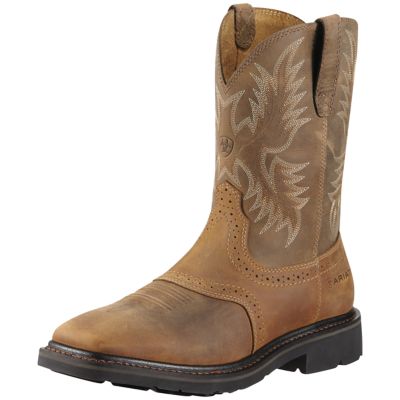
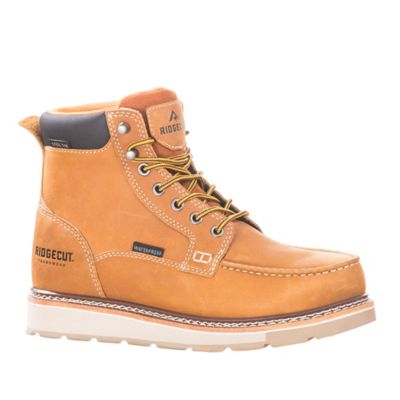
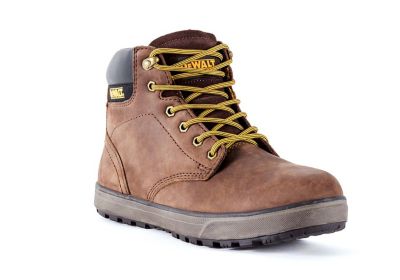
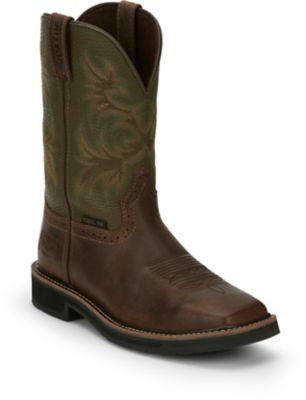
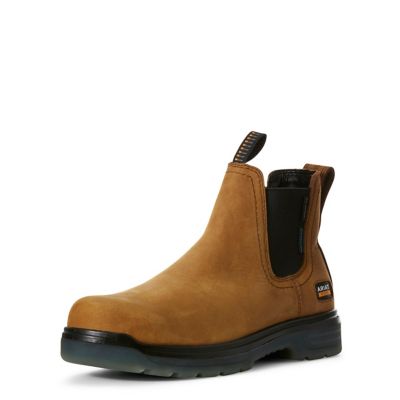
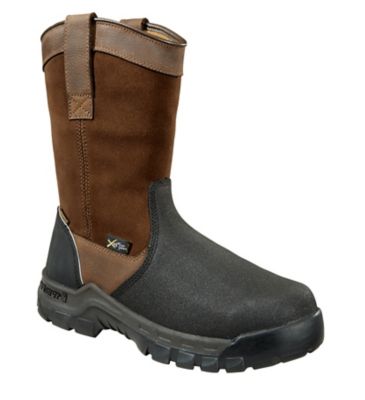
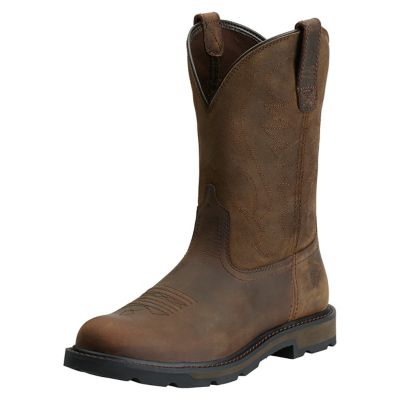
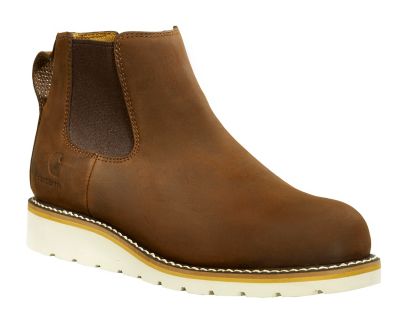
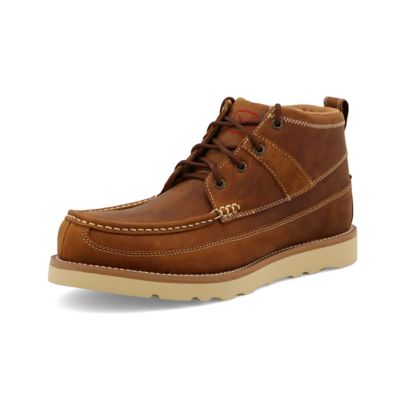
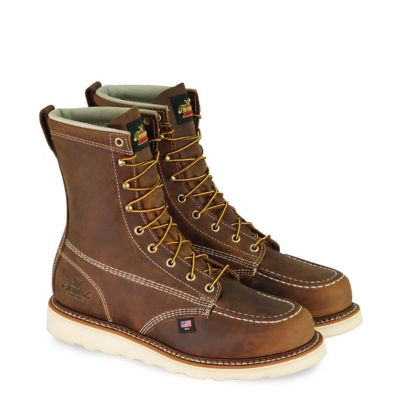
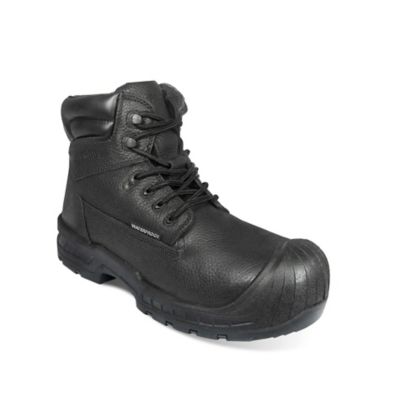
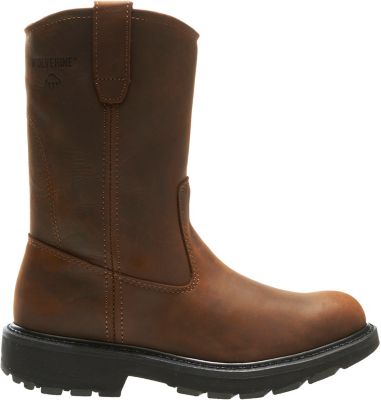
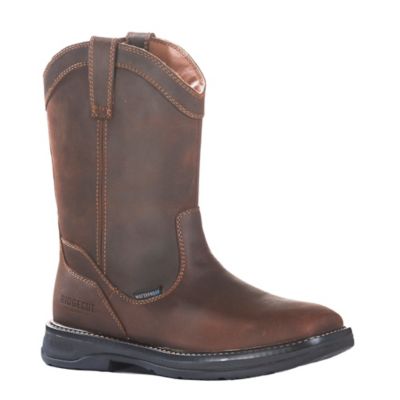
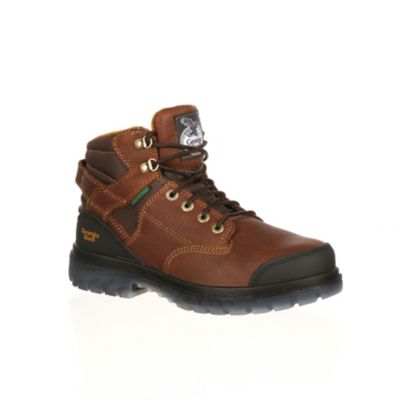
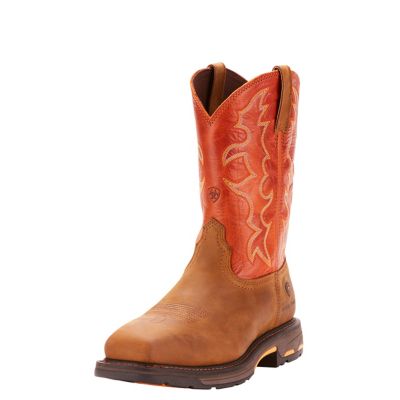
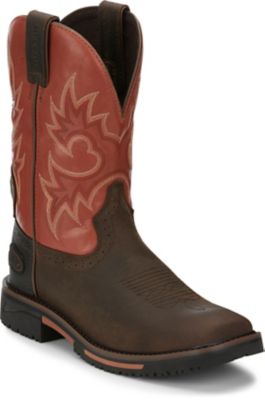
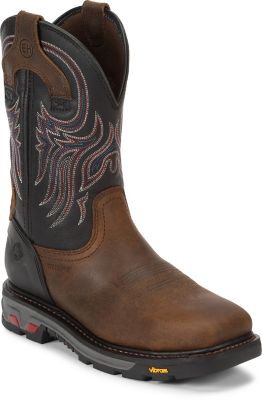
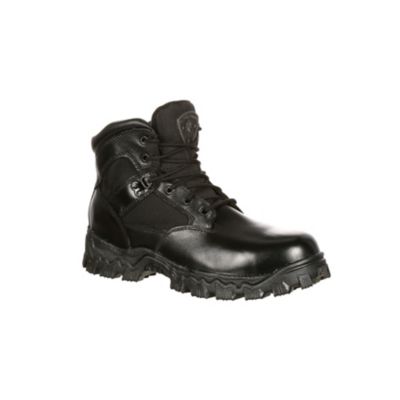
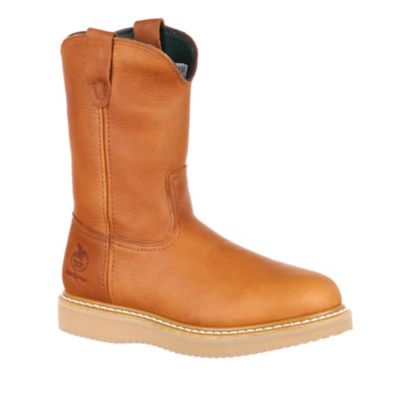
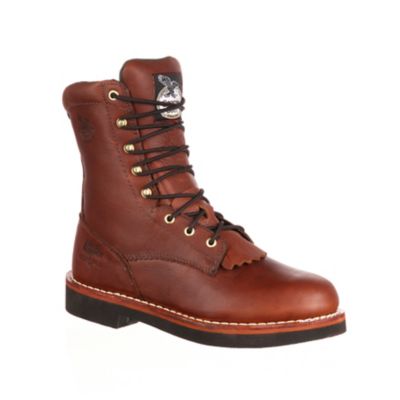
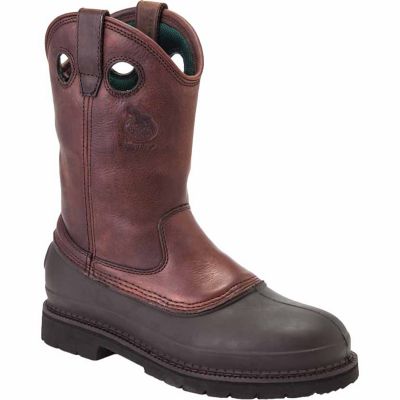
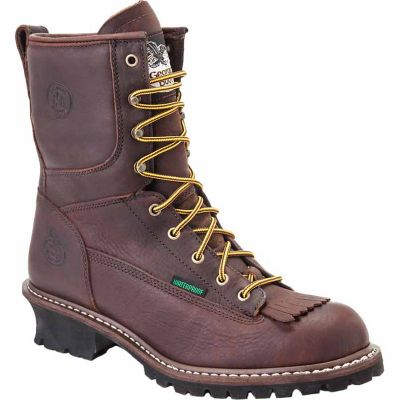
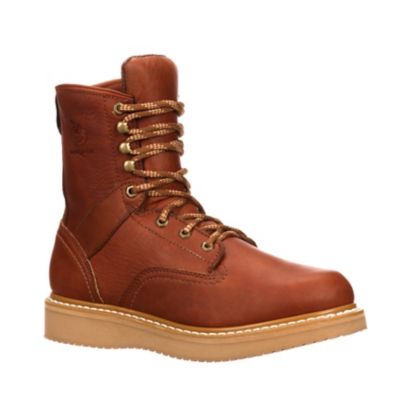
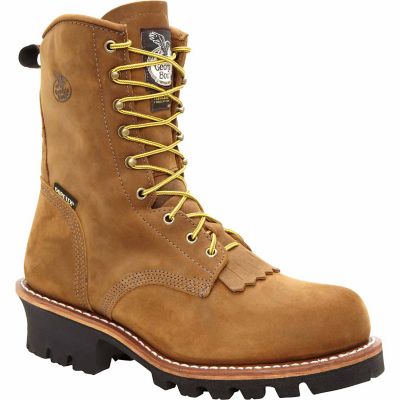
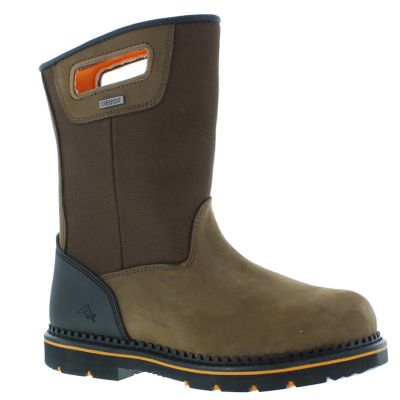
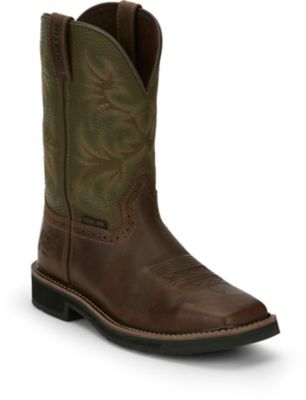
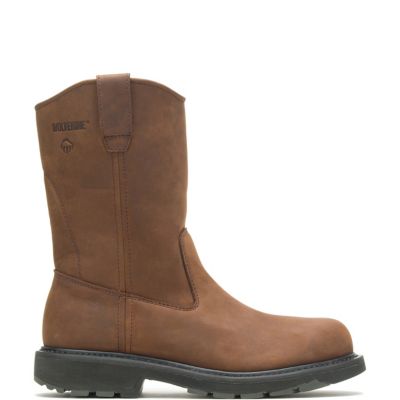
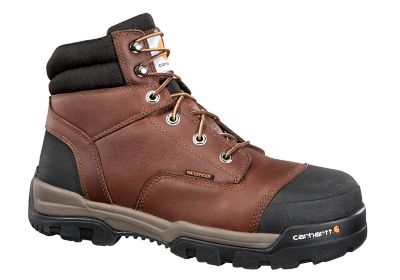
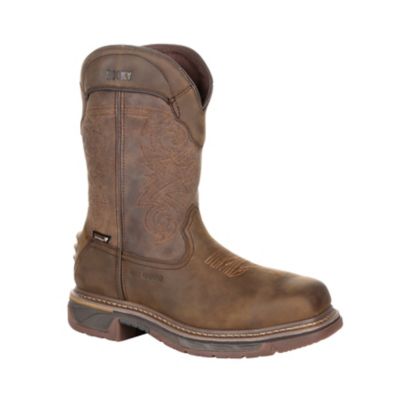
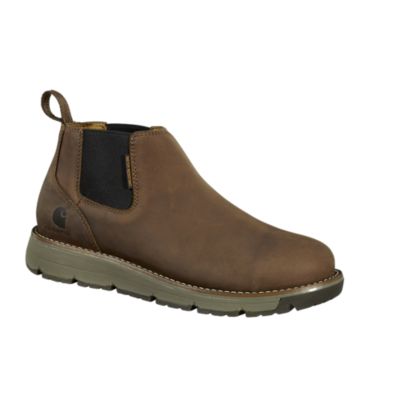
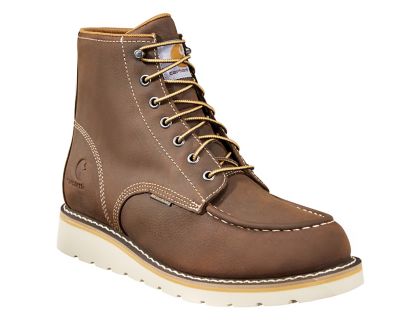
Welding boots are protective work boots built for jobs where sparks, hot slag, metal stock, and hard shop floors put footwear to the test. They serve welders, fabricators, farm mechanics, and folks who move between a welding bench and equipment repairs around the barn or machine shed. The right protection depends on the work: repairing a gate hinge, welding a trailer frame, and spending a full shift at a fabrication table can call for different combinations of coverage, traction, and underfoot support. Common features include leather uppers, safety toes, heat-resistant outsoles, and designs that limit openings where sparks can settle. Not every leather work boot is suitable for welding, though, and no boot provides unlimited protection from heat or molten metal. The manufacturer's stated applications and safety ratings matter more than a rugged appearance. Full-grain leather is a common choice because it offers abrasion resistance and substantial coverage without exposed mesh panels. Smooth uppers with fewer seams, folds, and pockets give stray sparks fewer places to lodge. Some welding footwear also incorporates heat-resistant stitching to help seams hold together during the exposure described by the manufacturer. Pull-on boots eliminate exposed laces, while lace-up designs allow a closer adjustment through the instep and ankle. For lace-up footwear, a properly fitted protective flap or purpose-built lace cover can reduce direct exposure around the tongue and fastening area. A gusseted tongue helps close gaps but should not be mistaken for a complete barrier against sparks. Shaft height also affects coverage, especially when work involves kneeling beside a hitch or reaching under a piece of machinery. Pant legs should extend over boot tops rather than tuck inside them, and cuffs that could catch hot particles have no place around welding sparks. Boots work alongside suitable welding clothing and other required protective equipment; they do not replace protection for the rest of the body.
Safety toes, metatarsal protection, and outsole construction help distinguish welding boots intended for different shop hazards. Steel and composite safety toes can meet recognized impact and compression requirements when the footwear carries the appropriate rating, such as ASTM F2413. Neither material should be judged by its name alone; the marked protection, shape of the toe box, and demands of the job are what count. A safety toe covers the front of the foot, not the entire area beneath a dropped length of steel. Metatarsal guards extend impact protection over the top of the foot, making them worth considering where heavy pieces, tools, or fixtures are handled. Internal guards sit beneath the upper, while external guards cover the instep; any protection against welding spatter must be confirmed separately in the footwear specifications. For work that overlaps with structural steel handling,
Iron Workers Boots offer a related footwear category, though welding suitability still depends on each boot's stated features. Underfoot, rubber and nitrile outsole compounds are common options for heat and abrasion resistance, but performance varies by formulation and construction. A contact-heat rating applies to defined test conditions, not unlimited time on hot steel or direct contact with molten slag. Oil resistance, slip resistance, and heat resistance are separate properties, so one claim does not establish the others. Shop floors can hold cutting oil, metal dust, and small offcuts that challenge footing even when a sole has substantial tread. A flatter wedge-style sole may offer broad contact on a level concrete floor, while a defined heel and deeper tread may better suit certain ladders or uneven work areas. The whole sole design matters, including how readily its tread sheds debris. Puncture-resistant construction is another separate feature to consider where sharp scrap is a concern. Electrical hazard footwear, when required, provides secondary protection under specified conditions; it is not a substitute for sound welding equipment, proper grounding, or workplace electrical safety practices.
Fit becomes especially important when a welding job keeps someone standing at a bench, squatting beside a mower deck, or carrying material across the shop. Welding boots should hold the heel securely without squeezing the instep, and the toes need enough room to move without striking the safety cap. A little settling of the leather is normal, but a safety toe will not stretch to make a cramped toe box comfortable. Trying boots with the socks intended for the job gives a better sense of working fit, particularly when comparing widths or checking space around a metatarsal guard. Pull-on styles need enough room for entry while still holding the foot steady during walking; lace-up styles should close evenly without pressure points across the top of the foot. Bending and kneeling can reveal rubbing that does not show up while standing still. Cushioning can soften long hours on concrete, while a supportive footbed and shank can help the boot feel steadier through repeated lifting and movement. Replacement insoles must suit the footwear and leave sufficient space beneath the safety toe, and alterations should not compromise protective features or ratings. Construction also affects service life. Reinforced stitching, abrasion-resistant toe areas, and firmly attached outsoles all deserve attention, especially for work that wears down the front of the boot against concrete or steel. Some welted designs allow sole replacement, but repairs to protective footwear should follow manufacturer guidance so required protection is not compromised. Everyday care starts with letting boots cool, then removing metal debris and wiping away dirt or residue according to the care instructions. Leather conditioner should be compatible with the material and intended application, and damp boots should dry away from direct heaters or open flames. Regular checks can catch split leather, burned seams, loose soles, exposed toe caps, and worn tread before another shift. Footwear that has taken a substantial impact or developed heat damage may need replacement even if it still feels comfortable. Matching protection to the task, getting the fit right, and keeping an eye on wear help welding boots earn their place beside the welding helmet and gloves.