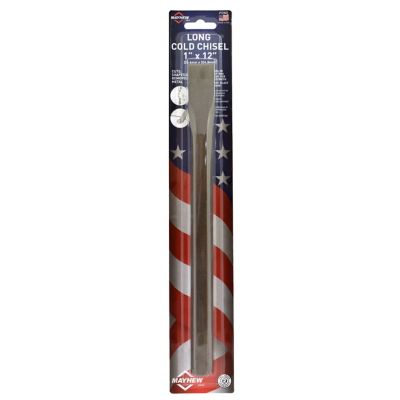
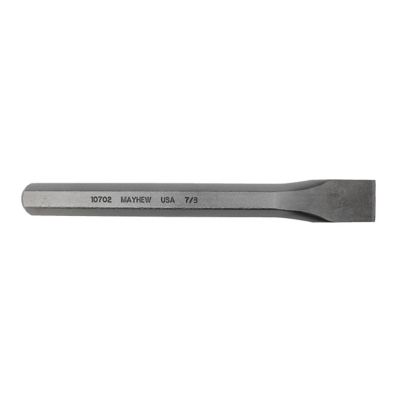
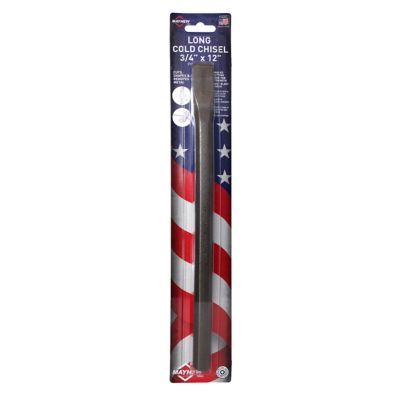
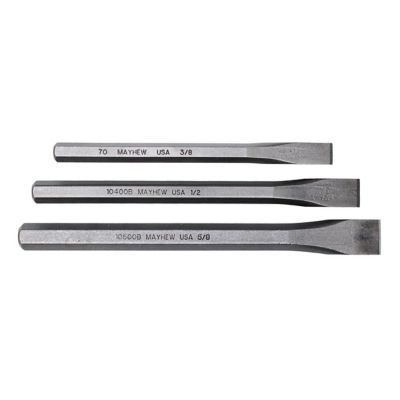
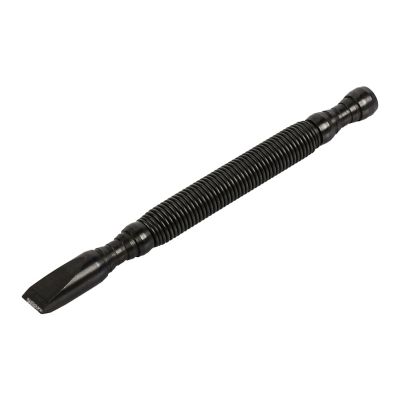
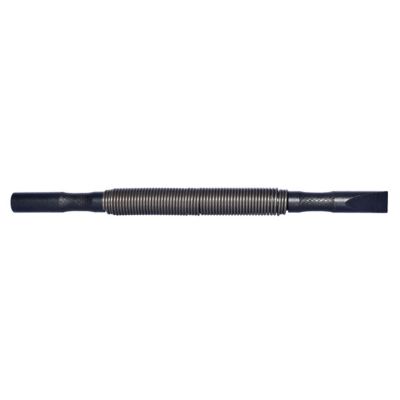
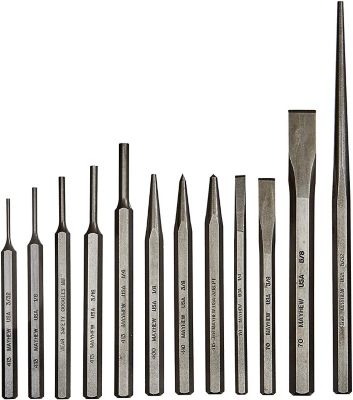
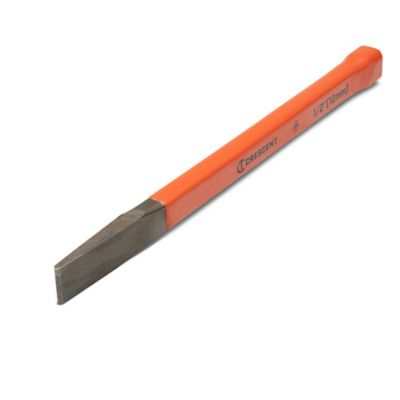
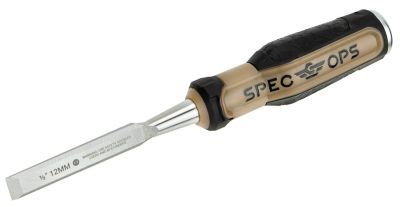
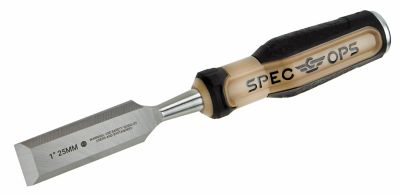
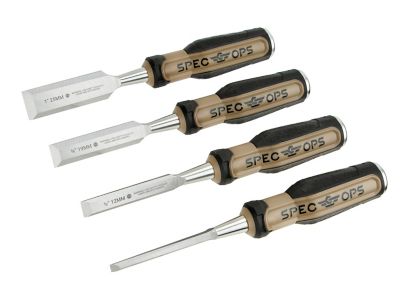
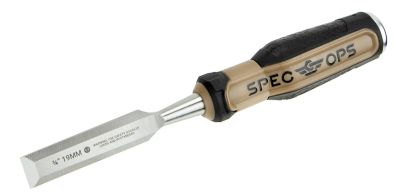
Cold chisels are tough, forged-steel hand tools made for cutting, shaping, and removing unheated metal. Unlike a wood chisel, a cold chisel is built to take repeated strikes from a hammer, with a hardened cutting edge suited to jobs such as trimming bolts, splitting rivet heads, breaking small welds, and cleaning up rough castings. They can also help with light demolition work involving masonry or stone, though the right chisel style and safety equipment depend on the material being worked. A standard flat cold chisel is the familiar all-purpose choice, with a straight cutting edge that can shear through sheet metal, cut off rusted fasteners, or knock away excess metal along a seam. Many general-purpose cold chisels have a cutting edge ground in the range of about 50 to 60 degrees, giving the edge enough strength for striking while still allowing it to bite into metal. A cape chisel, sometimes called a slot chisel, has a narrower cutting edge for starting grooves, cleaning keyways, and working in tight spaces. Other shapes may be useful for specific repair or fabrication tasks, so the best option depends on what needs to be removed, how much room is available, and how often the tool will be used. A single chisel can be a handy addition to a home toolbox, while a set with several widths gives mechanics, welders, farmers, maintenance workers, and serious DIYers more flexibility. During the cooler months, a cold chisel can earn its keep in the shop, barn, garage, or equipment shed when outdoor repairs slow down and older machinery gets attention. It may be used to free a stubborn hinge, separate corroded parts, cut a seized bolt that will not turn, or remove a damaged fastener when there is no room to swing a saw.
Choosing a cold chisel starts with the material and the job. For cutting thin sheet metal or trimming a small bolt, a narrower chisel may offer better control. A wider, heavier chisel can spread the force over a broader area and make more sense for larger fasteners, thicker stock, or general demolition. Pay attention to overall length, cutting-edge width, handle or striking-end design, and the way the tool feels in hand. A longer chisel can provide useful reach in a cramped area, while a shorter one may be easier to control when working close to a bench vise. Look for forged construction and a properly hardened cutting edge, but remember that a hard edge still needs care. The cutting edge should be sharp enough to start a clean cut without being razor-thin, since an overly thin edge can chip or roll when struck. Before each use, inspect the edge for cracks, mushrooming, deep nicks, or other damage. A striking end that has spread into a mushroom shape can send small metal fragments into the air and should be dressed or replaced rather than used as-is. Keep the chisel lined up with the cut, secure the workpiece in a vise whenever possible, and use a hammer suited to the size of the tool. Heavy swings are not always better; controlled strikes let the edge do the work and help prevent glancing blows. Eye protection is essential, and hearing protection, gloves, sturdy footwear, and appropriate long sleeves add another layer of protection. A face shield may be helpful for jobs that create a lot of flying chips. Cold chisels are intended for unheated metal, so do not use one on hot stock, and take care around hardened steel, springs, pressurized components, and materials that may splinter. When cutting a bolt or rivet, shield nearby surfaces and make sure no one is standing in the path of chips or the hammer.
Cold chisels are practical tools for anyone who works on equipment, vehicles, fencing hardware, fabrication projects, or household repairs. On a farm or rural property, one may be called into service when a gate latch is frozen with rust, an old implement needs to be taken apart, or a broken bolt must be removed before a repair can move forward. In a garage, it can help separate parts that have been joined by corrosion, clean up weld spatter, or make room around a damaged fastener. In a workshop, a set of different widths can help with layout, rough shaping, and the careful removal of excess metal after welding or casting. They also make a sensible gift for a new homeowner, an apprentice, a mechanic, a welder, or the handy person who always seems to be fixing something after supper. A compact single tool suits occasional repairs and takes up little room in a toolbox, while a multi-piece assortment is useful for someone who works on a variety of materials and needs both reach and cutting width. Storing chisels in a dry toolbox or drawer helps protect them from surface rust, especially in unheated sheds and outbuildings where temperature swings can cause condensation. Wipe away moisture after use and keep the cutting edges from banging against other tools. For additional options across common shop and repair tasks, browse
Top Rated Chisels. With the right size, a sound striking end, and a cutting edge matched to the work, a cold chisel is a dependable hand tool that can turn a frustrating repair into a straightforward one.