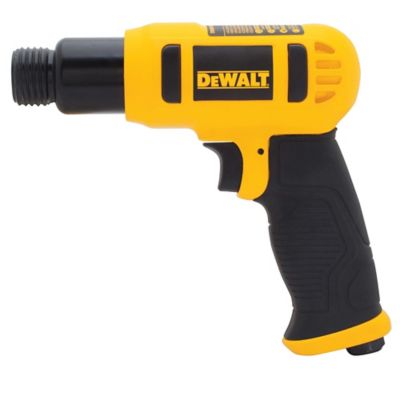
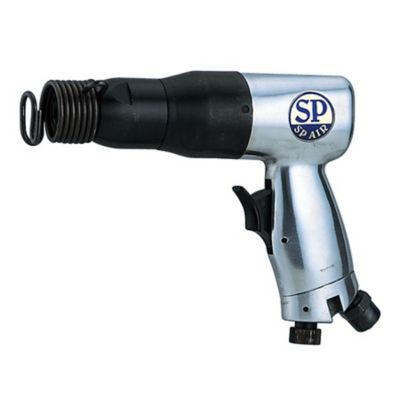
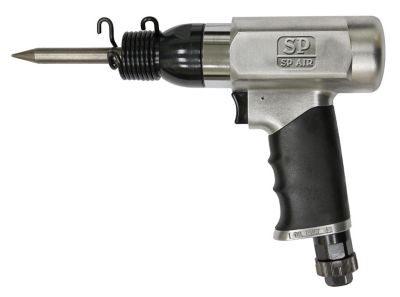
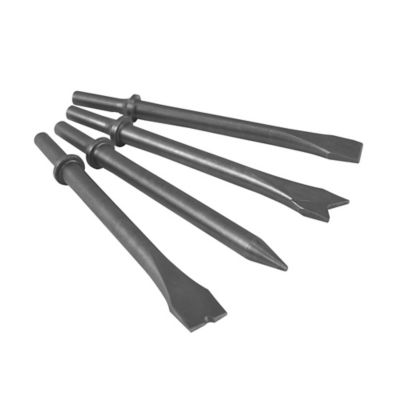
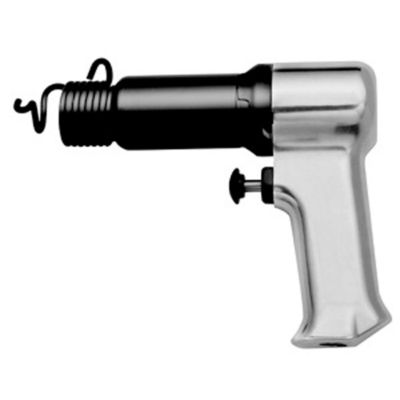
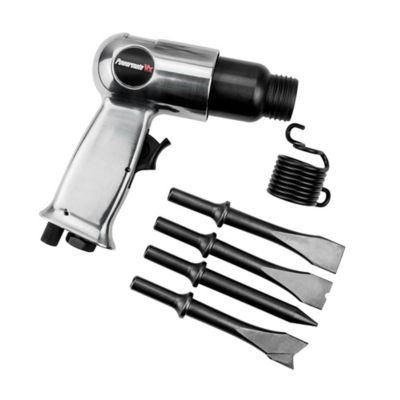
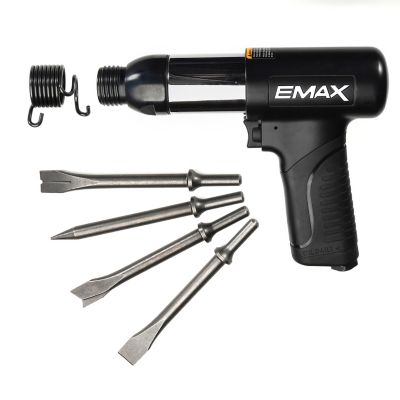
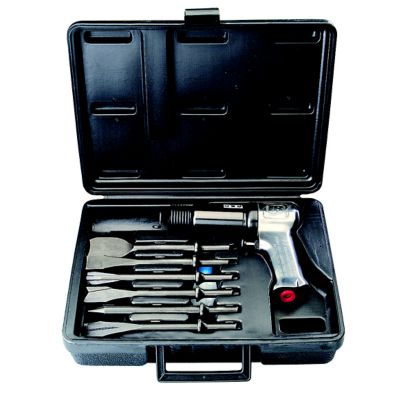
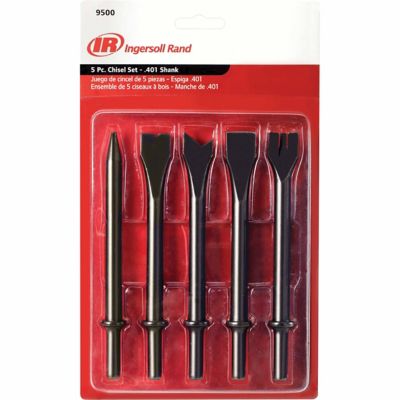
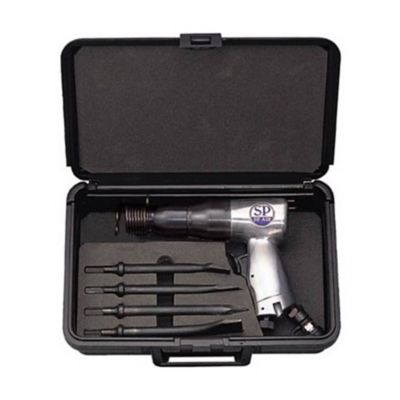
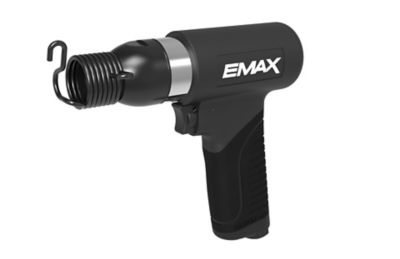
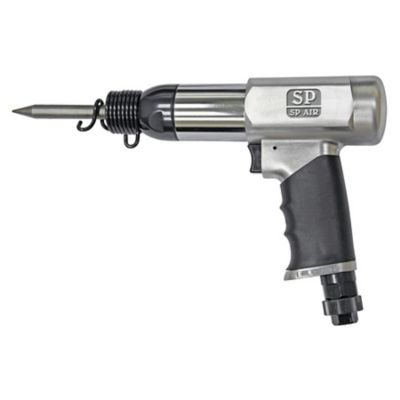
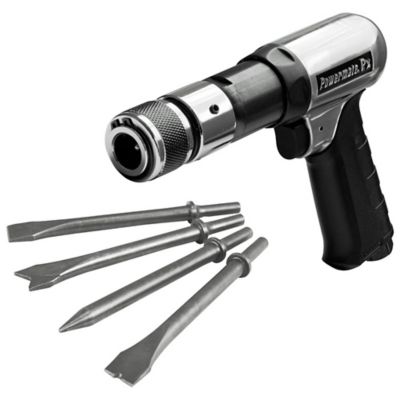
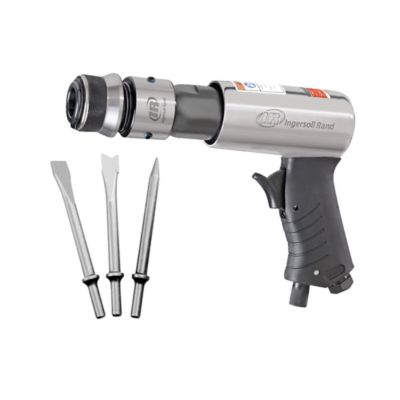
Air hammer chisels turn the repeated blows of a pneumatic air hammer into focused force for cutting, chipping, scraping, and separating material. The chisel is the attachment that contacts the workpiece; the air hammer supplies the motion, and an air compressor powers the tool. That combination earns its place in automotive bays, farm shops, fabrication spaces, and equipment repair sheds, especially when rust, tight clearances, or stubborn fasteners make a job tougher than it ought to be. Depending on their design and rated application, air hammer attachments can cut exhaust tubing, shear rivet heads, chip small areas of masonry, or help separate seized components. A flat cutting chisel concentrates force along an edge, while a pointed chisel directs it into a smaller contact area for localized breaking and chipping. Wider scraper blades spread the contact across more surface, making them suitable for certain removal jobs where a narrow cutting edge would dig in too sharply. Panel-cutting profiles are shaped for sheet metal, and purpose-built separating attachments serve a different role from ordinary cutting chisels. Those differences matter when the work ranges from an old exhaust connection beneath a pickup to a riveted bracket on a piece of shop equipment. The right profile puts the force where it belongs instead of leaving unnecessary gouges in the surrounding metal. Scraping applications deserve particular care: an attachment suited to removing stubborn buildup from a heavy steel surface may be far too aggressive for a machined aluminum gasket surface. Small masonry repairs also call for a bit and hammer rated for that material, rather than treating every metal-cutting chisel as a concrete breaker. These attachments are most useful for mechanics, maintenance crews, metalworkers, and property owners who already have a suitable pneumatic setup. They bring concentrated impact to repair and removal work, but their usefulness depends on matching the cutting end, the tool, and the material—not simply choosing the biggest blade.
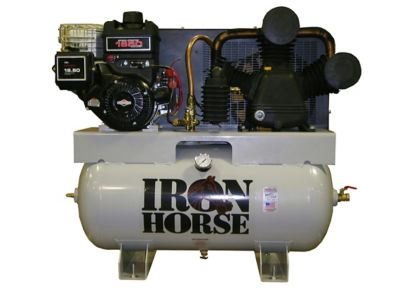
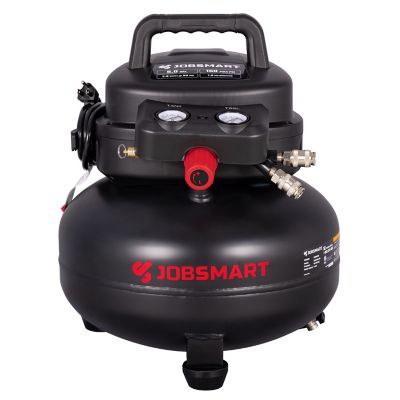
Fit starts at the shank, the end of the air hammer chisel that seats inside the tool. A .401-inch shank is common among light- and medium-duty automotive air hammers, while some larger hammers take .498-inch attachments or another specified size. Diameter alone does not establish compatibility. Shank shape, collar design, insertion length, and the hammer’s retaining system also need to match the tool manufacturer’s requirements. A bit that slips into the barrel is not necessarily a bit the retainer can secure properly. Checking those details matters whether the attachment is headed for a compact hammer working around an exhaust hanger or a larger tool tackling heavier separation work. Overall length affects reach and clearance, too. A longer chisel can reach past an obstruction, but extra length does not automatically mean better control or greater cutting force. Blade width and edge geometry determine how the impact meets the work: a narrow edge focuses the load, while a broad edge spreads it out and may demand more from the hammer. Material and heat treatment matter just as much as shape. Air hammer chisels commonly feature hardened alloy steel, with heat treatment intended to balance edge wear resistance and toughness under repeated impact. A cutting edge needs to resist rolling over without becoming so brittle that it readily chips. Surface finishes may help limit corrosion, but they do not replace proper care or make an attachment suitable for every material. The pneumatic setup belongs in the fit discussion as well. Many shop air hammers specify operation around 90 PSI, though the hammer’s own pressure rating always governs. Compressor airflow, measured in cubic feet per minute, must support the tool’s demand, and hose size and fittings can affect airflow at the hammer. Impact rate comes from the hammer rather than the chisel; many models operate in the range of roughly 2,500 to 4,500 blows per minute. Stroke length and hammer design also affect how the tool delivers each blow, so a higher impact count by itself does not establish greater working force.
Day-to-day service life comes down to sensible application, inspection, and storage as much as the steel itself. Repeated impact takes a toll on cutting edges, collars, and shanks, particularly when an attachment is twisted in a cut or pressed into service as a pry bar. A chipped edge, bent shank, cracked body, or deformed striking end is a reason to take the attachment out of service and follow the manufacturer’s replacement guidance. Edge maintenance also depends on the manufacturer’s directions; uncontrolled grinding can change the cutting profile or overheat the steel. After a job, removing grit and residue, drying the attachment, and applying an appropriate light corrosion protectant to exposed steel can help keep it ready for the next repair. Keeping chisels separated in a holder or fitted case protects cutting edges from knocking together and makes different profiles easier to spot at the bench. Lubrication of the air hammer itself is a separate maintenance task and should follow that tool’s instructions. For work that calls for hammer-and-chisel control rather than pneumatic impact,
Steel Chisels provide a related category to consider, though hand-struck tools and air hammer attachments are not interchangeable unless expressly designed for both applications. Around a busy shop, that distinction helps keep the right equipment paired together. Safe handling is another part of getting practical value from these tools. Disconnecting the air supply before changing attachments, confirming retainer engagement, and securing the workpiece reduce avoidable hazards. Impact-rated eye protection, hearing protection, and any additional protection specified for the task matter when metal fragments, noise, and airborne dust are involved. Beneath a vehicle, proper support and clearance from brake lines, fuel lines, wiring, and other vulnerable parts are essential. In fabrication work, protecting nearby finished surfaces can prevent a removal job from turning into a refinishing job. A well-matched air hammer chisel gives a properly equipped shop another way to tackle stubborn work, with the reach, edge shape, and impact capability suited to the repair at hand.