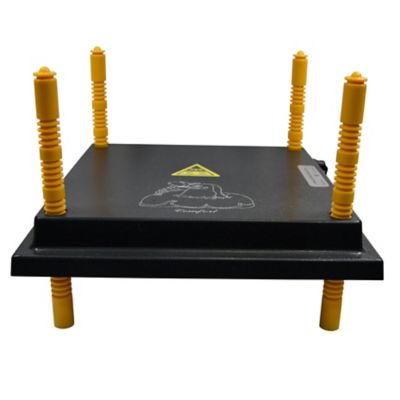
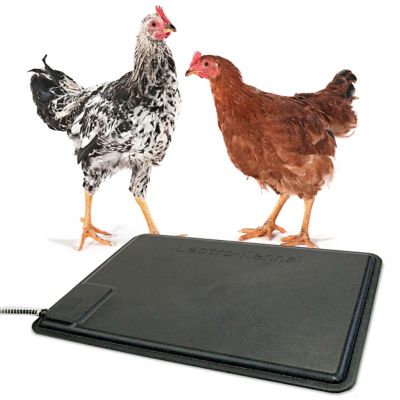
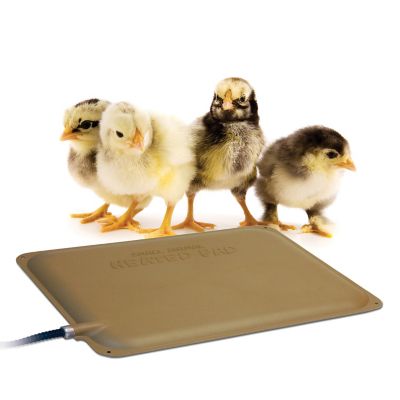
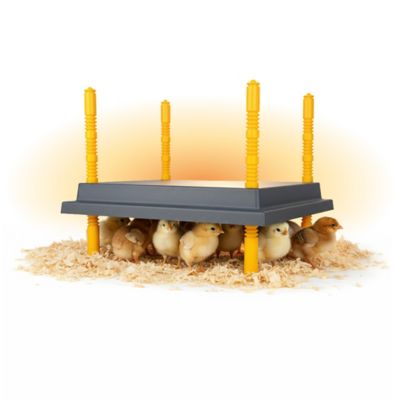
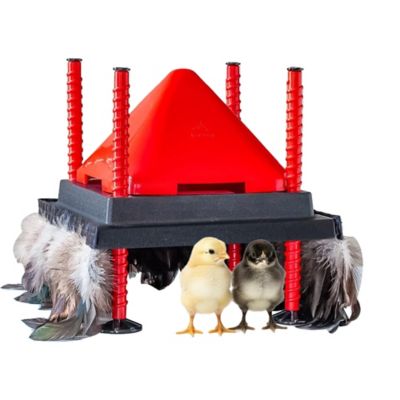
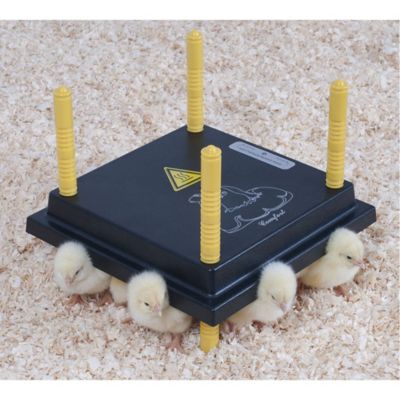
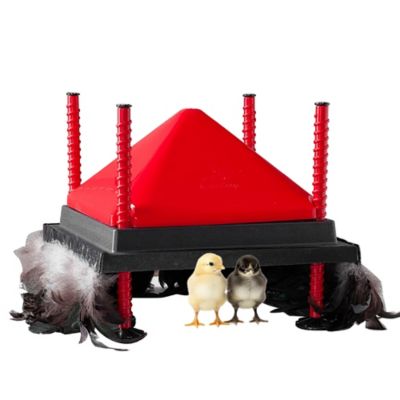
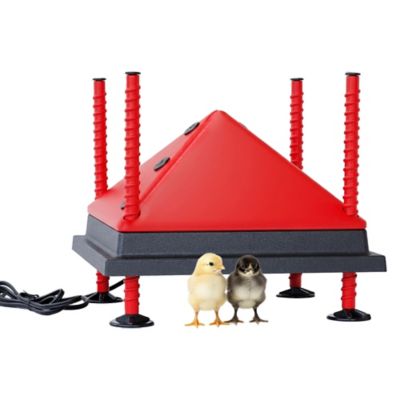
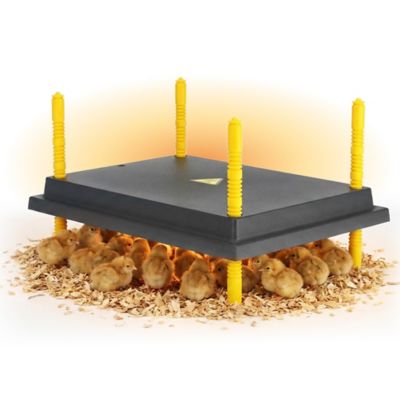
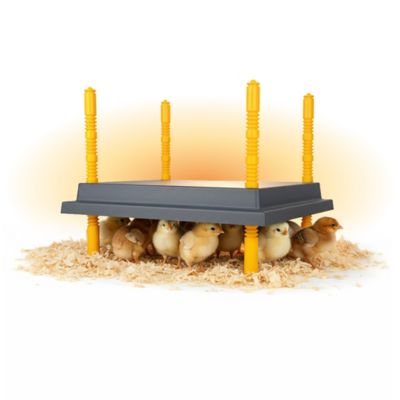
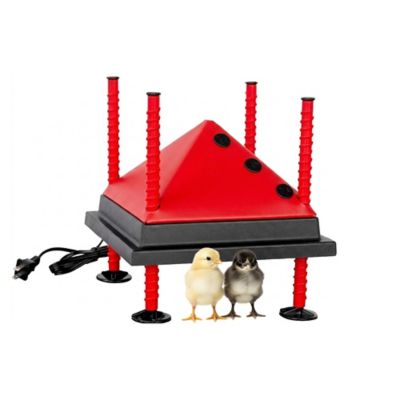
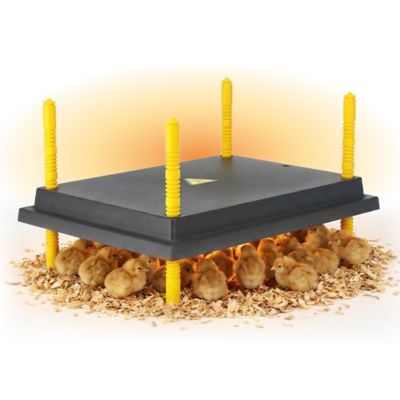
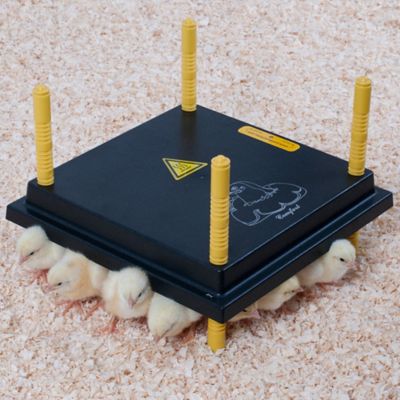
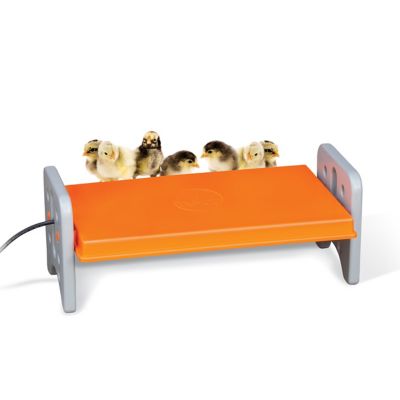
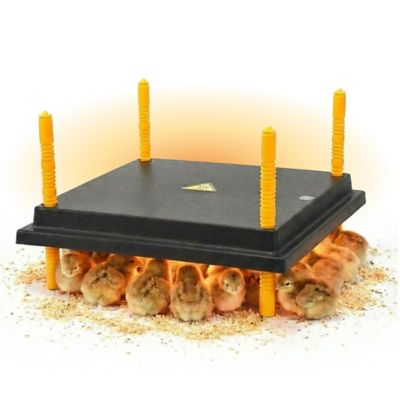
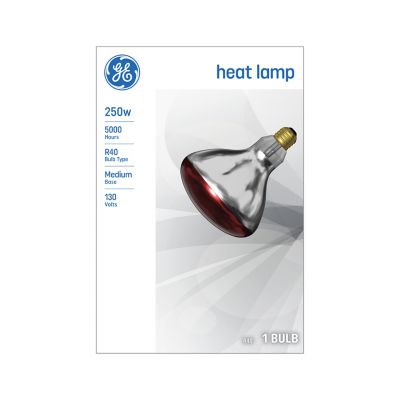
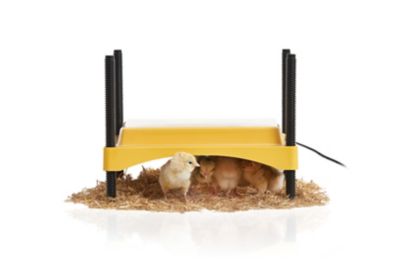
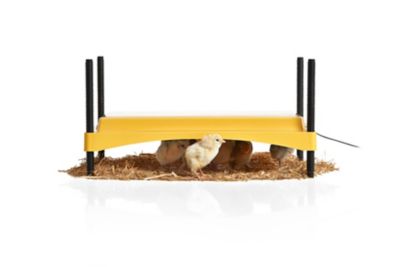
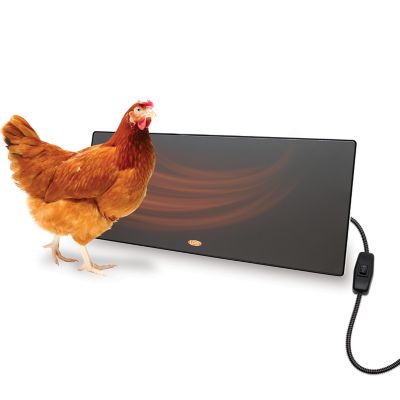
Chick heating plates give young birds a sheltered place to warm up while leaving the rest of the brooder open for eating, drinking and exploring. A chick brooder heating plate typically has a heated underside supported by adjustable legs, creating a low space that chicks can tuck beneath, much like settling under a mother hen. Depending on the design, birds receive warmth through close contact with the underside, radiant heat or a combination of both. Rather than heating the entire enclosure, the plate creates a warm resting area that chicks can enter and leave on their own. That arrangement suits the familiar rhythm of a brooder: a little time at the feeder, a drink, a scratch through the bedding and then a nap with the flock. Unlike a traditional heat lamp, a heating plate does not need a bright heating bulb shining over the birds, which can make it easier to maintain a regular day-and-night lighting schedule. The brooder still needs suitable lighting so chicks can find feed and water during their active hours. These plates fit into setups for backyard flock keepers, small farms and families raising a new group of chicks, provided the equipment matches the birds and their surroundings. They are brooder heaters, not substitutes for an incubator or equipment intended to heat an entire coop. The surrounding air matters, too. Every plate has operating conditions, and some require a sheltered room within a stated temperature range to provide enough warmth. An open pen in a drafty outbuilding is a different setting from an enclosed brooder in a protected room. Manufacturer guidance on bird age, placement and minimum ambient temperature is more useful than a single temperature recommendation applied to every plate. A suitable setup gives chicks access to warmth without expecting the heater to overcome drafts, damp bedding or conditions beyond its rating.
The right size chick heating plate depends on more than the number printed beside its capacity rating. Usable space underneath, chick size, breed and growth rate all affect how comfortably a group can rest together. A handful of large-breed chicks can fill a resting area sooner than the same number of bantams, and the space that seems roomy at arrival can look quite different once wings and feathers start coming in. Capacity is best considered alongside the plate’s dimensions and the amount of brooder floor space left for feed, water and movement. There should be room for every chick to reach the heated area without crowding or getting pinned behind another bird. Adjustable legs help the plate keep pace with growing chicks, while secure height settings keep the resting space consistent. Some designs allow one end to sit higher than the other, giving birds a choice of clearance beneath the same surface when the manufacturer permits that arrangement. The intended gap varies by design; contact-style plates generally sit close to the chicks’ backs rather than high above them like a lamp. A plate that is too high may not provide sufficient warmth, even when its underside feels hot to a hand. Birds resting comfortably beneath it and moving out to eat offer a more useful picture than surface feel alone, although behavior does not replace the equipment instructions. Persistent tight piling, loud distress calls or reluctance to leave the warm area can signal that the setup needs attention. For shoppers comparing
Radiant Heat Plates, helpful details include the height range, adjustment method, footprint, electrical rating and stated operating limits. Wattage describes electrical demand, but it does not establish chick capacity by itself. Features such as wide feet, securely seated supports and accessible adjustment points can also make a difference when a lively group starts scratching bedding around the brooder.
Construction and everyday care matter once chicks settle into their routine. Chick heating plates may combine a molded housing, a heat-conducting underside and plastic or metal supports, with cleaning requirements that depend on the materials and electrical design. Smooth surfaces and fewer hard-to-reach seams can make bedding dust and droppings easier to clear away. A sloped top or a compatible anti-roost cover can help discourage chicks from perching above the heated area, though any accessory needs to match the plate and leave ventilation openings clear. Stable feet are especially helpful on brooder floors where scratching can push litter into little ridges. The plate needs firm footing, while the surrounding bedding needs to stay dry and manageable. Waterers positioned where spills cannot reach electrical parts help keep the resting area from becoming damp. Cord length and routing deserve attention as well, particularly around pets, busy walkways or pen edges where a cable might be pinched. Electrical connections, clearances and outlet requirements should follow the manufacturer’s directions; the absence of an exposed heating bulb does not make any electrical heater fireproof. A plate also needs the specified warm-up time before chicks depend on it, and a power interruption calls for prompt attention. Between groups of birds, unplugging the plate and allowing it to cool makes inspection and cleaning more manageable. Wipe-clean surfaces are not necessarily waterproof, so immersion or spraying is appropriate only when the instructions expressly allow it. Cracked housings, loose supports, damaged cords or changes in heating performance warrant attention before another group moves in. For the flock keeper checking on chicks before chores and again at evening feeding, a well-matched plate becomes part of a straightforward brooder routine. Enough sheltered space, room to grow and equipment that is easy to inspect all help support those first weeks, when small birds depend on steady warmth but still need freedom to move about.