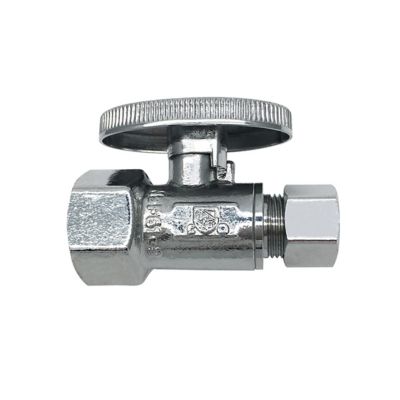
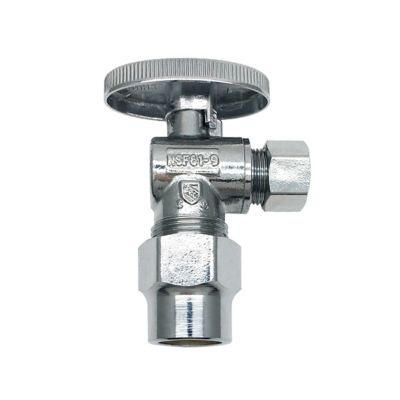
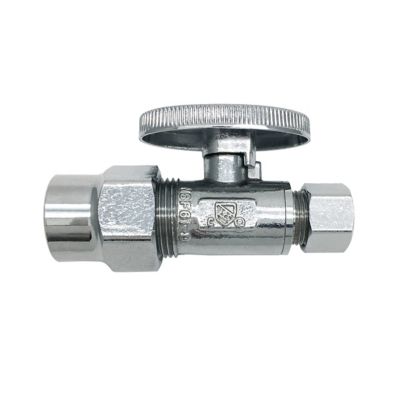
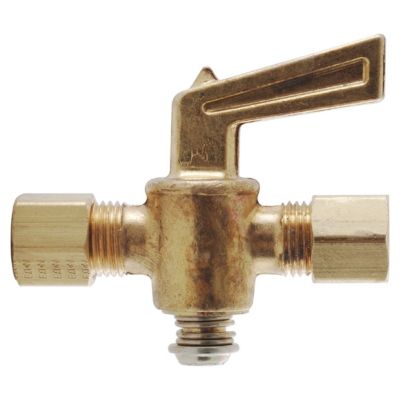
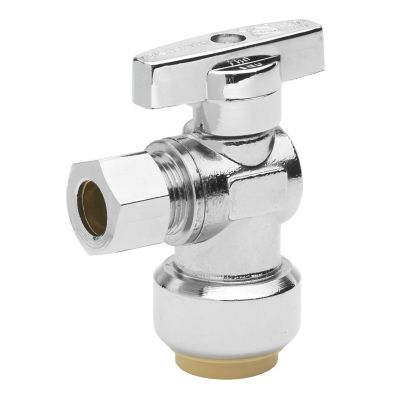
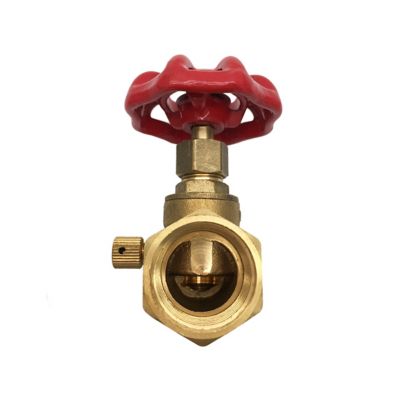
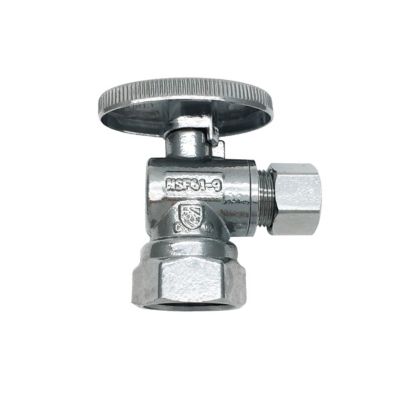
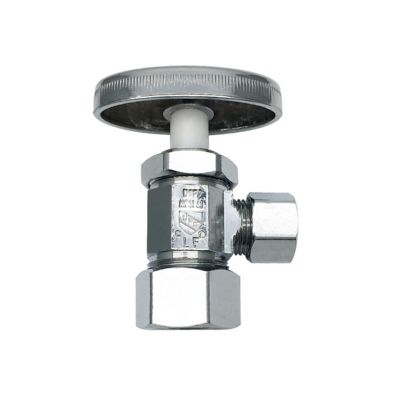
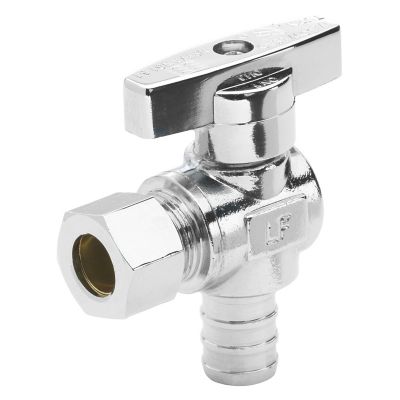
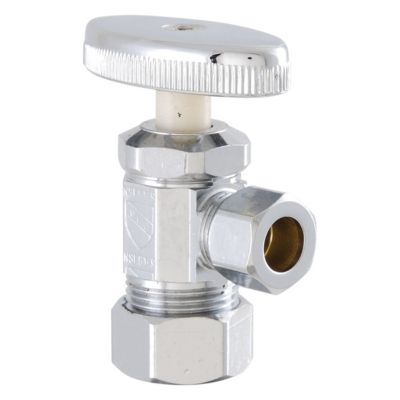
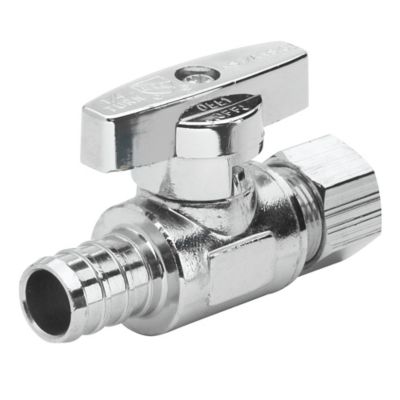
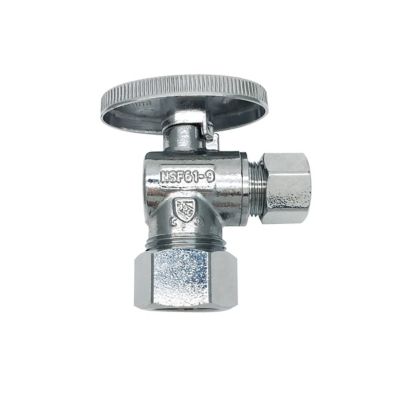
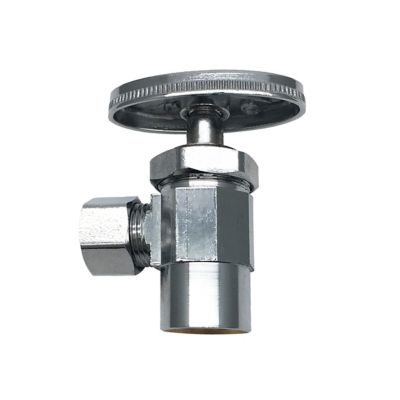
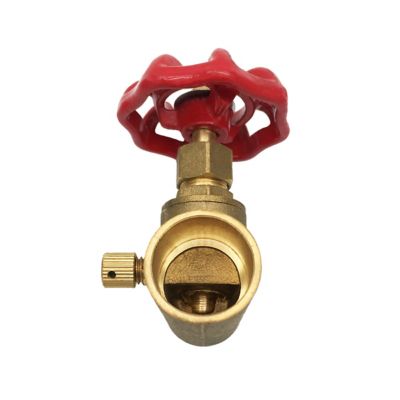
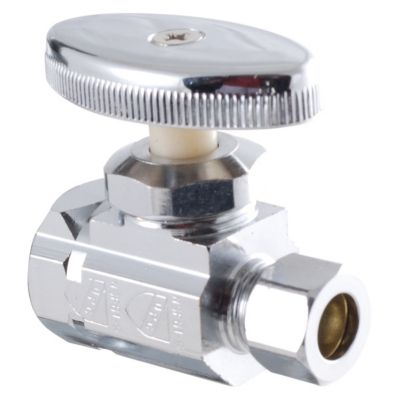
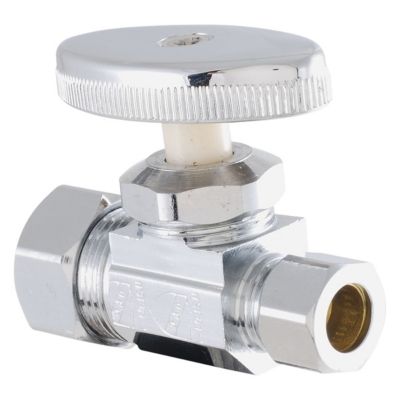
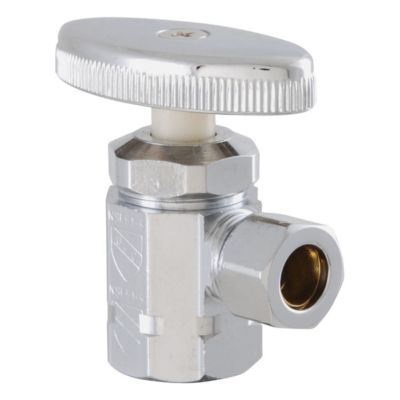
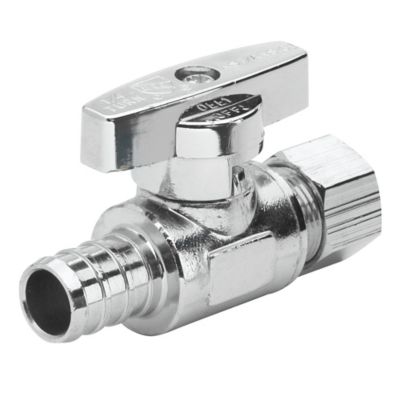
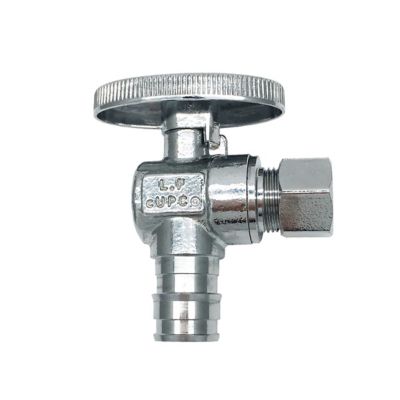
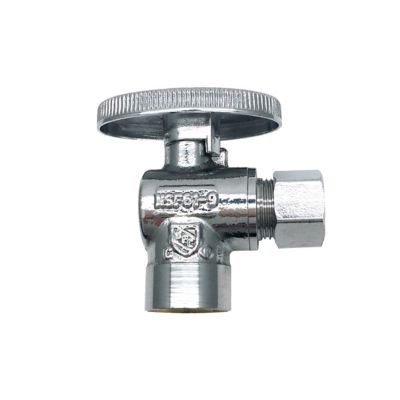
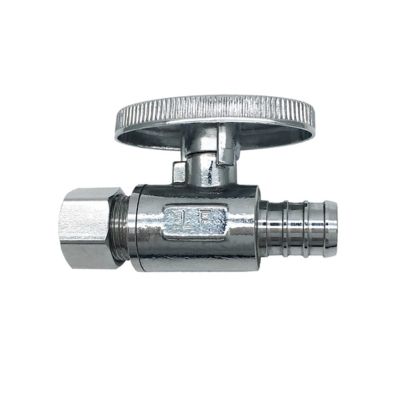
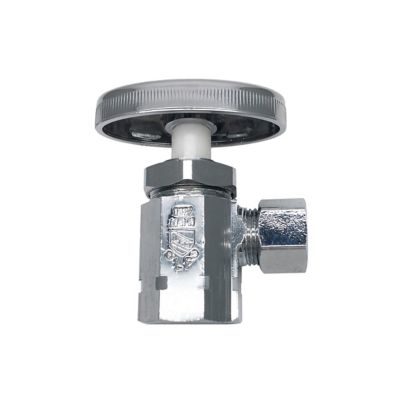
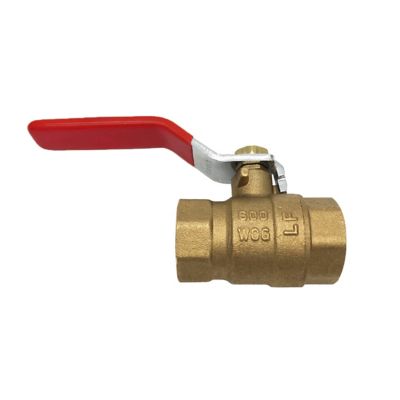
Bathroom sink shut-off valves give you control over the water supply at the fixture, so a faucet repair does not have to interrupt water service throughout the house. These small valves sit on the supply pipes beneath the sink, usually inside the vanity or behind a pedestal. A typical bathroom faucet has a separate valve for each supply, with hot water generally on the left and cold water on the right, though older plumbing may not follow that arrangement. Also called fixture stops or supply stops, these valves connect the household piping to the supply lines that feed the faucet. An angle stop turns the water path 90 degrees, making it a common fit where pipes come out of the wall. A straight stop keeps the inlet and outlet in line and often suits pipes coming up through the floor. That distinction matters in a tight vanity, where the drain trap, cabinet back, and faucet hoses all share a small space. The right valve shape lets the supply line reach the faucet without a sharp bend or an awkward loop pressing against a drawer. Bathroom sink shut-off valves serve homeowners replacing a dripping faucet, plumbers fitting out a new bathroom, and property owners keeping a guest bath or rental home ready for everyday use. They are practical working parts rather than finishing touches, but their placement makes a difference whenever maintenance comes around. A handle that is easy to reach behind the drainpipe is far more useful than one tucked against a cabinet wall. Local shutoffs can isolate a faucet or its downstream supply line, but they cannot stop a leak in the pipe feeding the valve. That is why a sound valve body, a properly matched connection, and access to the main water shutoff all matter when planning work beneath a sink.
Fit starts with the pipe material and connection style, not just the size printed on a package. Copper, PEX, CPVC, and threaded metal piping can call for different inlet connections, and a valve intended for one system is not automatically suitable for another. Compression inlets seal around compatible tubing with a nut and ferrule, while solder connections join to copper through a soldered fitting. Threaded inlets mate with matching pipe threads. Push-to-connect designs must be specifically rated for the pipe material and size involved, and PEX connections need the matching crimp, clamp, or expansion system identified by the manufacturer. These differences are especially important in an older farmhouse bathroom, where a recent faucet may sit above plumbing that has seen several rounds of repairs. A common bathroom arrangement pairs an inlet for nominal 1/2-inch copper tubing with a 3/8-inch outside-diameter compression outlet for the faucet supply line. However, nominal pipe sizes and actual tubing diameters are not interchangeable measurements. Nominal 1/2-inch copper tubing has a 5/8-inch outside diameter, so reading the full connection description helps prevent a mismatch. The outlet must also match the connector on the faucet hose; similar-looking threads alone do not establish a proper fit. Body material is another consideration. Brass is common in fixture stops, and chrome plating can give exposed valves a clean appearance beneath a wall-mounted or pedestal sink. Beneath that finish, the valve still needs materials and seals suited to its intended water service. For a bathroom faucet supplied with drinking water, look for valves identified for potable-water service and compliance with applicable lead-free requirements. Pressure and hot-water ratings should meet the plumbing system’s demands as well. A shiny surface does not tell the whole story about suitability. Checking the inlet, outlet, material, ratings, and required connection method together gives a much clearer picture of whether a bathroom sink supply valve belongs in that particular setup. There should also be enough room around the connection for installation tools and future service without straining nearby piping.
Handle operation helps separate the main types of bathroom sink shut-off valves. Multi-turn stops require several rotations to move between open and closed positions, generally closing clockwise. Quarter-turn stops move between those positions with a 90-degree turn and commonly use an internal ball mechanism. Their short handle travel can be handy in a cramped cabinet, but the handle still needs room to complete its movement. Open and closed positions should be confirmed from the valve’s markings or manufacturer’s directions rather than inferred from the handle’s relationship to nearby pipes. Internal construction varies, so repair parts and service methods are not interchangeable across every valve. Over time, seals can wear, mineral deposits can interfere with movement, and corrosion can affect connections. A stiff handle, moisture around the stem, or crusty buildup at a joint deserves attention before a faucet replacement becomes an urgent plumbing job. Forcing a stuck valve can damage the valve or attached pipe, particularly where older tubing has little support behind the wall. Care is mostly about keeping the area accessible, checking periodically for seepage, and following the manufacturer’s maintenance recommendations. A gentle exterior wipe makes small leaks easier to spot; harsh cleaners can damage some finishes. Storing bottles and cleaning supplies away from the handles also leaves room to reach the shutoffs when needed. A valve is not confirmed closed simply because its handle has reached the stop: flow at the faucet must cease after residual water drains. Replacing the valve itself requires shutting off its upstream water supply and relieving pressure, and questionable piping or unfamiliar connections are good reasons to bring in a plumber. For households tackling more than one sink,
Kitchen Faucet Shut Off Valves serve a similar fixture-isolation purpose, though each location still needs its own connection and clearance checks. Whether the bathroom is a busy family space or a small washroom off the mudroom, well-matched shutoff valves help keep routine faucet maintenance manageable and water control close at hand.