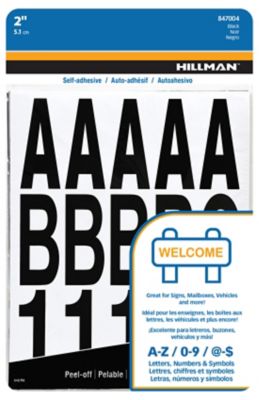
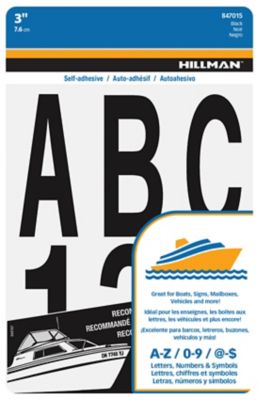
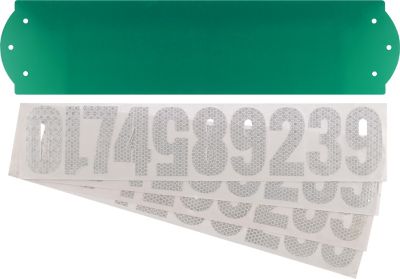
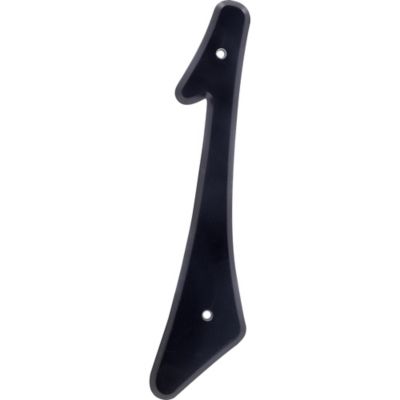
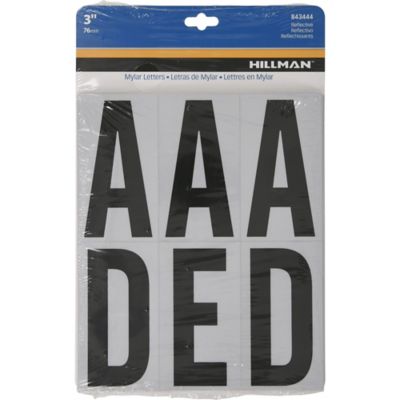
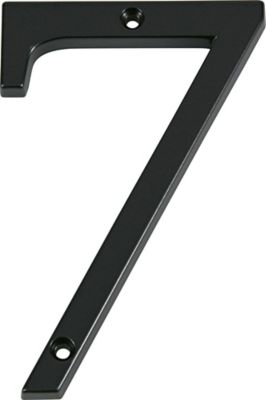
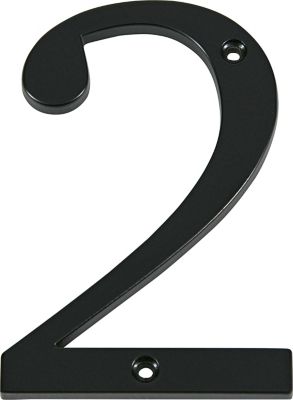
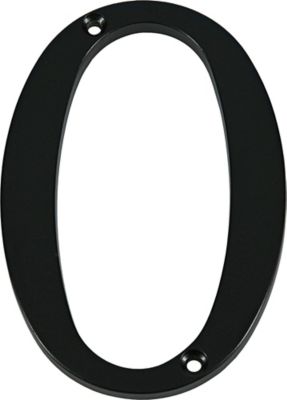
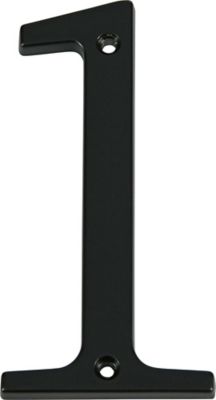
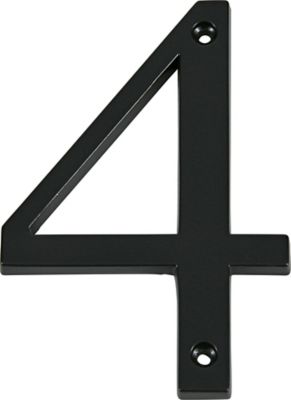
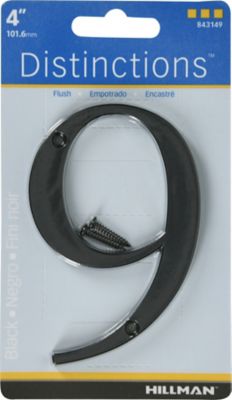
Adhesive numbers for mailboxes put a clear address right where mail carriers, delivery drivers and visitors need to see it. Along a country road, where the house may sit well back from the entrance, that small detail helps distinguish one gravel drive from the next. On a shared mailbox turnout, readable digits help connect each box with the right address without making someone hunt for a name. These peel-and-stick numbers attach directly to a suitable surface, providing address identification without screws, brackets or drilled holes. Vinyl is a common material because its thin, flexible construction can follow a flat panel or a gentle curve while keeping the lettering close to the mailbox body. Options may include individual digits, coordinated number sheets and reflective finishes, with different layouts suited to different address lengths. Individual digits make sense when only one number needs replacing, while a coordinated set helps keep the height, stroke width and finish consistent across the entire address. Repeated digits deserve a little attention: an address such as 2212 needs three copies of the number 2 for just one side of the box. Marking both sides doubles that count. Numerals around 2 to 3 inches tall are common choices for residential mailboxes, but the right size depends on the space, viewing distance and applicable requirements. Bigger lettering can help at a long driveway entrance, provided every digit fits comfortably on the visible panel. A short address leaves more room for wide, bold numbers; a longer address may need a narrower style to stay readable without crowding. For homeowners, renters responsible for their mailbox and folks keeping a farm entrance clearly marked, the goal is straightforward: an address that is easy to recognize at a glance. Adhesive mailbox numbers offer a simple way to refresh faded identification, finish a replacement mailbox or make several neighboring boxes easier to tell apart.
Readability comes from more than numeral height. Strong contrast between the number and its background matters, especially when a driver has only a brief view of the mailbox. Dark digits stand out on a light panel, while light digits are easier to spot against a dark surface. Simple shapes, open spaces inside the numerals and a substantial stroke generally make an address easier to read than fine lines or elaborate lettering. Reflective mailbox numbers return some incoming light toward its source, helping the address stand out when headlights strike it from a suitable angle. They do not create light of their own, and their visibility still depends on placement, viewing angle and an unobstructed sightline. A reflective finish cannot compensate for numbers hidden behind a raised flag or wrapped too far around the side of the box. A broad side panel often gives an address more room than the door, although placement should follow local postal and address-marking requirements. Numbers on both sides may help where traffic approaches from either direction. Measuring the usable panel rather than the overall mailbox length gives a better sense of fit, since seams, ribs, hinges and flag hardware can break up the space. The full address needs room for the digits and the gaps between them; letters or other address elements, where required, take additional space. Even spacing helps a string of numbers read as one address rather than several separate marks. A paper layout can make the footprint easier to picture before any adhesive touches the surface. The listed dimensions also warrant a close look, since a backing sheet can be larger than the numeral itself. Adhesive numbers work best as clear identification, not as a substitute for a sound mounting surface or a visible mailbox location. Checking postal guidance and local emergency-address rules helps settle questions about size and placement without relying on appearance alone.
The mailbox material and surface condition have a big say in how well stick-on numbers stay attached. Smooth, sound painted metal and compatible smooth plastic commonly provide a better bonding surface than rough wood, heavy texture or peeling paint. Not every adhesive bonds equally well to every plastic, so the stated surface compatibility matters even when the panel looks smooth. Flexible vinyl can accommodate a slight curve, but a sharp ridge or recessed groove may leave part of a digit unsupported and give its edges somewhere to lift. Raised adhesive numerals have a different footprint and generally need enough even contact for their backing to hold. For lasting attachment, the adhesive needs contact with the mailbox itself rather than a film of dust, oil, wax or leftover adhesive. Mild soap and water can address ordinary grime when the mailbox finish permits that cleaning method, followed by thorough rinsing and complete drying. Any additional cleaner should be compatible with both the mailbox finish and the number manufacturer's directions. Firm, even contact across the numeral helps reduce trapped air and loose edges, while repeated lifting and repositioning can weaken the initial bond. Product directions should govern application and any waiting period before cleaning. An exterior-use designation matters for a roadside mailbox; lettering intended only for indoor labeling may not suit that setting. Routine care is usually about preserving the surface and the edges: gentle wiping is preferable to abrasive pads, hard scraping or directing force beneath a corner. When old digits come off, some adhesive residue or a difference in the underlying finish may remain, so removability should not be assumed. Matching the original numeral size and style can make a single-digit replacement less noticeable, while replacing the full address gives it a consistent appearance. The same attention to surface compatibility carries over to other adhesive-backed household additions, including
Self Adhesive Wall Protectors, which serve a separate purpose indoors. For the mailbox at the end of the lane, the essentials remain a readable size, a contrasting finish, enough of each digit and an adhesive suited to the surface.