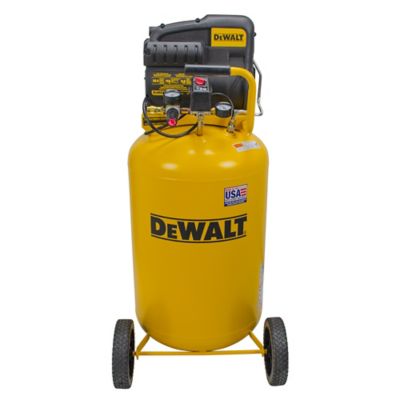
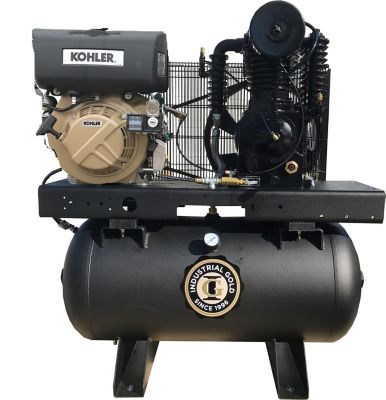
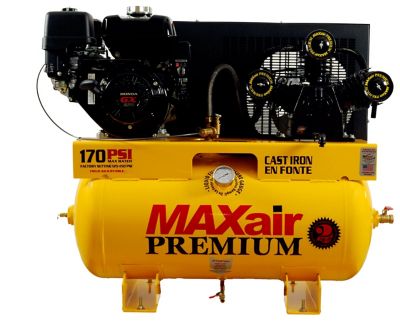
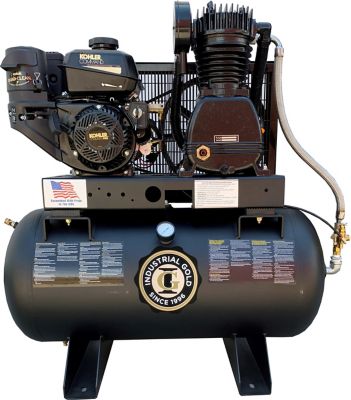
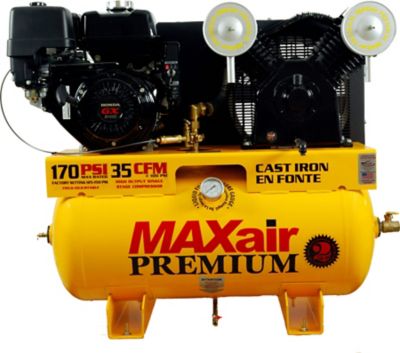
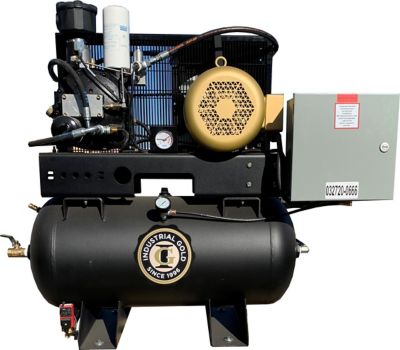
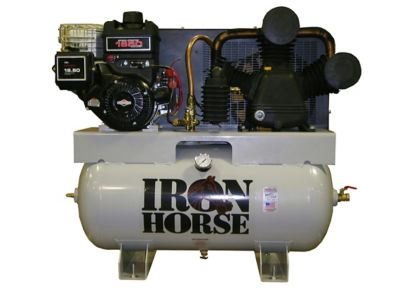
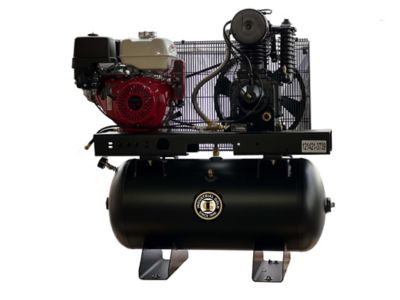
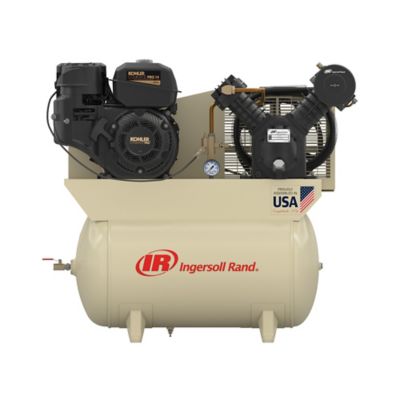
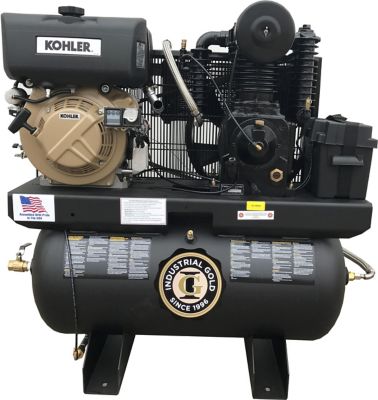
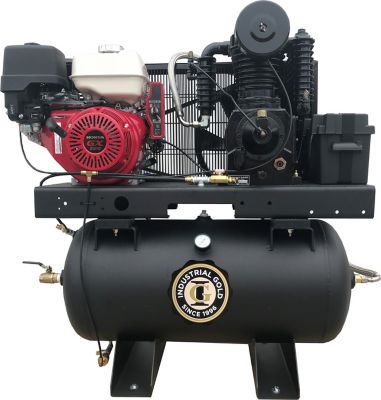
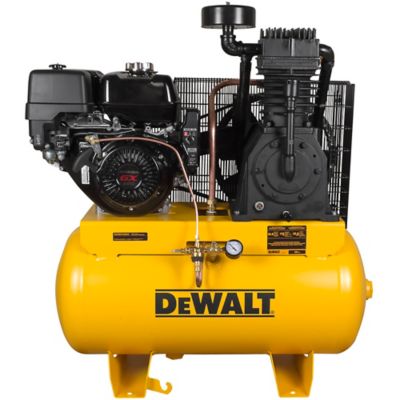
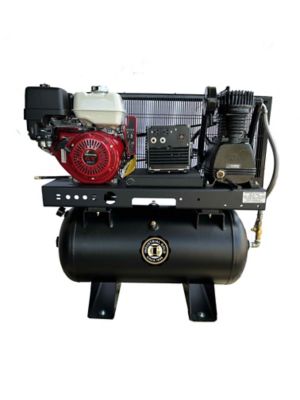
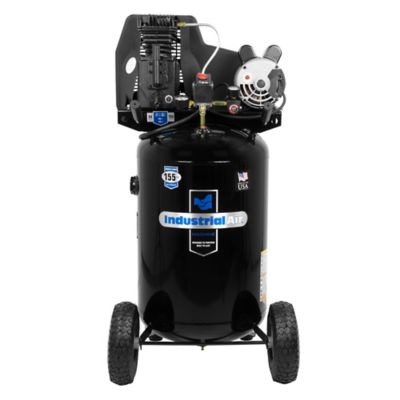
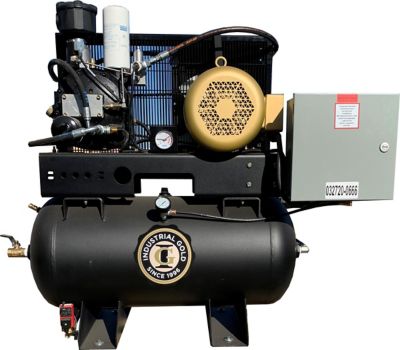
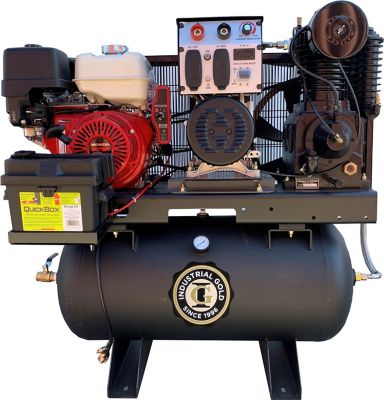
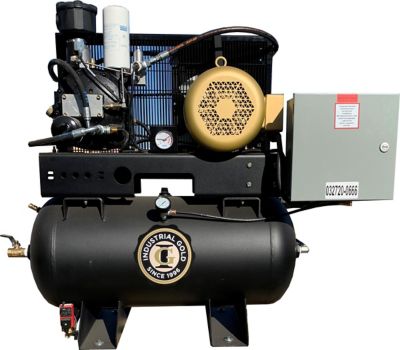
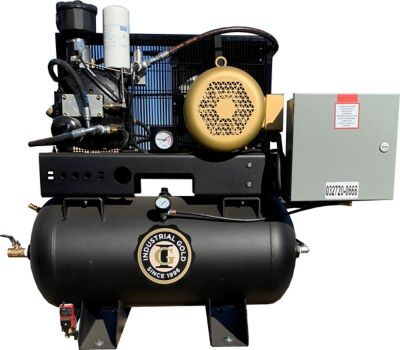
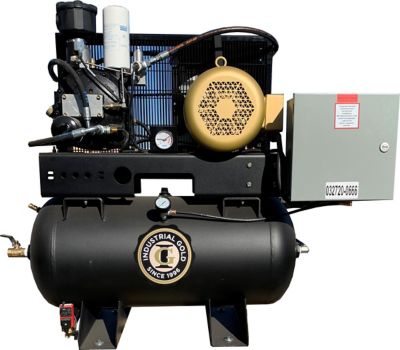
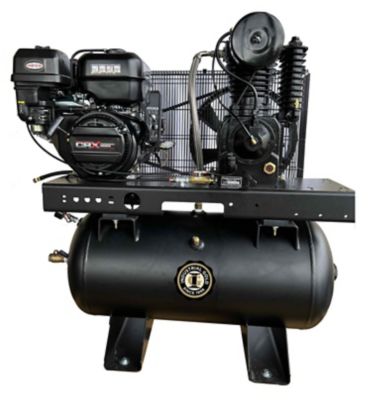
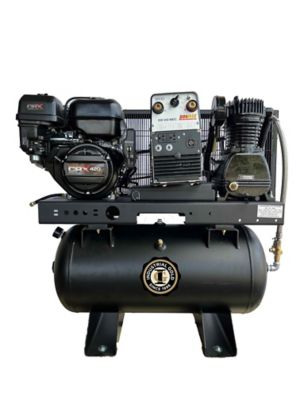
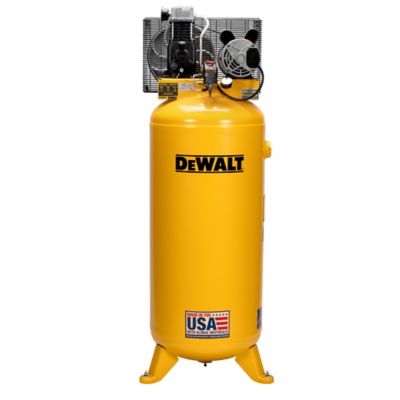
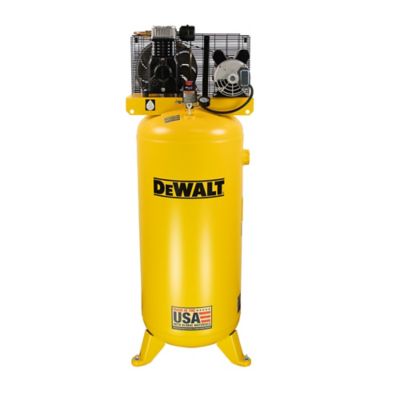
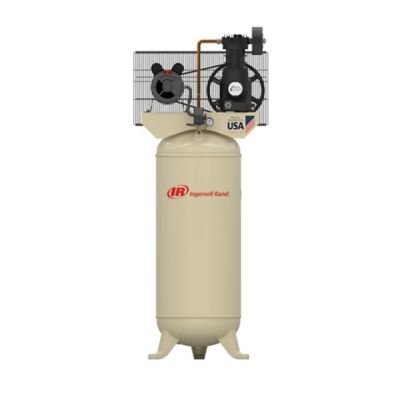
A 30-gallon air compressor is a handy middle-ground choice for a home garage, farm shop, barn, or small job site. It offers more air storage and longer run time than a compact portable unit without taking up the floor space or demanding the same heavy-duty setup as a large shop compressor. These compressors are well suited for inflating tractor and truck tires, running impact wrenches and ratchets, powering brad and finish nailers, blowing dust and debris from equipment, and handling many fastening and repair jobs around the property. Depending on the pump, motor, and pressure setting, many 30-gallon air compressors deliver roughly 5.0 to 6.2 SCFM at 90 PSI and reach a maximum pressure in the range of 155 to 175 PSI. That combination gives common air tools enough working pressure for routine maintenance, tire service, trim work, and light spray applications. Actual performance can vary, so compare the compressor's SCFM rating at 90 PSI with the air requirement listed for each tool. A compressor with a higher SCFM rating will generally recover more quickly while a tool is running, especially when you're using an impact wrench to loosen stubborn lug nuts or a nailer for a long stretch of fence repair. Tank size matters, too. The 30-gallon tank stores a useful reserve of compressed air, helping the motor cycle less often during short bursts of work. It does not mean the compressor can run every high-demand tool continuously, but it can make a noticeable difference over smaller 1- to 6-gallon tanks. For light spray painting, choose a model and spray gun that match each other's air requirements, and plan for steady airflow, proper filtration, and a clean, well-ventilated work area.
When choosing among 30-gallon air compressors, start with the work you expect to do most often. Electric models are a practical fit for a permanent garage or workshop with dependable power, and many operate from a standard 120V outlet. Some offer dual-voltage capability for 120V or 240V operation, which can provide added flexibility when a dedicated circuit is available. Check the required amperage, plug style, and circuit capacity before bringing a compressor home; a long extension cord or undersized circuit can reduce performance and create a safety concern. Vertical tank designs are popular where floor space is limited, while horizontal layouts may fit more naturally beneath a workbench or along a wall. Wheels and a sturdy handle make a 30-gallon unit easier to roll across a concrete floor, though these compressors are still substantial pieces of equipment and are not meant to be carried like a small pancake compressor. For frequent shop use, an oil-lubricated belt-drive pump is often worth considering. Belt-drive designs and cast-iron pump components are commonly built for longer service life and may operate more quietly than many oil-free portable compressors, with some models rated around the mid-70-decibel range. They do require routine care, including checking the oil level when applicable, inspecting the belt, keeping cooling fins clear, and draining moisture from the tank after use. Oil-free options can be simpler to maintain, but the best choice depends on your expected workload, noise tolerance, and preference for long-term serviceability. Look for an accessible drain valve, easy-to-read pressure gauges, a reliable regulator, a safety relief valve, and conveniently placed air outlets. A high-flow regulator can help tools receive the air they need, while quick-connect fittings make it easier to switch between an inflator, blow gun, nailer, or impact tool. During the warmer season, a compressor can help with equipment cleanup and tire checks after long days in the field; as the weather turns cooler, it can be just as useful for maintaining trailers, repairing gates, installing weatherstripping, and keeping pneumatic tools ready in the shop.
A 30-gallon air compressor can also be a practical gift for someone who enjoys working with their hands, although it is best suited for a person with enough room, electrical access, and a clear use for compressed air. It makes a thoughtful choice for a new homeowner setting up a garage, a farmer who handles regular equipment maintenance, or a hobby mechanic who is building a dependable workspace. Before giving one as a gift, consider whether the recipient has a solid, level place to operate and store it, along with suitable air hoses, fittings, and a circuit that can handle the motor. Useful accessories may include a quality air hose, tire inflator, blow gun, couplers, thread sealant, a filter or moisture separator, and hearing and eye protection. Keep in mind that a compressor is only part of the setup: every pneumatic tool has its own CFM and PSI requirements, and hose diameter and length can affect airflow. Use a hose rated for the compressor's pressure, secure connections before starting the motor, and never point compressed air at skin, clothing, animals, or another person. Eye protection is especially important when blowing dust from machinery or cleaning a work area. Before each use, inspect the hose and fittings, make sure the tank is free of visible damage or heavy corrosion, and give the unit room for ventilation. Drain accumulated water regularly, since moisture naturally collects inside the tank as air is compressed and can lead to rust if ignored. If your needs are limited to inflating tires, stapling, or occasional small repairs, a more compact option may be easier to store; browsing
10 Gal Air Compressors can help compare a smaller tank size. For heavier garage projects, repeated fastening, farm repairs, or several air tools used in the same workspace, the added reserve of a 30-gallon tank can provide a steadier, more capable setup. Choose based on air delivery, power requirements, pump construction, portability, noise, maintenance, and the tools you plan to run, and the compressor can become one of those shop essentials that earns its space year after year.