A 100-watt solar panel brings a manageable amount of off-grid charging power to a campsite, a small outbuilding, or a travel trailer parked beyond the nearest outlet. Its 100-watt rating describes power output under standard test conditions, not a promise of constant production throughout the day. Daily energy depends on the sunlight reaching the cells, panel placement, and losses in the charging setup. With four to five peak sun hours, a 100-watt panel has a theoretical daily output of about 400 to 500 watt-hours before system losses; the energy that reaches a battery will generally be lower. Peak sun hours describe the day's sunlight expressed as equivalent hours at a standard solar intensity, rather than simply the time between sunrise and sunset. That distinction matters when matching a panel to the job. A phone charging beside the camper, LED lights over a workbench, and a small radio draw far less energy than a refrigerator running on and off all day. For perspective, a 10-watt light operating for five hours consumes 50 watt-hours, before any conversion losses. A single 100-watt solar panel can support modest charging needs with suitable battery storage, but it is not a practical power source for an electric heater, a well pump, or other high-demand equipment. Even a small compressor refrigerator can require more daily energy than one panel supplies, depending on its consumption and operating time. For folks tending a remote property or spending a few nights away from hookups, this panel size makes the most sense as part of a small, carefully matched system. It can replenish energy drawn from a battery, support low-power equipment, or add charging capacity to an existing compatible setup. The right fit starts with the daily electrical load, not just the wattage printed on the panel, especially when several devices share the same battery.
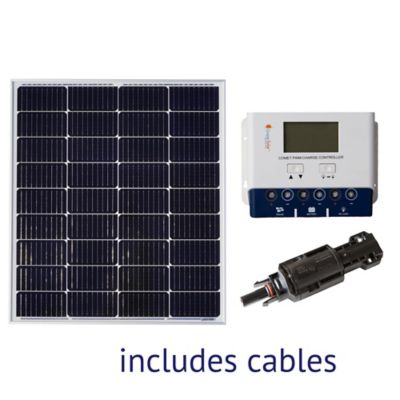
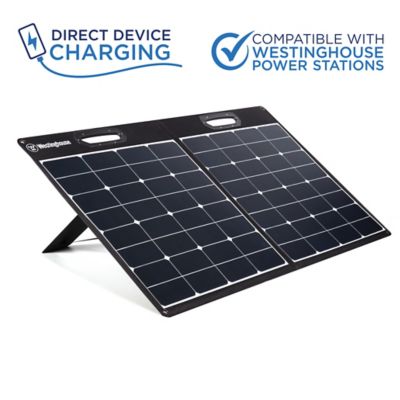
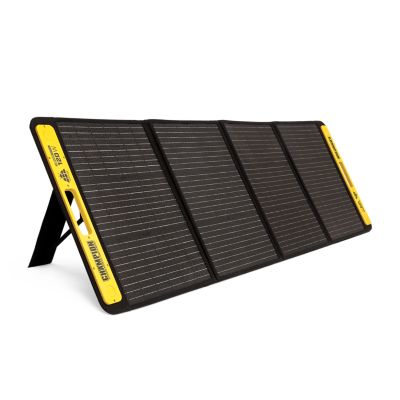
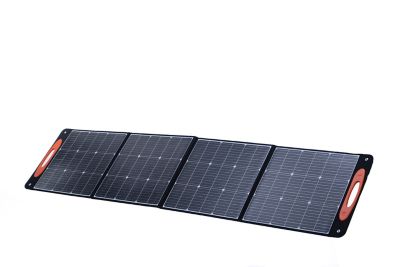
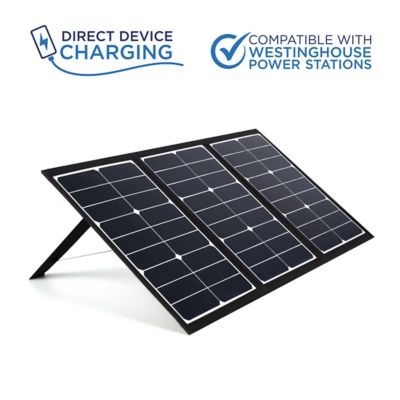
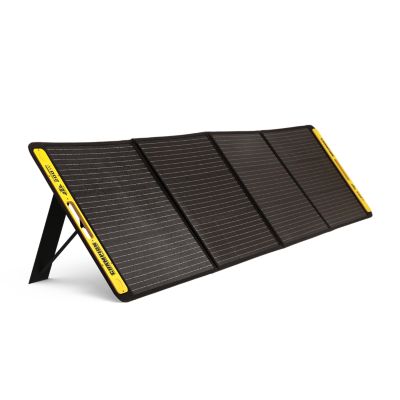
Construction makes a noticeable difference in how a 100-watt solar panel fits into everyday chores and travel. Rigid panels commonly pair solar cells with a glass face and an aluminum frame, giving them a firm structure for mounting on racks, outbuildings, or suitable vehicle roofs. Their weight and dimensions matter when lifting a panel into place, leaving room around roof fittings, or fitting several panels across a limited mounting area. A rigid panel may suit a permanent installation where it can stay securely fastened and receive unobstructed sunlight. Foldable panels favor portability, packing down for transport and opening at camp or beside a compatible power station. Carry handles, support legs, folded dimensions, and cable storage can make the difference between a setup that travels easily and one that takes up too much room behind the truck seat. Flexible panels offer a lower-profile option for certain surfaces, though allowable bend, mounting method, and ventilation requirements vary by design. They are not automatically suitable for every curved roof, and excessive bending or unsupported mounting can damage the cells. Cell construction is another useful comparison point.
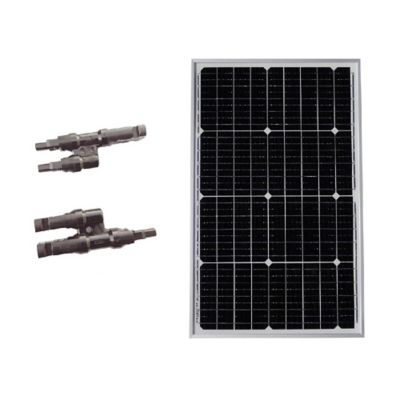
Monocrystalline Solar Panels contain cells made from single-crystal silicon and are often a good fit where mounting space is limited. Higher cell efficiency can help deliver a given wattage from a smaller area, but two panels with the same 100-watt rating still have the same rated power under the stated test conditions. Glass, frame construction, backing materials, connector protection, and mounting hardware all contribute to service life. For a panel that gets loaded and unloaded often, protected corners and secure storage matter. For one that stays mounted, sound attachment points and neatly supported wiring deserve close attention. A panel's outdoor exposure rating also matters; a portable design may have different limits for its fabric case, electrical ports, and junction box than a permanently mounted panel.
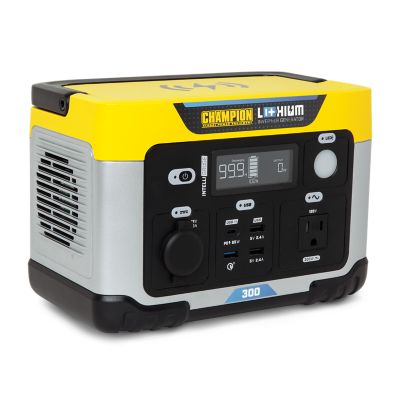
A complete 100-watt solar charging setup involves more than the panel itself, and electrical compatibility matters just as much as physical fit. Panels marketed for 12-volt battery systems commonly operate at a higher voltage than the battery's nominal rating, so a suitable solar charge controller is generally necessary between the panel and a standalone battery. The controller must support the battery chemistry and the panel's electrical specifications. Lithium and lead-acid batteries have different charging requirements, and the correct settings help protect both the battery and the charging equipment. A portable power station may already contain a solar charge controller, but its input voltage range, current limit, wattage limit, and connector requirements still need to match the panel. Matching plugs alone does not establish compatibility. Some portable panels include regulated charging ports, while others supply power only through solar leads. For a camper running lights and charging phones after dark, the battery stores the day's collected energy; the panel does not generate electricity at night. Battery capacity determines how much energy can be held, while panel output helps determine how quickly that energy can be replaced. Cable length, wire size, connection condition, and controller design also affect how much power reaches storage. Across a shed roof or beside a trailer, a short, well-planned cable route can reduce losses and keep wiring clear of sharp edges and foot traffic. Appropriate circuit protection and mounting hardware belong in the setup, with qualified installation help for unfamiliar wiring or permanent connections. Day-to-day care is straightforward: keep the collecting surface clear of dust, leaves, and bird droppings, following the manufacturer's cleaning directions and avoiding abrasive tools. Periodic checks of connectors, mounting points, and cable insulation can catch problems before they interrupt charging. Shade from a roof vent, fence post, or nearby tree can substantially reduce output, even when much of the panel remains exposed to sunlight. With sensible placement and compatible equipment, 100-watt solar panels offer a practical way to support small electrical loads without stretching an extension cord across the property.