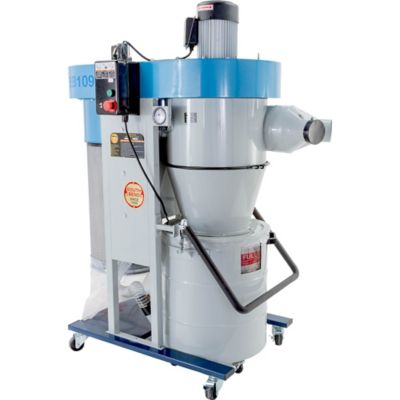
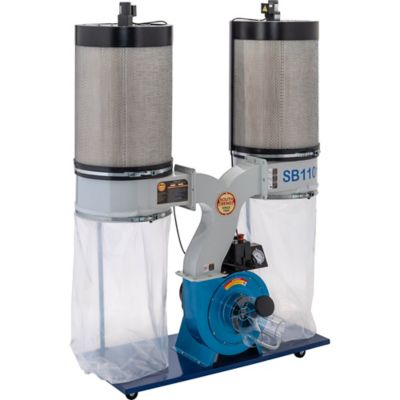
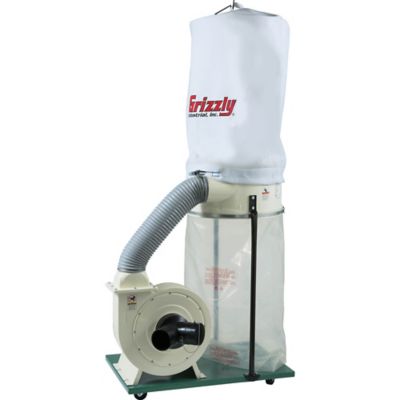
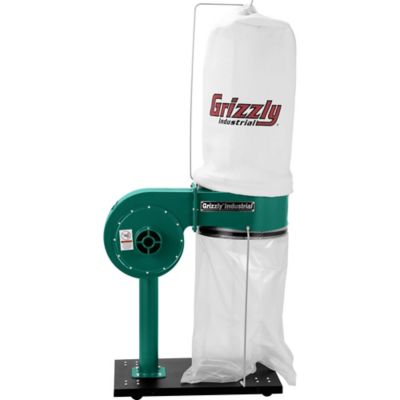
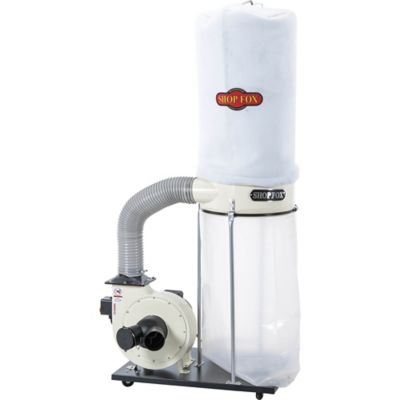
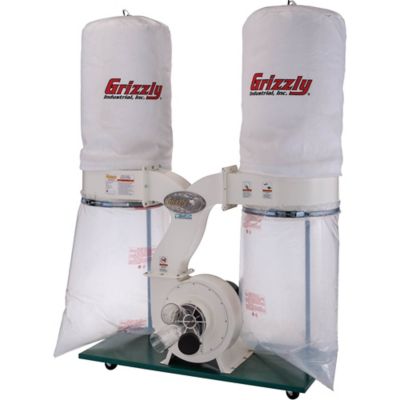
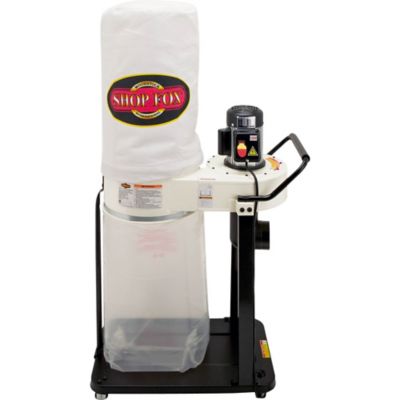
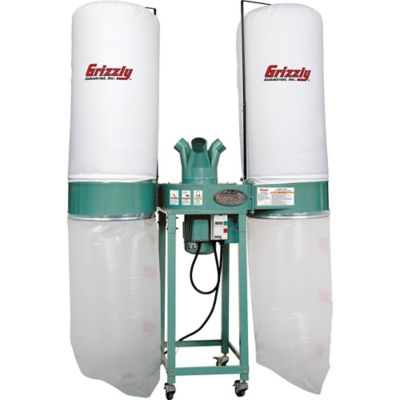
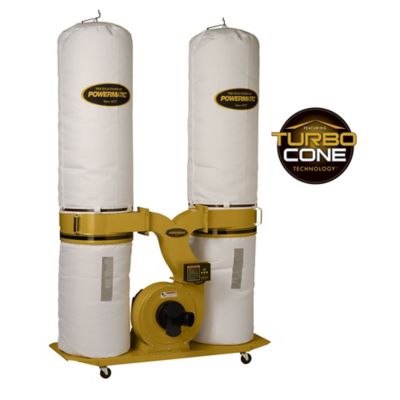
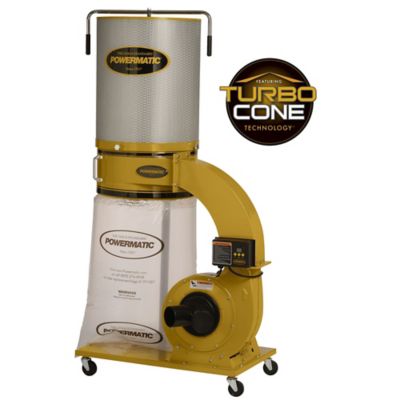
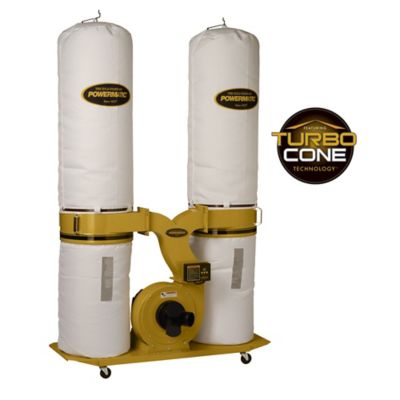
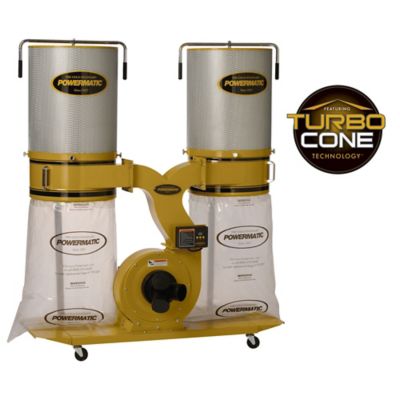
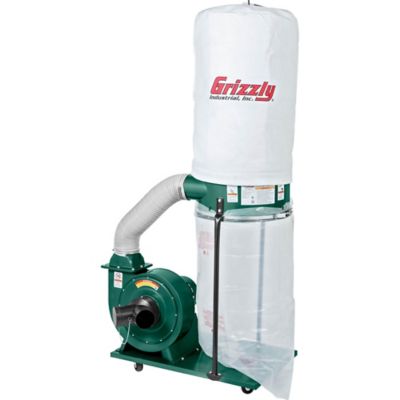
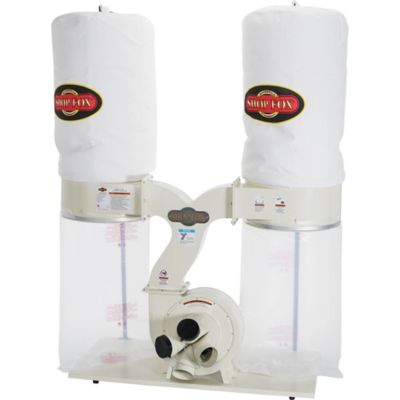
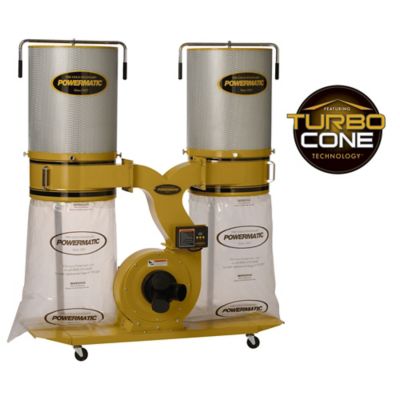
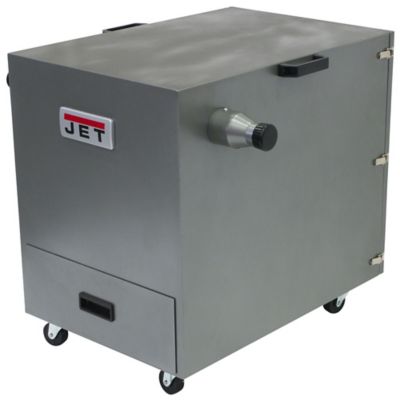
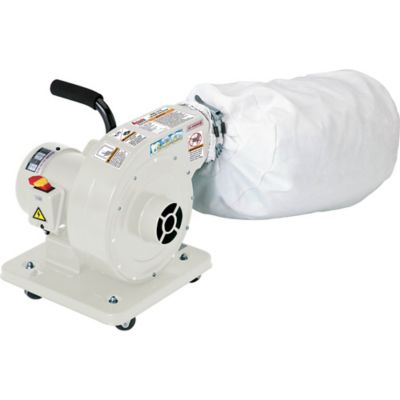
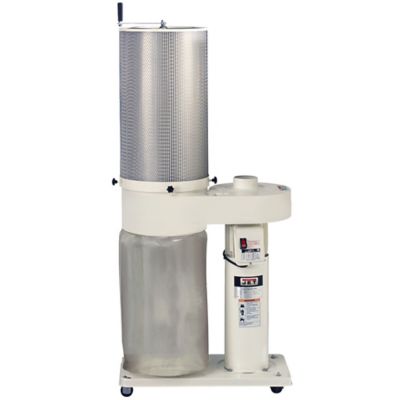
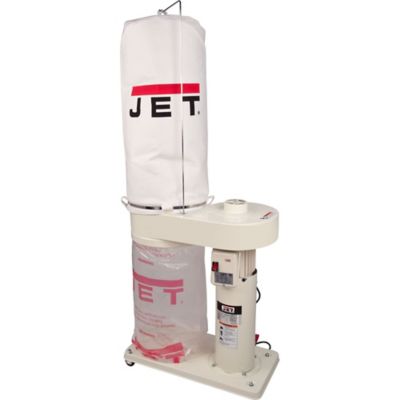
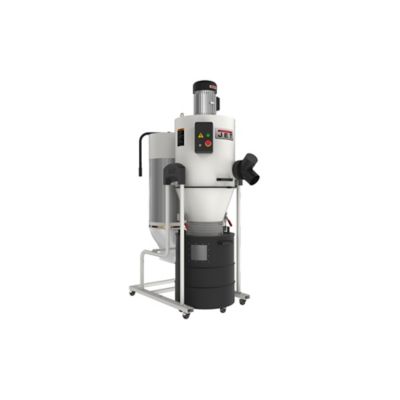
Woodshop dust collectors help keep sawdust and shavings from spreading across the bench, settling on lumber, and piling up around woodworking machines. In a garage shop, a farm outbuilding, or a dedicated cabinet workspace, collecting debris close to the cut makes a difference during everything from trimming boards to planing rough lumber. Different kinds of woodworking call for different collection equipment. A thickness planer can fill a container with curled shavings in short order, while a sander produces fine dust that may hang in the air long after the work stops. Single-stage dust collectors move debris through an impeller before separating it into a collection bag or container, with a filter handling the outgoing air. Their high-volume airflow generally suits larger dust ports on stationary equipment such as jointers, planers, and table saws. Two-stage cyclone dust collectors separate much of the heavier material before it reaches the impeller and final filter. That separation can reduce filter loading and make chip-heavy work easier to manage, though performance still depends on the collector, its connections, and the machine attached to it. Dust extractors and shop vacuums serve a different role: they generally provide higher suction pressure at lower airflow, making them better suited to many small-port handheld tools. For tasks involving
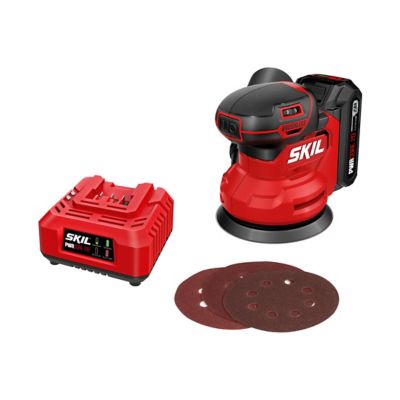
Woodworking Sanders, matching the tool’s extraction port and airflow requirements matters more than choosing the biggest motor. A collector built to move air through a large duct may not perform well when squeezed down to a narrow sanding hose. Likewise, a small vacuum usually cannot carry away the volume of chips coming off a wide planer. For weekend woodworkers, furniture builders, and folks making shelves or repairing wooden gates, the right match starts with the kind of debris coming off the tool. Effective source collection helps contain the mess before it reaches nearby storage shelves, machinery, and the next board waiting for a finish.
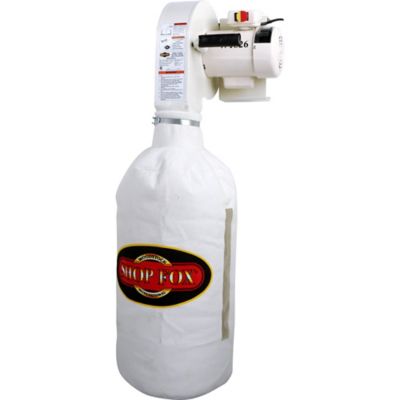
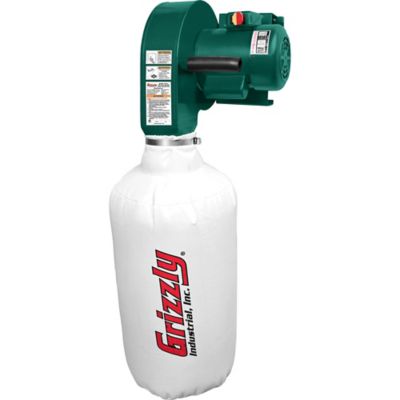
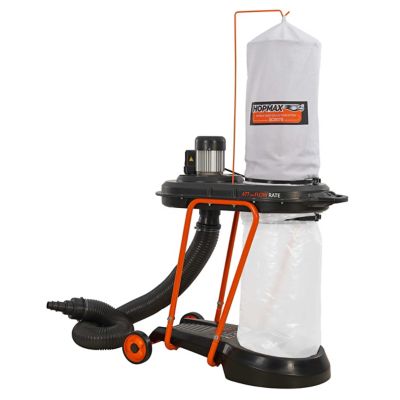
Shop layout plays just as big a part as the woodworking itself. Portable dust collectors on rolling bases suit spaces where a workbench shares the floor with a mower, feed storage, or other equipment. Moving the collector between machines can keep hose runs short without committing the whole building to fixed ductwork. Wall-mounted designs free up floor space, provided the mounting surface can support the equipment and there is enough clearance to empty the container and service the filter. Larger stationary systems fit shops with regular milling work or several connected machines, but multiple hookups do not automatically mean several tools can run together. That capability depends on the airflow each tool needs and the resistance throughout the duct system. Cubic feet per minute, commonly listed as CFM, describes airflow; static pressure describes resistance the collector must work against. A stated maximum CFM figure alone does not tell the whole story, since hoses, elbows, filters, and reducers all affect airflow at the machine. Manufacturer performance information at the expected operating pressure gives a more useful basis for comparison. Long stretches of ribbed flexible hose and sharp turns add resistance, while appropriately sized, well-planned duct runs help air carry chips toward the collector. Blast gates can direct airflow to the active branch in a system designed for that arrangement. Fit includes port diameter, hose diameter, adapter connections, and enough room to move boards past the tool without snagging a hose. Steel housings, sturdy mounting brackets, and rolling bases that stay steady matter in a working shop where lumber gets shifted and equipment gets repositioned. Flexible hose needs to bend where necessary without collapsing under suction, and connections need a secure seal. Electrical requirements deserve attention, too: voltage, amperage, plug configuration, and circuit capacity must match the installation. Noise, overhead clearance, doorway width, and access to collection bags all influence how comfortably a system fits into daily work, especially in a compact building where every clear patch of floor counts.
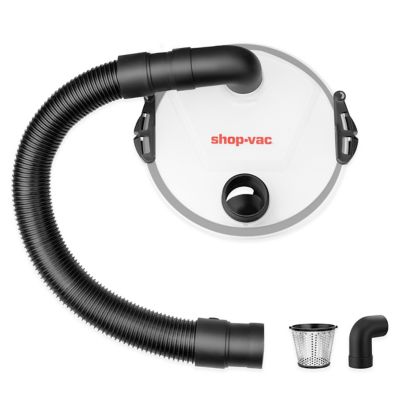
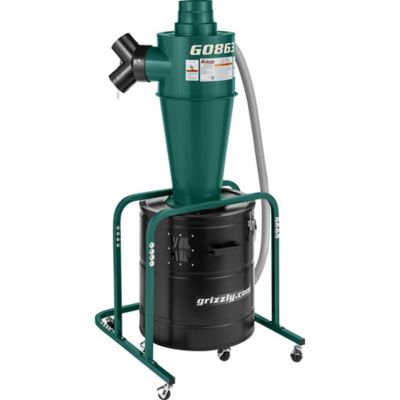
Filtration and routine care determine how well a dust collection setup keeps doing its job after the first load of shavings. Collection capacity matters when a planer is taking repeated passes through a stack of boards; a larger drum or bag means fewer interruptions, but it also takes more space and may be heavier to empty. Fine sanding dust brings a different concern because a tidy-looking floor does not mean the air is clear. Filter ratings vary, and a micron number without a stated capture efficiency gives only part of the picture. True HEPA filters capture at least 99.97 percent of particles measuring 0.3 microns under specified test conditions, but a HEPA filter alone does not establish that the entire collector meets a whole-system filtration standard. Seals, filter seating, and housing construction also affect whether dust stays contained. Canister filters can provide substantial filter surface area in a compact space, while bag filters differ in fabric, construction, and particle capture. The best fit depends on the dust involved and the equipment manufacturer’s specifications, not simply whether the filter is a bag or a cartridge. A separate cyclone separator can take heavier debris out of the airstream ahead of a compatible vacuum or collector, helping limit how quickly its main filter fills, although the added component also creates airflow resistance. Emptying containers before they exceed the marked fill level, inspecting hoses for splits, and following the recommended filter-cleaning method help maintain performance. Power should be disconnected before clearing blockages or reaching into the equipment. Blowing filters clean with compressed air can damage some media and send fine dust back into the shop, so the prescribed care method matters. Wood dust is combustible, and ordinary woodshop collectors should not take in hot ash, sparks, or metal-grinding debris. Suitable respiratory protection and ventilation remain important where dust exposure calls for them; collection equipment does not replace either. During cooler weather, when shop doors tend to stay shut, those details deserve particular attention. A well-matched setup supports steady work, from shaping a replacement porch rail to sanding a tabletop, with less debris scattered around the workspace and a more manageable cleanup at the end of the day.