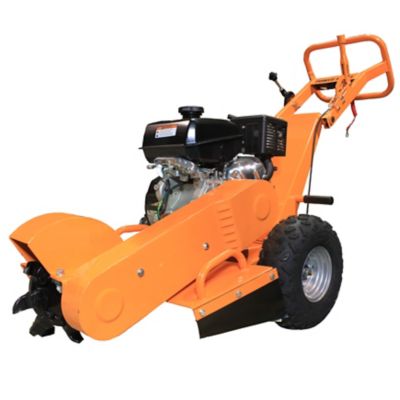
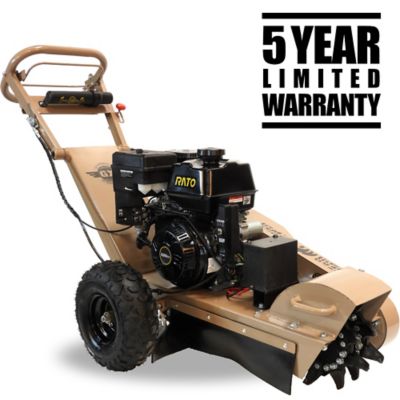
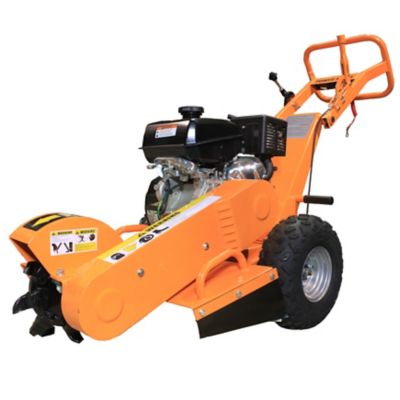
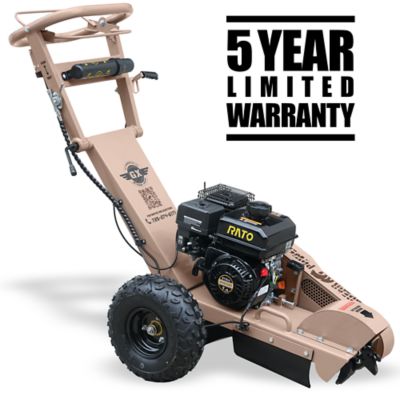
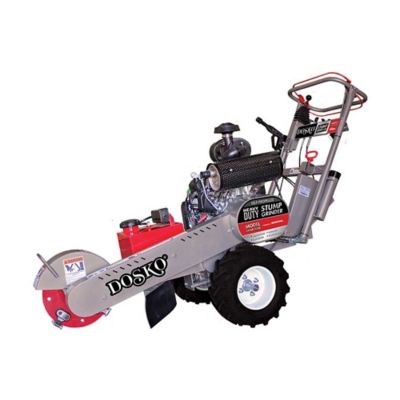
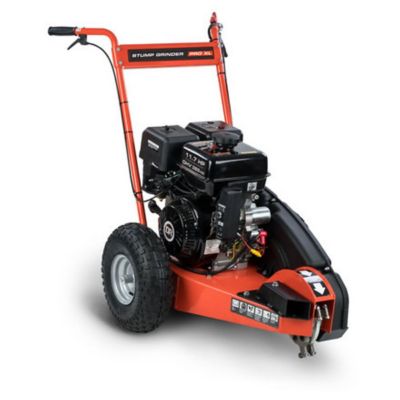
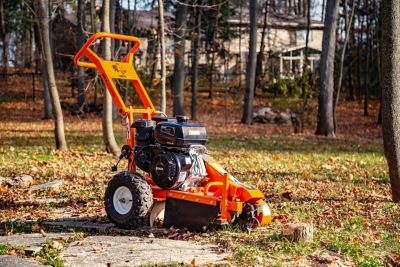
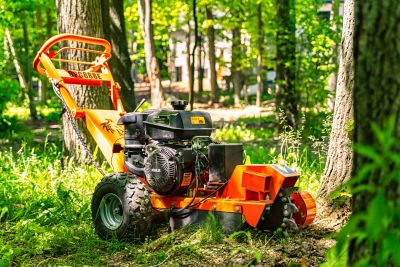
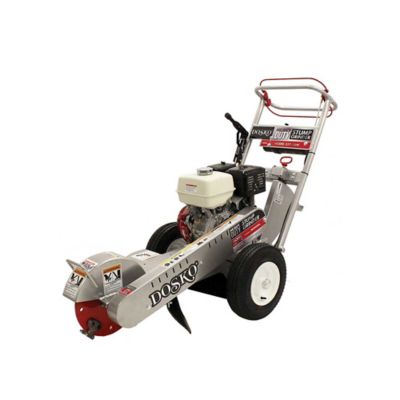
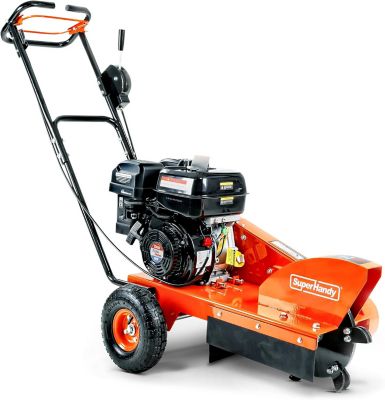
Walk-behind stump grinders help turn a stubborn tree stump into wood chips without digging out the entire root ball. These compact, motorized machines have a rotating cutting wheel fitted with teeth, often with carbide tips, that chip away at wood above and below ground level. For a homeowner clearing an old shade-tree stump, a landowner opening up a mowing route, or a landscaping crew finishing a tree-removal job, that means less wood standing in the way of the next project. Grinding also leaves most of the surrounding ground intact compared with pulling a stump and its larger roots. The work does not remove every underground root, and some tree species can send up new shoots afterward, but it can clear the surface for backfilling and lawn repair. Walk-behind designs put the operator at a handlebar behind the machine, with controls for managing engine operation and cutting movement. Some machines move by manual push, while others have powered travel to help with getting across the property. That distinction matters when the stump sits a long way from the driveway or the route crosses uneven ground. A compact footprint can be helpful around fenced yards, established planting beds, and areas where larger equipment would have trouble getting through. Even so, a smaller machine still needs enough room for the operator, the cutting motion, and the clearance specified in its manual. Intended use is another important match: clearing a few weathered pine stumps along a fence line is a different workload from tackling broad hardwood stumps throughout a property. Wood species, stump diameter, moisture, and the condition of the cutting teeth all affect how the work progresses. A stump that looks modest from the porch may have a wide flare at ground level, so the full working area matters more than the diameter of the trunk alone. For routine property cleanup, these machines fill the space between digging by hand and bringing in much larger equipment.
The best fit among walk-behind stump grinders comes down to cutting capacity, handling, and the ground the machine has to cross. Engine horsepower is worth comparing, but it does not tell the whole story. Cutting-wheel design, tooth arrangement, drive system, and machine balance all influence how a grinder handles a stump. Cutting depth describes how far the wheel can reach below grade under the conditions specified by the manufacturer; cutting height describes its reach above grade. Neither measurement should be mistaken for the maximum stump diameter. A wider stump generally calls for more passes across its surface, while a taller stump may need preparation before it falls within the machine’s operating range. For lawn repair, below-grade reach helps make room for soil over the remaining wood. A future fence post, foundation, or planting hole may call for more extensive root removal than grinding alone can provide. Machine width deserves just as much attention as cutting reach when access involves a backyard gate or a narrow lane beside a shed. Overall weight, wheel size, tire tread, and handle position affect how manageable the grinder feels during transport and positioning. Pneumatic tires may soften travel over rough ground, though their pressure and condition need attention. A wheel brake can help hold the machine in its working position, and some designs feature a pivoting or swiveling cutting assembly that changes how the operator sweeps across the stump. Controls within easy reach and handles that suit the operator’s height can make a difference during repeated passes. Steel frames, guarded drive components, and substantial cutting-wheel assemblies are common construction features worth checking in the specifications. Replaceable cutting teeth and accessible service points matter, too, especially when the machine will see regular work. For properties with several separate work areas,
Portable Stump Grinders offer another way to compare machines with transport and access in mind. Portability still depends on actual dimensions, weight, and loading requirements, not simply a compact appearance.
Long service life starts with a grinder that matches the workload and has a maintenance routine that fits the way it will be operated. Carbide-tipped teeth stand up to demanding cutting work, but contact with rocks, metal, and other buried debris can damage their edges. Dull or damaged teeth can slow progress and put added strain on the machine, which makes inspection and manufacturer-approved replacement parts important considerations. Depending on the design, regular care may include engine oil changes, air-filter service, belt inspection, bearing lubrication, and checks of guards and fasteners. Easy access to those areas can make upkeep less of a chore after a dusty afternoon near the woodlot. Chips and dirt also collect around the machine, so the manufacturer’s cleaning instructions matter as much as its service schedule. Before inspection, clearing, or maintenance, the engine should be shut down and the machine secured against accidental starting as directed in the manual. Storage needs deserve a place in the decision as well: a sheltered spot, suitable fuel care, and protection from moisture help keep a gasoline-powered grinder ready between jobs. During cooler months, damp leaves, soft soil, and frost can change traction and access, even when the stump itself has not changed. Operating limits for slopes and ground conditions should always come from the machine’s manual. Grinding throws chips and can expose hidden debris, making the specified protective equipment, intact guards, and clearance from people, pets, livestock, and nearby property essential. Underground utilities need to be located before work begins, including private lines that may require separate locating arrangements. Transport takes planning, too, with a vehicle or trailer, loading equipment, and tie-down points suited to the machine’s weight. After grinding, the pile usually contains both wood chips and soil; excess chips may need removal before suitable backfill goes in, and the area can settle as remaining wood breaks down. Matching capacity, access, service needs, and the intended finish helps make stump cleanup a practical part of keeping a yard, acreage, or working property clear.