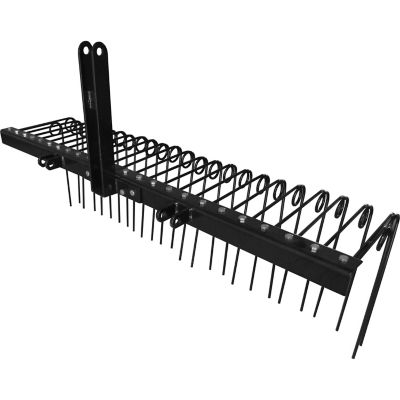
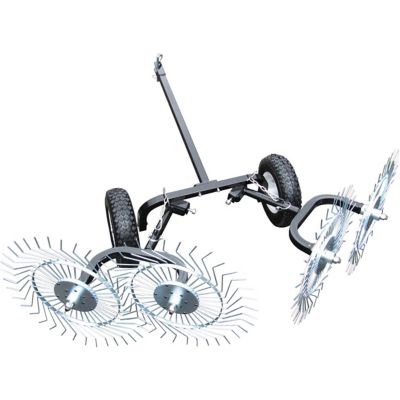
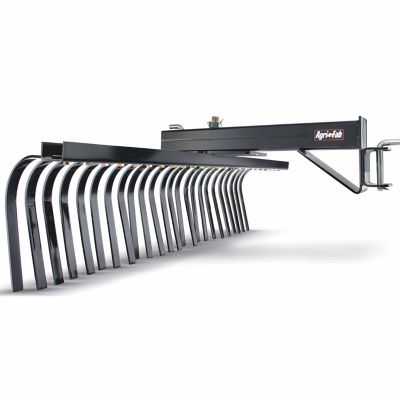
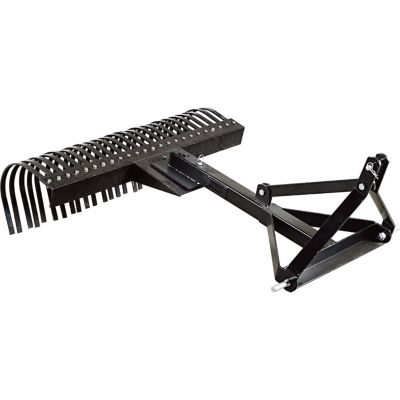
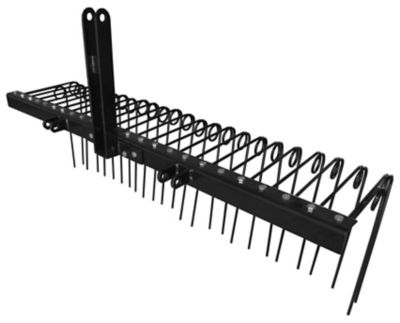
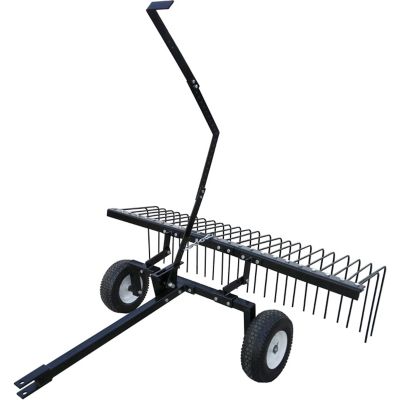
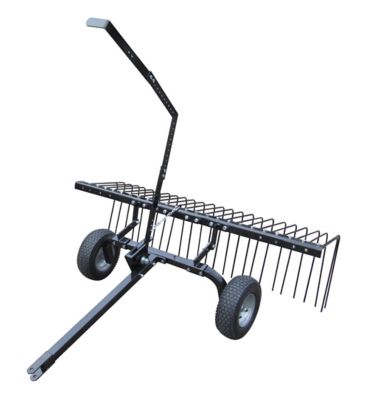
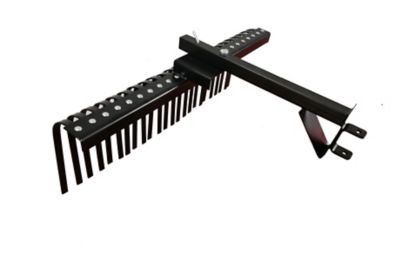
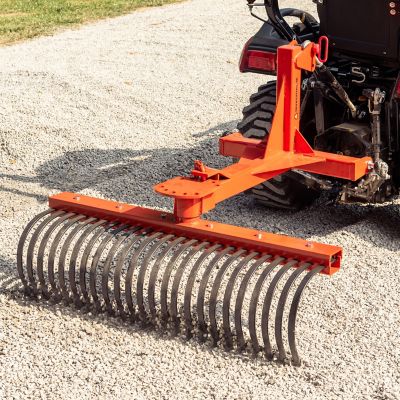
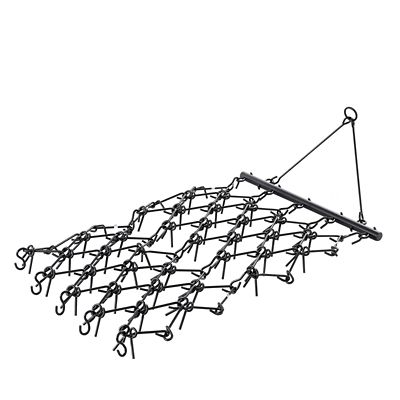
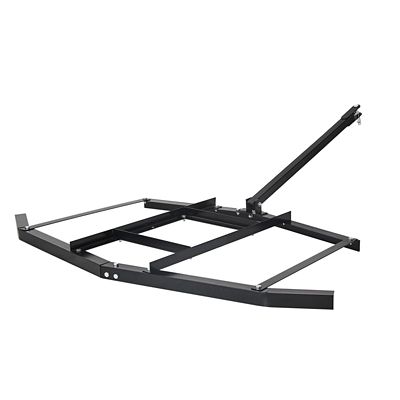
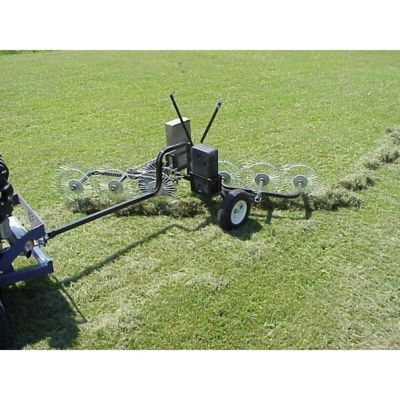
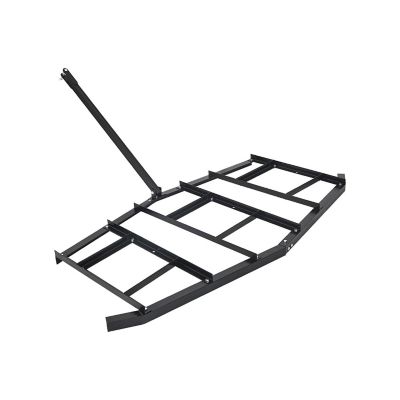
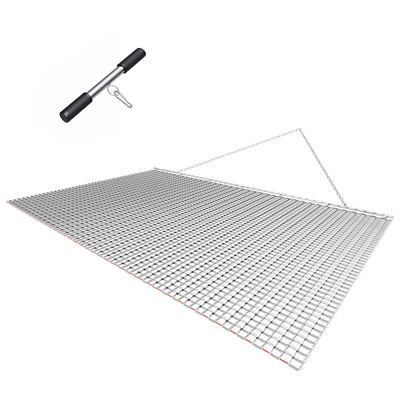
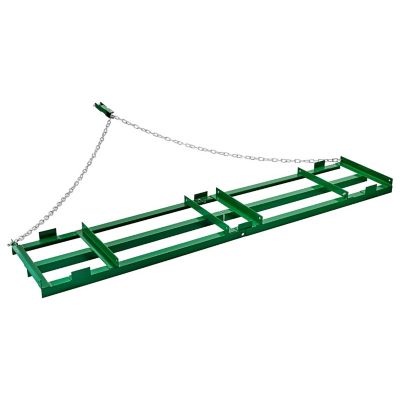
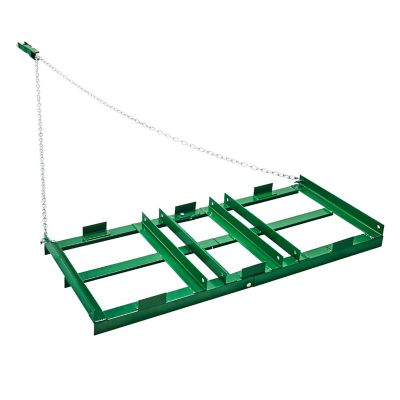
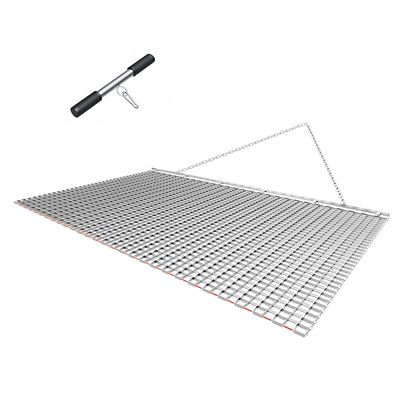
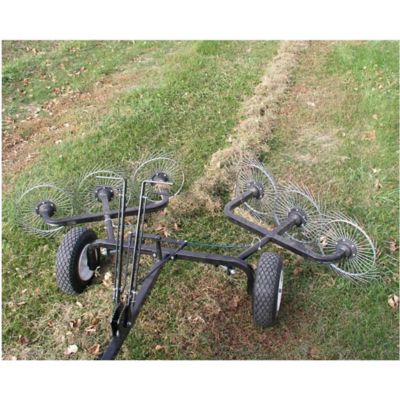
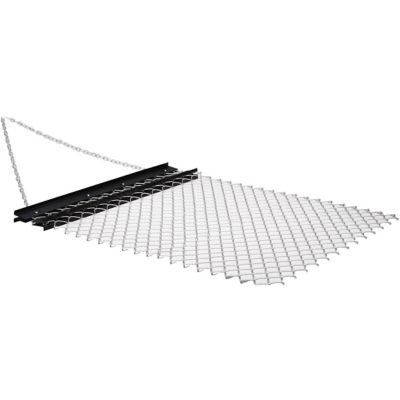
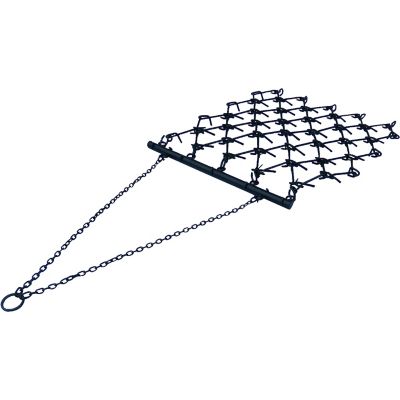
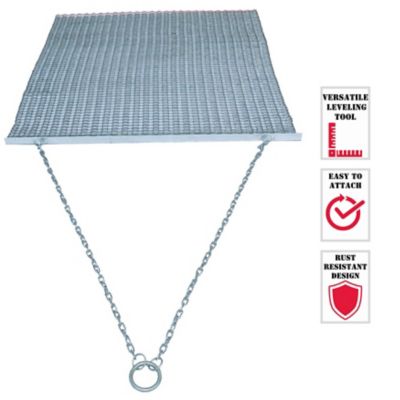
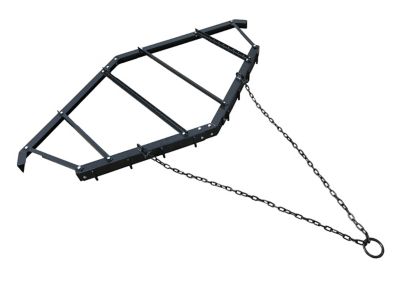
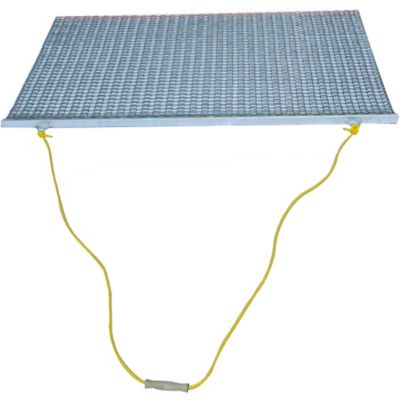
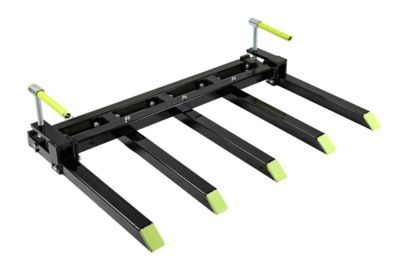
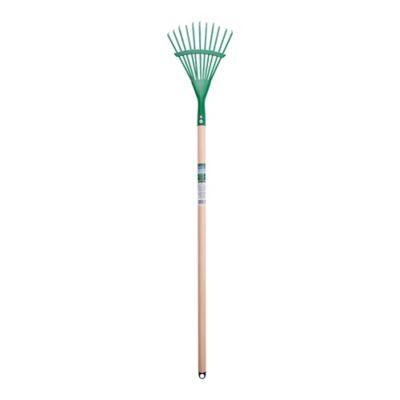
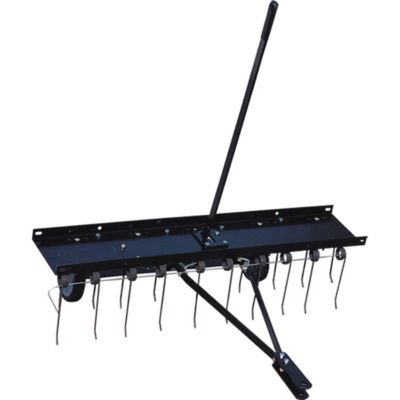
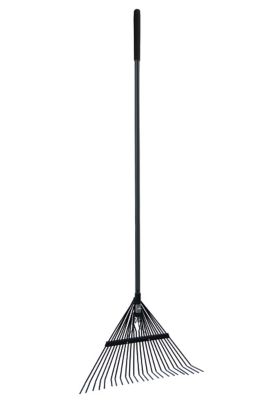
Tractor rake attachments help put the finishing touch on ground that needs smoothing, sorting, or cleaning up. A tractor landscape rake, sometimes called a rock rake or debris rake, has a row of curved tines that comb through loose surface material as the tractor moves. Those tines gather stones, roots, and small branches while allowing some finer soil to pass between them. Around a farm, acreage, or horse property, that makes a rake handy for tidying a cleared patch, spreading loose driveway gravel, or preparing an already loosened area for grass seed. It is a different tool from a hay rake, which gathers cut forage for baling, and it does not work the ground like a tiller. Its strength is surface work: drawing scattered material together, knocking down small ridges, and leaving a more even finish. Picture a gravel lane with stone pushed toward the shoulders or a garden expansion dotted with loose roots after initial ground preparation. A landscape rake can help bring that material back into a manageable strip instead of leaving every bit to a hand rake. Angling the rake directs debris toward one side, creating a windrow that can be collected afterward. Straight settings are useful for pulling material across a broader area, while the right working depth keeps the tines from dragging away more soil or gravel than intended. Deep potholes, packed layers, and major drainage trouble call for more than surface raking; extra fill, loosening, or heavier grading may be necessary before a rake can finish the job. For property owners, small farms, grounds crews, and landscape contractors, tractor rake attachments fill the gap between rough ground work and the last pass that makes a place look tended. The best match starts with the material being moved, the amount of ground involved, and the tractor doing the pulling.
Fit matters as much as working width when choosing a tractor rake attachment. Rear landscape rakes commonly connect to a three-point hitch, but the hitch category, pin dimensions, implement weight, and tractor requirements need to line up with the equipment. Category 0 and Category 1 connections are not interchangeable without checking the complete setup, and quick-hitch compatibility should be confirmed rather than assumed from the hitch category alone. A tractor’s horsepower rating is only part of the picture; lifting capacity, machine size, traction, and the attachment manufacturer’s recommendations also matter. A wide rake may cover an open paddock edge efficiently, yet feel cumbersome along a narrow lane or between fence corners. Widths around 4 to 7 feet are common across landscape rake designs, with other sizes suited to different equipment and jobs. An angled rake covers less ground from side to side than the same rake set straight, so effective coverage deserves a look alongside the listed width. Adequate coverage behind the rear tires helps avoid leaving a tire track outside the finished strip, provided the tractor can handle the attachment. Adjustable rake angles give more control over where loose stone and debris collect, and some designs allow the rake head to rotate for different working positions. Rotation range and approved pushing or pulling positions depend on the design. Gauge wheels, where supported, help the rake follow the surface and maintain a steadier tine height, especially on a long gravel drive with gentle rises and dips. Tine spacing also changes the result: closer spacing catches smaller debris but can collect more soil and plant matter, while wider spacing lets more material fall through. A rake intended for light cleanup around a compact tractor has different demands than one working broad gravel areas behind a larger machine. Looking at the whole pairing helps keep the attachment useful beyond the first project, whether the regular chore is dressing a parking area or gathering sticks along a fence line.
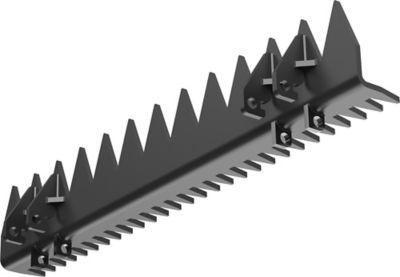
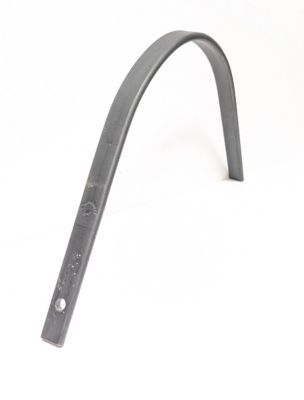
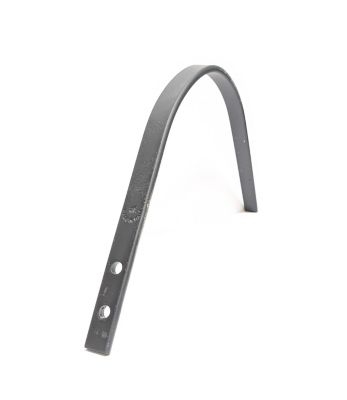
The frame, tine construction, and service points tell a lot about how a landscape rake will handle repeated work. Steel frames provide the backbone, while heat-treated spring-steel tines are common because they can flex as they move through loose material. That flex is helpful when a tine meets a small stone, but it does not make the attachment a tool for prying out buried boulders or pulling stumps. Tine thickness, frame bracing, mounting hardware, and the way the rake head connects to its pivot all deserve attention. Individually replaceable tines can make repairs more straightforward after a bent or broken tooth, and accessible fasteners make inspection less of a chore. Painted or powder-coated surfaces help shield the steel, though scratches and worn contact areas still need attention over time. After raking, clearing packed dirt and tangled roots from the tines makes it easier to spot damage before the next job. Checking hitch pins, retainers, bolts, and adjustment points keeps small problems from carrying into the next pass; lubrication and storage should follow the attachment’s maintenance directions. A firm, level storage spot keeps the rake stable and makes the next hookup easier. Out on the property, shallow passes often give better control than trying to move every stone and root at once, particularly where good topsoil needs to stay put. Large branches, wire, and hidden obstructions should be cleared before raking, and people and animals need room away from the working area. Once loose debris is gathered into piles,
tractor bucket attachments can help with the separate job of lifting and hauling material, provided the tractor and attachment are matched for that work. A rake handles the combing and gathering; a bucket handles the carrying. Keeping those roles clear makes for a practical equipment setup that can tidy a gravel approach, clean up disturbed ground, and leave everyday work areas easier to manage.